TL;DR

Get home appliances delivered free with Prime
- Fast, free delivery on millions of items
- Prime Video, Amazon Music and more included
- Member-only deals all year
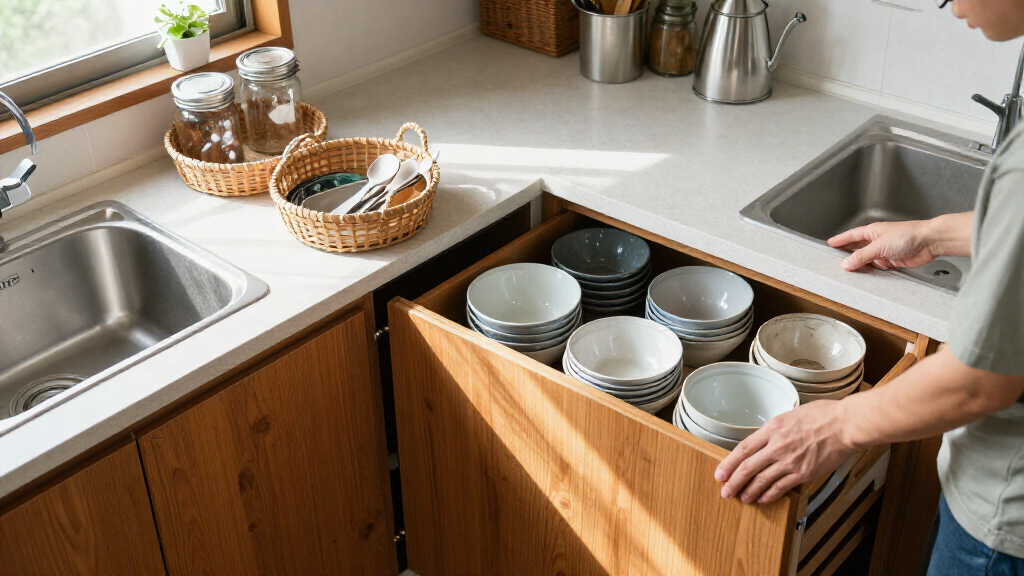
A Livingetc report outlines five Japanese kitchen storage principles: declutter before adding organizers, choose containers for their function, keep frequently used tools accessible, use cookware for both cooking and serving, and limit counter items to daily essentials that also look intentional. The advice comes from design professionals quoted by the outlet; it is practical guidance, not a formal study of Japanese households.
Livingetc has published five Japanese-inspired kitchen storage lessons aimed at helping households make better use of limited kitchen space: clear out what is unnecessary before buying organizers, match containers to their purpose, keep everyday cooking tools easy to reach, choose cookware that can also serve food, and be selective about what stays on the counter. The advice is based on comments from interior designer Yoko Kloeden and Nakagawa executive vice president Tasuku Ogino, rather than a survey or research study.
Kloeden advises beginning with decluttering rather than purchasing more storage. In the report, she says Japanese kitchens often have to function within small footprints, making it necessary for each container and stored item to justify its place. Her suggested starting point is to review one shelf and ask what each object is used for. The report says this approach can avoid spending money on organizers that do not solve the underlying problem.
The next two ideas focus on matching storage to contents and cooking habits. Kloeden recommends choosing containers for what they do: the report says paulownia wood boxes are used for dried goods and tea, while clear containers help users see what is inside. She also suggests moving frequently used ingredients into vessels that are convenient to open and use. For items such as salt and sugar, she says jars can be more practical than their original bags; for cooked rice, she describes an ohitsu, a lidded pot intended to draw off steam.
The final lessons are about getting more use from fewer objects and keeping counters deliberate. Kloeden describes cookware that can move from cooking or storage to the table, reducing transfers and dishes. For countertop items, she cites the principle of keeping objects that are used daily and have visual presence. Ogino calls the resulting contrast merihari, which the report translates as deliberate contrast. Branded packaging, in Kloeden’s example, is put away rather than left on display.
Make Small Kitchens Work Harder
The recommendations address a common household problem: storage products can take up space without reducing clutter if people buy them before deciding what they need to keep. Reviewing cupboards first can help households identify unused items, avoid unnecessary purchases and make existing storage easier to use.
For people who cook often, the other principles connect organization to daily routines. Keeping regular ingredients and utensils within reach can reduce interruptions during meal preparation, while choosing cookware that also serves food may cut down on transfers and washing. These are practical design suggestions from the people quoted in the report, not measured claims about how much time or space a household will save.
Japanese wooden rice storage container
As an affiliate, we earn on qualifying purchases.
As an affiliate, we earn on qualifying purchases.
The Ideas Behind the Five Rules
The Livingetc report presents the principles as lessons to borrow from Japanese kitchens, drawing on Kloeden’s design experience and comments from Ogino of Nakagawa, a Japanese home-goods company. It connects the advice to the challenge of working in compact kitchens and to a preference for objects with clear functions.
Some details are specific to the materials and vessels discussed. Kloeden says paulownia wood can buffer humidity and has insect-repellent properties, and describes the ohitsu as a vessel for managing steam from cooked rice. Those points are attributed to her in the report; the article does not provide independent testing or a broader comparison of storage materials.
“Before you add storage, take one shelf and ask what each thing on it is for.”
— Yoko Kloeden, interior designer, as quoted by Livingetc
Limits of the Report’s Claims
The source is a design-advice article, not a study establishing how common each practice is across Japanese households or whether the methods produce specific savings. It does not quantify changes in storage capacity, preparation time, cleaning, or cost. The publication date is also not included in the supplied material.
Some material and food-storage statements are presented through Kloeden’s comments without supporting research in the source. Readers should treat them as attributed guidance, not as independently verified performance claims. The best container or layout will also depend on the kitchen, the items being stored, and the household’s cooking habits.
Apply the Advice Shelf by Shelf
The report does not announce a product launch, policy change, or scheduled follow-up. Its practical next step for readers is to review one shelf before shopping, remove items with no clear purpose, and identify the ingredients and tools used most often. Households can then choose containers based on access and contents, rather than buying a matching set by default.
For counters, the report’s test is to keep items that are used daily and that the household wants visible, while storing packaging and less-used objects elsewhere. Any changes can be adjusted to fit local food-storage needs and the available space.
Key Questions
What are the five Japanese-inspired kitchen storage lessons?
Declutter before adding storage; choose containers for their function; keep often-used cooking items easy to reach; use cookware that can also serve food; and leave out only frequently used items that look intentional.
Why does the report recommend decluttering before buying organizers?
Kloeden says each stored item should have a purpose. Reviewing a shelf first can show whether the problem is a lack of storage or simply too many items, and may help avoid unnecessary purchases.
What does the report say about food containers?
It recommends choosing containers according to their job. Kloeden gives examples including clear boxes for visibility, paulownia boxes for dried goods and tea, and easy-to-open vessels for ingredients used often.
What is the counter rule in the article?
Kloeden’s test is whether an object is used daily and has visual presence. The report suggests putting packaging and items that do not pass that test away.
Does the article prove these methods work for every kitchen?
No. It presents expert design advice and examples, but provides no comparative study or measured results. Households may need to adapt the ideas to their space, routines, and storage needs.
Source: rss
Halloween Picks
halloween
As an affiliate, we earn on qualifying purchases.