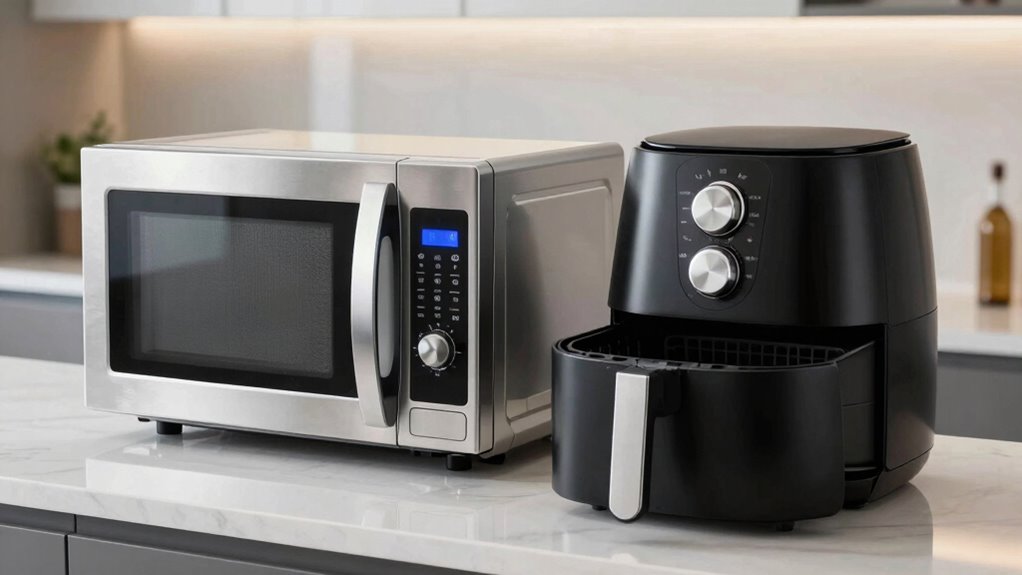

A convection microwave combines microwave and convection heating, making it versatile for baking, roasting, and reheating, while an air fryer uses rapid hot air to produce crispy, fried-style foods with minimal oil. If you want a single appliance that handles multiple cooking tasks, the convection microwave is your best bet. If you prefer quick, crispy snacks like fries and chicken wings, go for the air fryer. Explore further to see how each suits your kitchen needs.
Key Takeaways
- Convection microwaves combine microwave and convection functions for versatile cooking, while air fryers focus solely on rapid hot air frying.
- Convection microwaves can bake, roast, reheat, and cook various dishes; air fryers mainly produce crispy, fried-like snacks.
- Both are energy-efficient but convection microwaves handle larger meals, whereas air fryers are ideal for quick, small, crispy foods.
- Convection microwaves are suitable for multi-tasking, while air fryers excel at making crispy snacks with minimal oil.
- Choose based on whether you need a versatile appliance or a specialized device for crispy, fried-style foods.
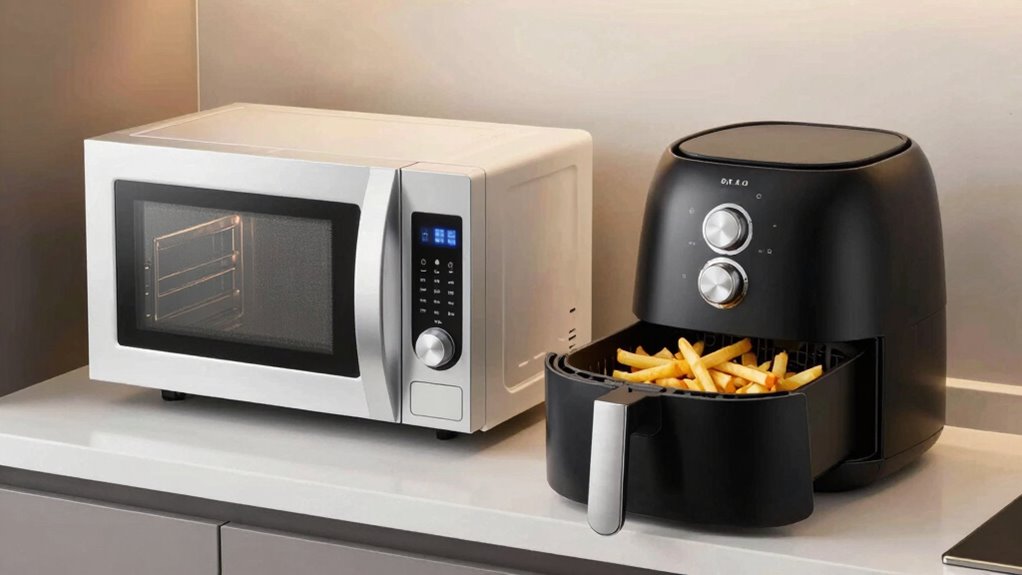
When choosing between a convection microwave and an air fryer, understanding their differences can help you make an informed decision. Both appliances have unique strengths, especially when it comes to cooking versatility and energy efficiency. A convection microwave combines traditional microwave functions with convection heating, allowing you to bake, roast, and reheat a variety of dishes. Its versatility is a major advantage because it can replace multiple appliances in your kitchen. You can cook a casserole, reheat leftovers, or even bake cookies, all in one device. Plus, because it heats food quickly, it’s generally more energy-efficient than using a conventional oven, saving you both time and electricity over the long run.
On the other hand, an air fryer is primarily designed for frying-like cooking without the excess oil, using rapid hot air circulation to produce crispy textures. While it’s fantastic for making chicken wings, fries, and other fried favorites, its cooking versatility is somewhat limited compared to a convection microwave. It excels at specific tasks but doesn’t offer the same range of functions like baking or reheating large dishes. Still, it’s highly energy-efficient for those particular tasks because it heats up quickly and cooks food faster than many traditional methods. If your focus is on preparing crispy, healthier versions of fried foods with minimal effort and energy, an air fryer can be a smart choice.
In terms of energy efficiency, both appliances outperform traditional ovens, but their efficiencies depend on what you’re cooking. A convection microwave uses less energy because it heats up faster and cooks food more quickly. It’s ideal for small to medium-sized meals and quick reheating, making it a practical choice for everyday use. An air fryer, with its rapid air technology, also conserves energy, especially when preparing small portions or snacks. However, if you’re cooking larger meals or multiple dishes, a convection microwave might be more energy-efficient since it can handle diverse cooking tasks without needing additional appliances.
Ultimately, your decision should depend on your cooking habits. If you want a single device that can handle a wide array of cooking tasks efficiently, a convection microwave is the better pick. If you’re mainly interested in quick, crispy snacks and smaller meals with less oil, an air fryer will serve you well. Both are energy-efficient options, but understanding their specific strengths helps you choose the appliance that best fits your lifestyle and kitchen needs. Additionally, considering the role of convection heating in the microwave can further enhance your cooking experience by providing even and consistent heat distribution.

BIG HORN OUTDOORS 12" Multi-Fuel Outdoor Pizza Oven – 3-in-1 Wood-Fired, Gas & Electric Compatible (Burners Sold Separately), Pellet Pizza Oven Portable Pizza Maker for Backyard, Camping & Tailgating
【Premium & Safe Stainless Steel】Outdoor pizza oven is constructed with high-quality stainless steel. This sturdy and compact oven...
As an affiliate, we earn on qualifying purchases.
Frequently Asked Questions
Can a Convection Microwave Replace Both an Oven and a Microwave?
A convection microwave can replace both an oven and a microwave, making it a great multifunctional appliance. It saves kitchen space by combining cooking functions, allowing you to bake, reheat, and even air fry in one device. While it may not match the capacity of a traditional oven for large meals, it’s perfect for everyday cooking and space optimization, streamlining your kitchen without sacrificing versatility.
Which Appliance Is More Energy-Efficient for Daily Cooking?
A convection microwave is typically more energy-efficient for daily cooking than an air fryer because it uses less energy consumption while offering versatile functions. While air fryers excel at quick, crispy results, they often consume more power for smaller tasks. If you’re prioritizing cost efficiency and energy savings, a convection microwave helps you save on electricity and costs over time, making it the smarter choice for regular use.
Are Convection Microwaves Safe for Use in Small Kitchens?
Yes, convection microwaves are safe for small kitchens if you follow proper kitchen safety and appliance placement. Make sure to keep the microwave on a stable, heat-resistant surface, away from water and heat sources. Avoid overcrowding the area to prevent accidents or overheating. Proper placement guarantees safe operation and easy access, helping you maximize space efficiently while maintaining safety standards in your small kitchen.
Do Air Fryers Require Preheating Like Convection Microwaves?
No, air fryers typically don’t require preheating, unlike convection microwaves which often do. You can start cooking immediately in an air fryer, making it more convenient for quick meals. Keep in mind, preheating in convection microwaves can slightly reduce cooking time differences, but most air fryers heat quickly enough that preheating isn’t necessary. This makes air fryers more straightforward for faster, on-the-spot cooking.
How Do Cleaning and Maintenance Differ Between the Two Appliances?
Think of cleaning and maintenance for these appliances like tending to different gardens. For the air fryer, cleaning routines are quick—just wipe the basket and tray after each use. Convection microwaves demand a bit more care, like cleaning the interior and turntable regularly to prevent residue build-up. Maintenance requirements for both include keeping vents clear, but air fryers are simpler, needing less frequent deep cleaning.

Gozney Roccbox Outdoor Pizza Oven, Black, Portable, Gas & Wood Fired, Restaurant-Grade
THE PIZZA OVEN THAT STARTED A REVOLUTION - Experience the game-changing Gozney Roccbox, the original stone-floor portable pizza...
As an affiliate, we earn on qualifying purchases.
Conclusion
So, next time you’re deciding between a convection microwave and an air fryer, picture yourself in a busy kitchen. The microwave whirs and hums, quickly warming leftovers, while the air fryer sizzles and crackles, giving your food that crispy finish. Both have their charm, but understanding their differences helps you choose what suits your needs. Whether you crave speed or crunch, knowing these tools lets you cook confidently—turning everyday meals into satisfying moments.

EDOSTORY Outdoor Wood Fired Gas 12'' Pizza Oven Multi-Fuel, Gas Burner, Wood Tray, Portable, Oven Grill, Outside, Backyard, Pizza Maker, oven gloves, Peel, Cutter (Gas Fire)
【Multiple Fuel Options】 Our outdoor pizza oven is designed with both wood and gas burners. Whether you prefer...
As an affiliate, we earn on qualifying purchases.

Ooni Karu 12 Multi-Fuel Outdoor Pizza Oven – Reaches 950°F and Cooks 12 Inch Pizzas and More in 60 Seconds - Portable Wood and Gas Grill with Pizza Stone, Dual Fuel Ooni Pizza Oven
HOT NEW FEATURES – A custom designed fuel tray that maximises airflow and delivers a powerful blast of...
As an affiliate, we earn on qualifying purchases.