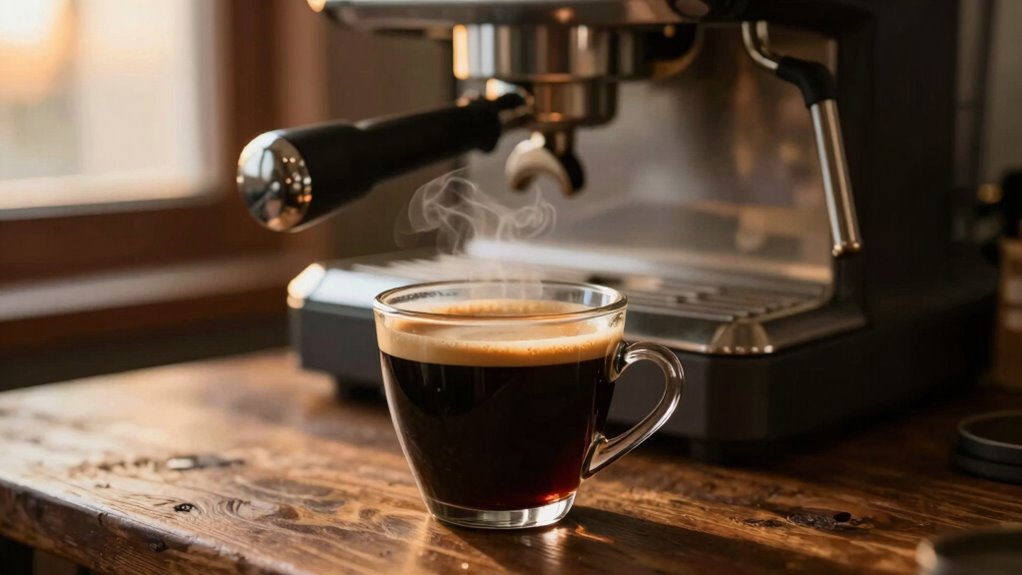

If your espresso tastes bitter, it’s likely because your brewing temperature is set too high, above the ideal 195°F to 205°F range. Excessive heat extracts bitter compounds more aggressively, leading to harsh flavors. Adjusting your machine’s temperature downward slightly can help balance extraction and reduce bitterness. Other factors like grind size and extraction time also matter, but controlling the temperature is a key step. Keep exploring to discover simple tweaks that make your espresso taste perfect.
Key Takeaways
- Brewing water temperature exceeding 205°F can extract bitter compounds, causing overly bitter espresso.
- Using too fine a grind increases resistance, which may require lowering temperature to prevent over-extraction.
- High brewing temperature accelerates extraction, leading to bitter flavors; adjusting temperature downward can help.
- Inconsistent or overly high tamping pressure can contribute to bitterness by affecting extraction, so maintain proper tamping.
- Over-extraction from long brew times or improper settings enhances bitterness; fine-tuning temperature and grind size reduces this.

If your espresso is excessively bitter, your machine might be brewing at too high a temperature. When water gets too hot—above the ideal range of around 195°F to 205°F—it extracts bitter compounds more aggressively. Many espresso machines have adjustable temperature settings; if yours does, try lowering the temperature slightly. Be cautious, though, because too low a temperature can lead to under-extraction, resulting in sour or weak espresso. Finding the right balance ensures you extract the desirable flavors without overdoing the bitter elements. Additionally, temperature control features can help you fine-tune your brewing process for optimal results. It’s also worth noting that these two factors—grind size and brewing temperature—are interconnected. A finer grind increases resistance, which can require a slight adjustment in brewing temperature to prevent over-extraction. Also, keep in mind that other variables, like tamping pressure and extraction time, can influence bitterness, but starting with your grind and temperature is the most straightforward approach. To troubleshoot, begin by slightly coarsening your grind and lowering your brewing temperature in small increments. Test each adjustment by pulling a shot and tasting it. If bitterness persists, revisit both settings and make incremental changes. Keep detailed notes so you can replicate the perfect shot once you find the right combination. With patience and a bit of experimentation, you’ll notice your espresso becoming smoother, more balanced, and free of that bitter edge. Ultimately, mastering these settings allows you to control the extraction process, giving you a richer, more enjoyable cup every time.

AMZCHEF Espresso Machine With Grinder, 190℉-201℉ Temp Control Coffee machine with 44 Grind Setting, Milk Frother, Touch Screen, Cold Brew, Sliver
- Temperature Control: 190℉–201℉ adjustable brewing temperature
- Grind Settings: 44 adjustable grind levels for precision
- Cold Brew Mode: One-touch cold brew with large water tank
As an affiliate, we earn on qualifying purchases.
As an affiliate, we earn on qualifying purchases.
Frequently Asked Questions
Can Changing the Grind Size Reduce Bitterness?
Yes, adjusting the grind size can reduce bitterness in your espresso. If your coffee tastes too bitter, try making the grind slightly coarser, which slows down extraction and prevents over-extraction that causes bitterness. Conversely, a finer grind can intensify flavors. Play with the grind size adjustment until you find the right balance, and enjoy a smoother, less bitter espresso.
Does Water Temperature Affect Espresso Bitterness?
Think of water temperature as the conductor of your espresso symphony; it guides the flavors to harmony. If water’s too hot or cold, bitterness can take center stage. Using high-quality water helps maintain extraction consistency, ensuring each shot is smooth rather than bitter. Adjusting your water temperature to an ideal range allows the delicate flavors to shine, preventing over-extraction that leads to unwanted bitterness, and creating a balanced, delightful espresso experience.
How Does Brewing Time Influence Bitterness Levels?
Longer brewing duration increases bitterness in your espresso because it extracts more compounds from the coffee grounds. If you brew for too long, you’ll notice a bitter flavor dominating the cup. To avoid this, keep your brewing time just enough to extract the ideal flavors without overdoing it. Shortening the brewing duration helps preserve the coffee’s natural sweetness and balance, preventing that unwanted bitter flavor from taking over.
Are There Specific Beans That Naturally Taste Less Bitter?
If you want less bitter espresso, choose beans that are naturally milder, such as single origin beans and lighter roasts. Single origin beans highlight unique flavors and often have a smoother profile, while lighter roasts preserve natural sweetness and acidity. These beans tend to produce a balanced, less bitter shot. To improve your espresso experience, experiment with different single origin beans and roast levels to find what suits your taste buds best.
What Role Does Pressure Play in Espresso Bitterness?
Pressure control directly affects espresso bitterness by managing the extraction force. If the pressure is too high, it over-extracts the coffee, releasing bitter compounds and making your espresso taste harsh. Conversely, insufficient pressure under-extracts the coffee, resulting in weak, sour flavors. Adjusting pressure control helps you find the perfect balance, ensuring the right extraction force to highlight the coffee’s rich flavors without bitterness.
Conclusion
So, next time your espresso bites back with bitterness, remember it’s just a hint from your machine’s setting. Think of your espresso as a tiny symphony—you hold the conductor’s baton. Adjust the grind, water temp, or brew time, and suddenly, you’re orchestrating a mellow, harmonious melody. With a few tweaks, you’ll turn that bitter note into a smooth, sweet chorus, making every sip a delightful serenade for your senses.