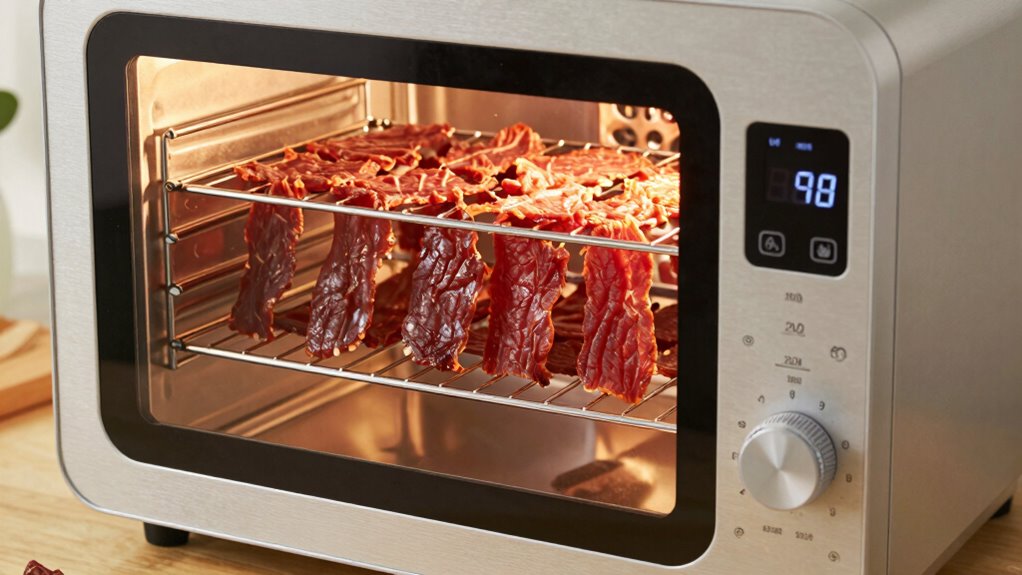

To avoid ruining your jerky, keep your dehydrator temp between 145°F and 155°F, which guarantees safety and the right texture. Monitoring and adjusting the temperature throughout the process helps prevent over-drying or bacteria growth. Using an external thermometer or following your dehydrator’s guidelines can make a big difference. Proper temperature control is key to perfect jerky. If you want to master the process, there’s more to discover about achieving ideal results.
Key Takeaways
- Maintain a temperature between 145°F and 155°F to ensure safe and properly dried jerky.
- Use an external thermometer to monitor internal temperature accurately during dehydration.
- Avoid over-drying by checking periodically and rotating jerky for even drying.
- Follow manufacturer guidelines for your dehydrator’s temperature settings for optimal results.
- Proper temperature control prevents spoilage and preserves flavor, ensuring jerky isn’t ruined.
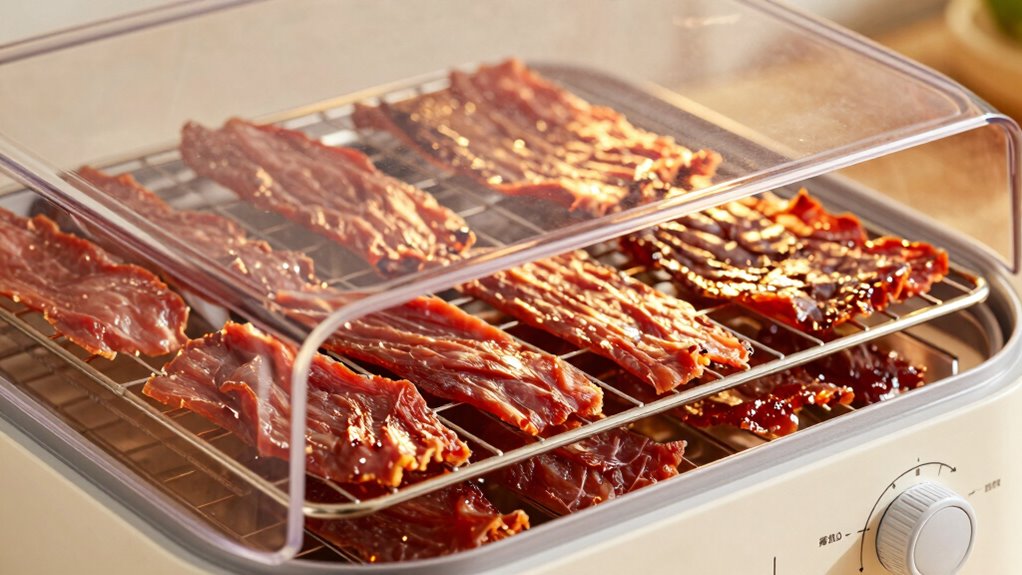
Are you wondering what the ideal temperature is for your food dehydrator? Getting this right is essential to making delicious dehydrator recipes without risking food safety or ruining your jerky. The proper temperature ensures that your snacks dry evenly, retain their flavor, and stay safe to eat. Most dehydrator recipes recommend a specific temperature range, usually between 125°F and 155°F, depending on what you’re drying. For jerky, you want to aim for around 145°F to 155°F to effectively eliminate bacteria while preserving the meat’s texture and flavor. Adjusting the temperature within this range helps you avoid under-drying, which can lead to spoilage, or over-drying, which makes your jerky tough and unappetizing.
Maintaining 145°F to 155°F is key for safe, evenly dried jerky.
Knowing the right temperature is also vital for food safety tips. Bacteria, molds, and yeasts thrive at certain temperatures, so maintaining a proper dehydrator temp is essential. For example, drying meat to the recommended temperature not only prevents spoilage but also ensures your jerky is safe to store and eat over time. If your dehydrator doesn’t have a precise temperature control, it’s a good idea to check the manufacturer’s guidelines or use an external thermometer to monitor the environment inside. This way, you can confidently follow food safety tips and avoid the risks of eating improperly dried food.
When experimenting with dehydrator recipes, keep in mind that not all foods require the same drying temperature. Fruits, for instance, are typically dehydrated at slightly lower temperatures around 125°F to preserve their flavor and nutrients. Vegetables often need around 125°F to 135°F, while meats for jerky need the higher end of the temperature spectrum. Using the correct temperature for each type of food ensures you get the best results and maintain food safety standards. It’s also helpful to rotate or check your food periodically during the drying process to prevent uneven drying or overheating. Additionally, selecting the right dehydrator settings can significantly impact the overall quality of your dried foods.
In addition, always follow food safety tips like washing produce thoroughly before dehydrating, slicing foods uniformly for even drying, and storing your dehydrated foods in airtight containers once fully dried. Proper temperature control combined with good practices will help you create tasty, safe dehydrator recipes every time. Remember, the goal is to dry your food thoroughly without compromising safety or flavor. By understanding and controlling your dehydrator temps, you’re taking the shortcut to not ruining your jerky or other dehydrated treats—making each batch a success.
Frequently Asked Questions
How Long Does It Take to Dehydrate Jerky at Different Temperatures?
You’ll typically spend 4-8 hours dehydrating jerky, depending on your temperature. At 145°F, it takes around 4-6 hours, while 160°F can reduce that to 3-5 hours. Remember to marinate your meat properly first and make certain it’s evenly sliced. Once done, store your jerky in airtight containers or vacuum-sealed bags to keep it fresh. Adjust times based on thickness and your dehydrator’s specifics.
Can I Reuse My Dehydrator’s Trays for Different Food Types?
You can definitely reuse your dehydrator’s trays for different food types, but you should be cautious about tray reuse and cross contamination. Always clean the trays thoroughly between uses, especially if you’re switching from raw meats to fruits or vegetables. This helps prevent cross contamination and guarantees food safety. Using separate trays or liners for different foods is a smart way to keep flavors intact and avoid any health risks.
What Safety Precautions Should I Follow During Dehydration?
You should always prioritize safety during dehydration. Keep cross contamination at bay by thoroughly cleaning trays and tools between uses. Monitor the temperature closely to guarantee it stays within safe limits, preventing bacteria growth. Use a food thermometer if needed, and handle raw ingredients with clean hands. By staying vigilant about cleanliness and temperature, you protect yourself and enjoy safe, delicious dried foods every time.
How Do Humidity Levels Affect Dehydration Times and Results?
Humidity levels greatly impact dehydration times and results, as high humidity causes moisture to linger in your food, making it harder to dry thoroughly. When humidity impact is significant, your dehydration process takes longer, and the risk of spoilage increases. To guarantee proper moisture control, use a dehumidifier or keep the dehydrator in a low-humidity environment. Consistently monitoring humidity helps you achieve safe, well-preserved jerky or dried foods.
Is It Necessary to Pre-Treat Meat Before Dehydrating?
Yes, pre-treating meat is essential for food safety and better dehydration results. You should trim excess fat, slice the meat uniformly, and consider marinating or curing it to inhibit bacteria growth. Proper meat preparation guarantees even drying and reduces the risk of spoilage. Skipping this step can compromise food safety, so always follow recommended pre-treatment methods before dehydrating meat to produce safe, high-quality jerky.
Conclusion
Now that you know the right temps for your food dehydrator, you’re unstoppable in creating perfect jerky every time. Stick to these guidelines, and you’ll craft snack masterpieces that could make even professional chefs jealous. Don’t let guesswork ruin your delicious results—think of it as the secret weapon in your kitchen arsenal. With these tips, your jerky will be the stuff of legends, impressing everyone and making your snack game stronger than ever.