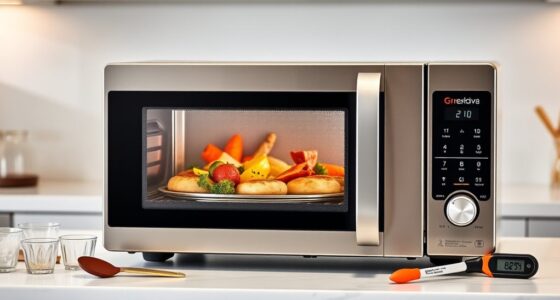
Smart ovens use built-in cameras to monitor your food during cooking in real time. These cameras capture images that are analyzed by smart algorithms, which assess color changes, browning, and texture to determine doneness. The oven can then automatically adjust temperature or cooking time for perfect results, often sending updates to your phone or display. Want to discover how this technology can make home cooking smarter and easier? Keep exploring to learn more.
Key Takeaways
- Smart ovens utilize high-resolution cameras to continuously monitor food appearance during cooking without opening the door.
- Visual data from cameras is analyzed by smart algorithms to detect color, browning, and texture changes indicating doneness.
- Real-time camera feedback enables the oven to automatically adjust temperature and cooking time for optimal results.
- Cameras provide detailed visual insights that help users understand cooking progress and achieve consistent doneness.
- Integration of camera analysis with smart algorithms ensures precise, automatic doneness detection and enhances overall cooking accuracy.
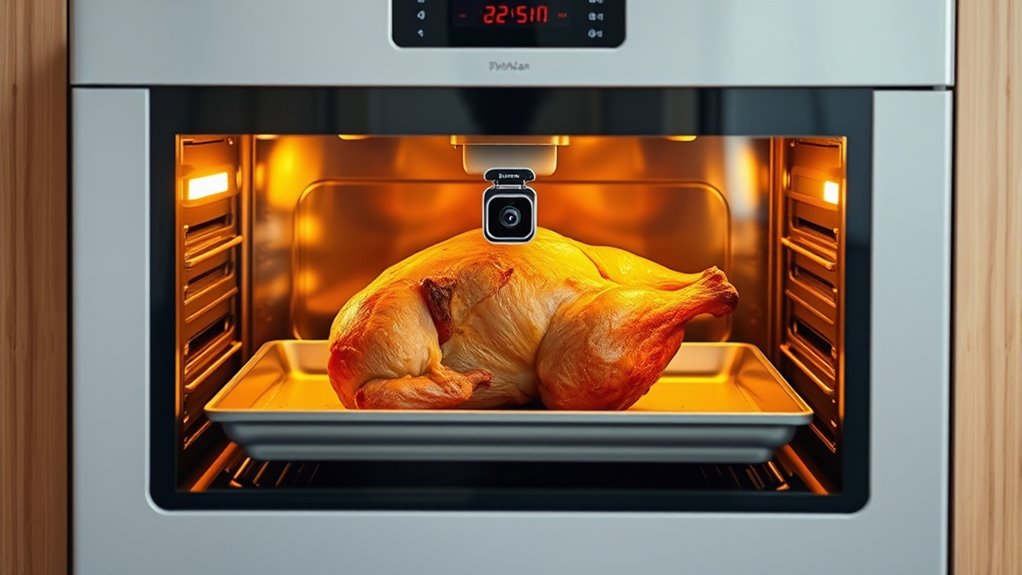
Smart ovens are revolutionizing cooking by incorporating advanced cameras that monitor your food in real-time. With these cameras, you gain unprecedented control over your cooking process, ensuring your dishes come out just right every time. This technology enhances cooking accuracy by providing detailed visual feedback, allowing you to see how your food is progressing without opening the oven door. Instead of relying solely on timers or guesswork, the oven’s camera system analyzes color changes, browning, and texture, giving you precise updates on doneness. This means you no longer have to worry about undercooked or overcooked meals, saving you from wasted ingredients and the frustration of inconsistent results.
Smart ovens use real-time cameras to ensure perfect results, eliminating guesswork and reducing cooking frustration.
The cameras work in tandem with smart algorithms that interpret visual cues, offering you real-time insights into the cooking process. These insights are delivered directly to your smartphone or oven display, giving you the ability to monitor your meal from anywhere. Whether you’re busy with other chores or at work, you can check on your dish’s progress, making your cooking experience more convenient and less stressful. This level of user convenience transforms the way you prepare meals, making it easier to achieve professional-quality results at home. You don’t need to be a culinary expert to utilize this technology—just follow the visual cues and trust your oven to do the heavy lifting.
Furthermore, these cameras facilitate automatic adjustments to cooking parameters. If the oven detects that the food isn’t browning as expected or is cooking faster than anticipated, it can modify temperature or cooking time on the fly. This automation reduces the need for constant manual intervention, allowing you to set it and forget it, confident that your oven is working to perfect your dish. This feature is similar to vetted technology used in first home theatre projectors, which enhances user experience through precise adjustments. As a result, you spend less time monitoring and more time enjoying your meal or attending to other tasks.
In addition to improving cooking accuracy, the cameras contribute to user convenience by simplifying the cooking process. They eliminate guesswork, making even complex recipes more accessible. With clear visual feedback, you can better understand how your food is changing, helping you learn and improve your cooking skills over time. This technology also minimizes mistakes, ensuring consistent results batch after batch. Overall, the integration of cameras into smart ovens offers a seamless blend of precision and ease, empowering you to cook smarter, faster, and with greater confidence.
Frequently Asked Questions
How Accurate Are Camera-Based Doneness Detections?
Camera-based doneness detection can be quite accurate if your smart oven maintains proper sensor calibration. Visual accuracy depends on the camera’s ability to interpret color changes and textures, which vary with lighting and ingredient types. When calibrated correctly, these cameras provide reliable assessments of doneness, but occasional misreads may occur if conditions aren’t ideal. Regular calibration guarantees consistent results, making your cooking more precise and effortless.
Can Smart Ovens Recognize Different Types of Food Automatically?
Think of your smart oven as a seasoned chef with a keen eye. It can recognize different foods by analyzing food texture and shape, thanks to advanced cameras and sensors. With a library of cooking presets, it automatically adjusts settings for each dish, ensuring perfect results. So, yes, your smart oven can identify various foods and tailor the cooking process, making meal prep effortless and precise.
What Happens if the Camera Malfunctions During Cooking?
If the camera fails during cooking, your smart oven might pause or stop the cooking process to prevent mistakes. This camera failure causes a cooking interruption, alerting you with a warning message on your device. You should check the camera connection, reset the oven, or manually adjust the settings. In some models, the oven may revert to traditional cooking modes until the camera is repaired or replaced.
Are There Privacy Concerns With Smart Oven Cameras?
Coincidentally, privacy concerns and security risks are central when using smart oven cameras. You might worry about unauthorized access to your cooking data or footage, especially if security isn’t tight. While manufacturers often implement encryption and privacy controls, it’s wise to stay informed and update firmware regularly. Being cautious about what you share and enabling privacy settings helps protect your personal information from potential breaches.
How Do Smart Ovens Learn and Improve Their Detection Over Time?
Smart ovens learn and improve their detection by using machine learning algorithms that analyze cooking data over time. They calibrate sensors regularly to guarantee accuracy and adapt their processes based on your cooking habits. As you use the oven more, it gathers feedback, refines its camera and sensor calibration, and enhances doneness detection, making future results more precise and personalized. This continuous learning helps you achieve better cooking outcomes effortlessly.
Conclusion
By using cameras, smart ovens can now accurately detect when your food is perfectly cooked, saving you time and effort. Did you know that 78% of home cooks believe their oven’s doneness is often inconsistent? With this technology, those worries fade away, making cooking more reliable and stress-free. So next time you bake or roast, trust your smart oven’s camera to deliver delicious results every time.