
To dehydrate food using your oven or dehydrator, start by selecting ripe, fresh produce or quality meats, then wash, dry, and slice them into uniform pieces. For ovens, set it to the lowest temperature (140°F-170°F) with the door slightly ajar, and dehydrate for 4-8 hours, checking regularly. Dehydrators follow manufacturer instructions for temperature and timing. Properly dried foods should be flexible but not sticky. Continue exploring techniques to guarantee perfect results every time.
Key Takeaways
- Select fresh, ripe produce or quality meats and cut into uniform slices (1/8 to 1/4 inch thick).
- For ovens, set to the lowest temperature (140°F-170°F) and leave the door slightly open for air circulation.
- Follow the manufacturer’s instructions for your dehydrator’s temperature and drying time.
- Check foods regularly during drying, aiming for a flexible, not sticky or moist, texture.
- Store dehydrated foods in airtight containers or vacuum-sealed bags to preserve flavor and nutrients.
Dehydrating food is an effective way to preserve your favorite fruits, vegetables, and meats for longer periods. It’s a simple process that allows you to enjoy your favorite flavors year-round, all while maintaining essential nutrients. Whether you’re looking to stock up on food preservation or create healthy snacks, dehydration is a practical method that requires minimal equipment. By removing moisture, you inhibit bacterial growth and spoilage, extending the shelf life of your foods without the need for preservatives or refrigeration. This makes dehydrated snacks not only delicious but also a healthier alternative to processed snacks loaded with additives.
Dehydrating preserves foods, extends shelf life, and creates healthy, flavorful snacks year-round.
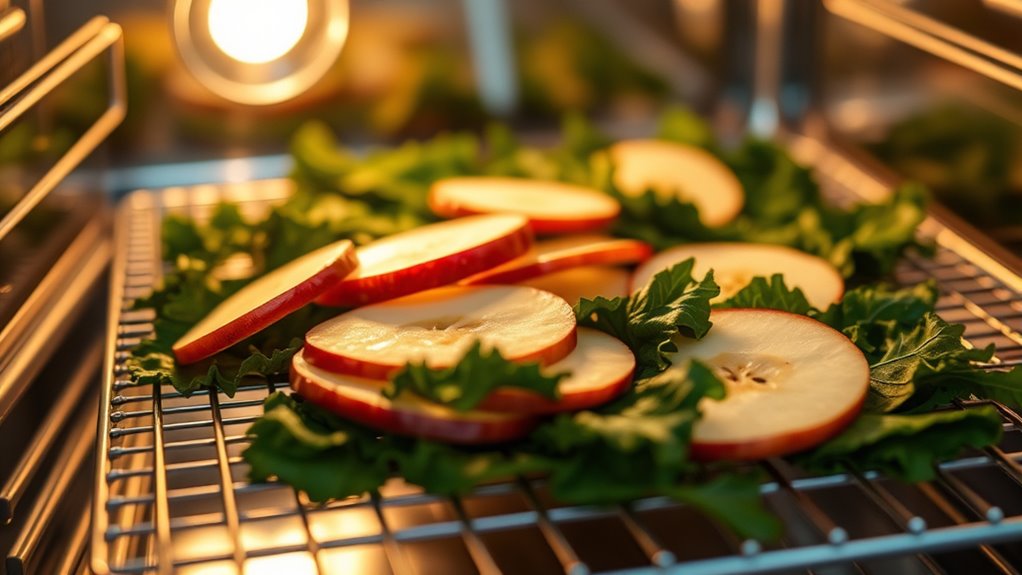
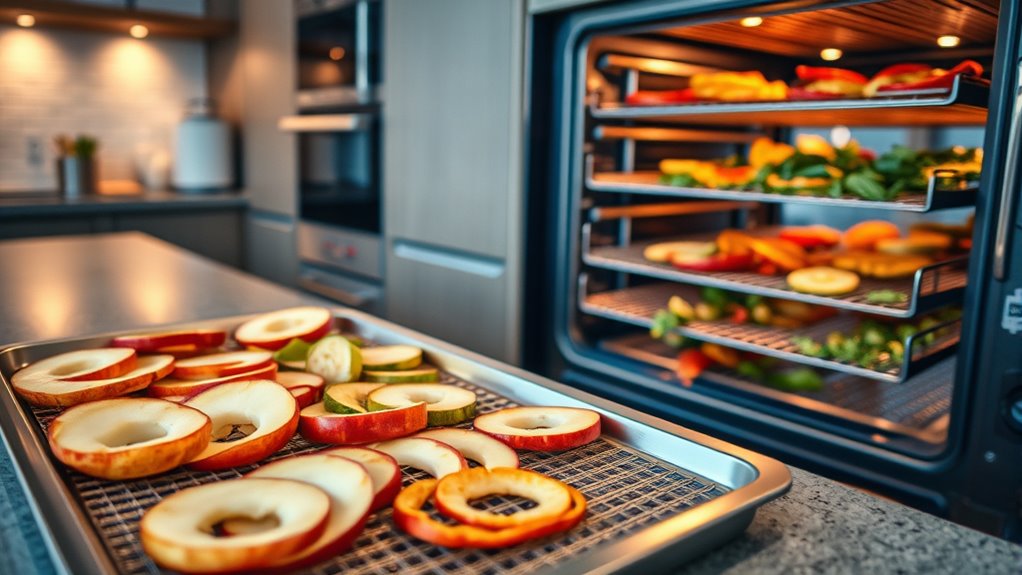
Using your oven or a dedicated dehydrator, you can easily dehydrate a variety of foods at home. Start by selecting ripe, fresh produce or quality meats. Wash and thoroughly dry your items to guarantee no excess moisture is left on the surface, which can interfere with the dehydration process. Slice fruits and vegetables into uniform pieces, roughly 1/8 to 1/4 inch thick, so they dry evenly. For meats, consider marinating or seasoning beforehand to enhance flavor and prevent bacteria growth. Arrange your slices in a single layer on baking sheets or dehydrator trays, leaving space between each piece to allow proper air circulation.
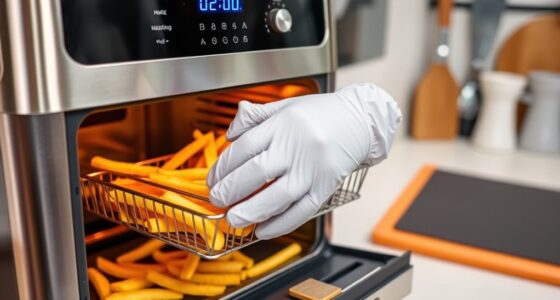
If you’re using an oven, set it to the lowest temperature possible—usually between 140°F and 170°F. Keep the door slightly ajar to allow moisture to escape, which helps speed up the dehydration process. Check on your food regularly to prevent over-drying or burning. If you’re using a dehydrator, follow the manufacturer’s instructions regarding temperature and time, which typically range from 4 to 8 hours depending on the food type and thickness of slices. Keep in mind that dehydration times vary, so patience is key. You’ll know your food is ready when it’s flexible but not sticky or moist. Additionally, understanding AI security considerations can help ensure your dehydration setup and storage methods remain safe and effective.
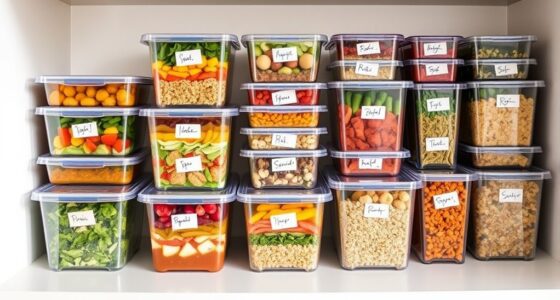
Dehydrated foods are incredibly convenient for making healthy snacks like fruit leather, trail mix, or jerky. They’re lightweight, portable, and perfect for on-the-go energy boosts. Properly stored in airtight containers or vacuum-sealed bags, your dehydrated treats can last months, maintaining their flavor and nutritional value. Dehydrating at home also gives you control over ingredients—no preservatives or added sugars—making your snacks genuinely healthy. Plus, it’s an eco-friendly way to reduce food waste by preserving surplus produce or meats that might otherwise spoil. Overall, dehydrating food is a smart, efficient method that enhances your food preservation skills and offers wholesome snack options for any occasion.
Frequently Asked Questions
Can I Dehydrate Wet Herbs Without Blanching First?
Yes, you can dehydrate wet herbs without blanching first, but it’s not ideal for herb preservation or flavor retention. Blanching helps stop enzyme activity and preserve vibrant flavors. If you skip it, make sure to gently wash and pat herbs dry thoroughly. Dehydrating wet herbs without blanching may lead to mold or uneven drying. For best results, lightly blanch, then dehydrate to maintain their flavor and quality.
How Do I Prevent Food From Sticking During Dehydration?
Your food won’t stick like glue if you take simple steps. Spray non-stick sprays on your trays or use parchment paper to create a barrier. This prevents sticking and makes removal a breeze. Make certain slices are evenly spaced and not overlapping, as overcrowding can cause food to cling. With these tips, dehydration becomes smooth sailing, and you’ll have perfectly dried snacks without any frustrating messes.
What’s the Best Way to Store Dehydrated Foods Long-Term?
To store dehydrated foods long-term, you should use airtight containers or vacuum sealing to keep out moisture and air. Make certain your foods are completely dry before sealing, as residual moisture can cause spoilage. Store the containers in a cool, dark place to maximize shelf life. Regularly check for signs of moisture or mold, and reseal if needed. Proper storage preserves flavor, texture, and nutritional value over time.
Can I Dehydrate Foods With High Water Content Like Watermelon?
Yes, you can dehydrate foods with high water content like watermelon, but it takes longer and requires careful attention. Watermelon dehydration involves removing the moisture slowly to prevent spoilage. Slice the watermelon thinly and use a dehydrator or oven set to a low temperature. Keep in mind, high water dehydration is more challenging, so patience is key to achieve good results. Proper storage afterward will help preserve your dehydrated watermelon.
How Do I Troubleshoot if My Food Isn’t Drying Evenly?
Oh, the irony—your food isn’t drying evenly? First, check your oven temperature; it might be fluctuating or set too high, causing dehydration unevenness. Spread your food in a single layer, ensuring proper air circulation. Rotate trays if possible, and use a thermometer to monitor oven consistency. Making these tweaks helps your snacks dry uniformly, turning unevenness into perfectly dehydrated treats.
Conclusion
So, now you know how to turn your fresh produce into long-lasting snacks using just your oven or dehydrator. Who knew that drying food could be so easy and handy? Just imagine, all those juicy fruits and crisp veggies, transformed into shelf-stable treats—no fancy gadgets needed. Ironically, the simplest method might be hiding right in your kitchen. So go ahead, dehydrate away, and enjoy the surprisingly effortless art of food preservation!