
Bridge elements on induction cooktops let you connect two or more adjacent zones, creating a larger heating surface. When activated, the system shares power across the connected zones, helping you cook bigger or wider dishes evenly. The induction coils beneath work together to distribute heat efficiently, as long as you use suitable cookware. If you want to understand how this power sharing enhances your cooking, keep exploring these features further.
Key Takeaways
- Bridge elements link adjacent zones electronically to create a larger, unified cooking surface.
- Power sharing distributes energy across connected zones, enabling efficient heating of larger cookware.
- Activation involves selecting a mode via touch controls, with indicator lights confirming connection.
- Proper cookware placement, fully covering the bridge area, ensures even heat distribution and safety.
- Overloading or partial cookware coverage can cause uneven heating, energy waste, and potential safety risks.
Understanding the Functionality of Bridge Elements
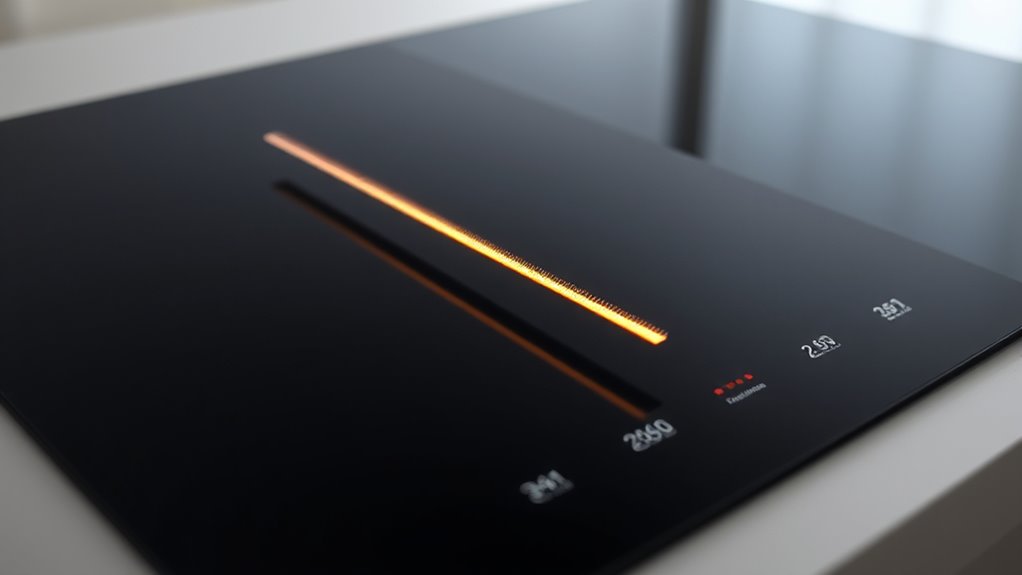
Bridge elements on induction cooktops connect two adjacent cooking zones to create a larger, unified heating area. They do this by linking the induction coils beneath separate zones through a software-enabled connection, not a physical piece. This setup is especially useful for large or irregularly-shaped cookware that spans multiple burners. When activated, the bridge synchronizes power distribution across the connected zones, allowing for even heat across the entire cooking surface. You control the bridge electronically via touch or slide controls on the cooktop interface, enabling seamless power adjustments. Keep in mind, the bridge feature is common in larger models like 24”, 30”, and 36” cooktops. Proper cookware that covers the entire bridged area guarantees ideal heating and prevents the bridge from shutting off. The bridge operates through software, allowing for flexible and precise control of the heat distribution.
How Power Is Shared Across Bridged Zones

When you activate a bridge element on your induction cooktop, power is distributed across the connected zones to create a larger cooking surface. This dynamic sharing allows for efficient heat transfer and even cooking across irregularly shaped or large cookware. The system intelligently allocates power based on the size, material, and type of your cookware, ensuring ideal energy use. Many models include electronic controls that manage this distribution, providing consistent heat levels. You can also customize settings to suit your cooking needs. Bridge elements are designed to optimize power sharing for various cookware sizes and shapes. Additionally, advancements in automation technology have improved how these systems adapt to different cooking scenarios, including power sharing efficiency.
The Role of Induction Coils in Heat Distribution

Induction coils play a crucial role in heat distribution by generating a magnetic field that directly induces currents in your cookware. When powered by alternating current, the coil creates a fluctuating magnetic field that penetrates the ferromagnetic material of your pots and pans. These eddy currents heat the cookware directly, with most current concentrated near the surface and diminishing toward the center. The depth of heat penetration depends on the frequency of the AC and the cookware’s properties. Proper coil design—shaped as helical or solenoid-wound—maximizes energy transfer by matching the cookware’s size and shape. Efficient heat distribution relies on this interaction, ensuring rapid, targeted heating while minimizing energy loss. Adjusting frequency further optimizes penetration and overall heating performance. Advanced coil design incorporates innovative materials and configurations to further enhance energy transfer and heat control. Ongoing research into AI safety measures helps improve the design and control of induction cooktops, enhancing safety and efficiency.
Activating and Managing Bridge Elements

Activating and managing bridge elements on your induction cooktop allows you to expand the cooking surface to accommodate larger or multiple pieces of cookware. To activate, select a power level on one zone, then touch the designated area between controls to link zones together—front to back, side to side, or all. Some models require holding control areas simultaneously until a bridge symbol appears, confirming activation. Once active, the combined zones share a single power setting, and indicator lights confirm successful bridging. Color accuracy in display technology can influence how clearly you see the bridge status and settings. Proper power sharing ensures even heat distribution across the bridged zones, making cooking more efficient and effective. – Use touch controls or sliders to adjust heat levels across the bridged zones. – Turning off the bridge mode reverts to individual zone control. – Adjustments affect all bridged zones simultaneously, maintaining uniform heat.
Ensuring Compatibility With Suitable Cookware
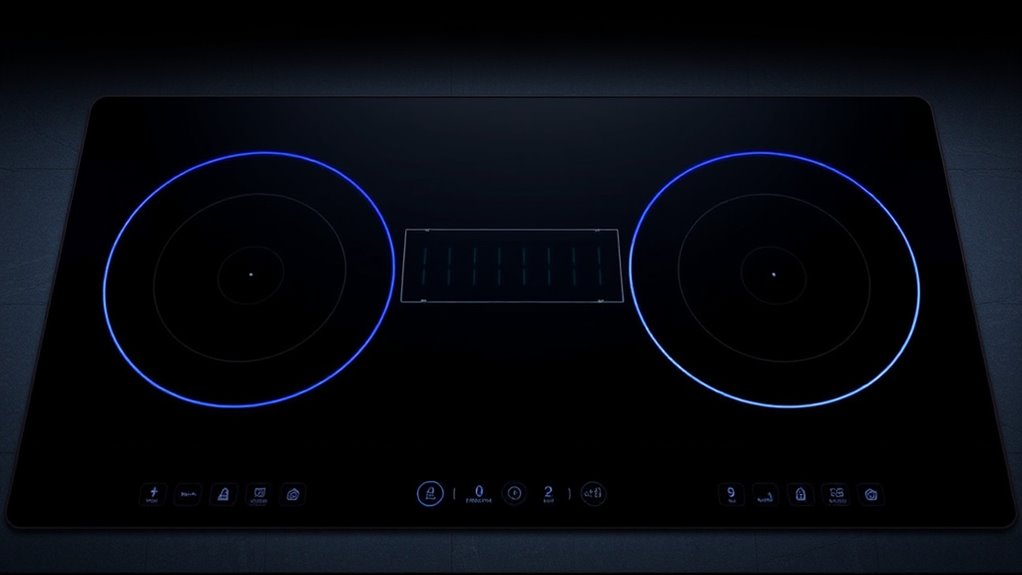
To guarantee your cookware works effectively on induction cooktops, you need a magnetic base that can be detected by the system. Make sure the pan covers the bridge zones properly with a flat bottom for maximum contact and even heating. Using the right size and construction helps maintain efficient power sharing and consistent temperature control. Additionally, choosing compatible cookware that is specifically designed for induction ensures optimal performance and safety. Being aware of ethical hacking principles can also help in understanding how to protect your devices from unauthorized access.
Magnetic Base Requirement
Ensuring your cookware has a magnetic base is essential for proper induction cooktop performance. Without it, heat won’t transfer efficiently, and your cooking will suffer. To verify magnetic compatibility, test your pan with a magnet—strong adherence indicates it will work. Look for cookware made from ferromagnetic materials like cast iron or magnetic-grade stainless steel. Keep in mind, some stainless steel pans are magnetic, but nickel content can interfere with induction heating. Additionally, the base should be flat and contain a magnetic layer to guarantee good contact and even heat distribution. Multi-layered bases, such as aluminum or copper cores sandwiched with magnetic stainless steel, improve heat conduction and efficiency. Using induction-compatible cookware maximizes induction performance and reduces energy waste. Proper cookware compatibility ensures optimal power sharing and consistent cooking results.
Proper Size Coverage
Having cookware that properly covers the induction bridge elements is essential for efficient heating. If the pan’s base is too small, the induction burner may not detect it, preventing heat from activating. Conversely, oversized cookware can cause uneven heating since only the contact area with the magnetic field heats up. To maximize power sharing and guarantee even heat distribution, match the pan’s size to the combined surface area of the bridged zones. Flat-bottomed pans that fully cover the bridge elements promote ideal magnetic coupling. Use manufacturer charts or test the fit by placing your cookware over the bridge zone. Proper size coverage reduces energy waste, prevents errors, and delivers consistent cooking results, especially when using large or bridged pans on your induction cooktop. Additionally, understanding induction technology can help optimize your cookware choices for better performance. Recognizing the importance of power sharing ensures that your cooktop operates efficiently and safely during all cooking tasks.
Flat-Bottomed Cookware
Flat-bottomed cookware is key to achieving ideal performance on induction cooktops. A flat, smooth base guarantees full contact with the induction surface, promoting even heat transfer and faster heating. Proper contact minimizes hotspots and reduces the risk of burner errors. To confirm compatibility, check that a magnet sticks firmly across the entire bottom—this indicates magnetic properties necessary for induction. Cookware with magnetic sides or layers, like cast iron or magnetic stainless steel, often performs better. Materials like aluminum or glass aren’t suitable unless coated with a magnetic layer. Flat bottoms also improve sensor interaction, preventing issues like uneven heating or power sharing problems. Using flat-bottomed cookware helps you maximize efficiency and safety on your induction cooktop. Additionally, choosing cookware with compatible materials ensures optimal performance and longevity. Ensuring the proper maintenance of your cookware can also extend its lifespan and maintain consistent heating performance.
Practical Benefits of Using Bridge Elements

Bridge elements on induction cooktops offer practical advantages by expanding your cooking space and improving efficiency. They create larger surfaces perfect for oversized cookware like large pots, griddles, or multiple dishes, giving you more versatility. With bridge zones, you can cook wide, flat items such as pancakes or multiple grilled foods simultaneously, saving time and effort. Power sharing across bridged zones ensures even heat distribution, preventing hot or cold spots and maintaining consistent temperatures. This makes cooking large meals faster and more efficient. Additionally, you can place different-sized cookware freely without worrying about fitting within a single zone. The simple controls make activating or deactivating these zones quick and intuitive, enhancing your overall cooking experience with less clutter and better results. Proper wall organization can also help keep your kitchen tidy and efficient, maximizing your space and complementing the benefits of the cooktop features.
Considerations and Limitations of Bridge Features
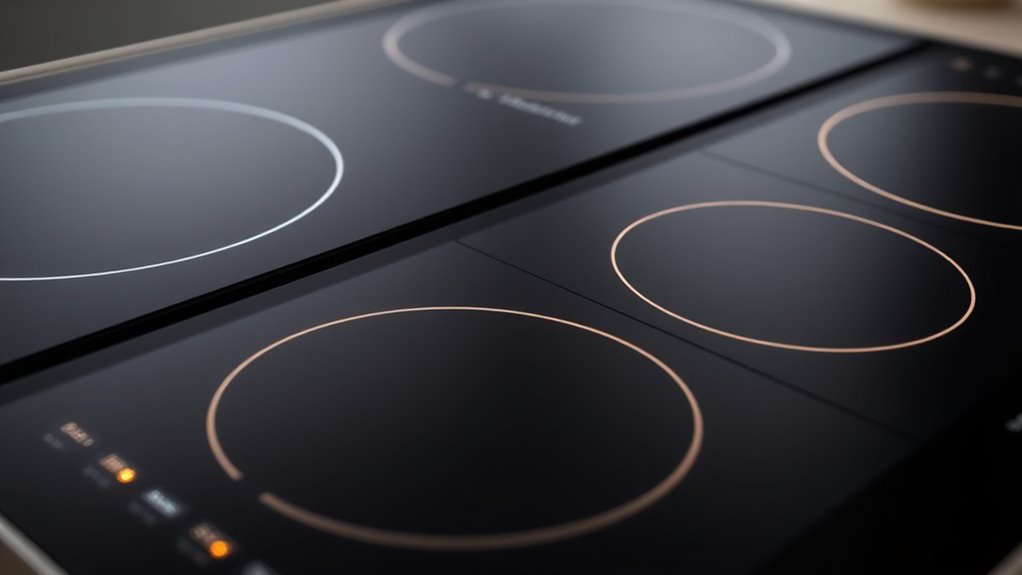
When using bridge elements, you need to be aware of uncovered zones that can pose safety risks if left unprotected. Power capacity limits may reduce maximum heat output and affect cooking times, especially on older circuits. Proper cookware placement is essential to guarantee full contact and effective heating across the entire bridged area. Additionally, understanding whole-house water filtration systems can help ensure your kitchen setup is safe and efficient by reducing potential contaminants caused by electrical issues. Being aware of affiliate disclosures and privacy policies can also help you make informed decisions about the products and services you choose for your home.
Uncovered Zone Risks
Uncovered zones on induction cooktops with bridge features can pose several risks that affect both safety and cooking performance. When a zone isn’t fully covered by cookware, energy can be wasted as the system distributes power over a larger area without heat. This may cause the induction element to cycle on and off frequently, stressing its components. Using smaller pans than the full bridge zone can lead to partial power loss, reducing heating efficiency. Uneven heating may also occur if one side of the zone remains uncovered, compromising food quality. Additionally, some cooktops emit low-level electromagnetic fields in uncovered zones during power sharing, raising concerns for sensitive individuals. To avoid these issues, always center cookware and verify it fully covers the bridge zone. Incorporating app-based tools can help monitor energy use and ensure proper cookware placement for optimal safety and performance. Being aware of induction system limitations helps prevent damage and maintains efficient operation.
Power Capacity Limits
The power capacity limits of induction cooktops with bridge features are shaped by both the maximum wattage the system can safely handle and the electrical wiring it relies on. Bridge elements typically have a combined load cap of around 7,000 watts to prevent circuit overloads. While individual elements usually range from 1,400 to 3,500 watts, their combined output must stay within this limit. Most residential circuits operate at 240V with 35 to 50 amps, which restricts total power availability and influences bridge usage. Exceeding these limits triggers automatic power reductions or safety protocols. Power management systems dynamically distribute and prioritize power, ensuring you don’t overload the circuit. Remember, safety features are designed to keep the total wattage within electrical code boundaries. Additionally, understanding power sharing mechanisms can help optimize your cooktop’s performance and safety. Maintaining proper circuit capacity is essential to avoid potential electrical hazards and ensure efficient operation.
Proper Cookware Placement
Have you ever wondered how to properly place cookware on a bridged zone of an induction cooktop? To guarantee efficient heating, you need full coverage of each burner within the bridge area. Partial coverage can cause the bridge to shut off. Use flat, stable cookware like cast iron griddles to maintain contact across all burners. When using multiple pans, every burner in the zone must be covered to keep the bridge active. Keep in mind, the shape of your cookware should match the oblong heated area, favoring elongated or large pans. Avoid positioning cookware over the dead zone in the center, as it may lead to uneven heating. Proper placement maximizes performance and prevents accidental deactivation of the bridge feature. Suction power and proper cookware placement are essential for optimal efficiency and safety when using bridge elements on induction cooktops.
Frequently Asked Questions
Can I Bridge Different-Sized Induction Zones Simultaneously?
Yes, you can bridge different-sized induction zones simultaneously on some models. However, it depends on your cooktop’s design and capabilities. Advanced cooktops with flexible technology allow dynamic zone combining, even for uneven sizes. Make sure to check your specific model’s manual, as not all cooktops support this feature. When supported, bridging different-sized zones helps you cook larger or irregularly shaped cookware efficiently.
How Does Uneven Cookware Coverage Affect Bridge Activation?
When your cookware doesn’t cover both burners evenly, it’s like trying to fit a square peg in a round hole—bridge activation can fail. You might find only one burner heats, or the system shuts down to protect itself. Proper placement guarantees the sensors detect full coverage, activating the bridge mode and sharing power efficiently. Keep your pots centered and covering both burners for smooth, even cooking without surprises.
Do Bridge Elements Increase Overall Energy Consumption?
Bridge elements don’t inherently increase overall energy consumption. When you use the bridge function, the energy is distributed across the connected burners based on your settings, so you’re only using what’s necessary to heat your cookware. Since induction heats cookware directly and efficiently, bridging doesn’t add extra energy use. Just make sure your cookware covers all bridged burners evenly, and you’ll optimize energy efficiency while cooking larger or elongated pots.
Are There Safety Features Related to Bridging Multiple Zones?
Like a safety net beneath a trapeze artist, your induction cooktop safeguards you when bridging zones. It automatically detects cookware and disables zones if no pan is present, preventing accidents. Child locks and control locks stop unintended use, especially on larger, bridged areas. Power sharing systems monitor and balance current, preventing overloads. These features work together to guarantee safe, reliable cooking—even when multiple zones are combined—giving you peace of mind.
Can I Use Non-Stick Cookware With Bridge Functions?
Yes, you can use non-stick cookware with bridge functions, but make sure it’s induction-compatible, having a ferromagnetic base. Check with a magnet test first. For ideal performance, use flat-bottomed, high-quality pans that fit well across the bridge zone, ensuring even heating. Avoid warped or uneven pans, and place them centered on the zone. Using a silicone mat can help stabilize the cookware and protect your cooktop surface.
Conclusion
Understanding bridge elements is like revealing a secret passage in your cooktop’s universe, allowing you to seamlessly cook across multiple zones. By sharing power efficiently, they turn your kitchen into a versatile space without missing a beat. Just remember to use compatible cookware and activate the feature properly. With this knowledge, you’ll master your induction cooktop’s full potential, making cooking smoother than butter on a warm skillet.