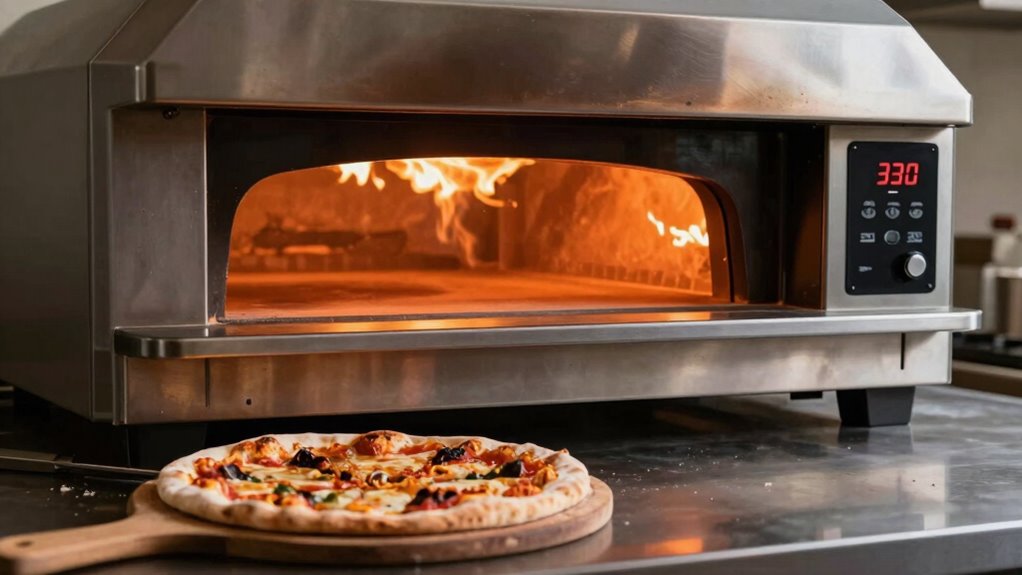

To avoid burning your pizza crust, preheat your oven for at least 30 minutes at 500°F to 550°F, making sure the stone or baking surface is evenly hot. Use an oven thermometer to verify the actual temperature since many home ovens aren’t accurate. Proper preheating guarantees even heat transfer, crispy crust, and prevents sticking or burning. Keep the timing steady, and you’ll get perfect results—continue on to discover even more tips to master the process.
Key Takeaways
- Preheat your oven at 500°F to 550°F for at least 30 minutes to ensure an evenly hot baking surface.
- Use an oven thermometer to verify accurate temperature and avoid under or over-heating.
- Proper preheating allows the stone to absorb maximum heat, preventing soggy or burnt crusts.
- Rushing the preheat process can cause uneven cooking; patience ensures a crisp, well-cooked crust.
- Longer preheat times for thicker stones enhance heat retention and baking consistency.
Preheating your pizza oven is a critical step to guarantee perfectly cooked pies, but knowing the right preheat times can be confusing. One key factor is understanding how to maximize stone baking, which is essential for achieving a crispy crust. When you use a pizza stone, it needs to be heated thoroughly to transfer heat evenly to your dough. Typically, allowing the stone to heat for at least 30 minutes at high temperatures—around 500°F to 550°F—is recommended. This ensures the stone becomes evenly hot, mimicking a traditional pizza oven’s floor, and prevents soggy or undercooked crusts. Keep in mind, the size and material of your stone influence heating time; thicker stones may require more time to reach ideal temperatures. Proper preheat duration is vital to ensure your stone reaches the necessary heat for optimal baking. Temperature calibration also plays a pivotal role in preheating. Many home ovens aren’t perfectly accurate, which can lead to inconsistent results. To avoid this, use an oven thermometer to verify your oven’s temperature settings. Once calibrated, you’ll have a better idea of how long to preheat and what temperature to set. For stone baking, it’s best to set your oven slightly higher than your target temperature if you know your oven runs cool. This way, the stone reaches the ideal heat for baking pizza without risking undercooked or burnt crusts. Regular calibration ensures that your oven’s displayed temperature matches the actual heat inside, giving you confidence that your pizza will turn out just right. Preheating isn’t just about reaching a certain temperature; it’s about doing so evenly. When you turn on your oven, give it ample time to stabilize at the desired heat, especially when using a stone. Proper preheat time allows the stone to absorb maximum heat, which is essential for creating that perfect crust. If you rush this process and start baking too soon, your pizza might stick to the stone or cook unevenly. Conversely, over-preheating can also cause burning, so sticking to recommended times based on your oven and stone type is key. Remember, patience during preheating pays off by producing that beautifully crisp, evenly cooked crust you’re aiming for.
Frequently Asked Questions
How Do Outdoor Weather Conditions Affect Preheat Times?
Outdoor weather conditions like humidity and wind can critically impact your pizza oven’s preheat times. High outdoor humidity slows heat transfer, making your oven take longer to reach the desired temperature. Wind effects can cause heat loss, requiring extra preheating time to stabilize the temperature. To make sure your oven heats efficiently, shield it from wind and consider indoor preheating if humidity is high, so your crust doesn’t burn or undercook.
Can I Preheat My Pizza Oven Overnight?
You can preheat your pizza oven overnight if it’s well-insulated and you’re mindful of fuel efficiency. Preheating slowly allows the oven to warm evenly, reducing strain on insulation and conserving fuel. Just make certain your oven is designed for long, gradual heating, and avoid leaving it unattended for too long. This way, you’ll enjoy a perfectly heated oven without risking damage or excessive energy use.
What Is the Best Temperature for Preheating Different Pizza Styles?
You should preheat your pizza oven to 450-500°F for thin-crust and Neapolitan styles, and around 600°F for thick, pan-style pizzas. During preheating, consider dough hydration—higher hydration needs slightly longer to heat evenly—and focus on topping placement, ensuring toppings don’t touch the oven’s heat source. This approach helps prevent burning while ensuring your crust stays perfect, no matter the pizza style.
How Do I Know When My Oven Is Fully Preheated?
Your oven is fully preheated when the preheat indicator reaches its target, and the oven thermometer hits your desired temperature. It’s like waiting for the stars to align — but faster! Always check the thermometer inside your oven, not just the dial, to be sure. Once it’s stable at the set temp and the preheat indicator signals go off, you’re ready to bake that perfect pizza without burning the crust.
Are There Safety Risks Associated With Rapid Preheating?
Rapid preheating can pose oven safety risks if you’re not cautious. Preheat hazards include potential burns from hot surfaces or sudden temperature changes, and the risk of fire if the oven isn’t used properly. Always follow manufacturer instructions, keep flammable objects away, and avoid opening the oven door too often during preheat. Staying attentive guarantees safe oven safety practices while enjoying quicker preheat times.
Conclusion
So, next time you’re craving a perfectly crispy pizza, remember that preheating your oven just right can make all the difference. It’s funny how a few extra minutes can be the key to avoiding a burnt crust and achieving that restaurant-quality result. Sometimes, it’s those small details—like timing—that surprise us with the best outcomes. Keep an eye on your oven, and before you know it, you’ll be enjoying pizza that’s just right every time.