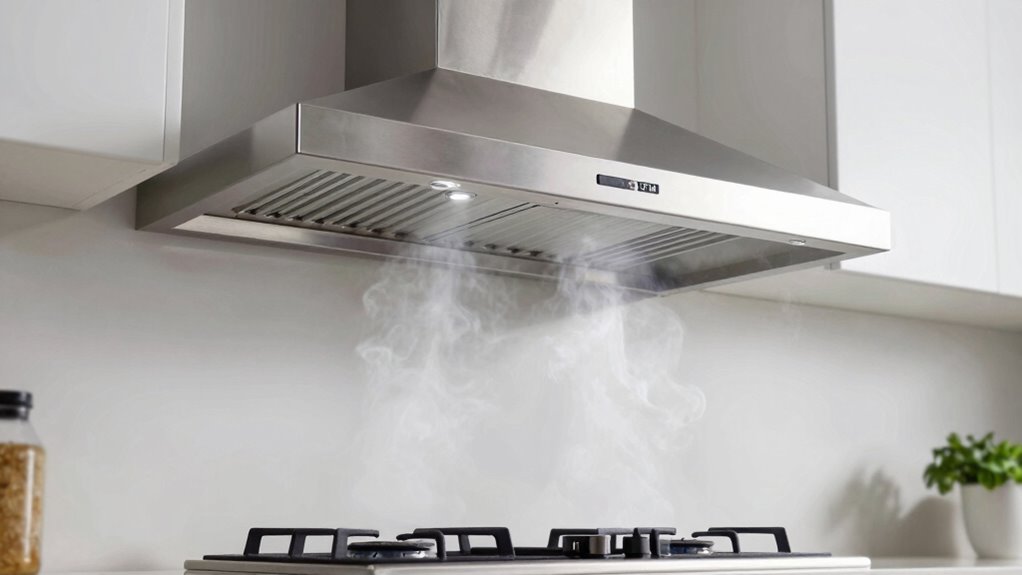

To prevent a smoky kitchen, match your range hood’s CFM to your cooking needs. For most homes, a hood with 300-400 CFM works well, but larger or more intense cooking may require 600 CFM or more. Keep in mind, higher CFM often means more noise, so aim for a balance. Proper ducting also boosts efficiency, potentially reducing the needed CFM. Want to learn how to find the perfect size? Keep going to find out more.
Key Takeaways
- Match the CFM rating to your kitchen’s size and cooking habits for effective smoke removal.
- Larger or open kitchens typically require higher CFM to prevent smoke buildup.
- Balance CFM with noise levels; aim for less than 6 sones for comfortable operation.
- Proper ductwork and installation improve ventilation efficiency, reducing the need for excessively high CFM.
- Avoid overestimating CFM to prevent noisy operation while ensuring your kitchen remains smoke-free.
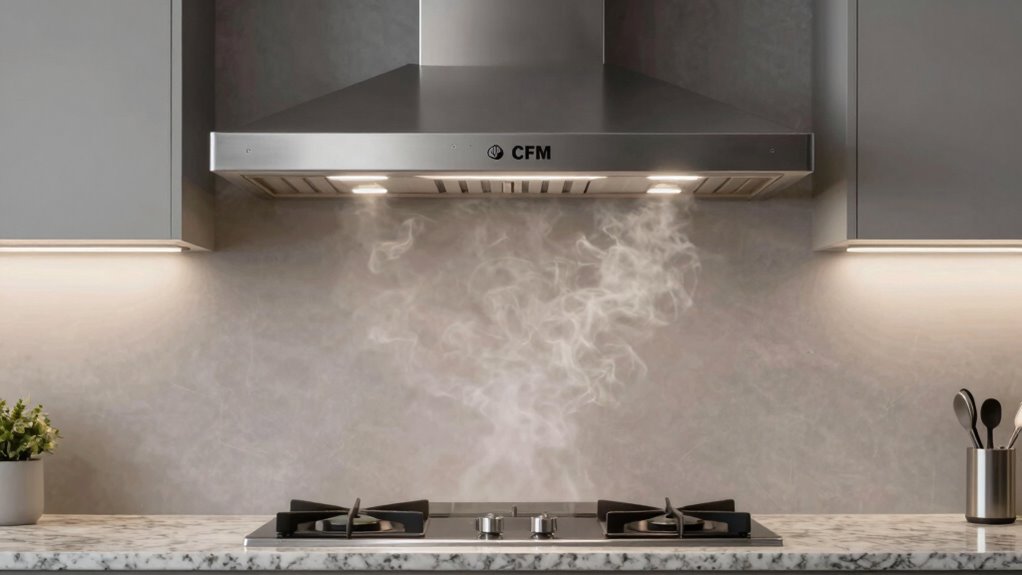
Are you unsure about how to choose the right range hood CFM for your kitchen? If so, you’re not alone. Picking the correct CFM rating is vital to ensure your kitchen stays fresh and free of lingering smoke or odors. The key lies in understanding how CFM relates to ventilation efficiency and noise levels. The right balance helps your range hood do its job without turning your cooking space into a noisy, uncomfortable environment.
Choosing the right CFM balances effective ventilation with quiet operation for your kitchen.
First, consider the size of your kitchen and how much cooking you do. Larger kitchens or those with open layouts require higher CFM ratings because they need more airflow to effectively remove smoke and odors. A small apartment kitchen, on the other hand, might do just fine with a lower CFM. But size isn’t everything. You also need to think about your cooking habits. If you often cook greasy, smoky, or strongly flavored foods, a higher CFM ensures that fumes are quickly vented out, boosting ventilation efficiency. This keeps the air clean and prevents lingering smells from settling in furniture or curtains.
However, higher CFM ratings come with a trade-off: noise levels. The more powerful the fan, the louder it tends to be. You don’t want a range hood that sounds like a jet engine every time you cook. The trick is to find a model that offers sufficient airflow without sacrificing comfort. Manufacturers often specify noise levels in sones, and aiming for something below 6 sones at maximum CFM will usually keep the noise manageable. Remember, a quieter hood with slightly lower CFM can sometimes be more effective in your specific space than a loud, overly powerful model that causes constant distraction.
Additionally, understanding how ventilation efficiency is affected by factors like ductwork and airflow resistance can help you optimize your setup and select an appropriate CFM rating. Properly installed ducting with minimal bends improves ventilation efficiency without needing an excessively high CFM. If your ductwork is short and straight, you might get away with a lower CFM because the air flows more easily. Conversely, long or complex duct runs may require a higher CFM to compensate for resistance and ensure smoke and odors are effectively removed.
Ultimately, choosing the right range hood CFM is about balancing ventilation efficiency and noise levels to suit your kitchen’s size and your cooking style. You want a hood that clears the air effectively but doesn’t create a constant noise disturbance. By considering these factors, you’ll find a model that keeps your kitchen smelling fresh and your cooking experience enjoyable.
Frequently Asked Questions
How Often Should I Clean My Range Hood Filter?
You should clean your range hood filter at least once a month to maintain filter maintenance and guarantee it works efficiently. If you cook frequently or notice grease buildup, consider cleaning it every two weeks. Regular cleaning prevents grease accumulation, reduces fire hazards, and keeps your kitchen smelling fresh. Remember, proper cleaning frequency helps your range hood perform at its best and prolongs its lifespan.
Can a Higher CFM Cause Noise Issues?
A higher CFM is like revving a powerful engine—noise levels can increase, making your kitchen feel like a noisy racetrack. While more airflow improves ventilation, it can also cause installation concerns, such as increased vibration or louder operation. If you want a quieter kitchen, choose a CFM that balances effective smoke removal with manageable noise, and guarantee proper installation to minimize unwanted sound issues.
Is Ductless Range Hood Ventilation Effective?
Ductless range hoods can provide decent ventilation effectiveness for removing odors, but they’re generally less effective than vented models. Since they rely on filters to trap smoke and smells, you might notice less odor removal, especially during heavy cooking. If you want better odor control, consider a vented hood. However, if ductwork isn’t feasible, a ductless hood still offers a convenient solution for improving air quality.
How Do I Determine the Right CFM for My Kitchen Size?
Did you know that proper kitchen ventilation can reduce indoor air pollution by up to 90%? To find the right CFM, measure your kitchen’s square footage and multiply by 100. This airflow calculation guarantees your range hood effectively removes smoke, odors, and grease. For example, a 10×12-foot kitchen needs at least 1200 CFM. Choosing the right CFM keeps your kitchen fresh and smoke-free during cooking.
Are There Energy-Efficient Range Hoods With High CFM?
Yes, you can find energy-efficient fans with high CFM that deliver strong performance without wasting energy. Look for range hoods featuring high-performance motors designed to maximize airflow while minimizing power consumption. These hoods often use advanced technology to balance high CFM with energy efficiency. By choosing models with energy-efficient fans, you get effective ventilation and lower energy bills, making them a smart choice for a clean, smoky-free kitchen.
Conclusion
In the end, choosing the right range hood CFM creates clear, clutter-free cooking spaces. By balancing brightness with brilliance, you banish bad smells and smoky squalor, turning your kitchen into a clean, cheerful chamber. Remember, the perfect CFM count is your key to a pristine, pest-free environment. So, suit your space, specify your needs, and savor a spotless, smoke-free sanctuary every time you cook.