
To keep your fridge running efficiently and your food fresh, avoid storing dairy, eggs, and sensitive condiments in the door. The door experiences temperature fluctuations that speed up spoilage for these items. Instead, place them on middle or lower shelves where temperatures remain more stable. Proper organization not only preserves your food longer but also helps your fridge work smarter. If you want to guarantee maximum freshness, you’ll find more helpful tips below.

Get home appliances delivered free with Prime
- Fast, free delivery on millions of items
- Prime Video, Amazon Music and more included
- Member-only deals all year
Key Takeaways
- Store dairy, eggs, and delicate items on middle or lower shelves for consistent, cooler temperatures.
- Keep condiments like ketchup and mustard in the door; avoid placing perishable foods there.
- Frequent door openings cause temperature swings that can spoil sensitive foods stored in the door.
- Improper storage of perishables in the door accelerates spoilage and bacterial growth.
- Organize foods by zones to maintain optimal temperature and prolong freshness.
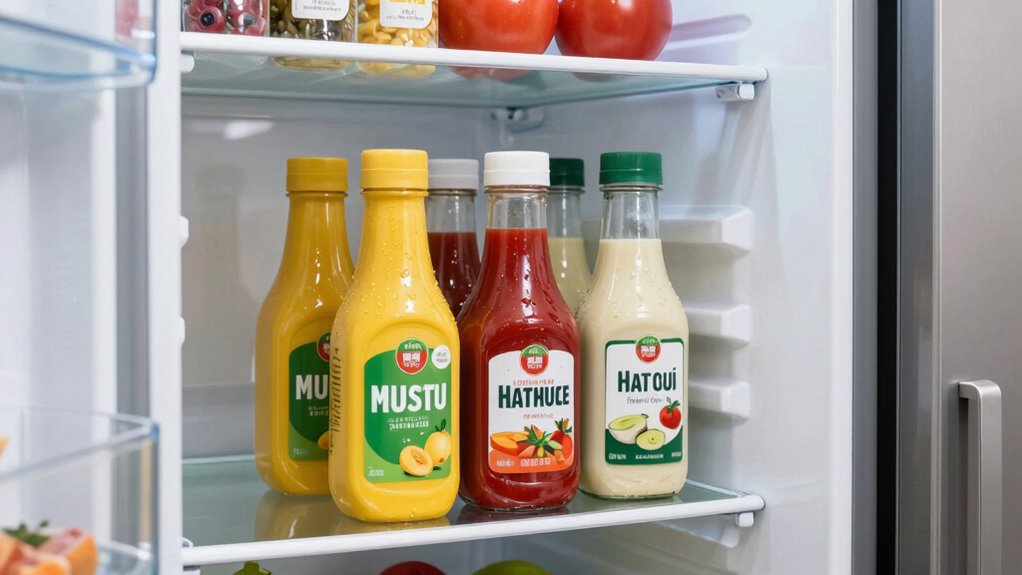
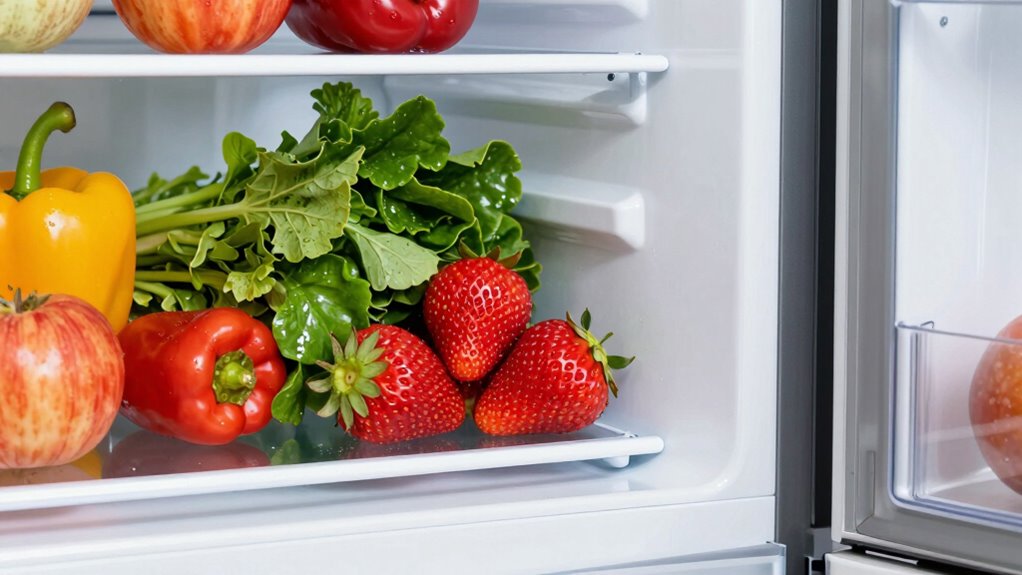
The refrigerator door might seem like a convenient spot to store frequently accessed items, but some foods don’t belong there. This common habit can actually compromise food preservation tips and impact your refrigerator’s efficiency. The door is the warmest part of your fridge, so storing sensitive items like dairy, eggs, or condiments there can cause them to spoil faster. Instead, reserve this space for sturdier, less perishable products such as bottled water, juice, or certain condiments that tolerate temperature fluctuations. Proper refrigerator organization isn’t just about neatness; it’s about maintaining ideal conditions for your food’s freshness and safety.
When you store perishable items like milk, yogurt, or leftovers in the door, they’re exposed to temperature swings every time you open and close the fridge. This constant fluctuation can accelerate spoilage and promote bacterial growth. For better food preservation tips, keep dairy products on the middle or lower shelves where temperatures stay more consistent. Eggs should be stored in their original carton on a middle shelf rather than the door, as they’re sensitive to temperature changes and need stable conditions to stay fresh longer.
Condiments like ketchup, mustard, and salad dressings can generally be stored in the door because they contain preservatives that help keep them safe at higher temperatures. However, once opened, it’s best to check storage guidelines on the label. For items that require refrigeration, such as mayonnaise or opened jams, it’s smarter to keep them on a dedicated shelf rather than in the door, ensuring they stay fresh longer and don’t spoil prematurely.
To maximize your refrigerator’s performance and extend the lifespan of your foods, focus on organizing it efficiently. Group similar items together and designate specific zones for dairy, vegetables, meats, and beverages. This not only helps you find things quickly but also ensures each item is stored at the right temperature. Implementing good refrigerator organization is a key food preservation tip that reduces waste and saves money over time. Additionally, understanding how the refrigerator temperature fluctuates helps in choosing the best storage spots for your groceries.
As an affiliate, we earn on qualifying purchases.
Frequently Asked Questions
How Does Storing Certain Foods in the Door Affect Their Freshness?
Storing certain foods in the door exposes them to temperature fluctuations and moisture exposure, which quickly diminishes their freshness. The door’s frequent opening causes inconsistent temperatures, making items like dairy and condiments spoil faster. Moisture exposure from condensation also accelerates spoilage and affects texture. To keep your foods fresh longer, store sensitive items away from the door, where temperatures stay more stable and moisture levels are controlled.
Are There Specific Beverages That Shouldn’T Be Stored in the Door?
You shouldn’t store beverages like milk, juice, or soda in the door, as temperature fluctuations cause inconsistent beverage temperature and drink condensation. When you keep drinks in the door, they experience more temperature swings, leading to quicker spoilage and flavor loss. For ideal freshness, store these beverages on a shelf inside the fridge, where the temperature remains steady, preventing condensation and maintaining the quality of your drinks longer.
Can Storing Eggs in the Door Impact Their Safety?
Storing eggs in the door can affect their safety due to temperature fluctuations, which isn’t ideal. Door storage effects mean eggs aren’t kept at a consistent, cool temperature, increasing the risk of bacterial growth. To guarantee egg safety, keep eggs in the main body of your fridge where the temperature stays steady. This helps prevent spoilage and potential foodborne illnesses, keeping your eggs fresh and safe to eat.
How Does Door Storage Influence Refrigerator Energy Efficiency?
A stitch in time saves nine, and that’s true for your fridge too. Storing foods in the door affects energy consumption because it causes temperature fluctuations, making the fridge work harder. This reduces temperature stability, leading to higher energy use. Keep perishables in the main compartments to maintain consistent cooling, which saves energy and keeps your food fresher longer. Proper storage helps your fridge run efficiently and cut down on power bills.
What Are the Best Alternative Storage Spots for Condiments?
You should store condiments on a dedicated shelf inside your fridge, not the door. This keeps temperature more consistent and prevents spoilage. Use shelf organization to keep condiments easily accessible and avoid overcrowding, which can affect cooling efficiency. By placing condiments away from the door, you maintain a stable environment, ensuring they stay fresh longer and your fridge runs efficiently.
Conclusion
Think of your fridge like a delicate palace—each item has its place to stay fresh. By avoiding placing these foods in the door, you’re guarding your cooling fortress like a wise guardian. Just as a captain keeps the ship’s helm steady, keeping your perishables properly stored guarantees they last longer and stay flavorful. Don’t let haphazard placement turn your fridge into chaos; instead, treat it like a trusted vault, preserving freshness with intention.
NFL season / tailgating Picks
team gear
As an affiliate, we earn on qualifying purchases.