Condensation in your beverage fridge happens when warm, humid air enters and touches cold surfaces, causing moisture to form. Frequent door openings, temperature fluctuations, or worn door seals let in more moisture, increasing condensation. To stop this, keep the door closed tightly, check seals regularly, and maintain a steady temperature between 37°F and 42°F. If you want to learn more about preventing moisture buildup, there’s helpful advice ahead.
Key Takeaways
- Humidity enters the fridge when door seals are damaged or opened frequently, causing moisture buildup.
- Temperature fluctuations from improper settings or door openings promote condensation on cold surfaces.
- Warm or uncovered beverages introduce moisture, which condenses as they cool inside the fridge.
- Using moisture absorbers, maintaining proper airflow, and sealing containers help reduce internal humidity.
- Keeping the fridge door closed quickly and ensuring consistent, optimal temperature prevents condensation formation.
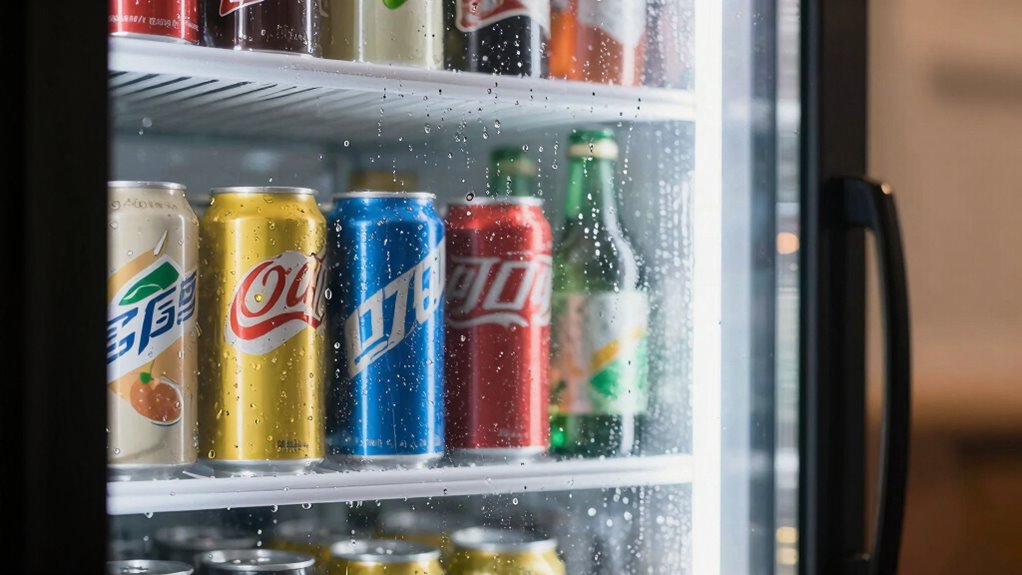
If your beverage fridge is developing condensation, it can be frustrating and potentially harmful to your drinks. This moisture buildup is often caused by humidity buildup inside the fridge, which occurs when warm, humid air enters and interacts with the cooler interior surfaces. When the warm air hits the cold walls or shelves, it cools rapidly, and the moisture condenses into water droplets. This process is especially common if your fridge experiences frequent temperature fluctuations or if the door is opened often, allowing humid air to seep in and disrupt the internal environment. As the temperature swings, the condensation can become more persistent, creating a cycle of moisture accumulation that’s hard to control.
To combat this, you need to understand that maintaining a stable temperature is key. When your fridge’s temperature fluctuates, it creates the perfect conditions for condensation to form. For example, if the thermostat isn’t functioning properly or if you set the temperature too high or too low, the internal environment becomes inconsistent. This inconsistency causes moisture to condense on the cooler surfaces, especially around the door seals or vents. To prevent this, always ensure your fridge maintains a steady temperature, ideally between 37°F and 42°F (3°C to 6°C). Using a reliable thermometer can help you monitor and adjust the settings accordingly, reducing the likelihood of humidity buildup and subsequent condensation.
Maintaining a steady temperature prevents condensation and keeps your drinks perfectly chilled.
Another effective step is to minimize the amount of humid air entering the fridge. Always close the door quickly and seal it properly to prevent outside air from infiltrating. Check the door seals regularly for any cracks or gaps; worn or damaged gaskets allow humid air to seep inside, increasing humidity levels. Additionally, avoid placing warm or uncovered beverages directly into the fridge, as they introduce moisture that can contribute to humidity buildup. Instead, let drinks cool to room temperature before storing them, and keep bottles or cans sealed tightly.
If condensation persists, consider using moisture absorbers like silica gel packs or dehumidifier packs designed for appliances. These can help absorb excess humidity and keep the internal environment dry. Regularly cleaning the fridge’s interior and vents also improves airflow, preventing areas where moisture can collect. Proper temperature regulation and good sealing practices are essential for creating a stable, low-humidity environment inside your beverage fridge, which not only prevents condensation but also preserves the quality of your drinks. By controlling temperature fluctuations and limiting humid air infiltration, you’ll keep your beverages perfectly chilled and condensation-free.

Vintage Refrigerator Door Replacement Seal e Shaped Door Seal gaskets for refrigerators(15feet)
- Size confirmation recommended before purchase: Ensure proper fit before buying
- Compatible with vintage refrigerators: Fits older refrigerator models
- Durable silicone material: High-quality, low-temp resistant
As an affiliate, we earn on qualifying purchases.
As an affiliate, we earn on qualifying purchases.
Frequently Asked Questions
Can Condensation Damage the Beverage Fridge’s Electronics?
Condensation can indeed damage your beverage fridge’s electronics by causing moisture corrosion, which may lead to malfunction or failure. When excess moisture accumulates, it seeps into electronic components, increasing the risk of short circuits and corrosion. To prevent this, keep the fridge dry and well-ventilated, and address condensation promptly. Regular maintenance and checking seals help reduce moisture buildup, safeguarding your fridge’s electronics from damage.
Is Condensation Harmful to Stored Beverages?
Condensation can be harmful to your stored beverages because excess moisture can lead to spoilage or mold, affecting hydration safety and beverage quality. When moisture builds up, it creates an environment that encourages bacteria growth and deteriorates the drink’s taste and freshness. To protect your beverages, keep the fridge well-ventilated, maintain proper temperature, and wipe away any moisture buildup regularly. This helps ensure your drinks stay safe and delicious.
How Often Should I Defrost My Beverage Fridge?
You should defrost your beverage fridge when you notice a buildup of ice or frost, typically every 3 to 6 months. Maintaining a regular defrost frequency as part of your maintenance schedule guarantees ideal performance and prevents excess condensation. If you see frost forming quickly or frequently, consider defrosting more often. Regularly check your fridge to keep it running efficiently and avoid potential issues caused by ice buildup.
What Types of Beverages Are Most Affected by Condensation?
Fruit beverages and canned drinks are most affected by condensation because they often have high moisture content and are stored in a cold environment. When warm, humid air hits these cold containers, condensation forms quickly, making them slippery and potentially damaging labels. To prevent this, keep the fridge at a consistent temperature and wipe down beverages regularly, especially if you notice excess moisture on fruit drinks or canned sodas.
Does Using a Dehumidifier Prevent Beverage Fridge Condensation?
Think of a dehumidifier as a sponge for moisture—yes, it can help prevent fridge condensation. Using a dehumidifier can improve condensation control techniques, but its effectiveness depends on your fridge’s environment. It’s not a guaranteed fix but works best in humid spaces. To truly stop condensation, combine a dehumidifier with good insulation and proper ventilation, creating a dry haven for your beverages.
Conclusion
Just like the steady flow of a river finds its way to the sea, understanding why your beverage fridge condensates helps you control it. By sealing gaps, maintaining proper temperature, and ensuring good airflow, you prevent unwanted moisture buildup. Remember, even the most well-guarded fortress can face leaks without vigilance. With these simple steps, you’ll keep your fridge dry and your drinks perfectly chilled—no more surprises, just smooth sailing.