A proper drain setup for your crawl space dehumidifier is essential to prevent flooding and keep moisture under control. Installing a continuous drain line guides excess water away automatically, reducing the risk of standing water, mold growth, and water damage. This setup ensures your dehumidifier works efficiently and minimizes manual maintenance. Proper drainage extends your equipment’s life and protects your home’s foundation. Keep going to discover how to set up your drain with confidence.

Get home appliances delivered free — and shop member deals
- Fast, free delivery on millions of items
- Access to Prime Big Deal Days deals on October 6–7
- Prime Video, Amazon Music and more included
Key Takeaways
- Properly installed continuous drain lines direct excess moisture away, preventing flooding and standing water in the crawl space.
- Using sealed, slope-graded drains ensures reliable water flow and reduces blockages or backups.
- Connecting drain lines to a sump pump or exterior drain system automatically removes excess water.
- Regular maintenance and inspections of drain lines prevent clogs that could cause water buildup.
- Incorporating backup drainage solutions protects against overload during heavy rains or pipe failures.
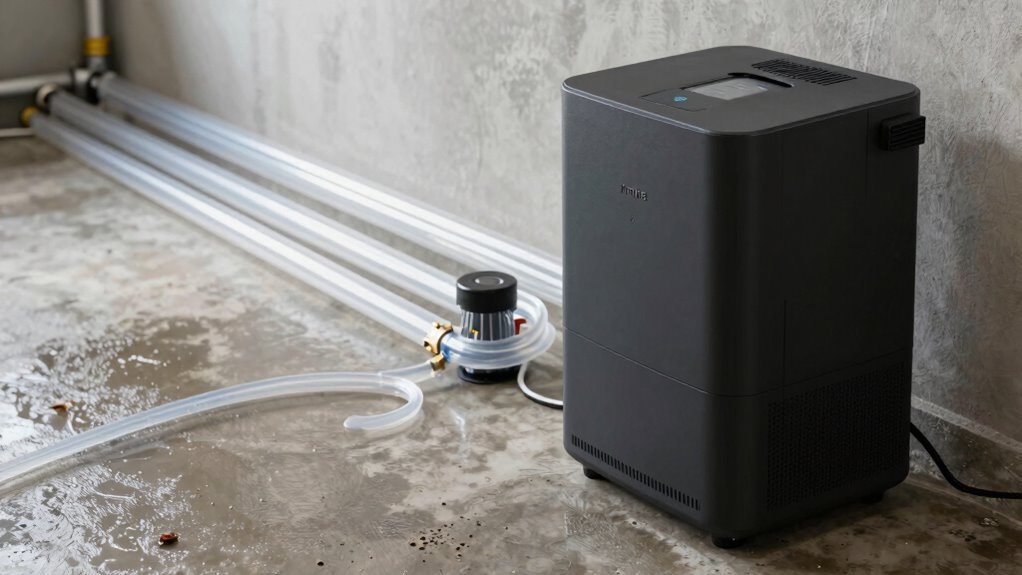
If you have a crawl space, keeping it dry is vital to prevent mold growth, wood rot, and pest problems. A dependable dehumidifier plays an essential role in maintaining ideal moisture levels, but the drain setup you choose can make all the difference. One of the smartest options is a dedicated drain system that prevents flooding and guarantees continuous operation without constant manual intervention. This setup not only safeguards your home’s foundation but also enhances energy efficiency and mold prevention, making your crawl space healthier and more cost-effective to maintain.
When you install a crawl space dehumidifier with a proper drain setup, you eliminate the need for frequent emptying or manual water removal. A continuous drain line directs excess moisture out of the space and away from your home, reducing the risk of water pooling and potential flooding. This automatic drainage system is especially useful during humid months or heavy rain, when moisture levels tend to spike. By guaranteeing that water is consistently drained, you protect your crawl space from standing water that can lead to wood rot and mold development.
Moreover, a well-designed drain setup supports energy efficiency. When your dehumidifier has a clear, unobstructed path to drain excess moisture, it can operate more effectively without overworking. This means it cycles less frequently and consumes less electricity, saving you money on energy bills. The less strain your dehumidifier endures, the longer it lasts, providing dependable performance over time. Plus, a properly installed drain reduces the risk of leaks or water damage to your home’s structure, which can be costly to repair.
Preventing mold is another key benefit of a proper drain setup. Mold thrives in damp environments, so by continuously removing moisture, you create an inhospitable environment for mold spores to settle and grow. This not only keeps your crawl space cleaner and healthier but also improves indoor air quality, as mold spores can migrate into your living spaces. Additionally, a dry crawl space minimizes the chance of wood rot and pest infestations, which are often attracted to moist environments.
In essence, investing in a crawl space dehumidifier with a reliable drain setup helps you maintain a dry, mold-free environment. It’s a simple yet effective way to protect your home’s foundation, improve energy efficiency, and prevent costly damage caused by excess moisture. When you implement a proper drainage system, you’re ensuring your crawl space remains a safe, dry space for years to come, with minimal maintenance required on your part. Proper drain setup is a crucial component in creating a reliable and effective moisture management system for your crawl space.
crawl space dehumidifier drain hose
As an affiliate, we earn on qualifying purchases.
As an affiliate, we earn on qualifying purchases.
Frequently Asked Questions
How Often Should I Clean the Dehumidifier’s Drain Pan?
You should clean your dehumidifier’s drain pan at least once every three to six months. Regular maintenance tips include checking for mold, debris, or standing water to prevent clogs or mold growth. When cleaning, use a mild detergent and rinse thoroughly. Keep an eye on your drain pipe materials—PVC or flexible hoses—ensuring they’re clear and free of obstructions to maintain proper drainage and avoid flooding.
Can I Install the Drain Setup Myself?
You can definitely try DIY installation of the drain setup, but picture the delicate maze of pipes and fittings—it’s easy to get lost. If you’re comfortable with basic plumbing, you might handle it yourself, but for peace of mind and to prevent costly mistakes, seeking professional assistance is prudent. They ensure everything’s sealed and functioning perfectly, giving you confidence your crawl space stays dry and flood-free.
What Safety Precautions Are Needed for Drain Setup?
You should prioritize electrical safety by turning off power before working on the drain setup to prevent shocks. Wear gloves and protective eyewear to avoid mold spores and debris. Make certain the drain is properly sealed and sloped to prevent leaks and mold growth. Use appropriate tools and follow manufacturer instructions carefully. Regularly inspect the drain for clogs or leaks to maintain safety and prevent flooding.
How Do I Troubleshoot Drain Clogs?
Ever wonder if your drainage system is secretly plotting against you? To troubleshoot drain clogs, start with a drain inspection—look for visible debris or buildup. Use a plunger or drain snake for clog removal, but be gentle! If these fail, consider flushing with a mixture of vinegar and hot water. Regular maintenance keeps your drain clear, preventing floods and ensuring your dehumidifier does its job smoothly.
What Is the Average Lifespan of a Dehumidifier Drain System?
The average lifespan of a dehumidifier drain system depends on the drain material and installation location. Typically, it lasts around 5 to 10 years, but plastic or PVC drains tend to wear out faster if exposed to extreme temperatures or UV rays. Proper installation in a sheltered, indoor location can extend its life. Regular inspections and maintenance help prevent clogs and leaks, ensuring your drain system functions smoothly for years.
Conclusion
By setting up the drain properly, you create a silent guard over your crawl space, preventing unexpected floods from turning your home into a soggy mess. Imagine a steady stream of water gracefully flowing away, keeping your space dry and secure, no matter the weather outside. With this simple yet essential step, you’ll breathe easy, knowing your home’s foundation is protected—dry, safe, and trouble-free, rain or shine.
Halloween Picks
halloween
As an affiliate, we earn on qualifying purchases.