If you’re tired of spots and streaks on your dishes caused by hard water, the best fix is to use a water softener or softening agents. These remove or neutralize minerals like calcium and magnesium that cause buildup, improving your dishwasher’s performance and leaving dishes sparkling. Regularly running descaling cycles with vinegar or detergents also helps dissolve existing deposits. Keep an eye on your water quality and explore effective solutions—you’re about to discover more tips that can make a difference.
Key Takeaways
- Installing a water softener unit effectively prevents mineral deposits that cause spotting on dishes.
- Using water softening agents or salts during washes helps neutralize minerals and reduce spots.
- Regularly running dishwasher cleaning cycles with vinegar or descaling agents dissolves mineral buildup.
- Ensuring spray nozzles are clear and water flow is optimal improves washing and reduces spotting.
- Combining water softening with routine maintenance extends dishwasher lifespan and keeps dishes spotless.
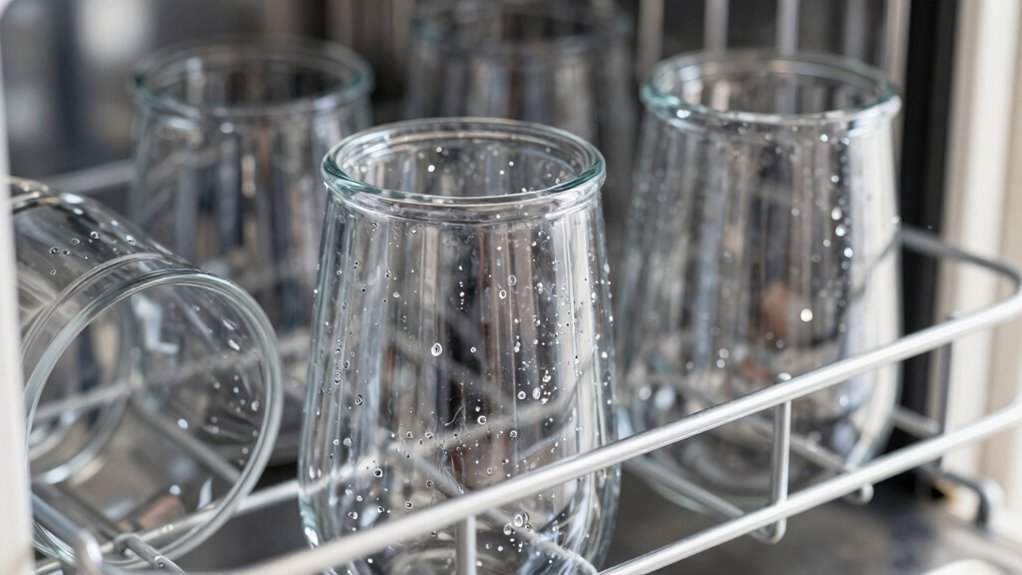
Hard water can cause significant problems for your dishwasher, leading to mineral buildup and reduced cleaning performance. When you use hard water, minerals like calcium and magnesium are deposited on your dishes and inside the machine. Over time, these minerals accumulate, forming stubborn deposits that hinder the dishwasher’s ability to clean effectively. This buildup can also clog spray nozzles, reduce water flow, and cause spots or film on your dishes. To combat these issues, water softening becomes essential. By installing a water softener or using a water softening agent, you remove or neutralize the minerals responsible for hard water. This process helps prevent mineral deposits from forming, ensuring your dishwasher functions smoothly and your dishes come out sparkling.
Using water softening methods is one of the most effective ways to maintain your dishwasher’s performance. A water softener typically exchanges calcium and magnesium ions for sodium or potassium ions, which don’t cause mineral buildup. With softened water, you’ll notice fewer spots and streaks on glasses, plates, and utensils. Plus, your dishwasher’s internal components will stay cleaner longer, reducing maintenance and prolonging its lifespan. Some dishwashers have built-in water softening systems, while others require standalone units or the use of water softening salts. Whichever method you choose, maintaining proper water softness is *vital* for preventing the mineral buildup that hampers cleaning. Ensuring proper water quality is crucial for dishwasher longevity and performance.
In addition to installing a water softener, you can occasionally run a cleaning cycle with a descaling agent or vinegar to dissolve existing mineral deposits. This helps keep spray arms and filters clear, ensuring proper water flow during wash cycles. Pairing regular descaling with water softening will maximize your dishwasher’s efficiency and prevent spots caused by mineral residues. Remember, the key is to address mineral buildup early, before it becomes a stubborn problem that affects cleaning quality and damages your dishwasher.

Finish Dishwasher Salt Helps Soften Water to Prevent Limescale and Watermarks, 2 KG
Finish Salt is specifically made for dishwashers to soften water and protect them from the negative effects of…
As an affiliate, we earn on qualifying purchases.
As an affiliate, we earn on qualifying purchases.
Frequently Asked Questions
Can Hard Water Damage My Dishwasher Over Time?
Yes, hard water can damage your dishwasher over time. The mineral buildup from hard water can clog spray nozzles and filters, reducing efficiency. It can also lead to water mineral buildup that causes dishwasher corrosion, potentially damaging internal parts. To prevent this, consider using a water softener or descaling products regularly. This will help protect your appliance from long-term damage and keep it running smoothly.
What Are Natural Remedies to Prevent Hard Water Spots?
You can prevent hard water spots naturally by using lemon juice or a vinegar rinse. Just add a cup of lemon juice to your dishwasher’s rinse cycle or wipe your dishes with a vinegar solution before washing. These remedies help break down mineral deposits and leave your dishes sparkling. Regularly using these natural solutions keeps hard water spots at bay and protects your dishwasher from mineral buildup over time.
Does Water Softening Affect Dishwasher Performance?
You might wonder if water softening impacts your dishwasher’s performance. It actually helps by reducing mineral deposits that cause spots and build-up. When you soften water, your dishwasher works more efficiently, cleaning better and lasting longer. It prevents mineral deposits from clogging jets and filters, keeping everything running smoothly. So yes, water softening improves performance, ensuring your dishes come out spotless and your appliance stays in top shape longer.
Are There Specific Dishwasher Features for Hard Water Areas?
Yes, there are specific dishwasher features designed for hard water areas. Look for models with water softening capabilities, which use ion exchange systems to reduce mineral buildup. Features like dedicated rinse aids or water conditioners can also help prevent spotting and streaks. These dishwasher features guarantee your dishes come out spotless, even in hard water conditions, making maintenance easier and your cleaning more effective.
How Often Should I Clean My Dishwasher to Prevent Hard Water Buildup?
Did you know that mineral buildup from hard water can reduce your dishwasher’s efficiency by up to 50%? To prevent this, you should clean your dishwasher at least once a month. Regular dishwasher maintenance helps remove mineral deposits and prevents hard water spots. Use a descaling agent or vinegar to keep it running smoothly. Consistent cleaning keeps your dishes spotless and extends your dishwasher’s lifespan.

Active Element Universal Descaler – 2 Gallon – Commercial Grade Delimer for Dishwasher – Ice Machine Cleaner and Coffee Pot Descaler – Steam Tables – Hand Descaling
Commercial-Strength formula removes hard-water scale and mineral buildups improving equipment operation and removing unwanted tastes.
As an affiliate, we earn on qualifying purchases.
As an affiliate, we earn on qualifying purchases.
Conclusion
Now that you know the trick to tackle hard water spots, you’re all set to keep your dishes sparkling. Remember, sometimes the simplest fix is the best one—don’t let hard water be the thorn in your side. With a little preventative care, you’ll save time and frustration. Keep your dishwasher in top shape, and your dishes will shine brighter than ever. After all, a stitch in time saves nine!

Bioclean Hard Water Stain Remover 20.3 oz
PROFESSIONAL HARD WATER STAIN REMOVER: Get the powerful industrial and commercial strength that takes stains, spots, and rust…
As an affiliate, we earn on qualifying purchases.
As an affiliate, we earn on qualifying purchases.
Finish Dishwasher Salt Helps Soften Water to Prevent Limescale and Watermarks, 2 KG
Finish Salt is specifically made for dishwashers to soften water and protect them from the negative effects of…
As an affiliate, we earn on qualifying purchases.
As an affiliate, we earn on qualifying purchases.