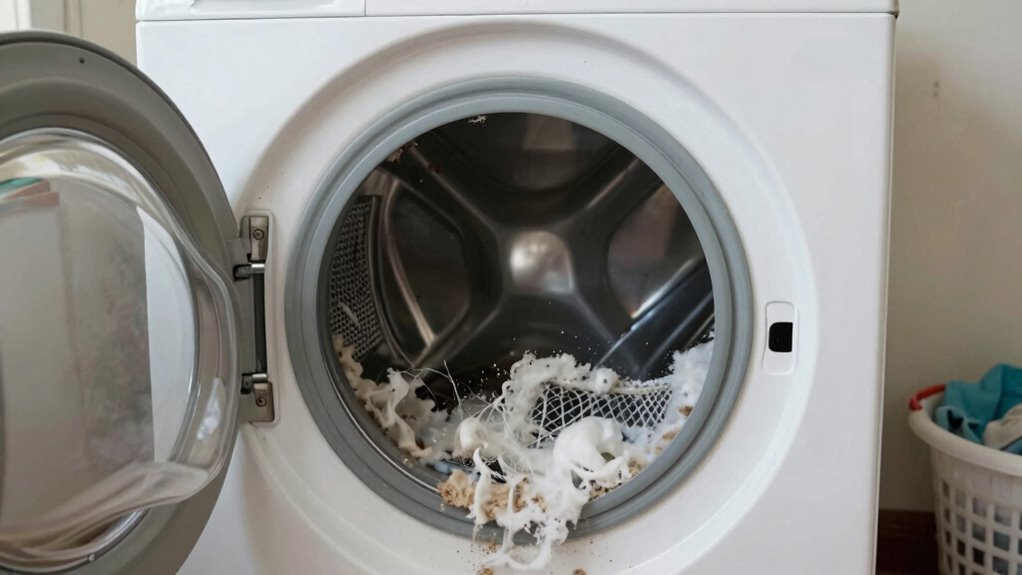

If your dryer is taking forever to dry clothes, the first step is to clean the lint filter thoroughly after every load to guarantee proper airflow. Next, inspect and clear the vent system by detaching the vent hose and removing any lint buildup or debris with a vent brush or vacuum. Clogged filters and vents trap hot air, causing longer drying times and potential hazards. Keep these areas clean and you’ll improve efficiency—stay with me to discover more tips.
Key Takeaways
- Regularly remove lint from the lint filter to ensure proper airflow and prevent drying delays.
- Inspect and clean the vent hose and ductwork to remove lint buildup and improve airflow efficiency.
- Check for obstructions or blockages in the vent system that could restrict hot air escape.
- Ensure the dryer’s heating element and blower wheel are functioning properly if issues persist.
- Perform routine maintenance and cleaning to prevent fire hazards and extend your dryer’s lifespan.
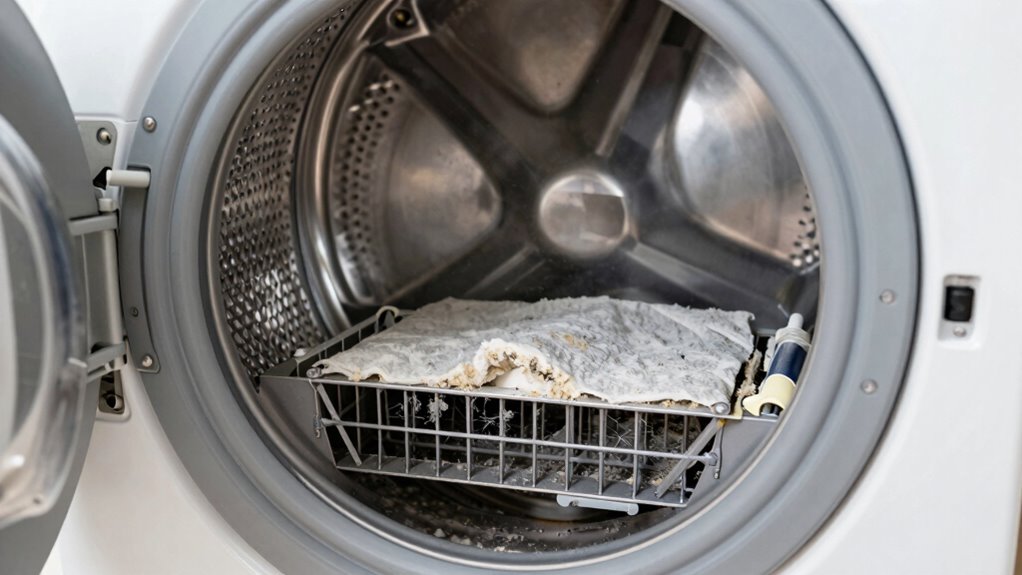
A clean dryer is essential for safe and efficient laundry days. If your dryer is taking forever to dry your clothes, the first thing you should check is the lint filter and vent system. Over time, lint buildup can considerably reduce your dryer’s performance. When lint accumulates in the lint trap, it restricts airflow, making the dryer work harder and longer to dry each load. Regularly removing lint from the trap is a simple yet effective step to maintain ideal drying times, but don’t stop there. You also need to look deeper into the vent system, as lint can accumulate inside the duct and cause a vent blockage. This buildup acts like a barrier, preventing hot air from escaping efficiently and causing your dryer to run excessively long or even overheat.
To prevent this, start by thoroughly cleaning the lint filter after every load. Use a brush or a vacuum attachment to remove all residue, ensuring nothing is left behind that could restrict airflow. Once the lint filter is clean, turn off the dryer and disconnect it from the power source. Locate the vent hose, usually attached to the back of your machine, and detach it carefully. Use a vent brush or a long-handled vacuum to clear out any lint or debris inside the duct. If you notice a substantial blockage or if the duct is long and complex, consider using a dryer vent cleaning kit. This step is vital because even small blockages can cause your dryer to run inefficiently.
Ignoring vent blockage not only prolongs drying times but also poses a fire hazard. Lint is highly flammable, and if it accumulates inside the vent, it can ignite when exposed to high heat. That’s why routine cleaning is essential for safety and performance. If, after cleaning the lint trap and vent, your dryer still takes longer than usual, it might be time to inspect other components, such as the heating element or blower wheel, but often, the issue stems from airflow restrictions caused by lint buildup and vent blockage. Taking these simple cleaning steps can save you time, energy, and money, and help prolong the lifespan of your appliance. Don’t wait for a complete breakdown—regular maintenance keeps your dryer running smoothly and safely. Additionally, understanding the importance of ventilation and airflow can help you better maintain your appliance’s efficiency.
Frequently Asked Questions
How Often Should I Clean My Dryer’s Lint Filter?
You should clean your dryer’s lint filter after every load to prevent lint buildup, which hampers airflow and extends drying time. Regular dryer maintenance keeps your appliance running efficiently and reduces fire hazards. Don’t forget, a clean lint filter improves dryer performance and safety. Make it a habit to check and clean the filter frequently, especially if you notice your dryer taking longer than usual to dry clothes.
Can Overloading the Dryer Cause It to Take Longer?
Imagine your dryer as a busy highway; overloading it is like adding too many cars, causing traffic jams. When you overload the dryer, it struggles with proper load distribution, which makes drying take longer. Sticking to your dryer’s capacity guarantees efficient air circulation and even heat distribution. So, avoid cramming in too much, and you’ll see better drying times, keeping your laundry moving smoothly instead of getting stuck in a long line.
What Signs Indicate My Dryer Needs Professional Repair?
If your dryer makes loud noises or the drum isn’t spinning, it’s a sign you need professional repair. These issues often indicate worn-out bearings, a broken belt, or a motor problem. Ignoring these signs can lead to further damage. You should get a repair technician to diagnose and fix the problem promptly, so your dryer works efficiently again and prevents costly repairs down the line.
Does Vent Cleaning Improve Dryer Efficiency?
Yes, vent cleaning considerably improves dryer efficiency by removing vent blockage that restricts airflow. When your vents are clogged with lint or debris, airflow decreases, causing your dryer to work harder and take longer to dry clothes. Regular vent cleaning ensures better airflow improvement, reducing drying time and energy use. This simple step can prevent potential breakdowns and save you money on repairs and energy bills.
Are There DIY Methods to Test Dryer Vent Blockages?
Yes, you can do DIY testing for vent blockage. Start by unplugging your dryer and disconnecting the vent hose. Use a long, flexible brush or a vacuum with a hose attachment to clear out lint and debris. You can also try to blow compressed air through the vent to check for obstructions. If airflow feels restricted, it indicates a vent blockage that needs cleaning to improve dryer efficiency.
Conclusion
Before calling for repairs, think of your dryer as a trusted friend whose energy wanes when weighed down by unseen grime. Giving it a thorough clean is like clearing a foggy window—suddenly, everything shines brighter and runs smoother. Don’t let lint and debris build a fortress around its efficiency. A simple cleaning can breathe new life into your dryer, turning a sluggish giant into a swift, reliable partner. Keep it tidy, and it’ll serve you well, rain or shine.