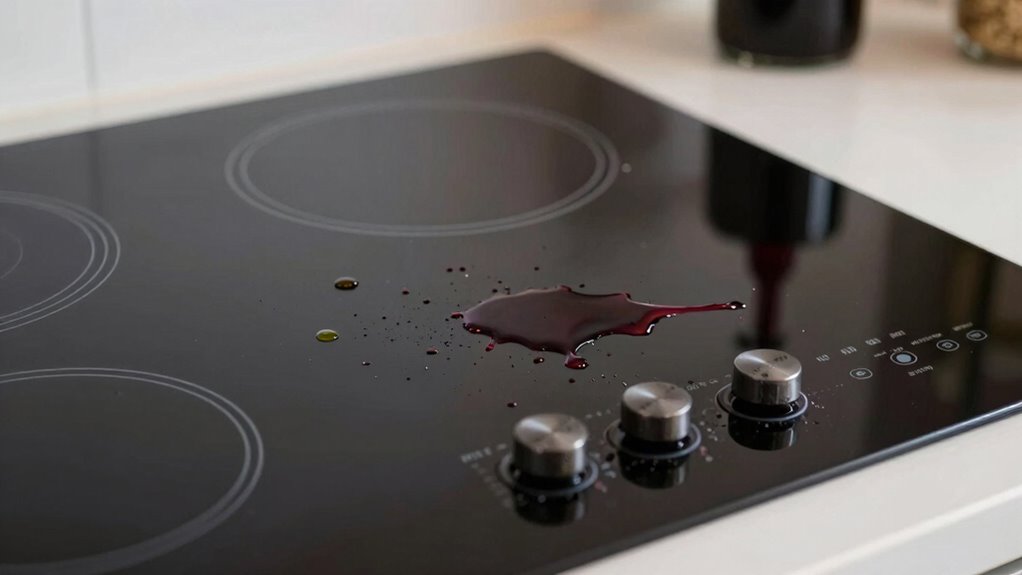

If your cooktop won’t ignite, food spills and debris are likely blocking the igniters or gas flow. First, make certain the area is completely dry and then carefully clean around the burners with a soft brush or cloth to remove any residue. Check for blockages in the igniter or gas outlets. If it still doesn’t spark, more detailed troubleshooting might be needed—continue along to learn about other causes and solutions to get your cooktop working again.
Key Takeaways
- Clean any food spills or debris around burners and igniters to prevent blockage and ensure proper spark and gas flow.
- Dry the area thoroughly after cleaning to avoid moisture interfering with ignition.
- Check for and remove any obstructions that may be covering the igniter or gas outlets.
- Reset the cooktop by unplugging it or turning off the circuit breaker, then try igniting again.
- If ignition issues persist, consult a professional technician to inspect internal components and wiring.
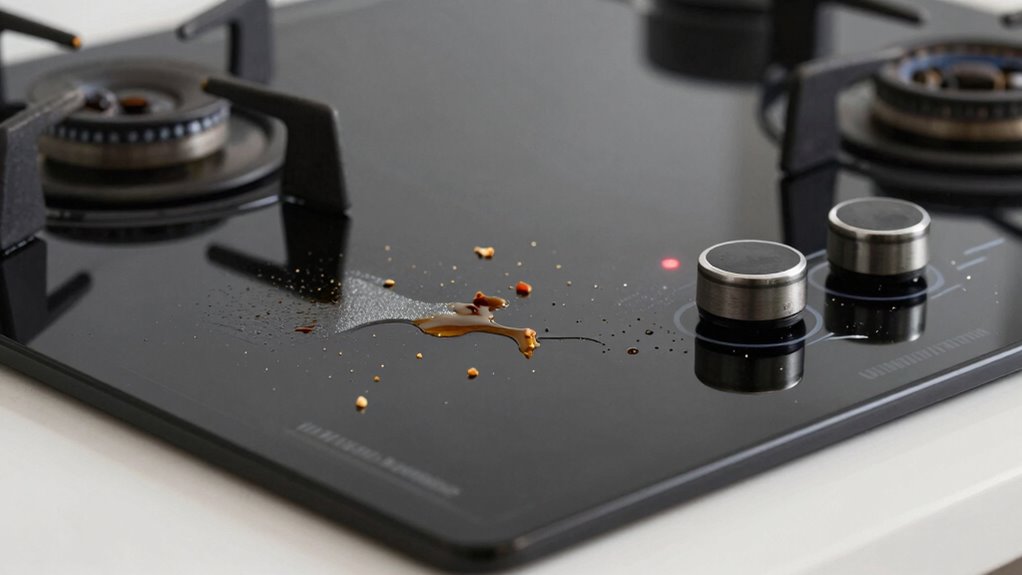
If your cooktop won’t ignite, it can be frustrating and disruptive to your cooking plans. You might be tempted to keep trying, but ignoring the problem could lead to more serious issues. One common cause for a stubborn or unresponsive cooktop is a gas leak, which can be dangerous. Gas leaks often cause the appliance to fail to ignite properly, or worse, create a hazardous environment. If you smell gas or suspect a leak, it’s vital to turn off the gas supply immediately and ventilate the area. Do not attempt to ignite the cooktop again until a professional inspects and repairs the leak. Gas leaks are serious and require prompt attention to prevent potential fires or health risks. Additionally, the contrast ratio of your cooktop’s lighting or indicator lights can sometimes affect visibility during troubleshooting. Electrical issues are another frequent culprit when your cooktop refuses to spark. Modern cooktops rely on electrical components like igniters, switches, and wiring to produce the spark needed to ignite the gas. Over time, these parts can wear out or become damaged, especially if there’s been a power surge or moisture intrusion. If you notice that your cooktop’s igniter isn’t clicking or sparking when you turn the knob, it’s a sign that electrical trouble might be the cause. Sometimes, simply resetting the circuit breaker or unplugging the unit can resolve minor electrical glitches. However, if the problem persists, you’ll need to inspect the wiring or replace faulty components. Remember, working with electrical parts can be hazardous if you’re not experienced, so it’s wise to call in a professional technician. Another aspect that can interfere with ignition is food spills or debris around the burners. Food spills can clog the igniter or block the gas flow, preventing proper ignition. Carefully cleaning the burners and igniter areas with a soft brush or cloth can often restore function. Make sure the area is completely dry before trying to ignite again. If cleaning doesn’t work, and you’ve eliminated potential gas leaks and electrical issues, the problem might be deeper within the appliance’s internal components. Sometimes, accumulated dirt or corrosion can prevent sparks or gas flow, and professional cleaning or repairs are necessary.
gas cooktop igniter cleaner
As an affiliate, we earn on qualifying purchases.
As an affiliate, we earn on qualifying purchases.
Frequently Asked Questions
Can Spilled Food Cause the Igniter to Malfunction?
Yes, spilled food can cause the igniter to malfunction. When food residue or igniter dirt accumulates on the igniter or around the spark module, it can block the electrical connection needed for proper ignition. You should clean the area thoroughly, removing any food residue or dirt. Use a soft brush or cloth to make certain the igniter stays free of debris, which helps restore proper functioning and prevents future issues.
How Do I Clean Food Spills From the Igniter?
Your igniter’s life depends on it, so don’t ignore food spills! To clean spills from the igniter, gently turn off the power, then use a soft brush or cloth with a bit of rubbing alcohol to carefully remove food residue. Follow proper cleaning safety, and always wipe up spills immediately to prevent future issues. Spill prevention keeps your cooktop working smoothly and your kitchen safe from pesky ignition problems.
Is It Safe to Use My Cooktop After a Spill?
Yes, it’s safe to use your cooktop after a spill, but you should check for safety concerns first. Make certain the spill is completely cleaned and the igniter is dry to prevent any electrical issues. To avoid future problems, focus on spill prevention by cleaning up messes promptly and keeping the area dry. Always inspect your cooktop carefully before use to ensure everything functions correctly and safely.
Can Moisture From Food Spills Damage the Ignition System?
Like a storm in a teacup, moisture from food spills can cause electrical interference, potentially damaging your cooktop’s ignition system. Moisture promotes corrosion, which weakens electrical connections and disrupts sparks needed for ignition. To prevent this, promptly clean spills and keep the area dry. Regular corrosion prevention measures, such as using protective coatings or desiccants, help safeguard your cooktop’s electrical components, ensuring it ignites reliably every time.
How Long Should I Wait Before Attempting to Ignite After Cleaning?
After cleaning your cooktop, wait at least 15 minutes before attempting ignition testing. This guarantees any residual moisture from your cleaning schedule has evaporated, preventing moisture from causing ignition issues. Rushing the process might lead to sparks not igniting properly. Giving it this time helps maintain your cooktop’s performance and safety, so always be patient after cleaning before testing or igniting your burners again.
electric cooktop spark module replacement
As an affiliate, we earn on qualifying purchases.
As an affiliate, we earn on qualifying purchases.
Conclusion
When your cooktop hesitates to ignite, a little spill might be the gentle nudge it needs to settle down. By giving it some tender attention—cleaning and checking for obstructions—you’re helping keep the spark alive. Remember, a well-cared-for cooktop can continue to serve you delicious moments. So, take a breath, handle the mess with patience, and soon enough, you’ll be back to cooking with confidence and ease.
cooktop burner cleaning brush
As an affiliate, we earn on qualifying purchases.
As an affiliate, we earn on qualifying purchases.
gas leak detection kit
As an affiliate, we earn on qualifying purchases.
As an affiliate, we earn on qualifying purchases.