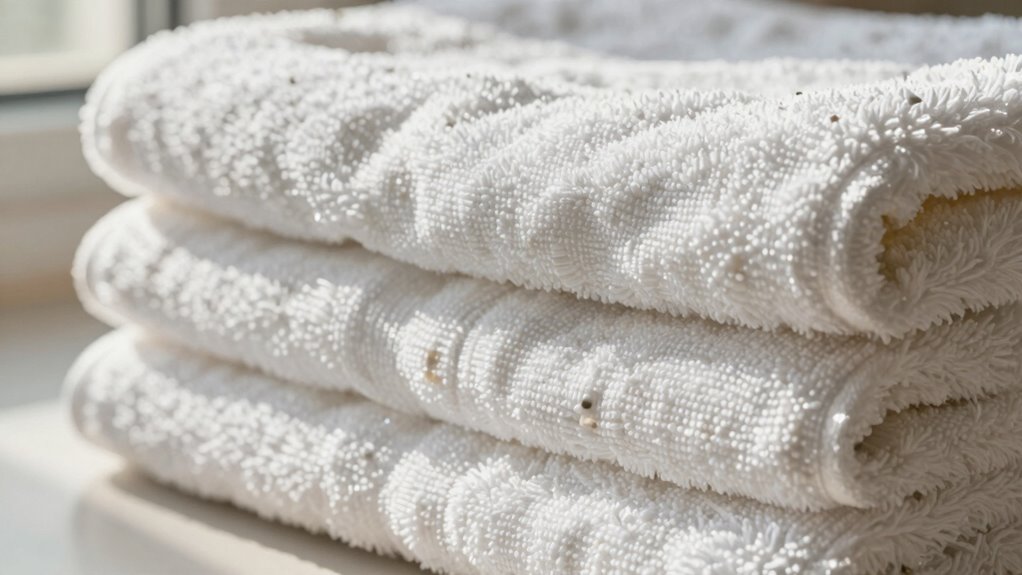

When you wash towels with hard water, minerals like calcium and magnesium build up on the fabric fibers, making them feel stiff and crunchy. This mineral residue doesn’t dissolve well during washing, causing towels to become rough and dull over time. To prevent this, installing a water softener or using water conditioning products can help. If you want to understand more about solving this common issue, keep exploring the solutions available.
Key Takeaways
- Hard water contains minerals like calcium and magnesium that cause mineral deposits on towels, making them feel crunchy.
- Mineral buildup stiffens fabric fibers, reducing towel softness and causing a rough, scratchy texture after washing.
- Without water softening, minerals don’t dissolve properly, leading to residue that dulls and roughens laundry over time.
- Installing a water softener or using additives prevents mineral deposits, maintaining towel softness and improving laundry quality.
- Softened water enhances detergent effectiveness, keeps towels feeling plush, and extends the lifespan of washing machines.
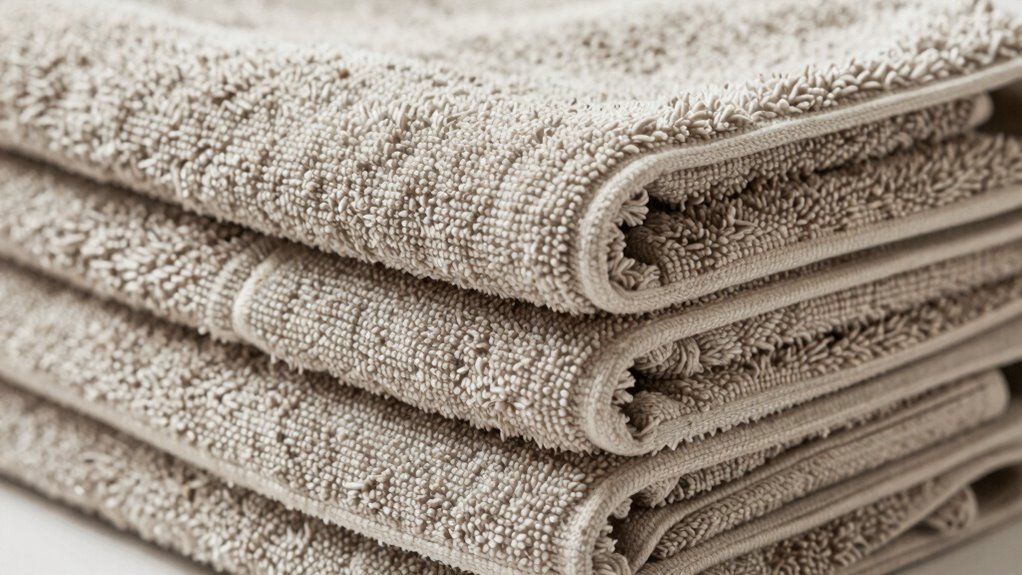
Have you ever noticed your clothes seem dingy or take longer to wash than they should? If so, hard water might be the culprit. Hard water contains high levels of minerals like calcium and magnesium, which can cause mineral buildup on your clothes and in your washing machine. When you wash with hard water, these minerals don’t dissolve easily, leading to a range of laundry issues. One common problem is towels feeling crunchy or rough after drying. That crunchiness isn’t just a feeling—it’s the result of mineral deposits stiffening the fabric fibers over time.
Hard water causes mineral buildup, making clothes feel rough and dingy after washing.
The key to fixing this problem is water softening. Water softening involves removing or neutralizing the minerals responsible for hardness, usually through a water softener appliance or additive. When you soften your water, you reduce the mineral content that causes buildup. This means fewer minerals cling to your clothes during washing, which helps fabrics stay softer and more comfortable. Softening water also improves the effectiveness of your laundry detergent, so your clothes come out cleaner with less effort. Without mineral buildup, there’s less residue left behind on fabrics, which means your towels won’t feel rough or scratchy after drying.
Mineral buildup isn’t just an aesthetic problem; it can also damage your washing machine over time. The deposits can clog pipes, reduce the efficiency of water flow, and cause parts to wear out faster. This can lead to costly repairs or replacements down the line. So, investing in water softening isn’t just about better laundry; it’s also about maintaining your appliances and extending their lifespan. Plus, softer water can save you money on detergent and energy because your washing machine doesn’t need to work as hard to get your clothes clean.
If you notice your towels are consistently feeling stiff or your laundry isn’t smelling fresh, it’s worth checking if you’re dealing with hard water. Installing a water softener or using a water conditioning product can make a significant difference. You’ll find that your clothes, especially towels, stay softer longer, and your laundry routine becomes easier overall. The mineral buildup that causes the crunchiness will diminish, leading to fresher, more pleasant-smelling laundry. Remember, soft water benefits not just your clothes but also your appliances and your wallet, making it a smart upgrade for anyone battling hard water’s effects. Additionally, using proper water treatment systems can help prevent mineral deposits and keep your laundry feeling fresh and soft.
Frequently Asked Questions
Can Hard Water Damage Towels Over Time?
Yes, hard water can damage your towels over time. The mineral buildup from hard water causes water mineral buildup on towel fibers, making them stiff and less absorbent. This buildup leads to towel fiber degradation, weakening the fabric and reducing its softness and longevity. To protect your towels, consider using water softeners or vinegar during laundry to minimize mineral deposits and maintain their quality.
Are There Natural Remedies to Soften Towels?
Yes, there are natural remedies and softening techniques you can try. You might add a cup of white vinegar to your rinse cycle, which helps break down minerals and softens towels. Baking soda can also boost softness when added during washing. Additionally, drying towels in the sun naturally softens fibers. These methods are eco-friendly, inexpensive, and effective at making your towels feel plush again without harsh chemicals.
How Does Water Temperature Affect Towel Crunchiness?
Imagine warm water as a gentle hug for your fabric fibers, making them softer and more pliable. When you use higher water temperatures, the heat helps relax the fibers, reducing towel crunchiness. Conversely, cold water can leave fibers stiff and tight, causing that rough feel. So, adjusting your water temperature directly impacts your towels’ softness by influencing how the fabric fibers behave during washing.
Does Towel Fabric Type Influence How Hard Water Impacts It?
Yes, towel fabric type influences how hard water impacts it. Natural fibers like cotton are more durable and better at absorbing water, making them less prone to crunchiness from mineral deposits. Synthetic fibers may be more affected because they often have different fiber durability and less fabric absorption. Choosing towels with high-quality, durable fibers helps reduce the crunchiness caused by mineral buildup in hard water.
Can Laundry Detergents Prevent Towel Crunchiness in Hard Water?
Did you know that proper detergent formulations can reduce towel crunchiness by up to 30%? Yes, using the right laundry detergent designed for hard water helps prevent mineral buildup. When you opt for detergents with water softening agents and guarantee a thorough rinse cycle, you’ll notice softer, fluffier towels. This approach minimizes mineral deposits, keeping your towels plush rather than crunchy, even in hard water conditions.
Conclusion
Did you know that over 85% of homes worldwide have hard water? That’s a huge chunk of people experiencing crunchy towels and stiff fabrics. By understanding the effects of minerals like calcium and magnesium, you can take simple steps to improve your laundry routine—like using water softeners or vinegar. Don’t let hard water keep your towels feeling rough; a small change can make a big difference in softness and comfort!