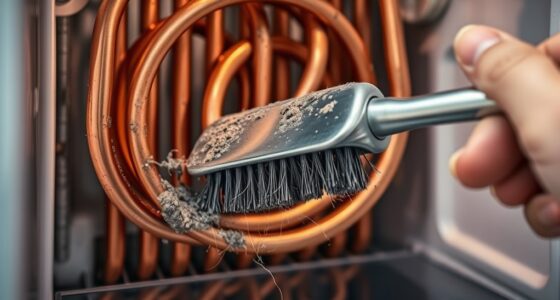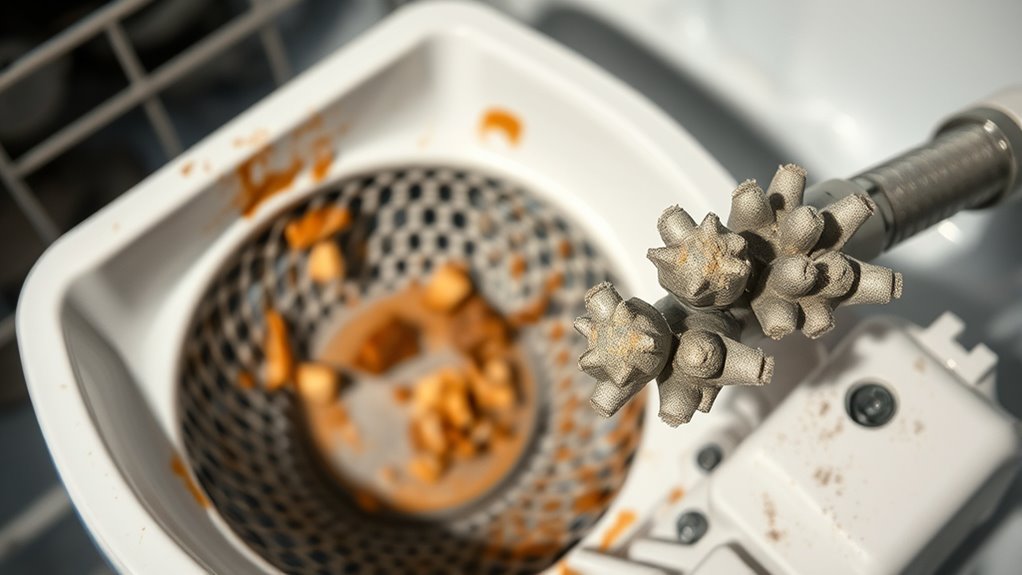

To clean your dishwasher filters and spray arms, locate the filter at the bottom, remove it, and rinse it under warm water, scrubbing away debris with a soft brush. For spray arms, detach them according to your model, check for clogs in the small holes, and clear any obstructions with a toothpick or wire. Soak everything in vinegar if needed for stubborn deposits. Regular maintenance keeps your dishwasher working smoothly—stay with us to learn more.
Key Takeaways
- Locate and remove the dishwasher filter; rinse under warm water and scrub with a soft brush to remove debris.
- Remove spray arms per manufacturer instructions; clear clogged holes with a toothpick or wire, then rinse thoroughly.
- Soak both filter and spray arms in vinegar and warm water for 30 minutes to dissolve mineral buildup.
- Reinstall all components securely, ensuring they are properly seated before running a short cycle.
- Regularly clean filters and spray arms to maintain water flow, prevent clogs, and ensure spotless washing results.
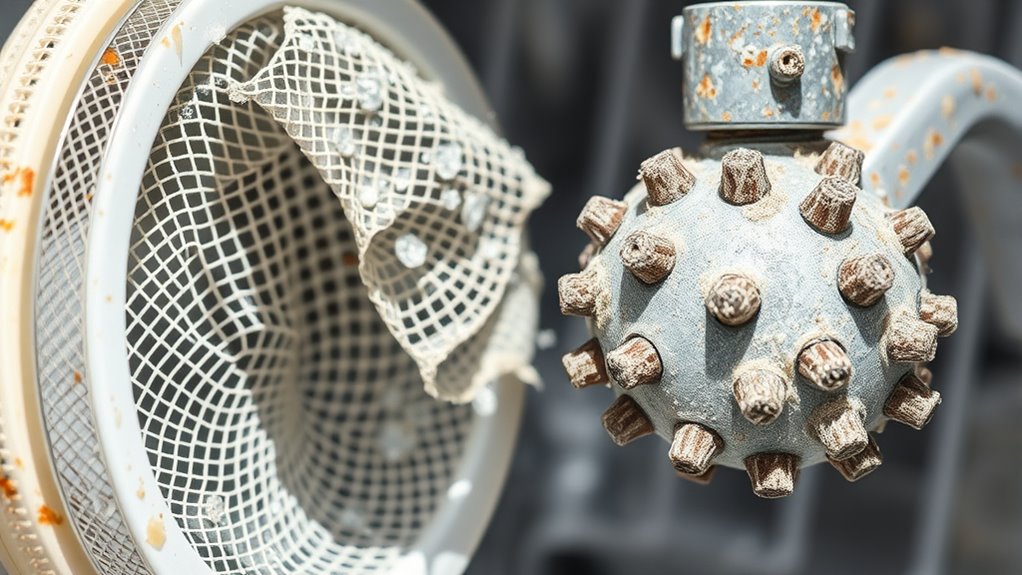
Regularly cleaning your dishwasher’s filters and spray arms is essential to keep it running efficiently and make sure your dishes come out spotless. Over time, soap residue, grease, and food particles can accumulate in the filters, clogging them and reducing water flow. This buildup can hinder water pressure, preventing your dishwasher from thoroughly rinsing your dishes. When water pressure drops, soap residue isn’t rinsed away effectively, leading to poor cleaning results and lingering spots or film. By maintaining these components, you guarantee ideal water flow, which enhances cleaning performance and prolongs your dishwasher’s lifespan.
Regularly cleaning filters and spray arms ensures optimal water flow and spotless dishes.
Start by removing the filter, which is usually located at the bottom of your dishwasher. Consult your user manual if you’re unsure about its exact location. Once removed, rinse the filter under warm water. Use a soft brush or an old toothbrush to gently scrub away soap residue, grease, and debris lodged in the mesh or crevices. Avoid using harsh chemicals or abrasive tools, as they can damage the filter. If the filter is particularly dirty, soak it in a mixture of warm water and vinegar for 10-15 minutes to loosen stubborn residues before scrubbing. After cleaning, inspect the filter for any signs of damage or excessive wear, and replace it if necessary to maintain effective filtration.
Next, examine the spray arms. These components distribute water during the wash cycle, so their cleanliness directly impacts water pressure and overall cleaning performance. Remove the spray arms according to your dishwasher’s instructions, usually by unscrewing or popping them out. Check for clogs in the small holes, which can be blocked by soap residue or mineral deposits. Use a toothpick or a thin wire to clear out any obstructions carefully. Rinse the spray arms under warm water, ensuring all holes are open and water flows freely. If mineral deposits persist, soak the spray arms in a vinegar solution for about 30 minutes to dissolve buildup, then scrub gently with a brush.
Additionally, the efficiency of your dishwasher can be improved by automation in business, which streamlines maintenance tasks like cleaning components, ensuring regular upkeep without added effort. Once both the filters and spray arms are thoroughly cleaned, reinstall them securely. Run a short cycle with an empty dishwasher to flush out any remaining debris and verify that water pressure has improved. Consistently maintaining these parts prevents soap residue buildup and keeps your dishwasher functioning at peak performance. Regular cleaning not only ensures your dishes come out spotless but also helps avoid costly repairs caused by clogged components or reduced water flow. Taking a few minutes to care for these parts every few months can make a noticeable difference in your dishwasher’s effectiveness and lifespan.
Frequently Asked Questions
How Often Should I Replace My Dishwasher Filters?
You should replace your dishwasher filters every 6 to 12 months, depending on your usage and water quality. Regular filter maintenance helps prevent clogs and guarantees peak cleaning performance. Keep an eye out for signs like persistent odors or poor dishwashing results, which indicate it’s time for a replacement. By sticking to the recommended replacement frequency, you’ll maintain your dishwasher’s efficiency and extend its lifespan.
Can I Use Vinegar to Clean Spray Arms?
Yes, you can use vinegar cleaning for spray arm maintenance. Fill a bowl with white vinegar, remove the spray arms, and soak them for about 30 minutes. Use an old toothbrush to scrub away mineral deposits and debris. Rinse thoroughly before reinstalling. Vinegar cleaning is an effective, eco-friendly way to keep your spray arms functioning properly and guarantee your dishwasher cleans efficiently.
What Tools Are Best for Removing Stubborn Debris?
You’ll want tools and brushes like a small toothbrush or a soft-bristle brush to loosen stubborn debris. A toothpick or pin can help clear clogged spray holes. For particularly tough grime, consider detergent alternatives like baking soda or a specialized cleaner. These tools and methods make it easier to remove stubborn debris, ensuring your dishwasher functions efficiently and your dishes come out sparkling clean.
Are There Specific Filters for Different Dishwasher Brands?
Yes, there are brand-specific filters for different dishwasher brands. You should always check filter compatibility before purchasing, as filters designed for one brand or model might not fit another. To guarantee proper cleaning and fit, look for filters labeled as compatible with your dishwasher’s brand and model. Using the correct, brand-specific filters helps maintain peak performance and prevents potential damage caused by incompatible parts.
How Do I Prevent Future Clogging of Filters and Spray Arms?
You can prevent future clogging of filters and spray arms by regularly performing filter maintenance and spray arm inspection, like giving them a regular check-up. Think of it as keeping your dishwasher’s heart healthy—clean filters and clear spray arms ensure smooth, efficient operation. Always rinse away debris before loading dishes, and schedule monthly inspections. This proactive approach keeps clogs at bay, making your dishwasher run like a well-oiled machine.
Conclusion
By regularly cleaning your dishwasher filters and spray arms, you guarantee your appliance runs efficiently and your dishes come out spotless. For example, Jane noticed her dishwasher stopped cleaning properly; after cleaning the spray arms, her dishes looked brand new again. Staying on top of maintenance may seem small, but it prevents costly repairs and keeps your kitchen running smoothly. Make it a habit, and you’ll enjoy cleaner dishes and a longer-lasting dishwasher.