
If you clean your range hood filters incorrectly, you might block airflow, making your vent less effective at removing smoke and odors. Using harsh abrasives or cold water can damage the filters, reducing their ability to trap grease and odors. Failing to follow proper cleaning methods can cause grease buildup, leading to clogged filters and poor ventilation. Keep in mind, proper maintenance is key—stay tuned to discover the best ways to keep your filters functioning perfectly.
Key Takeaways
- Incorrect cleaning methods, like using abrasive cleaners or cold water, can damage filters and reduce their effectiveness.
- Neglecting regular cleaning leads to grease buildup, hindering airflow and decreasing odor absorption capacity.
- Failing to replace charcoal filters as recommended causes odors to escape and air quality to decline.
- Overlooking filter maintenance can cause airflow restrictions, making the fan work harder and increasing energy costs.
- Proper cleaning and timely replacement preserve filter lifespan, ensure efficient airflow, and prevent damage to the ventilation system.
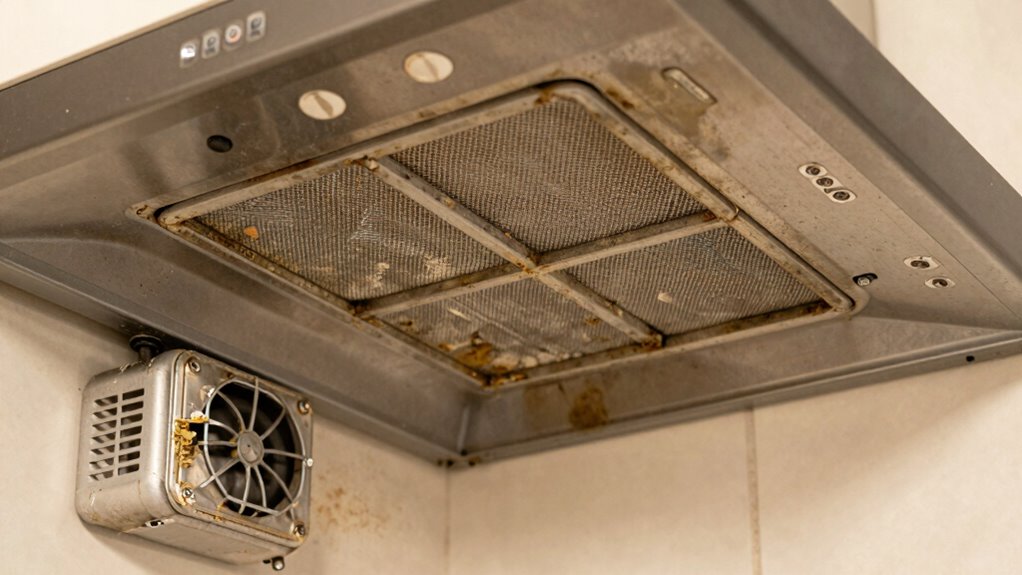
Range hood filters play a crucial role in maintaining a clean and healthy kitchen environment by trapping grease, smoke, and odors before they circulate. Proper filter maintenance is essential to ensure your range hood functions effectively and keeps your kitchen smelling fresh. When you neglect regular cleaning or replace filters improperly, you risk reducing airflow, which can cause smoke and odors to linger longer and potentially damage the fan motor over time. To keep your filters performing at their best, it’s vital to understand how to maintain them correctly, especially when it comes to odor absorption.
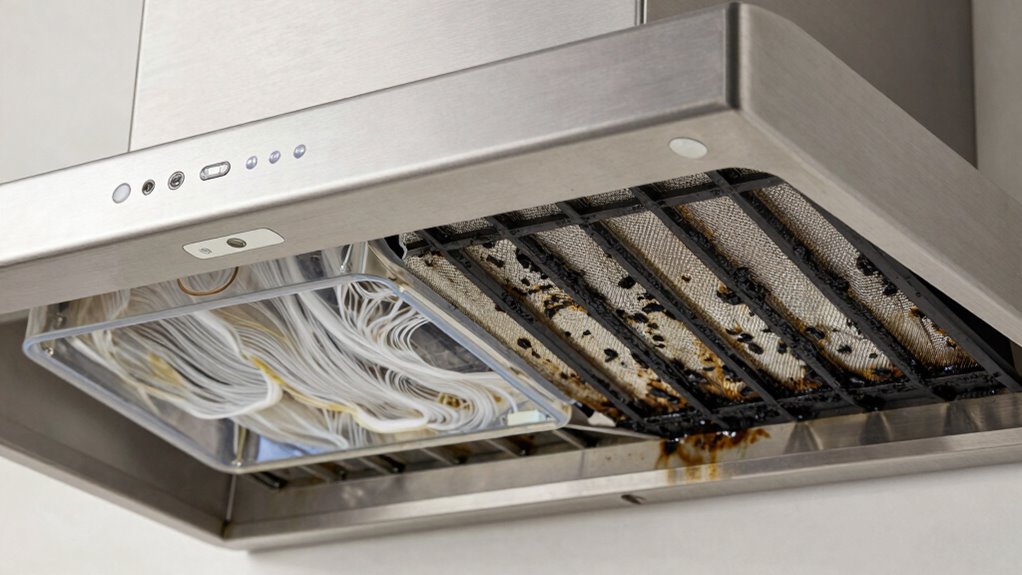
Odor absorption is one of the primary reasons your range hood filters need regular attention. Over time, grease and grime build up on the filter surface, creating a layer that can trap odors but also hinder airflow. If you ignore this buildup, your filter won’t absorb odors effectively, and unpleasant smells will escape into your kitchen. This is especially true if you use your range hood frequently or cook aromatic dishes. Regular filter maintenance involves cleaning or replacing filters as recommended by the manufacturer, which helps preserve their odor absorption capacity. Using the right cleaning methods—such as soaking grease filters in hot, soapy water or specialized degreasers—removes accumulated grease and restores their ability to trap odors.
Regular cleaning preserves your filter’s odor absorption and keeps your kitchen fresh.
Many people make the mistake of cleaning filters incorrectly, which can damage their mesh or charcoal components. For example, some assume that rinsing a filter with cold water or using abrasive cleaners will do the trick, but this can damage the filter material or reduce its effectiveness. Instead, follow the manufacturer’s instructions carefully; most grease filters can be cleaned with warm water and a gentle scrub, while charcoal filters often need replacing rather than cleaning. Proper filter maintenance not only prolongs the life of your filters but also ensures that your range hood can do its job efficiently, maintaining good airflow and odor control. Additionally, understanding the importance of connected equipment and proper care can help optimize the performance of your entire kitchen ventilation system.
Neglecting filter maintenance can lead to airflow restrictions, making your fan work harder and consume more energy, which increases your utility bills. Plus, a clogged filter becomes a breeding ground for bacteria and mold, potentially impacting your health. Regularly inspecting your filters, cleaning grease buildup, and replacing charcoal filters when needed will keep your range hood performing optimally. Ultimately, to prevent airflow tanks and keep your kitchen smelling fresh, you need to stay proactive about filter maintenance. By doing so, you protect your investment, improve kitchen air quality, and enjoy a cleaner, healthier cooking environment.
Frequently Asked Questions
Can I Use Regular Dish Soap to Clean Range Hood Filters?
Yes, you can use regular dish soap to clean range hood filters. Simply mix dish soap with warm water and soak the filters, then scrub off grease and dirt with a soft brush or sponge. This cleaning method is effective and gentle, helping to remove buildup without damaging the filter. Just make sure to rinse thoroughly and let the filters dry completely before reinstalling to maintain proper airflow.
How Often Should I Replace Filters Instead of Cleaning?
You should replace your range hood filters based on their filter lifespan and replacement schedule, typically every 6 to 12 months. If filters become heavily grease-laden, damaged, or clogged despite cleaning, it’s time for a replacement. Regular maintenance extends their life, but don’t delay replacing them when they reach the end of their recommended lifespan. This ensures peak airflow, reduces fire risk, and keeps your kitchen air fresh.
Are There Different Filter Types for Specific Cooking Styles?
Yes, there are different filter types for specific cooking styles. You’ll find filter materials like charcoal for odors, aluminum for grease, and hybrid filters combining both. Filter designs vary too, with some being mesh, baffle, or foam-based, tailored to your cooking needs. Choosing the right filter materials and designs guarantees ideal airflow and odor control, making your kitchen cleaner and more efficient.
What Are the Signs That Airflow Is Restricted Due to Dirty Filters?
Think of your range hood as a breathing partner; when airflow reduction occurs, it’s like it’s struggling to breathe. If your filters are obstructed, you’ll notice increased smoke, lingering odors, or a noisy fan. These signs indicate airflow reduction due to dirty filters. Regularly check and clean your filters to prevent obstruction, ensuring your kitchen stays fresh and your range hood works efficiently.
Can Improper Cleaning Damage the Filter’s Filtering Capability?
Improper cleaning can definitely damage your filter, reducing its filtering capability. Using harsh chemicals, abrasive scrubbers, or cleaning techniques that bend or tear the filter media harms its structure. When filters get damaged, their cleaning effectiveness drops, allowing grease and debris to pass through. To maintain peak performance, use gentle cleaning methods and avoid aggressive scrubbing, ensuring your filter stays intact and functions effectively over time.
Conclusion
Remember, your range hood filters are the gatekeepers of your kitchen’s air, silently battling grease and smoke. Clean them properly, and you keep the airflow flowing freely—like clear skies after a storm. But neglect them, and they become barriers, choking your space with unseen dirt. Treat them with care, and they’ll serve as guardians of freshness, symbolizing your commitment to a healthy home. Keep them clean, and let your kitchen breathe easy every day.