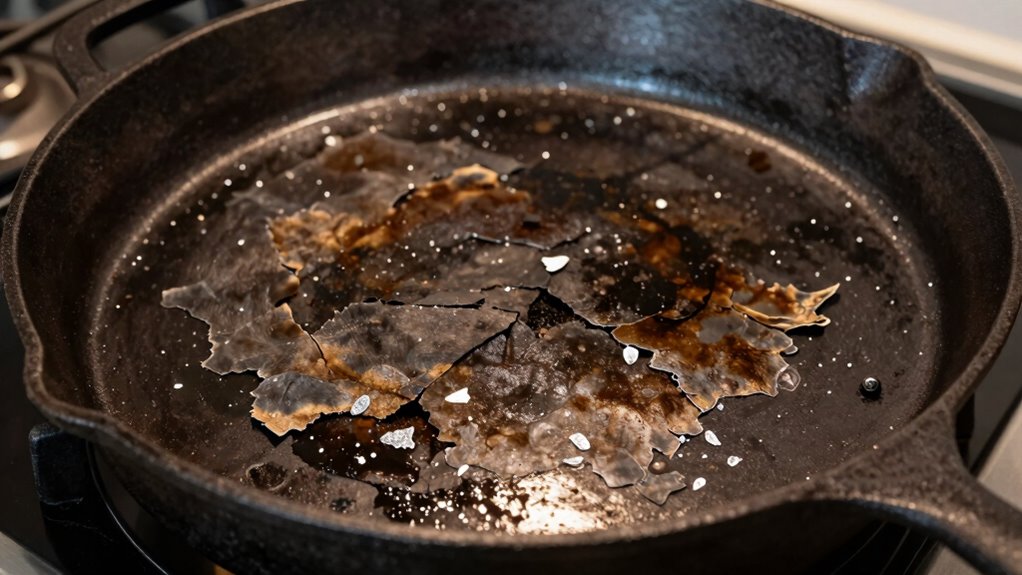

To avoid flaking, you need to apply your seasoning carefully, spreading thin, even coats and avoiding thick layers that trap moisture. Make sure to clean your griddle thoroughly before seasoning, removing any debris or rust, and avoid using harsh soaps. Be patient with heating — too hot or uneven heat causes oil to peel. Proper maintenance and gradual heating help create a durable, non-stick surface. Keep going, and you’ll discover how to master these key steps.
Key Takeaways
- Applying thick or uneven coats of oil traps moisture, leading to flaky seasoning layers.
- Failing to clean the griddle thoroughly removes debris and old seasoning, impairing adhesion.
- Heating the surface too quickly or at high temperatures causes oil burning and flaky spots.
- Skipping regular maintenance and reapplication weakens the protective seasoning, increasing flaking risk.
- Rushing the seasoning process or not allowing proper cooling prevents proper bonding and durability.
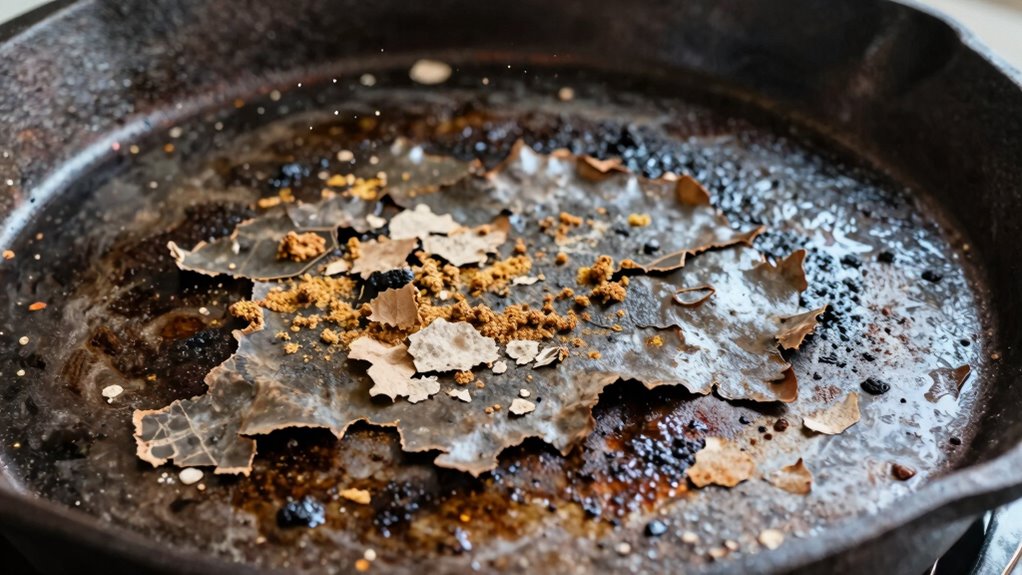
Seasoning your griddle is essential for achieving a non-stick surface and great flavor, but it’s easy to make mistakes that can hinder these results. One common mistake is applying seasoning improperly. If you rush the seasoning application or neglect to evenly coat the surface, you risk creating uneven layers that can peel or flake over time. To avoid this, make sure you spread a thin, even layer of oil across the entire griddle and heat it gradually. Multiple light coatings are better than one thick layer, which can trap moisture or cause bubbling, leading to flaking.
Another key factor is your cleaning practices. If you don’t clean your griddle correctly before seasoning, residual food particles, rust, or old seasoning can interfere with proper adhesion. Avoid using harsh soaps or abrasive scrubbers that strip away the seasoning and damage the surface. Instead, clean your griddle with a gentle scraper or a soft brush after each use, removing loose debris without removing all the seasoning. When it’s time to reseason, ensure the surface is thoroughly cleaned, dry, and free of grease or water, as moisture can cause the new layer of oil to peel off or flake during heating.
Failing to maintain consistent seasoning application can also lead to flaking. For example, if you skip seasoning sessions or don’t reapply oil after cleaning, the surface becomes more prone to damage. Think of seasoning as a protective and non-stick coating that needs regular reinforcement. After each use, wipe the surface clean but don’t forget to apply a light coat of oil before storing or reheating. This continuous maintenance builds a durable, even layer that resists chipping and flaking.
Overheating the griddle during seasoning is another mistake that can cause issues. If you heat it too rapidly or to excessively high temperatures, the oil can burn and create a sticky, uneven film that’s prone to flaking off later. Instead, heat the griddle gradually and maintain a moderate temperature to allow the seasoning to bond properly with the surface. Patience during the seasoning process results in a smoother, longer-lasting non-stick finish.
Frequently Asked Questions
How Often Should I Re-Season My Griddle?
You should re-season your griddle every 1 to 3 months, depending on how often you cook. Regular seasoning maintains a non-stick surface and prevents flaking. Follow re-seasoning tips like applying a thin layer of oil and heating it evenly. If you notice the surface starting to chip or become dull, it’s time to re-season. Consistent seasoning frequency guarantees your griddle stays in top shape for all your cooking needs.
Can I Use Soap to Clean My Seasoned Griddle?
You shouldn’t use soap to clean your seasoned griddle, as it can strip away the seasoning and harm proper cleaning and seasoning maintenance. Instead, scrub it with hot water and a stiff brush or scraper to remove food residue. After cleaning, dry it thoroughly and apply a light coat of oil to maintain the seasoning. This approach keeps your griddle well-seasoned and ready for your next cookout.
What Types of Oil Are Best for Seasoning?
You should use high-smoke point cooking oils like flaxseed, grapeseed, or vegetable oil for seasoning your griddle. These oils create a durable, non-stick surface when applied using the seasoning method. Avoid low-smoke point oils like olive or butter, as they can burn and cause flaking. Consistently applying thin layers of the right oil helps build a strong, long-lasting seasoning layer for your griddle.
How Do I Fix a Flaking Seasoned Surface?
To fix a flaking seasoned surface, start by removing loose flakes with a scrub brush or steel wool. Then, clean the griddle thoroughly to eliminate seasoning buildup and any residue. Once dry, apply a thin, even layer of oil and heat the griddle to create a fresh, smooth coating. Regular maintenance and proper seasoning layers prevent uneven coating and future flaking issues.
Is It Necessary to Season a New Griddle Before First Use?
Like tuning a vintage radio, seasoning your new griddle is essential before first use. You need to do some proper griddle preparation, which involves applying a thin layer of oil and heating it to create a durable non-stick surface. Regular seasoning frequency helps maintain this coating. Skipping this step can lead to food sticking and flaking, so don’t skip the initial seasoning—it’s key for a smooth, long-lasting cooktop.
Conclusion
Remember, even the tiniest mistake in seasoning your griddle can lead to flakes and frustration. It’s funny how a small oversight, like rushing the process, can mirror life’s bigger lessons—patience and attention matter. Just as your seasoned surface needs care, so do your goals. Take your time, learn from these missteps, and your griddle—and life—will stay smooth and durable, revealing that sometimes, the smallest changes make the biggest difference.