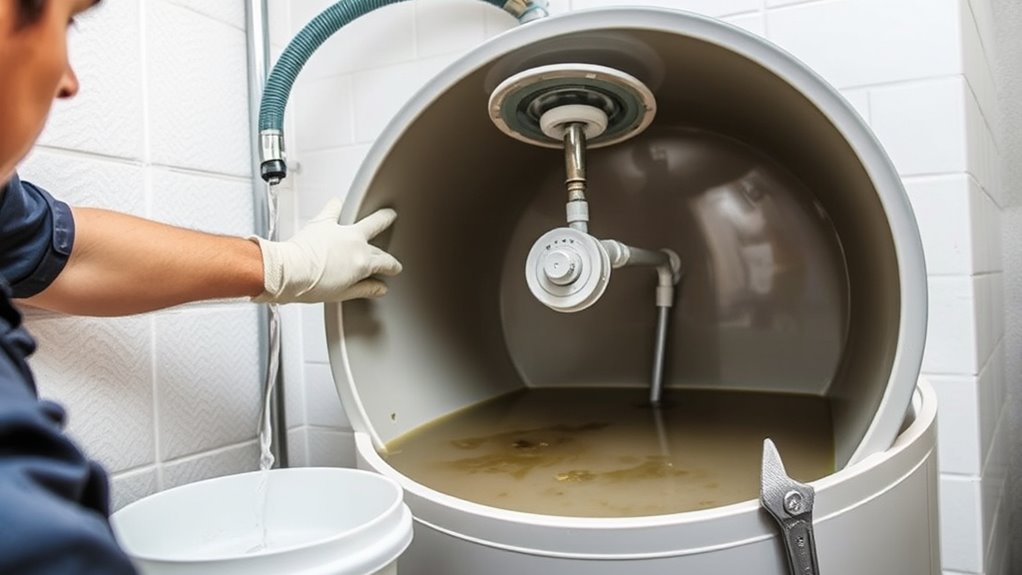

To keep your water heater running smoothly, regularly drain sediment that’s built up from minerals, which can cause inefficiency and damage. Check your anode rod every few years to see if it’s corroded or depleted, and replace it if needed to prevent rust and leaks. These simple maintenance steps help extend your unit’s life and keep it functioning reliably. Continue with these tips to learn more about maintaining your water heater effectively.
Key Takeaways
- Drain several gallons of water from the tank annually to remove accumulated sediment and improve efficiency.
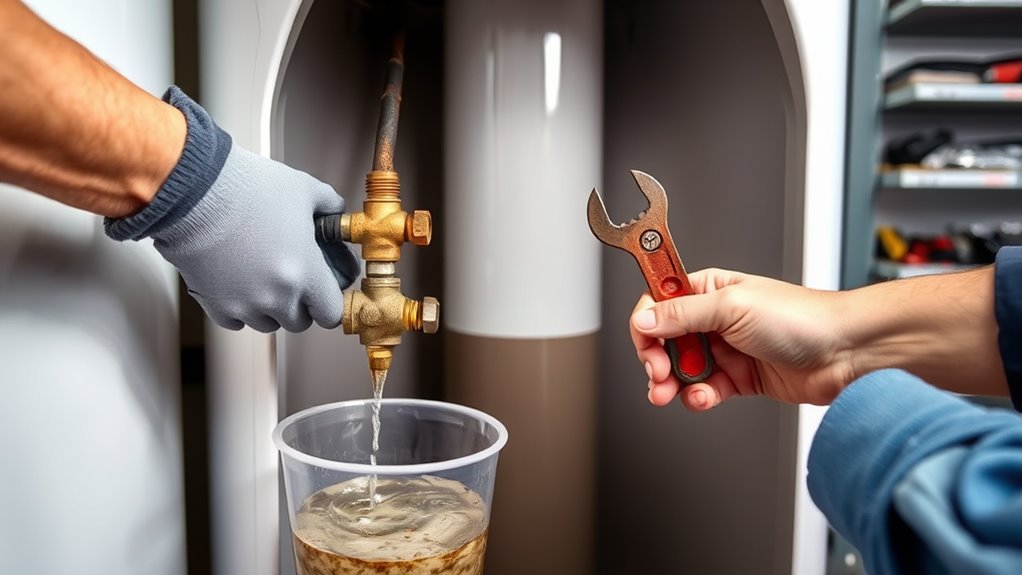
- Turn off power or gas and connect a hose to drain valve before flushing sediment out.
- Regularly inspect the anode rod every few years for corrosion or depletion, replacing it if heavily corroded.
- Use a socket wrench to remove the anode rod, and check for rust or signs of wear during inspection.
- Maintaining sediment removal and anode rod replacement prevents leaks, prolongs lifespan, and ensures optimal heater performance.
A water heater is a vital appliance that keeps your household running smoothly, but like any mechanical device, it requires regular maintenance to guarantee it works efficiently and lasts longer. Proper upkeep ensures ideal temperature regulation and helps prevent leaks that could cause damage or costly repairs. When you maintain your water heater, you’re essentially keeping it operating at its best, saving you energy and money over time.
Regular water heater maintenance keeps your appliance efficient, safe, and long-lasting, saving energy and preventing costly repairs.
One of the key aspects of maintenance is checking the temperature setting. If the thermostat is set too high, your water heater can overwork, increasing energy consumption and risking scalding accidents. Conversely, setting it too low might result in inadequate hot water. Aim for a temperature around 120°F (49°C) to balance comfort, safety, and efficiency. Regularly verifying and adjusting the thermostat ensures your water heater maintains consistent temperature regulation, preventing sudden fluctuations that can lead to leaks or other issues. Proper temperature control also extends the unit’s lifespan by reducing stress on its components.
Leak prevention is another essential component of maintenance. Small leaks often start unnoticed but can quickly escalate into major problems if left unchecked. Regularly inspect around the tank, fittings, and valves for signs of moisture or corrosion. Tighten loose fittings and replace worn-out washers or seals promptly. Additionally, installing a leak detection device can provide early warning, saving you from water damage and costly repairs. By proactively addressing potential leak sources, you keep your water heater functioning efficiently and avoid water wastage.
Draining sediment buildup is equally important to maintain the efficiency and longevity of your water heater. Over time, minerals from your water supply settle at the bottom of the tank, reducing heat transfer and increasing energy use. Sediment accumulation can also cause noise and corrosion, leading to leaks. To prevent this, drain a few gallons of water from the tank periodically—at least once a year—and flush out the sediment. This simple task helps maintain proper temperature regulation and keeps your unit running smoothly.
Checking the anode rod is another maintenance step that extends your water heater’s lifespan. The anode rod attracts corrosive elements, protecting the tank from rust. Remove and inspect it every few years; if it’s heavily corroded or depleted, replace it. Doing so prevents rust from compromising the tank and reduces the risk of leaks. Maintaining the anode rod is a proactive way to safeguard your investment and ensure your water heater continues to deliver reliable hot water.
Additionally, understanding the benefits of regular maintenance can help motivate ongoing care and prevent unexpected breakdowns.
As an affiliate, we earn on qualifying purchases.
Frequently Asked Questions
How Often Should I Replace My Water Heater’s Anode Rod?
You should replace your water heater’s anode rod every 3 to 5 years, depending on its lifespan and water quality. Regular water heater maintenance involves inspecting the anode rod at least once a year. If it’s heavily corroded or reduced to less than half its original size, it’s time for a replacement. This helps prevent tank corrosion, extending your water heater’s life and ensuring efficient operation.
What Signs Indicate Sediment Buildup in My Water Heater?
You’ll notice sediment buildup if you see scale formation on the tank’s interior or hear rumbling noises when the heater runs. Water discoloration, such as a rusty or cloudy appearance, also signals sediment accumulation. These signs indicate that mineral deposits are collecting at the bottom, reducing efficiency and potentially damaging your heater. Regularly inspecting your water heater helps catch these issues early and keeps it running smoothly.
Can I Drain My Water Heater Without Shutting off the Power?
Did you know that over 60% of water heater issues stem from improper maintenance? You shouldn’t drain your water heater without shutting off the power supply, as it poses severe safety risks. Always follow safety precautions, such as turning off the power and waiting for the tank to cool, to prevent electrical shocks or burns. This guarantees safe, effective sediment removal without damaging your unit or risking injury.
Is It Necessary to Flush My Water Heater Annually?
Yes, you should flush your water heater annually to maintain water quality and efficiency. Regular flushing removes sediment buildup that can affect water clarity and heating performance. It also reduces environmental impact by conserving energy and extending your heater’s lifespan. By keeping your water heater clean, you ensure better water quality and help protect the environment, saving you money and reducing unnecessary waste over time.
What Tools Are Needed to Check the Anode Rod?
Think of checking your anode rod as giving your water heater a health check-up. You’ll need an anode rod removal tool, usually a socket wrench, to unscrew the rod. Inspection tools like a flashlight help you see corrosion or buildup. Use pliers or a magnetic screwdriver if needed. With these tools, you can easily remove, inspect, and decide if your anode rod needs replacing, extending your water heater’s life.
Conclusion
By regularly draining sediment and checking your anode rods, you’re not just maintaining a water heater—you’re safeguarding your entire household’s comfort and safety. Neglecting these tasks could lead to catastrophic failures, skyrocketing energy bills, and water disasters that rival natural calamities. Think of yourself as the ultimate guardian of your home’s warmth and efficiency. Take action now, and make certain your water heater remains a steadfast, unstoppable force against the chaos of mineral build-up and corrosion!