
If your water flow is slow, low tank pressure could be the culprit you’re overlooking. Your RO tank needs to be pre-charged with about 5-7 psi of air to push water efficiently. When pressure drops below this range, water flow slows down or stops. Regularly checking and maintaining the correct pressure can keep your system running smoothly and extend its lifespan. Keep going to discover how to easily fix this common issue.
Key Takeaways
- Low tank pressure (below 5 psi) reduces water push, causing slow flow or no water output.
- An under-pressurized tank fails to maintain proper water flow, leading to sluggish performance.
- Not checking or maintaining tank pressure regularly can cause inconsistent water delivery.
- Over-pressurizing the tank can damage the system and impair water flow.
- Neglecting proper pressure adjustments increases wear on system components, reducing overall efficiency.
Have you ever wondered why your reverse osmosis (RO) system’s tank pressure matters? If your water flow has suddenly slowed or stopped altogether, the culprit might be low tank pressure. Your tank isn’t just a container holding filtered water; it plays a vital role in ensuring smooth, consistent flow when you turn on the tap. Proper tank maintenance and pressure regulation are essential to keep your system functioning efficiently. When the tank pressure drops below the recommended level, it can cause a noticeable decrease in water flow, making your drinking water feel sluggish or require longer to fill your glass.
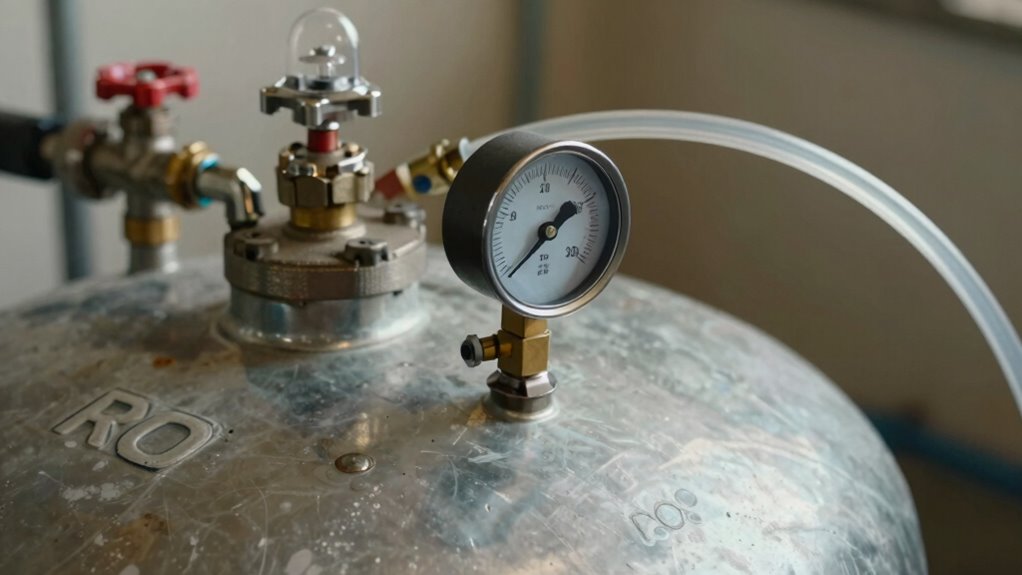
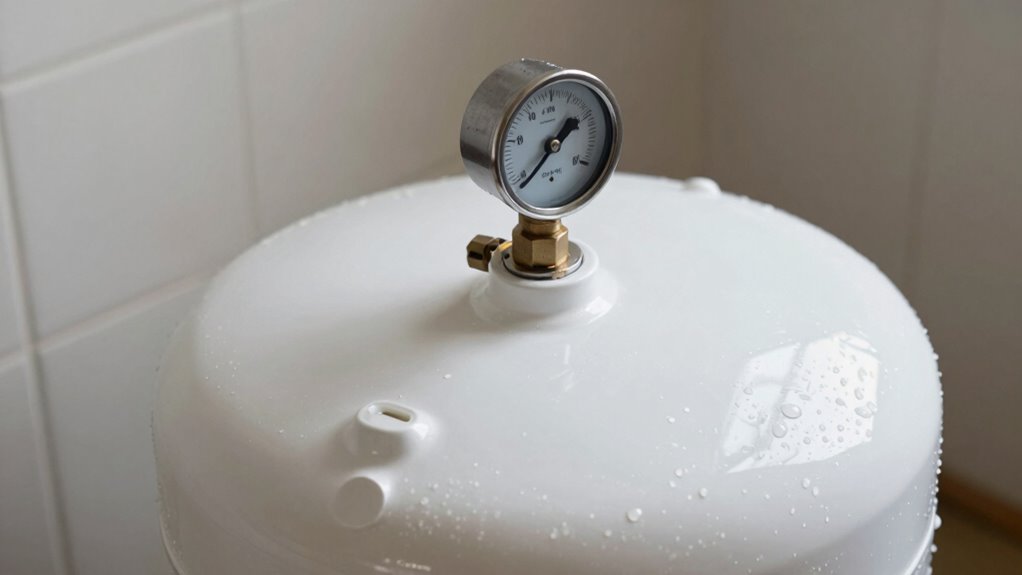
The key to avoiding these issues is understanding how tank pressure works. Most RO tanks are pre-charged with air, creating pressure that pushes water out when you open the faucet. When you use water, pressure inside the tank drops, signaling the system to produce more. If the pressure isn’t restored through proper tank maintenance, the system struggles to deliver water at a good flow rate. That’s why regularly checking the tank pressure and maintaining it within the manufacturer’s recommended range is so important. You can do this with a simple pressure gauge, which should read between 5 to 7 psi when the tank is empty of water. If your reading is below this range, it’s time to add air.
Adjusting tank pressure is straightforward but requires care. Usually, you’ll need to release the water from the tank and then add air using a bicycle pump or an air compressor. Just be sure to turn off your system before doing this to avoid any mishaps. Proper pressure regulation ensures the tank can push water out with enough force, preventing sluggish flow and reducing strain on your system’s components. Additionally, understanding system components and their roles can help you troubleshoot more effectively. Neglecting tank maintenance and pressure regulation leads to inefficient operation, increased wear and tear, and ultimately, a shorter lifespan for your RO system.

WYNNsky Low Pressure Pencil Tire Gauge 1-20 PSI for Golf Carts, ATV'S and Air Springs
The WYNNsky tire gauge is designed specifically to provide precision measurements for low pressure readings that higher PSI…
As an affiliate, we earn on qualifying purchases.
As an affiliate, we earn on qualifying purchases.
Frequently Asked Questions
How Often Should I Check My RO Tank Pressure?
You should check your RO tank pressure at least once every six months to guarantee optimal performance. Regular tank maintenance includes monitoring the pressure gauge and adjusting the pressure as needed. Proper pressure levels help prevent slow water flow and maintain water quality. If you notice inconsistent flow, it’s time for a pressure adjustment. Maintaining correct pressure ensures your system runs smoothly and extends its lifespan.
Can Incorrect Pressure Cause Water to Taste Bad?
Imagine your water’s flavor as a delicate dance, and incorrect pressure regulation as a misstep throwing it offbeat. Yes, improper pressure can cause taste issues, making your water taste strange or off. When pressure isn’t right, it disrupts the filtration process, letting impurities slip through. Regularly checking and maintaining proper RO tank pressure guarantees your water stays crisp and clean, avoiding that unpleasant taste.
Is a Loud RO Tank Noise Normal?
A loud RO tank noise isn’t normal and often indicates pressure sounds or air in the tank. You might hear banging, hissing, or gurgling, which suggests the tank isn’t functioning properly. Check the tank’s pressure and verify it’s within the recommended range. If the noise persists, it could mean a pressure imbalance or a faulty valve. Addressing these issues helps reduce the noise and ensures your system works smoothly.
What Is the Ideal Pressure Range for RO Tanks?
Perfect pressure prevents problems and promotes proper performance. You should aim for an ideal pressure range of 5 to 7 psi for your RO tank. Regular tank maintenance and pressure regulation are vital to avoid slow water flow and guarantee efficiency. Keep an eye on your tank’s pressure gauge, and if it drops below or rises above this range, adjust or refill to maintain peak operation and prolong your system’s lifespan.
How Does Temperature Affect RO Tank Pressure?
Temperature fluctuations directly impact your RO tank pressure because warmer water expands, raising pressure, while colder water contracts, lowering it. This variation can make pressure regulation tricky, affecting your water flow. To keep consistent pressure, monitor temperature changes and adjust your system accordingly. Maintaining a stable environment helps guarantee your RO system functions at its best, providing steady water flow regardless of seasonal or daily temperature shifts.
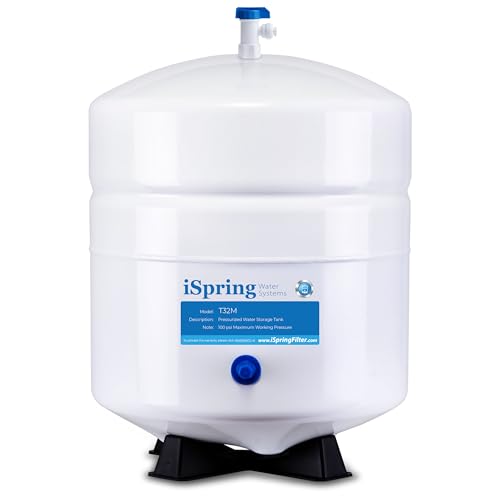
iSpring T32M Pressurized Water Storage Tank with Ball Valve for Reverse Osmosis RO Systems, 4 Gallon, 1/4" Tank Valve Included, White
Metal pressurized tank with up to 3.2 gallon holding capacity
As an affiliate, we earn on qualifying purchases.
As an affiliate, we earn on qualifying purchases.
Conclusion
Now that you know how RO tank pressure affects your water flow, you can troubleshoot like a pro. Think of your RO system as a delicate dance—you need the right rhythm to keep everything moving smoothly. If your water flow’s slow, check that pressure first; it’s the heartbeat of your system. Once it’s right, you’ll enjoy water as swift and steady as a stream rushing downhill, making your daily routine much more invigorating.

iSpring APR40 Pressure Regulator Filter Protection Valve with 1/4" Quick Connect, 40 psi
Reduce pressure to 40 Psi
As an affiliate, we earn on qualifying purchases.
As an affiliate, we earn on qualifying purchases.
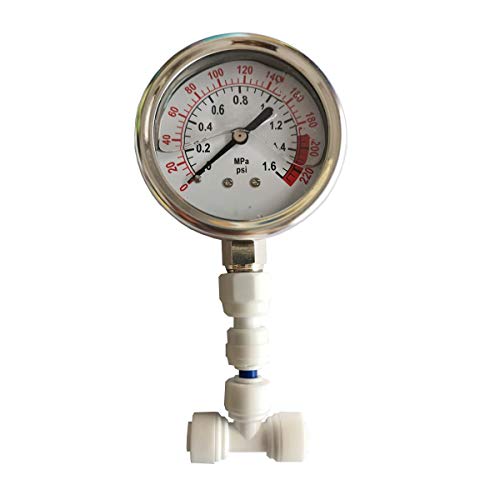
Malida Stainless Water Pressure Test Gauge, Water Pressure Detector for Aquarium Meter 0-1.6MPa 0-220psi Reverse Osmosis System Pump with 1/4.
Water Pressure test Gauge with fittings for connection to 1/4"OD tube
As an affiliate, we earn on qualifying purchases.
As an affiliate, we earn on qualifying purchases.