If your stand mixer is overheating, stop overloading it with large batches or using it at high speeds for too long. Make sure your mixer’s vents are clear from dust and debris, and give it breaks to cool down during extended use. Using surge protectors and avoiding continuous, intense operation can also help prevent overheating. Keep these tips in mind—there’s more to learn on how to keep your mixer running smoothly.

Get home appliances delivered free with Prime
- Fast, free delivery on millions of items
- Prime Video, Amazon Music and more included
- Member-only deals all year
Key Takeaways
- Avoid running the mixer at maximum speed continuously without giving it breaks to prevent heat buildup.
- Keep vents clear of dust, debris, and obstructions to ensure proper airflow and cooling.
- Do not overload the mixer with large batches or excessive ingredients that strain the motor.
- Protect the appliance from power surges by using surge protectors and avoiding electrical storms.
- Regularly monitor the motor for signs of overheating and stop use immediately if it becomes excessively hot.
Stand Mixer Overheating
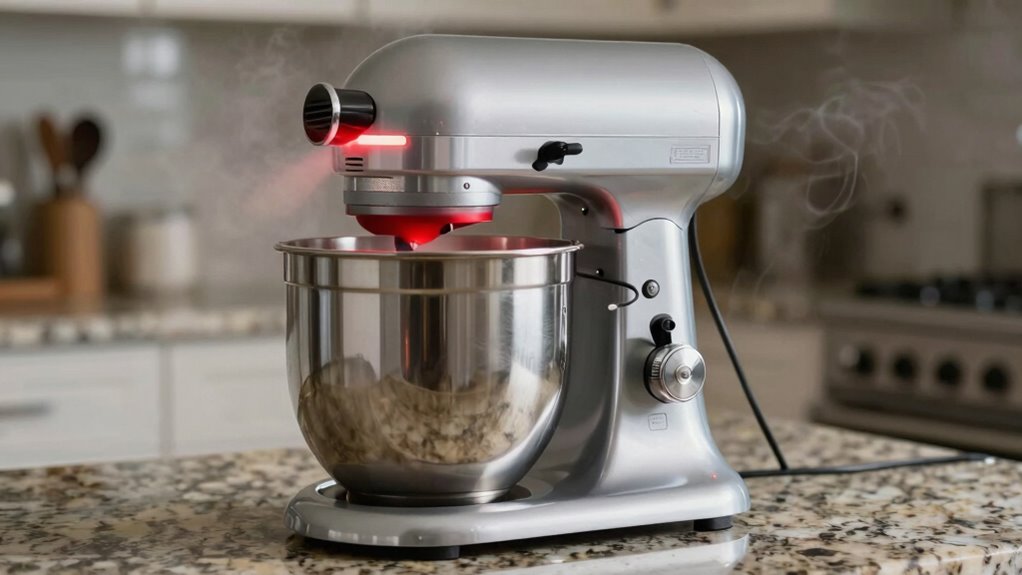
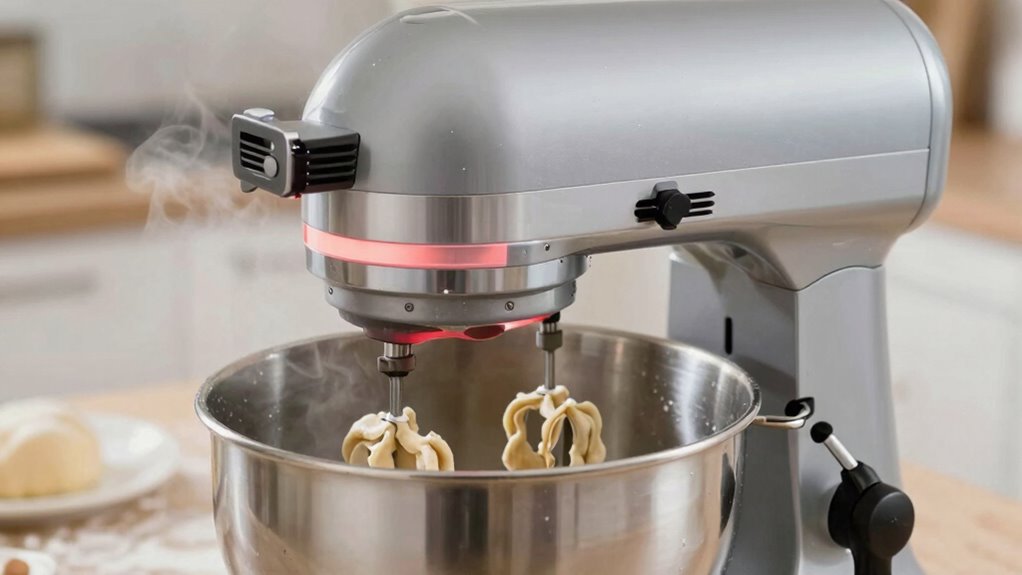
If your stand mixer starts overheating, it’s a clear sign that something isn’t working properly. Overheating can damage the motor and reduce the appliance’s lifespan, so it’s essential to address the issue promptly. One common cause of overheating is inadequate motor cooling. When you run your mixer for extended periods or at high speeds, heat builds up inside the motor. Without proper motor cooling, this heat can accumulate quickly, leading to overheating. To prevent this, avoid continuous operation without breaks, and consider giving your mixer time to cool down between heavy mixing tasks. Ensuring that the vents are clear of dust and debris also helps promote effective airflow, which is vital for motor cooling. If the vents are blocked, heat can’t escape efficiently, increasing the risk of overheating. Additionally, using a high-quality transfer switch or proper electrical setup can help protect against power surges that may contribute to overheating. Another factor to watch out for is a power surge. Power surges can cause irregular electrical flow to the motor, making it work harder than necessary and generating excess heat. When a power surge occurs, it can cause the motor to draw more current, which in turn increases the temperature inside the motor housing. To protect your stand mixer, plug it into a surge protector or avoid using it during storms or electrical instability. If you notice frequent power surges in your home, addressing this issue with appropriate electrical solutions can help safeguard your appliance. Avoid the temptation to continuously run your stand mixer at the highest speed or to overload it with too much dough or batter. Overloading not only strains the motor but also causes it to heat up faster, especially if motor cooling isn’t sufficient. Use the mixer’s speed settings appropriately; lower speeds for mixing ingredients gently, and only bump up the speed when necessary. Also, never force the mixer to work beyond its capacity—this puts unnecessary stress on the motor and can lead to overheating. If you’re mixing large batches, do it in stages rather than all at once. Properly managing load size and speed will help prevent overheating and prolong your mixer’s life.
As an affiliate, we earn on qualifying purchases.
Frequently Asked Questions
Can Overuse Cause My Stand Mixer Motor to Overheat?
Yes, overusing your stand mixer can cause the motor to overheat. When you push it beyond its capacity, it experiences motor strain, increasing the risk of overheating. A power surge, especially during extended use or when mixing heavy ingredients, can also stress the motor further. To prevent this, avoid running the mixer continuously for long periods and give it time to cool down between tasks.
Is It Safe to Use a Damaged Power Cord?
Using a damaged power cord isn’t safe because it compromises electrical safety and could cause shocks or fires. If you notice frayed wires, exposed conductors, or loose plugs, stop using your stand mixer immediately. Replace or repair the cord before operating it again. Continuing to use a damaged power cord risks electrical hazards, so prioritize safety and make sure all connections are intact and secure before plugging in.
How Often Should I Clean the Motor Vents?
You should clean your stand mixer’s motor vents every three to six months, depending on usage. Regular vent cleaning helps prevent overheating and maintains ideal performance. During maintenance, use a soft brush or compressed air to remove dust and debris from the vents. Consistent frequency maintenance ensures proper airflow, prolongs your mixer’s lifespan, and keeps the motor cool during extended use. Don’t neglect vent cleaning to avoid overheating issues.
Can Using the Wrong Attachment Overheat the Motor?
Yes, using the wrong attachment can overheat your motor. If the attachment isn’t compatible with your stand mixer, it can increase the motor load, causing it to work harder than designed. Always check attachment compatibility before use, and avoid overloading the motor. Using the correct attachments guarantees your mixer runs efficiently, prevents overheating, and prolongs the motor’s lifespan.
Does Ambient Temperature Affect the Mixer’s Overheating Risk?
Yes, ambient temperature definitely affects the mixer’s overheating risk. When you operate your stand mixer in a hot environment, the surrounding heat adds to the motor’s workload, increasing the chances of it overheating. To prevent this, keep the mixer in a cool, well-ventilated area and avoid using it outdoors or in direct sunlight. Monitoring ambient temperature helps you avoid unnecessary strain on the motor and prolongs its lifespan.
Conclusion
To prevent your stand mixer from overheating, avoid overloading it or running it for extended periods without breaks. Some believe that using the wrong attachments can also cause excess strain, but recent studies suggest that modern motor designs are more resilient than we think. Still, taking these precautions guarantees your mixer stays in top shape, prolonging its lifespan. Remember, giving your mixer regular breaks isn’t just good practice—it’s backed by research, ensuring efficient, safe operation every time.
Halloween Picks
halloween
As an affiliate, we earn on qualifying purchases.