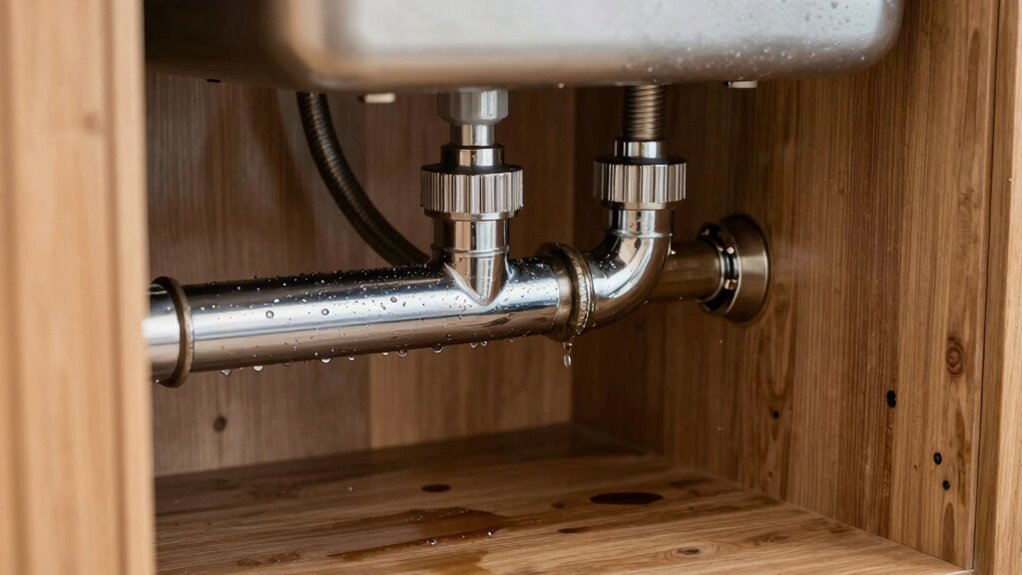
Start by inspecting the plumbing fittings and connections where the pipes join under your sink, tightening any loose slip nuts and checking for cracks or corrosion. Then, look closely at the drain pipe and nearby pipes for signs of leaks like water stains or pooling. If you notice corrosion or persistent dampness, the issue may be a damaged pipe or worn seals. Keep exploring these areas to catch leaks early and prevent water damage.

Get home appliances delivered free — and shop member deals
- Fast, free delivery on millions of items
- Access to Prime Big Deal Days deals on October 6–7
- Prime Video, Amazon Music and more included
Key Takeaways
- Inspect plumbing fittings and connections under the sink for looseness, corrosion, or leaks.
- Check the drain pipe and slip nuts for cracks, damage, or loose fittings causing water pooling.
- Look for water stains, mold, or dampness around the drain area indicating ongoing leaks.
- Examine for corrosion, mineral deposits, or damaged gaskets at fittings and seals.
- Ensure there are no clogs or blockages causing water backup and pressure leaks.

Have you noticed a puddle or dampness beneath your sink? If so, it’s a clear sign that water is escaping somewhere, and you’ll want to identify the source quickly. The first places you should check are the plumbing fittings and drain area, as these are common spots for leaks. Plumbing fittings, which connect the various pipes under your sink, can loosen over time or develop small cracks, leading to water dripping or pooling beneath the sink. Tightening these fittings carefully might stop the leak, but if they’re cracked or corroded, replacing them is often necessary. Remember, even a minor leak at a fitting can cause significant water damage if left unattended.
Next, inspect the drain itself. Over time, drain connections can loosen or become damaged, especially if you’ve recently had work done or if the fittings weren’t properly secured initially. Look for any signs of water around the drain pipe or pooling underneath. Sometimes, a simple tightening of the slip nuts can resolve the problem, but if the pipe or gasket is cracked or worn out, you’ll need to replace those parts. Drain clogs are another culprit that can cause leaks indirectly. When debris, hair, or grease block the drain, water can back up and find its way out through weak points in the plumbing connections. Clearing clogs promptly ensures water flows smoothly and prevents pressure buildup, which might compromise fittings or pipes.
Additionally, understanding plumbing system components can help you better diagnose and prevent leaks in the future. While inspecting these components, keep an eye out for corrosion, rust, or mineral deposits, as these can weaken fittings and pipes, making leaks more likely. Also, check the area around the drain for any signs of water stains or mold, which can indicate ongoing leaks. If you notice persistent dampness despite tightening fittings and clearing clogs, it’s worth considering whether the pipes themselves are damaged or if the seals have deteriorated. Sometimes, replacing worn-out washers or gaskets can solve the problem, but more extensive repairs might require professional help.
sink plumbing fittings repair kit
As an affiliate, we earn on qualifying purchases.
As an affiliate, we earn on qualifying purchases.
Frequently Asked Questions
How Can I Prevent Future Water Leaks Under My Sink?
To prevent future water leaks under your sink, you should regularly perform plumbing maintenance and use leak detection techniques. Check pipes, fittings, and seals for signs of wear or corrosion, tightening connections when needed. Keep an eye out for slow drips or moisture. Using a leak detection kit can help catch small issues early. Consistent maintenance and prompt repairs guarantee your plumbing stays leak-free and functioning smoothly.
What Tools Do I Need to Fix a Sink Leak?
Think of fixing a sink leak as assembling a toolbox for success. You’ll need DIY fixes like an adjustable wrench, slip-joint pliers, a screwdriver, plumber’s tape, and a bucket. These tool essentials help tighten fittings, replace washers, or seal leaks effectively. With these in hand, you can confidently tackle minor repairs, stopping leaks before they turn into bigger problems. Always guarantee safety and turn off water before starting.
When Should I Call a Professional Plumber?
You should call a professional plumber when DIY tips don’t fix the leak or if you notice persistent issues. Common causes like damaged seals or corroded pipes can be tricky to repair on your own. If you’re uncomfortable with the repair process or if water damage worsens, it’s best to seek expert help. Don’t risk further damage—trust a plumber when basic fixes don’t resolve the problem quickly.
Are There Eco-Friendly Solutions for Repairing Leaks?
You can absolutely use eco-friendly repair methods for leaks, and they’re often safer for your home and the environment. Sustainable leak solutions include using biodegradable sealants, repurposing recycled materials, and choosing non-toxic adhesives. These eco-friendly options not only minimize chemical impact but also promote sustainability. By opting for these methods, you’re making a responsible choice that benefits both your household and the planet.
How Long Does a Typical Sink Leak Repair Take?
A typical sink leak repair usually takes about 1 to 3 hours, depending on the cause. Common causes include loose fittings, damaged washers, or corroded pipes. You can speed up the process with effective leak detection, like inspecting connections and testing for drips. If you’re comfortable with basic plumbing, you might fix minor issues quickly; otherwise, expect to spend more time or call a professional.
Conclusion
Fixing a leak is like catching a small leak before it floods your entire home. I once ignored a tiny drip under my sink, thinking it was nothing. Weeks later, it caused water damage that cost hundreds to repair. Don’t wait until it’s too late—check those first three spots regularly. A quick fix now can save you big trouble later, just like stopping a small leak prevents a flood. Stay vigilant and keep your home dry!
Halloween Picks
halloween
As an affiliate, we earn on qualifying purchases.