
To inspect and replace your water heater’s anode rod, turn off power and water supply, drain some water, and locate the rod on top of the tank. Check for corrosion, thinning, or buildup—if over 75% corroded, replace it. Use the proper tools and follow safety steps. Regular maintenance keeps your tank in top shape. Stay tuned to learn detailed steps for a safe and effective replacement.
Key Takeaways
- Turn off power, water, and gas before inspecting or replacing the anode rod.
- Drain the tank below the anode’s level and locate the hexagonal plug or screw on top.
- Use a socket wrench and leverage tools to unscrew the corroded anode rod carefully.
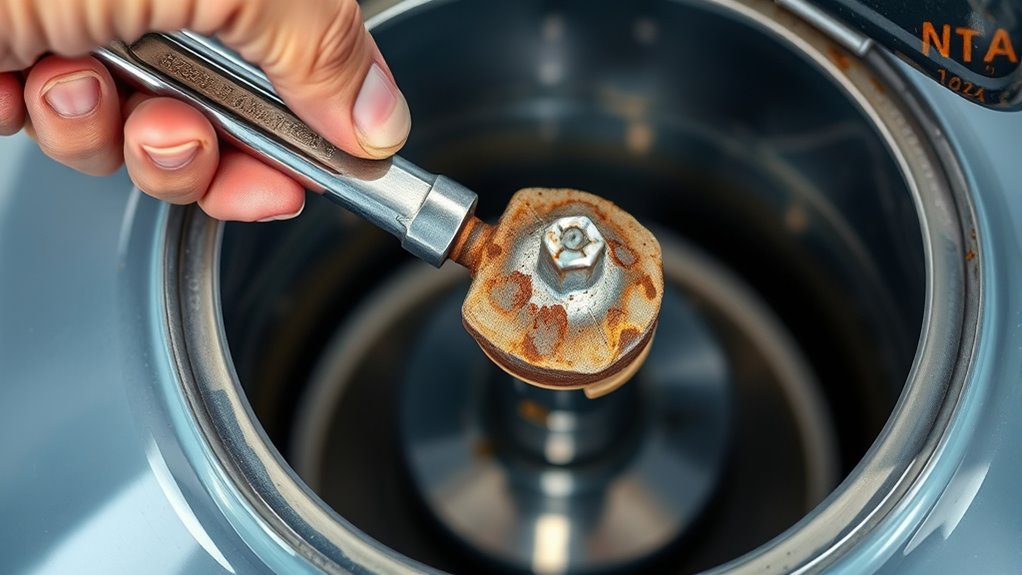
- Check the rod for corrosion; replace if over 75% corroded or less than half-inch thick.
- Regularly inspect every 6-12 months and replace the anode rod to prevent tank damage.
Understanding the Role of the Anode Rod in Your Water Heater
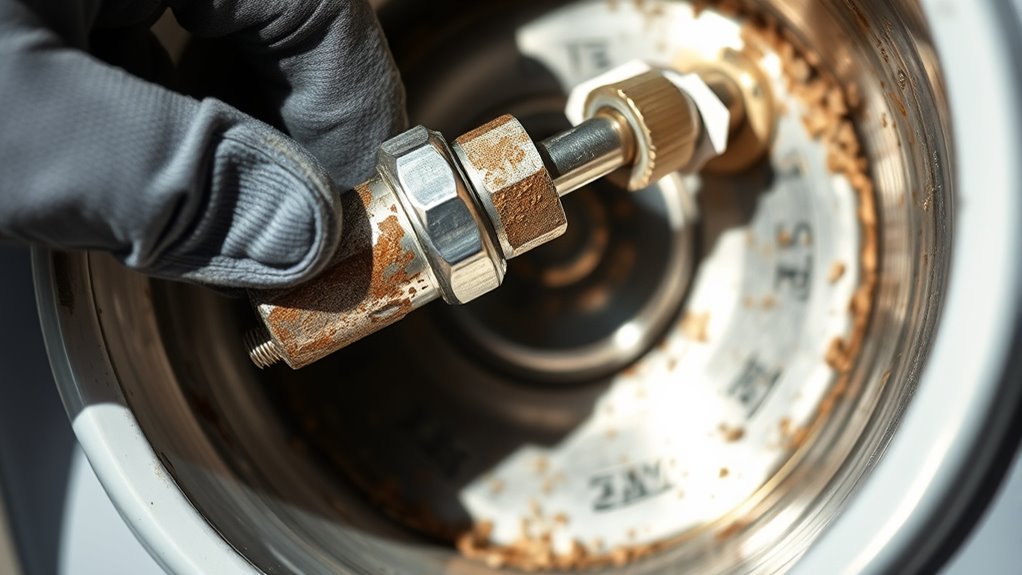
Understanding the role of the anode rod in your water heater is essential for maintaining its longevity. The anode rod acts as a sacrificial component made from reactive metals like magnesium or aluminum-zinc, which attract corrosive elements in the water. This process, called galvanic corrosion, protects the steel tank by corroding itself instead of the tank’s walls. The anode rod’s primary purpose is to extend the unit’s lifespan and prevent leaks. Regularly inspecting and maintaining the anode rod guarantees it remains effective, allowing it to continue protecting your water heater from corrosion and damage over time. Proper maintenance helps prevent premature tank failure and costly repairs. Additionally, understanding water heater corrosion can help homeowners identify early signs of anode rod deterioration and take timely action. Being aware of anode rod deterioration signs can assist in planning for timely replacements before significant damage occurs.
Signs Indicating the Need for Anode Rod Inspection and Replacement

Recognizing the signs that your water heater’s anode rod needs inspection or replacement is crucial for preventing costly damage. Rusty or discolored water indicates the tank is corroding due to a failing anode rod. A brown tint often appears when the rod can no longer prevent rust inside the tank. Persistent sulfur or rotten egg smells signal bacterial growth, which happens when the rod deteriorates. Reduced hot water supply and efficiency also point to internal corrosion weakening the tank. Additionally, unusual noises like popping or banging suggest sediment buildup caused by corrosion products. Physical signs such as heavily corroded or thinned rods, calcium deposits, or exposure of the core wire above six inches require inspection. Regularly checking these signs helps maintain your water heater’s longevity and performance. Understanding the role of the anode rod can help you better maintain and extend your water heater’s lifespan. Staying informed about water heater maintenance and the importance of the anode rod can further prevent unexpected failures.
Step-by-Step Guide to Inspecting Your Anode Rod
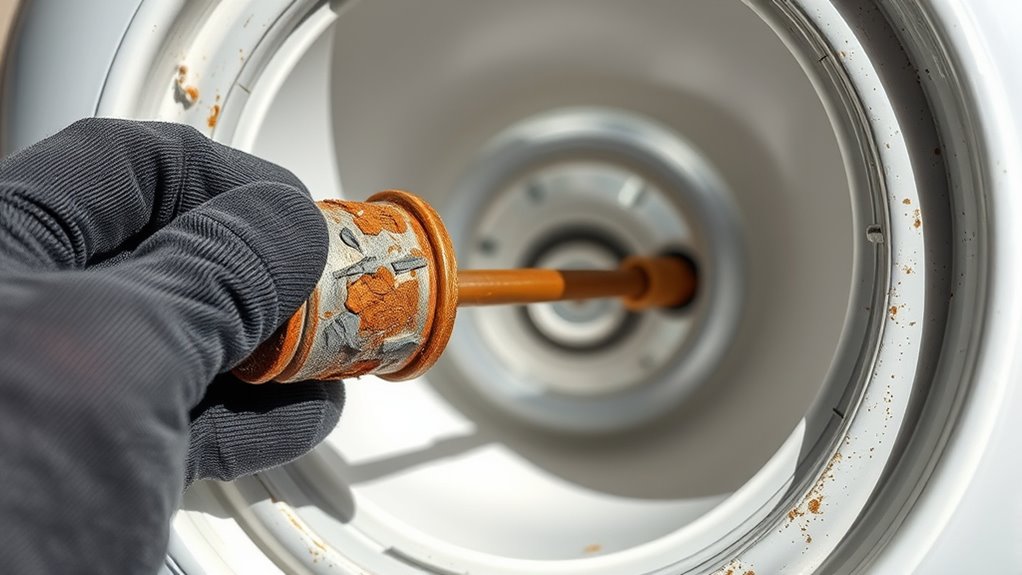
Before inspecting your anode rod, you need to prepare your water heater to guarantee safety and ease of access. Turn off the power supply—switch off the breaker for electric models or shut the gas valve for gas heaters. Close the cold water inlet valve to stop water flow. Attach a hose to the drain valve and drain a few gallons to lower the water level below the anode rod, preventing spills. Open a nearby hot water faucet to release pressure and facilitate draining. Gather tools like a socket wrench (usually 1 1/16-inch), extension bars, and possibly a wire brush or penetrating lubricant. These steps help assure your inspection is safe and straightforward. Once prepared, locate the anode rod on top of the tank, typically under a hexagonal plug or screw head. Proper maintenance of your water heater can extend its lifespan and improve water quality. Regularly inspecting the anode rod helps prevent corrosion and potential tank leaks over time.
Proper Techniques for Replacing the Anode Rod
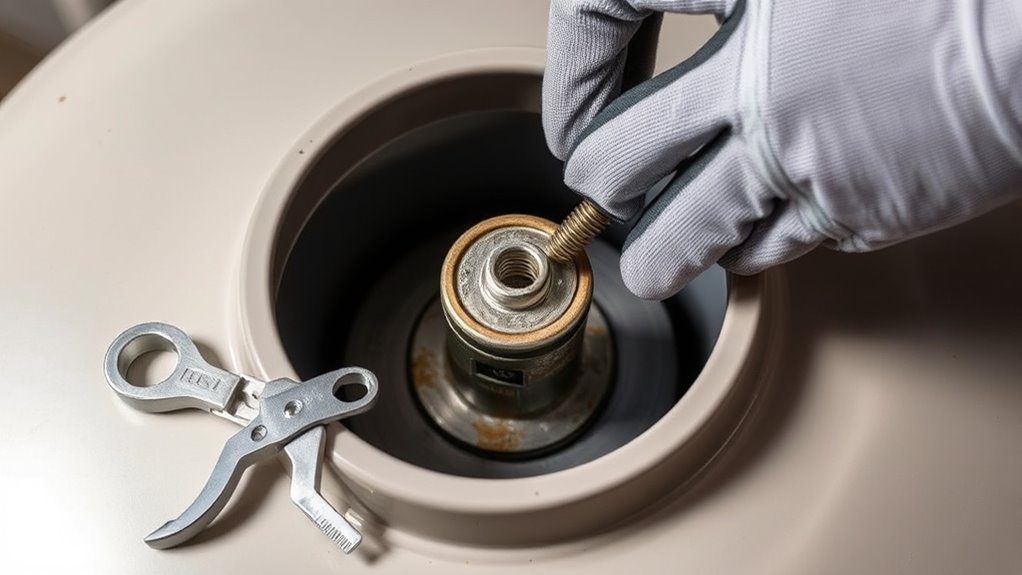
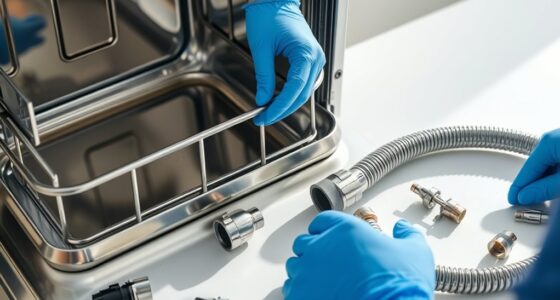
To replace the anode rod properly, start by gathering the necessary tools and materials, including a deep socket wrench, Teflon tape, and leverage tools like a breaker bar if needed. Make certain you turn off power, water, and gas before beginning. Drain the tank partially to below the anode’s level, using a garden hose and hot water faucet to ease drainage. Locate the anode, usually under a hex cap, and apply penetrating oil if corroded. Use your wrench with the correct socket to unscrew the rod counterclockwise, applying extra leverage if stuck. When installing the new rod, wrap Teflon tape around the threads, insert carefully, and tighten to the proper torque. Always tighten to manufacturer’s specifications. Incorporate a proper inspection to ensure the anode is still effective or needs replacement. Finally, restore the water, power, and gas, and check for leaks.
Tips for Maintaining Optimal Anode Rod Performance
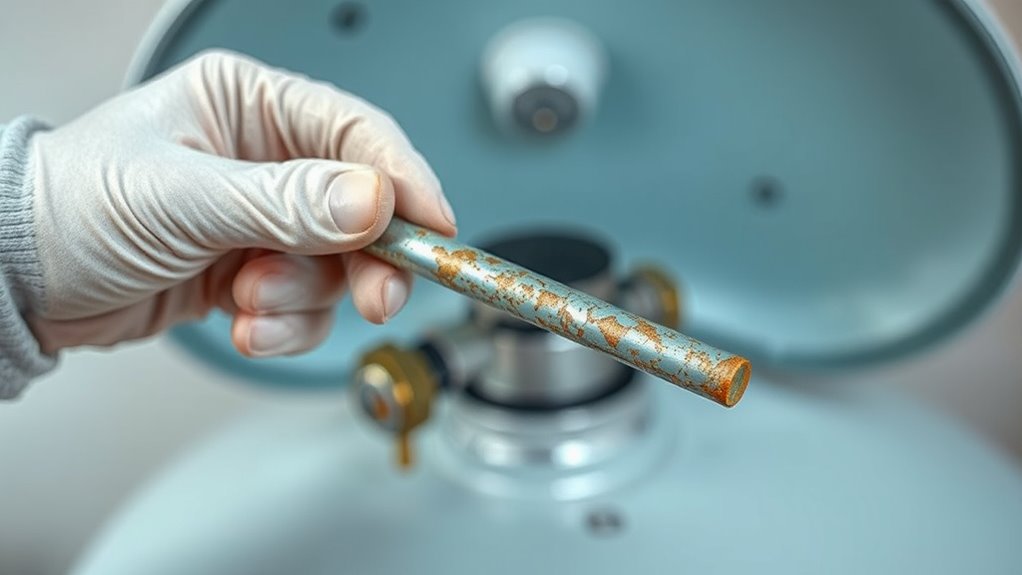
Regular inspection and monitoring are essential to make certain your anode rod functions effectively and prolongs your water heater’s lifespan. Check the rod every 6 to 12 months for corrosion or thinning—replace it if it’s over 75% corroded or less than half an inch thick. Watch for signs like rusty water, sulfur odors, or reduced heating efficiency, which indicate rod failure. Use water testing to adjust softener settings, preventing over-softening that speeds up corrosion. Choose the right anode material—magnesium for soft water, aluminum or zinc for hard water. Flush the tank annually to remove sediment. Keep detailed records of inspections and replacements to anticipate future maintenance. Following these tips helps maximize anode performance and extends your water heater’s lifespan. Regular tank maintenance also helps ensure your system operates safely and efficiently over time, and incorporating preventive care practices can significantly reduce unexpected repairs.
Frequently Asked Questions
Can Using Softened Water Affect Anode Rod Lifespan?
Yes, using softened water can shorten your anode rod’s lifespan. Softened water, especially with salt-based softeners, increases electrical conductivity and introduces sodium ions that accelerate corrosion. This causes the anode rod to degrade faster, often within a year instead of 3-5 years. To protect your water heater, you should inspect and replace the anode rod more frequently, ideally annually, and consider using the right type of rod for soft water conditions.
Are There Different Anode Rods Suitable for Various Water Heater Models?
Yes, different anode rods suit various water heater models. You’ll find standard 3/4-inch rods fitting most tanks, but size and type vary by model and design. Some heaters have separate inlets or access points, affecting compatibility. To avoid issues, check your heater’s manufacturer guidelines or consult a professional. Choosing the right rod guarantees maximum protection, longer lifespan, and prevents costly repairs down the line.
How Does Water Temperature Influence Anode Rod Corrosion Rate?
Higher water temperatures speed up anode rod corrosion because they increase electrochemical reactions. When your water heater operates above 120°F, the corrosion rate accelerates, causing the rod to wear out faster. Hot water also boosts mineral activity and oxidation, which worsens corrosion. To extend your anode rod’s lifespan, keep the temperature below 120°F and perform regular inspections, especially if your water is naturally hot or chemically aggressive.
Can Installing a Longer Anode Rod Improve Protection?
Installing a longer anode rod can improve protection by providing more sacrificial material, which prolongs the tank’s corrosion resistance. The extra length means more reactive metal to corrode before the tank is compromised. Just make sure it fits your water heater and isn’t cut excessively. Regular inspections are still essential, but a longer rod generally extends the time between replacements and helps keep your water heater in better condition longer.
What Safety Precautions Should I Take During Anode Rod Replacement?
During anode rod replacement, you should shut off the water supply, gas or power sources, and let the heater cool to prevent burns or accidents. Wear gloves to handle sharp or brittle parts, drain some water to reduce pressure, and use proper tools to avoid slippage. Confirm ventilation for gas heaters, check for leaks after reassembly, and carefully restore power or gas, monitoring for any issues during operation.
Conclusion
By staying on top of your anode rod inspections and replacements, you’ll keep your water heater running smoothly and avoid costly repairs. Regular maintenance is the key to extending its lifespan, so don’t let it fall by the wayside. Remember, an ounce of prevention is worth a pound of cure—taking care of your anode rod now will save you headaches down the road. Keep up the effort, and your hot water will stay flowing when you need it most.