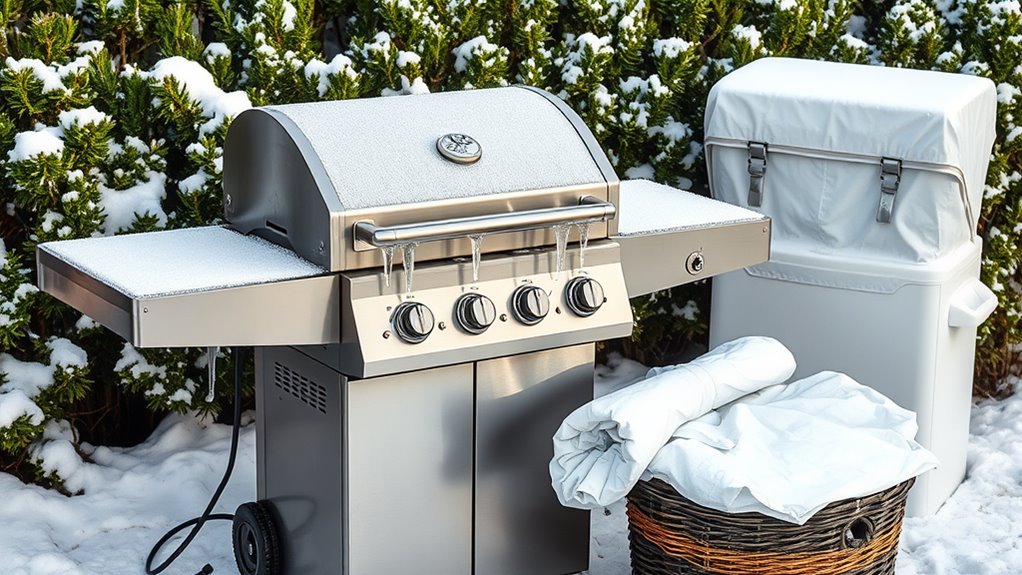

To winterize your outdoor appliances like grills and freezers, start by unplugging and cleaning them thoroughly to remove dirt, debris, and food residues. Drain any water lines or tanks to prevent freezing and potential cracks, ensuring all parts are completely dry. Cover the appliances with durable, weather-resistant covers that fit snugly but allow airflow to prevent moisture buildup. If you continue exploring, you’ll discover key tips to protect your appliances throughout the cold months and extend their lifespan.

Get home appliances delivered free with Prime
- Fast, free delivery on millions of items
- Prime Video, Amazon Music and more included
- Member-only deals all year
Key Takeaways
- Clean and dry all surfaces, removing food, debris, and moisture to prevent mold and corrosion.
- Drain internal water lines, hoses, and removable parts to prevent freezing damage.
- Cover appliances with durable, weather-resistant covers that fit snugly but allow airflow.
- Secure covers firmly to resist wind, ensuring they don’t trap moisture underneath.
- Inspect and maintain covers regularly, replacing damaged ones and ensuring proper drainage and ventilation.
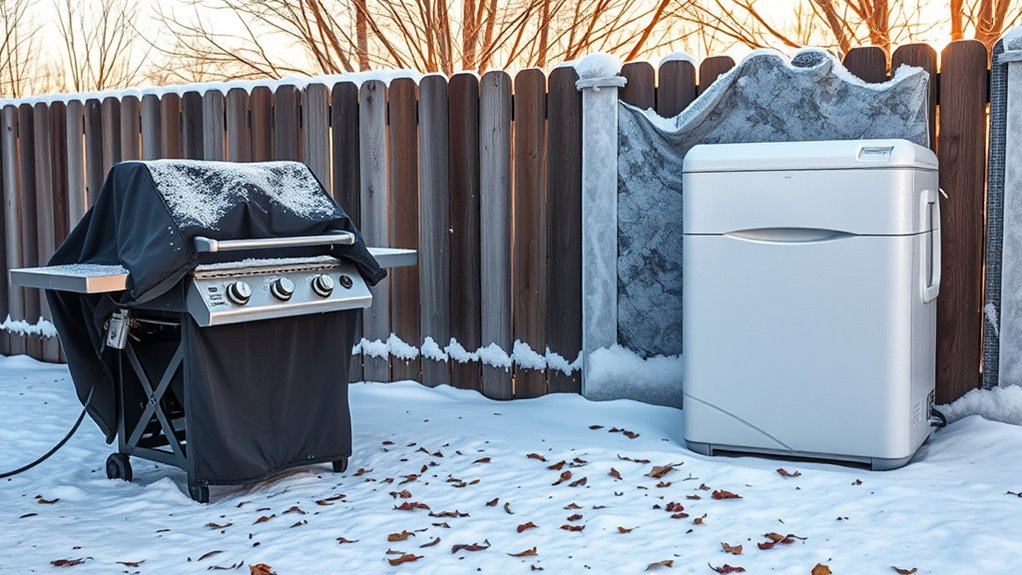
As winter approaches, it is essential to prepare your outdoor appliances to withstand the cold and prevent damage. One of the most effective steps you can take is covering appliances properly. Use durable, weather-resistant covers that fit snugly over your grills, freezers, or outdoor refrigerators. Covering appliances keeps snow, ice, and debris from accumulating, which can cause rust, corrosion, or other damage over the winter months. Make sure covers are secure but not so tight that they trap moisture underneath, as trapped moisture can lead to mold and deterioration. If your appliances are built with vents, ensure these are open or properly covered with vent covers to allow air circulation and prevent condensation buildup inside.
Another essential part of winterizing outdoor appliances is draining fluids. Many appliances, especially those with internal water lines like outdoor freezers or refrigerators, need their fluids removed to prevent freezing and expansion that can crack components. Start by unplugging the appliance and removing any removable parts, such as trays or drawers, to clean and dry thoroughly. Next, locate any internal water lines or tubes—these are common in appliances with ice makers or water dispensers. Carefully drain all water from these lines, using a siphon or by disconnecting the hoses if necessary, to ensure no residual water remains. For appliances that contain refrigerants, it’s advisable to consult a professional to handle any necessary maintenance or to confirm that refrigerant levels are safe for winter.
In addition to draining fluids, it’s wise to clean and dry all surfaces of your outdoor appliances. Remove any leftover food, dirt, or debris to prevent mold or pests from taking hold during the cold months. Dry all parts thoroughly to inhibit rust and corrosion. If your appliance has a drain plug, make sure it’s securely closed after draining and cleaning. For appliances that don’t have drain plugs, tilt or position them slightly to encourage any remaining water to escape. When covering appliances, double-check that they are completely dry beforehand to prevent trapping moisture under the cover, which can accelerate deterioration.
Taking these steps—covering appliances properly and draining fluids—significantly extends the lifespan of your outdoor appliances and keeps them in good condition for the next season. It might seem simple, but neglecting these tasks can lead to costly repairs or replacements. Invest a little time now, and you’ll save yourself money and hassle come springtime. Proper winterization ensures your outdoor appliances are protected from harsh weather, allowing you to enjoy their use longer and with fewer worries about winter damage. Additionally, using appropriate covers that are designed for outdoor appliances can further enhance protection against the elements.
outdoor appliance weatherproof cover
As an affiliate, we earn on qualifying purchases.
As an affiliate, we earn on qualifying purchases.
Frequently Asked Questions
How Do I Prevent Pests From Entering My Outdoor Appliances During Winter?
To prevent pests from entering your outdoor appliances during winter, you should start by sealing gaps and cracks around doors, vents, and seams with weatherproof caulk or sealant. Keep the area clean and free of food debris or standing water that attracts pests. Cover appliances with tight-fitting, breathable covers when not in use. Regularly inspect and re-seal any new gaps to maintain effective pest prevention throughout the season.
Can I Leave My Outdoor Freezer Outside During Harsh Winter Storms?
You shouldn’t leave your outdoor freezer outside during harsh winter storms. The extreme cold and moisture can damage the compressor and cause rust. Instead, perform outdoor appliance maintenance by disconnecting it, cleaning thoroughly, and winter weatherproofing tips like covering it with a weather-resistant tarp. Protect your investment and avoid surprises—take action now to guarantee your freezer survives the winter unscathed. Don’t risk costly repairs by ignoring these vital steps.
What’s the Best Way to Store Propane Tanks When Winterizing Grills?
When winterizing your grill, store propane tanks outdoors in a well-ventilated, upright position away from ignition sources. make certain the tank valve is closed tightly and disconnect the tank from the grill. Use a secure, weatherproof cover or place the tank in a protected, shaded area to prevent rust. Proper propane tank storage is essential for winter safety, reducing the risk of leaks or accidents during cold months.
How Do I Protect Outdoor Appliances From Ice Damage?
To protect outdoor appliances from ice damage, you should use insulation techniques like foam covers or blankets to prevent freezing. Additionally, implement drainage solutions such as tilting appliances slightly or installing drainage holes to keep water out. These methods help prevent ice buildup inside and around your appliances, reducing the risk of cracks and damage during cold weather. Regularly check and maintain these protections throughout winter for ideal safety.
Are There Specific Cleaning Products Recommended for Winterizing Outdoor Appliances?
Did you know that using the right cleaning products can extend the lifespan of outdoor appliances by up to 30%? For winterizing, you should use specialized cleaning solutions designed for outdoor equipment, which effectively remove grease and dirt. Additionally, applying rust inhibitors helps prevent corrosion during the cold months. These products guarantee your appliances stay in top shape, ready for use when spring arrives.
Conclusion
By winterizing your outdoor appliances, you protect your investment and avoid costly repairs come spring. Did you know that over 60% of appliance failures during winter are caused by moisture and freezing temperatures? Taking simple steps now can save you money and hassle later. So, don’t wait—drain, clean, and cover your grills and freezers today. Proper winterizing keeps your appliances in top shape and ready to use when warmer weather returns.
Fall Picks
fall essentials
As an affiliate, we earn on qualifying purchases.