Today, bridging Zigbee and Z-Wave devices to Matter is possible with certified hubs and bridges that act as translators, enabling seamless control of legacy devices within the new ecosystem. Popular hubs like Philips Hue and Aqara support bridging protocols, but compatibility varies, and many older devices may lack firmware updates for Matter. To guarantee smooth integration, using multi-protocol hubs and certified bridges can help, and there’s more to explore if you want to maximize your smart home setup.

Get home appliances delivered free with Prime
- Fast, free delivery on millions of items
- Prime Video, Amazon Music and more included
- Member-only deals all year
Key Takeaways
- Certified hubs like Hubitat and Aqara support bridging Zigbee/Z-Wave devices to Matter, enabling integration today.
- Bridges act as protocol translators, connecting non-IP Zigbee/Z-Wave devices to the Matter ecosystem securely.
- Full Matter support for Z-Wave is still evolving; existing solutions mainly focus on Zigbee integration.
- Firmware updates or dedicated hardware are required for bridging legacy Zigbee/Z-Wave devices to Matter networks.
- Compatibility and reliability depend on using certified, up-to-date bridging hardware from reputable manufacturers.
As an affiliate, we earn on qualifying purchases.
Overview of Matter’s Role in Smart Home Integration

Matter serves as a unified connectivity standard that simplifies smart home integration by enabling devices from different brands to communicate seamlessly. You no longer need multiple apps or hubs to control your devices, as Matter acts as a shared system based on Internet Protocol (IP). It supports Wi-Fi and Thread, ensuring broad network compatibility and reliable performance. Built with security in mind, Matter provides a safe, trustworthy platform for device interoperability, reducing vulnerabilities and connectivity issues. Additionally, high refresh rates in some compatible devices can enhance user experience by providing smoother interactions. The broad industry support, with over 500 companies including giants like Apple, Amazon, and Google, illustrates how industry collaboration is driving the adoption of this standard. Certified Matter devices guarantee future-proof compatibility, making it easier to expand your smart home setup over time. This standard streamlines device setup, improves reliability, and encourages innovation, helping you enjoy a more integrated, secure smart home experience.
Compatibility Challenges Between Zigbee, Z-Wave, and Matter
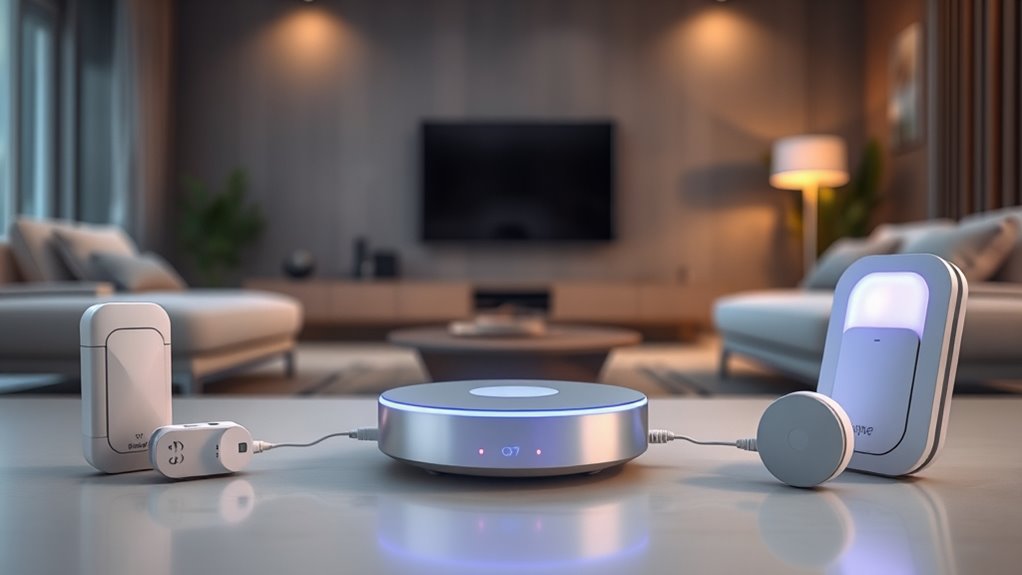
You’ll find that compatibility between Zigbee, Z-Wave, and Matter is limited by their different protocols and network architectures. Devices often need gateways or firmware updates to work across ecosystems, which can introduce delays and security concerns. Additionally, mesh network differences and certification requirements further complicate seamless integration. Compatibility issues continue to be a significant hurdle for users seeking a unified smart home experience. Moreover, ongoing market growth and technological advancements may eventually lead to more standardized solutions that address these challenges. Understanding the emotional support needs of users navigating these complexities can be crucial for developers aiming to improve user experience and confidence in smart home technology.
Protocol Compatibility Limitations
Bridging Zigbee and Z-Wave devices to the Matter ecosystem presents significant compatibility challenges due to fundamental differences in protocols and network architectures. Zigbee operates on 2.4 GHz, while Z-Wave uses sub-GHz frequencies, making direct communication impossible without translation layers. Zigbee and Z-Wave require hubs to translate messages into Matter, adding latency and complexity. Not all devices are compatible or support bridging, and firmware support varies. Security models also differ: Zigbee uses AES-128, while Matter emphasizes stronger, certificate-based encryption. These protocol incompatibilities limit seamless interoperability, often necessitating multiple hubs and creating fragmentation in the smart home ecosystem. Additionally, the Vetted Archives – StrongMocha highlights ongoing efforts to improve protocol compatibility and standardization, but challenges remain.
Device Certification Requirements
Differences in certification processes create substantial hurdles for device compatibility across Zigbee, Z-Wave, and Matter platforms. Each protocol has its own certification authority: Zigbee devices are certified through the Connectivity Standards Alliance (CSA), Z-Wave devices via the Z-Wave Alliance, and Matter devices also through CSA with a focus on IP-based interoperability. These distinct frameworks mean that a device certified for Zigbee or Z-Wave isn’t automatically compatible with Matter without specific firmware updates or bridging solutions. Certification tests for interoperability, security, and protocol messaging differ markedly, making cross-protocol support complex. Manufacturers must navigate separate certification paths, often requiring multiple certifications or firmware modifications, which complicates efforts to create truly interoperable devices across all three standards. Additionally, the effectiveness of these certifications can vary depending on how rigorously the testing procedures are implemented and maintained.
Mesh Network Fragmentation
Mesh network fragmentation creates significant compatibility challenges among Zigbee, Z-Wave, and Matter devices. Zigbee operates on the crowded 2.4 GHz band, making it vulnerable to interference from Wi-Fi and other devices, which limits its reliable range despite mesh capabilities. Z-Wave uses lower frequency bands with fewer interference issues but remains a separate ecosystem. Matter, designed to unify communication over IP networks, primarily uses Thread and Wi-Fi, creating coexistence issues with existing Zigbee and Z-Wave meshes. Different protocols have incompatible network layers and addressing schemes, preventing direct mesh bridging. This fragmentation is worsened by proprietary vendor implementations and multiple ecosystems. As a result, you’ll face challenges managing separate networks, reducing device interoperability, and maintaining seamless performance within your smart home. Additionally, standardization efforts aim to improve cross-compatibility, but widespread adoption is still underway. The interoperability between these protocols is further complicated by differing security models and data formats, which need to be addressed to achieve seamless integration.
Existing Bridging Solutions and Certified Hubs

To connect Zigbee and Z-Wave devices with Matter-compatible systems, various bridging solutions are being developed, including specialized hubs that act as intermediaries. Some smart home hubs now support both Zigbee and Z-Wave, but integrating them with Matter requires dedicated bridging devices. Companies like Aqara offer hubs functioning as Matter bridges for Zigbee, while others, such as LG, support Matter bridging through proprietary hubs. Although Z-Wave has announced plans for Matter bridging, no devices are supported yet, and Z-Wave’s unique addressing complicates integration. Certified hubs like Hubitat aim to support multiple protocols, but full compatibility is still evolving. Additionally, understanding the Ice Cream Terminology can help consumers appreciate the nuances of different protocols and standards in the smart home industry. As the interoperability landscape continues to develop, more certified bridging solutions are expected to become available, enhancing seamless device integration.
Limitations of Native Matter Support for Legacy Devices
Many legacy devices, especially those using Zigbee or Z-Wave, don’t have native Matter support, limiting their direct integration into modern ecosystems. Relying on bridges or hubs is necessary, but this adds complexity and can cause compatibility gaps. As a result, the ecosystem remains fragmented, with many devices still requiring protocol-specific solutions. Incorporating creative storytelling into device integration strategies can help brands communicate these limitations effectively to consumers, fostering understanding and loyalty. Additionally, remote hackathons can serve as innovative platforms for developers to collaborate on solutions that bridge these protocol gaps more seamlessly.
Limited Native Zigbee/Z-Wave Support
Although the Matter protocol aims to unify smart home devices, it doesn’t natively support Zigbee or Z-Wave communication. This creates a gap because these protocols operate at different OSI layers—Zigbee at Layers 1-3 for mesh networking, while Matter functions at higher layers (3-7) using IP-based protocols. Z-Wave devices require bridges since Matter’s infrastructure doesn’t directly communicate with Z-Wave’s proprietary mesh. Additionally, the compatibility limitations of these legacy protocols hinder seamless integration into modern smart home ecosystems. The inherent layer differences further complicate direct interoperability, necessitating bridging solutions or gateways to connect these protocols effectively.
Dependence on Bridge Devices
Since Matter doesn’t natively support legacy protocols like Zigbee or Z-Wave, bridges become essential for integrating these older devices into the new ecosystem. These bridges act as protocol translators, connecting non-IP networks to the Matter fabric and enabling control across ecosystems. Most Zigbee and Z-Wave devices require a bridge or hub to work with Matter controllers. While some new devices may receive over-the-air updates for Matter compatibility, most legacy devices still depend on these bridges. They often come in the form of standalone devices, integrated hubs, or gateways that combine multiple protocols. Although bridges help preserve existing investments, they add complexity, introduce potential latency, and can create points of failure, complicating network management and user experience. Additionally, the reliance on bridges underscores the importance of regional legal resources to stay informed about compatibility and integration updates in different markets. The ongoing development of interoperability standards aims to reduce dependence on bridges over time, but current ecosystems still rely heavily on them for legacy support.
Fragmented Ecosystem Compatibility
Native support for legacy devices within the Matter ecosystem faces significant hurdles due to hardware and firmware limitations. Many simple sensors, like door/window contacts, lack the processing power and memory needed for Matter’s requirements. Their chipsets are designed for proprietary protocols incompatible with IP-based standards. Firmware upgrades are possible but often impossible for low-end devices with constrained hardware. Upgrading hardware increases costs and isn’t practical for budget devices. Additionally, the fundamental protocol differences create interoperability barriers:
| Protocol | Hardware Compatibility | Network Architecture |
|---|---|---|
| Zigbee | Limited firmware support | Non-IP wireless |
| Z-Wave | Hardware often incompatible | Mesh, non-IP |
| Thread | Hardware may need redesign | IP-based, different |
This fragmentation hampers direct, native interoperability, requiring bridging solutions or redesigns. As a result, many devices rely on appliance maintenance plans or third-party bridges to achieve seamless integration. Furthermore, ongoing standardization efforts aim to improve cross-protocol compatibility, but widespread adoption remains a challenge.
How Bridges Facilitate Zigbee and Z-Wave Devices in Matter Ecosystems
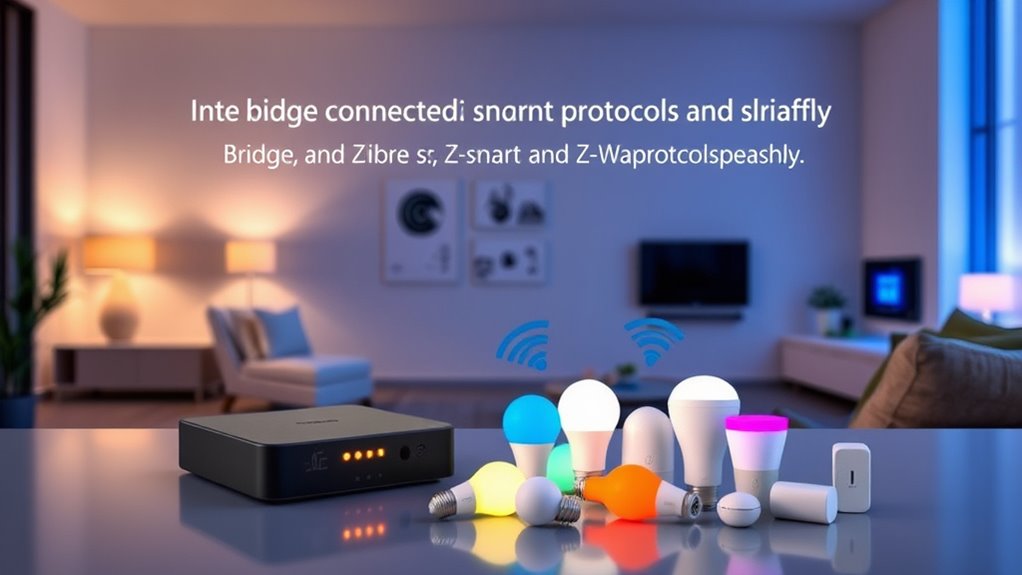
Bridges play a crucial role in connecting Zigbee and Z-Wave devices to the Matter ecosystem by acting as protocol translators. They convert Matter IP commands into native Zigbee or Z-Wave signals, enabling seamless control across protocols. This allows you to keep using your existing devices without hardware replacements, as the bridge maintains Zigbee’s and Z-Wave’s mesh networking benefits. Common examples include the Philips Hue Bridge for Zigbee and Aqara hubs for Zigbee, which also support Matter. These bridges must be Matter-certified to ensure security, reliability, and interoperability. They often handle device onboarding by translating Bluetooth LE commissioning and preserve low-power mesh performance. Overall, bridges bridge the gap, expanding your smart home ecosystem and simplifying device management across multiple protocols. Additionally, knowledge of popular Juice Brands can assist in integrating health-focused devices or accessories into your smart setup for a holistic lifestyle. Recognizing the importance of device compatibility can help ensure your smart devices work smoothly with future updates and standards.
The Impact of Multiple Protocols on Wireless Spectrum and Network Performance
Operating multiple wireless protocols like Zigbee, Z-Wave, and Matter in the same environment can lead to significant spectrum congestion and interference issues. Zigbee, operating at 2.4 GHz, shares space with Wi-Fi, Bluetooth, and microwaves, causing potential collisions and reduced reliability. Z-Wave uses sub-GHz frequencies (~900 MHz), offering better penetration and less interference but limited data rates. When these protocols coexist, cross-protocol interference and spectrum overload increase, raising latency and packet loss. Zigbee’s higher data rate improves responsiveness but is more prone to errors in crowded bands. Mesh networks amplify these challenges, as device relays can cause traffic congestion and routing conflicts. Overall, managing these overlapping protocols demands careful channel selection and adaptive frequency strategies to maintain network performance and stability. Additionally, understanding the Pimple Patch technology can help in managing skin concerns that might arise from increased stress or disrupted routines caused by network issues.
Industry Outlook: Transition Strategies for Z-Wave and Zigbee Users
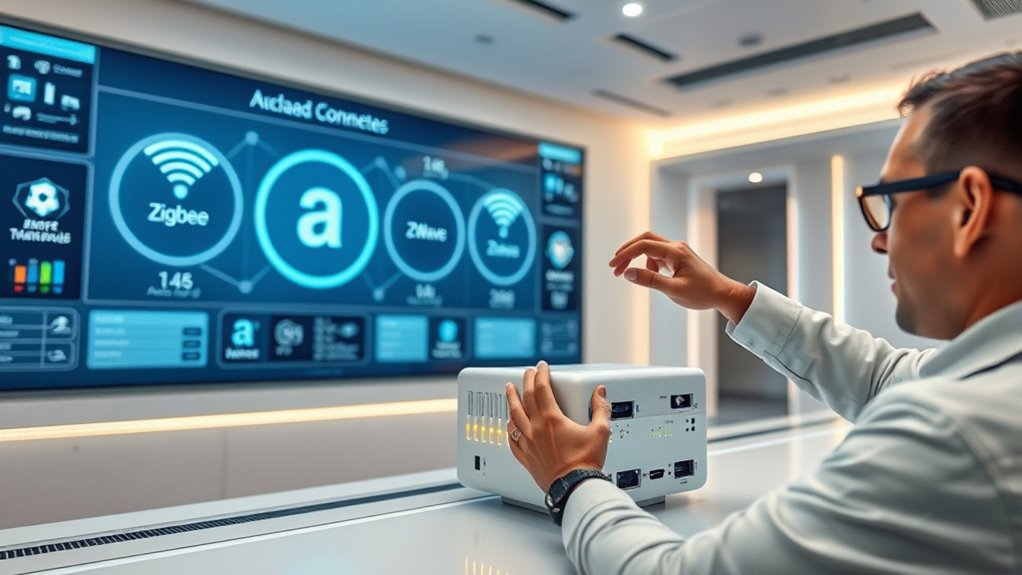
As you consider shifting to Matter, compatibility challenges with legacy Zigbee and Z-Wave devices remain a concern. You’ll likely need bridges or adapters to connect your existing devices to new ecosystems, which can add complexity. Understanding these transition strategies helps you plan effectively and avoid disruptions during the switch. Incorporating compatibility with legacy devices into your communication can also facilitate smoother adoption of new systems.
Compatibility Challenges Persist
Despite the promise of a unified smart home ecosystem, compatibility challenges continue to complicate your shift from Zigbee and Z-Wave to Matter. Zigbee’s proprietary approach results in inconsistent device behavior across brands, making seamless integration difficult. Z-Wave’s strict certification guarantees compatibility but limits device options and raises costs. While Matter supports existing protocols like Zigbee and Z-Wave by creating a common “language,” retrofitting devices can still be necessary for full interoperability. Network performance issues, especially on crowded 2.4 GHz bands for Zigbee or limited channels for Z-Wave, can affect stability. Additionally, ecosystem fragmentation persists, with some devices still relying on proprietary features or specific vendor implementations. These hurdles slow down the transition despite industry efforts to unify standards and improve device compatibility.
Transition via Bridges
Bridges are transforming how you shift from Zigbee and Z-Wave to Matter by allowing your existing devices to connect seamlessly without hardware replacements. They translate protocols, enabling legacy devices to operate within Matter ecosystems. For example, Philips Hue updates let Zigbee bulbs work with Matter controllers like Google Nest or Apple TV without firmware changes. Bridges also enable control of Z-Wave and Zigbee devices through modern hubs, broadening interoperability without replacing hardware. They serve as a crucial transition tool during gradual migration, reducing the need for immediate upgrades.
| Device Type | Functionality |
|---|---|
| Zigbee/Z-Wave | Connects to Matter via certified hubs or bridges |
| Firmware Updates | Enable bridging support without hardware change |
| Compatibility | Ensures broader ecosystem interoperability |
| Certification | Hub certification, not individual device logo |
Practical Tips for Using Bridges and Native Devices Today

Using bridges effectively today requires understanding their role in connecting legacy Zigbee and Z-Wave devices to the emerging Matter ecosystem. Bridges translate protocol signals, allowing non-Matter devices to integrate seamlessly with Matter-native systems. To guarantee smooth operation, use only certified Matter bridge hubs like Philips Hue or Aqara, which provide reliable compatibility. Confirm that your devices support the bridge’s capabilities, especially during setup, where match descriptor requests identify compatible endpoints. Once discovered, these devices are represented as dynamic endpoints within the Matter fabric, enabling unified control. Be aware that bridging can introduce latency and limit some features compared to native Matter devices. Regular firmware updates and manufacturer support are essential for security and ongoing compatibility. Relying on certified hubs and proper setup simplifies integration and enhances stability across your ecosystem.
Future Developments in Matter Device Certification and Interoperability

Recent updates to Matter certification programs aim to streamline approval processes and cut costs for manufacturers. The CSA’s Portfolio Program allows “child” products to inherit certification from a “parent,” reducing repeated testing. The Fast Track Program lets manufacturers self-test using CSA software, bypassing third-party fees and speeding up approval. These changes lower costs and shorten timelines, encouraging wider industry participation. Digital tools like the Certification Web Tool automate product submissions and compliance checks, improving efficiency. Automated certificate management platforms further accelerate device security attestation, speeding manufacturing and market entry. Certification has expanded beyond physical devices to include software controllers, supported by reusable test scripts and open-source collaborations. These developments enhance interoperability and security, making the future for Matter devices more efficient, cost-effective, and scalable.
Recommendations for a Seamless Smart Home Experience Amid Transition

As the smart home ecosystem shifts to Matter, maintaining compatibility between legacy Zigbee and Z-Wave devices and new Matter-enabled systems requires strategic planning. Keep your existing hubs with built-in bridging, like Philips Hue or Aqara, to guarantee seamless control without immediate upgrades. Focus on purchasing new devices that support Matter natively over Thread or Wi-Fi, reducing dependency on multiple hubs. Upgrade hubs with firmware updates to extend their lifespan and support additional protocols. Choose multi-protocol hubs that handle Zigbee, Z-Wave, Thread, and Matter to future-proof your setup. Educate yourself on the difference between device certification and hub bridging to avoid confusion. This approach guarantees security, reliability, and a smooth transition to a fully compatible smart home.
| Strategy | Benefit |
|---|---|
| Use bridging hubs (e.g., Philips Hue) | Compatibility with legacy devices |
| Prioritize native Matter devices | Reduced hub complexity |
| Update hubs’ firmware | Extended device usefulness |
| Select multi-protocol hubs | Future-proofing |
| Understand certification vs. bridging | Clear integration expectations |
Frequently Asked Questions
Can I Use My Existing Zigbee and Z-Wave Devices Without a Bridge in Matter Homes?
You can’t use your existing Zigbee and Z-Wave devices without a bridge in Matter homes. These protocols aren’t natively supported by Matter, so you’ll need a certified hub or bridge to translate signals. Without it, your Zigbee and Z-Wave devices won’t connect or work within a Matter ecosystem. Relying on a bridge guarantees compatibility, control, and seamless integration across your smart home devices.
Are There Any Z-Wave Devices Currently Certified to Work Natively With Matter?
Are there any Z-Wave devices certified to work natively with Matter? No, there aren’t. As of early 2025, Z-Wave devices haven’t received official Matter certification, meaning they can’t connect directly without a hub or bridge. Instead, compatibility relies on Matter-certified hubs that translate commands, allowing existing Z-Wave devices to work within a Matter ecosystem. Keep an eye on industry updates, since new certifications may emerge soon.
How Do Matter Bridges Handle Device Updates and Firmware Management?
Matter bridges don’t directly handle firmware updates for Zigbee or Z-Wave devices. Instead, firmware management stays with the original hubs or protocol controllers. You update the bridge firmware to support new features or standards, but the legacy device firmware remains unchanged. Future standards may enable bridges to proxy OTA updates, but right now, device firmware updates are managed separately by the device vendors or native protocol layers.
Will Future Devices Automatically Switch to Native Matter Support?
Future devices won’t automatically switch to native Matter support. You’ll need to replace your existing Zigbee or Z-Wave devices with new, certified native Matter products, or rely on bridges to maintain compatibility. Manufacturers are gradually adding native support, but it’s not automatic. You’ll have to look for devices explicitly designed for Matter. Until then, bridging remains your best option to integrate legacy devices into your smart home ecosystem.
How Do I Improve Wireless Performance With Multiple Protocols in My Smart Home?
Think of your smart home as a well-orchestrated symphony—each protocol a different instrument. To improve wireless performance, position dedicated hubs or bridges supporting multiple protocols and native Matter. Spread out repeaters and powered nodes evenly to strengthen your mesh network, and keep devices on different frequencies to avoid interference. Regular firmware updates and strategic device placement will help your devices harmonize beautifully, ensuring smooth operation across all protocols.
Conclusion
Charting the smart home landscape is like charting a course through uncharted waters, but with bridges and compatible hubs, you’re steering toward smoother sailing. While native Matter support is still growing, these solutions act as bridges—literally and figuratively—helping your Zigbee and Z-Wave devices stay afloat. Stay informed and adaptable, and you’ll keep your smart home current, turning what once seemed like a maze into a well-orchestrated symphony.
Fall yard work Picks
leaf blowers
As an affiliate, we earn on qualifying purchases.