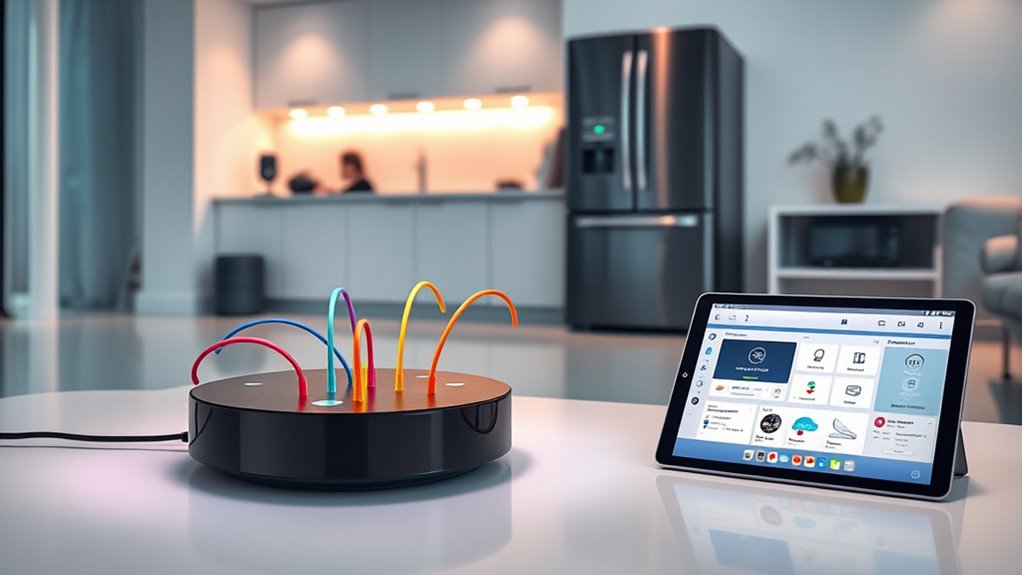
Smart hubs connect multiple appliances seamlessly by acting as a central control point that communicates with each device through various protocols like Wi-Fi, Zigbee, or Z-Wave. They integrate your lights, thermostats, security cameras, and locks into one easy-to-manage system, often with a single app or voice command. This setup simplifies your routines and improves efficiency. If you want to discover how these connections work together and how to set them up, keep exploring.
Key Takeaways
- Smart hubs unify device management through centralized control interfaces, simplifying multi-appliance operation.
- They use compatible protocols like Zigbee, Z-Wave, or Wi-Fi to connect diverse appliances seamlessly.
- Automation features enable coordinated actions among devices based on triggers like time or motion.
- Voice control integration allows hands-free, instant management of multiple appliances simultaneously.
- Regular updates and expanding device compatibility enhance seamless connectivity and functionality.
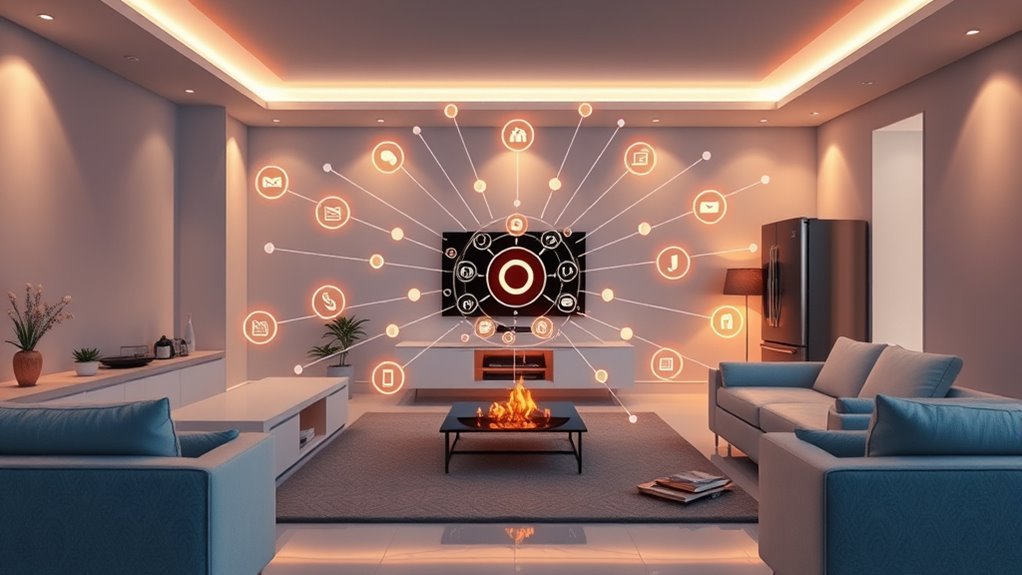
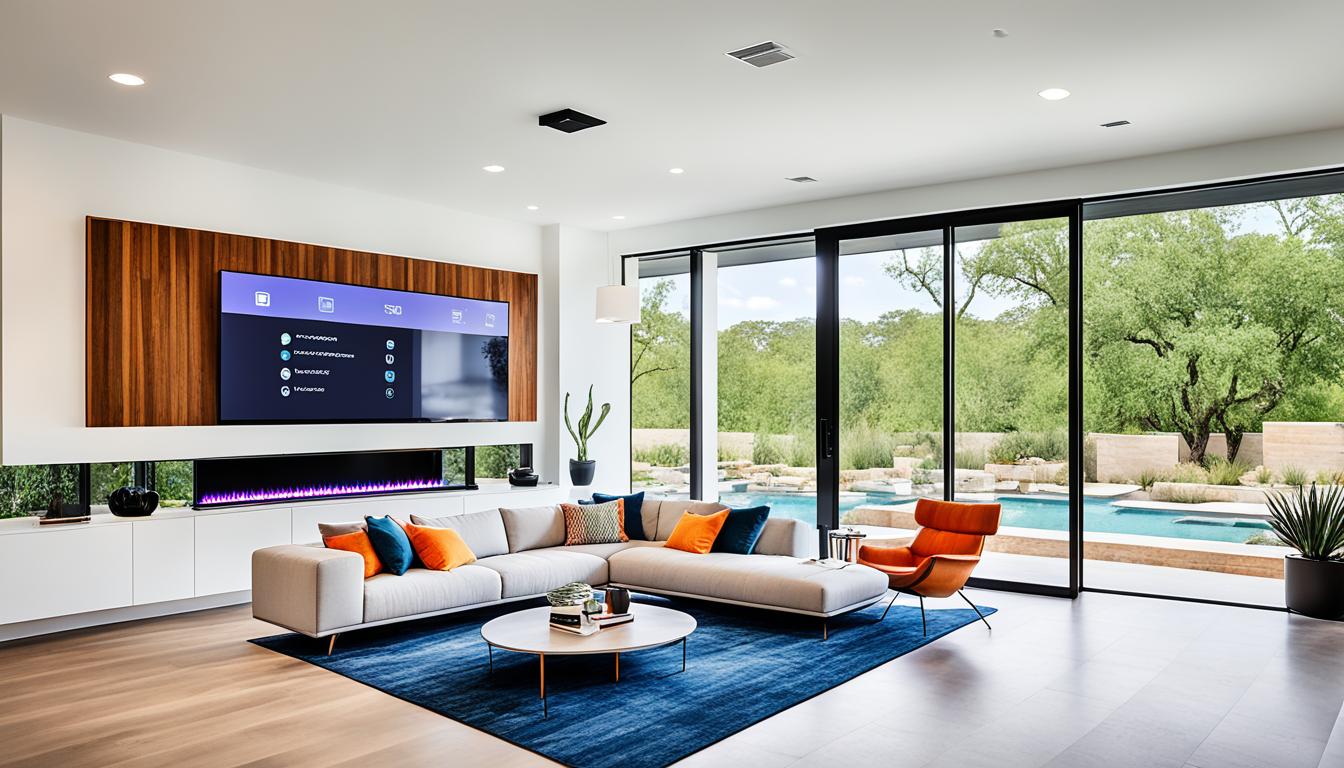
Smart hubs are revolutionizing how you connect and control your household appliances. With a single device, you can manage everything from your lights and thermostats to your security cameras and door locks. This centralized approach simplifies everyday routines, making your home more efficient and user-friendly. One of the key benefits is voice control. Instead of fumbling for switches or apps, you can simply speak commands to your smart hub, which then relays instructions to your connected devices. Imagine telling your hub, “Turn off the living room lights” or “Set the thermostat to 72 degrees,” and having it respond instantly. This hands-free convenience not only saves time but also makes managing your home more intuitive, especially when your hands are full or you’re multitasking.
Security integration is another major advantage of modern smart hubs. These systems don’t just connect appliances—they also serve as hubs for your home security. You can link your security cameras, doorbell, alarms, and locks into the same platform. When integrated, your smart hub provides a thorough overview of your home’s security status, giving you peace of mind whether you’re at home or away. You might receive real-time alerts if a door is opened unexpectedly or if motion is detected on a security camera. Plus, you can remotely control locks or arm/disarm your security system through your hub, ensuring your home stays protected at all times. This seamless security integration means you don’t need multiple apps or devices to monitor and secure your home, simplifying your setup and enhancing your overall safety.
The beauty of connecting multiple appliances through a smart hub lies in its ability to automate routines. You can program scenes or schedules that activate certain appliances based on time, location, or activity. For example, as you arrive home, your hub can turn on the porch lights, unlock the front door, and start your coffee maker—all orchestrated with a simple voice command or automated trigger. The hub acts as the brain, coordinating various devices to work together smoothly. This level of integration maximizes convenience and energy efficiency while reducing the need for manual intervention. Additionally, advancements in smart home technology continue to expand the capabilities and compatibility of these hubs, making them even more accessible and versatile for users.
In short, smart hubs are transforming how you interact with your home. By leveraging voice control and security integration, they create a connected environment that is smarter, safer, and easier to manage. With just a few taps or words, you gain control over your entire household, making everyday living more seamless and enjoyable.
Frequently Asked Questions
Can Smart Hubs Integrate With Non-Smart Appliances?
Yes, smart hubs can integrate with non-smart appliances by using legacy devices and protocol compatibility. You can connect older appliances through smart plugs or adapters that communicate with the hub. Make sure your smart hub supports various protocols like Zigbee, Z-Wave, or Wi-Fi, so it can interact with both new and legacy devices. This way, you can control all your appliances seamlessly from one centralized system.
How Secure Are Smart Hubs From Hacking?
Smart hubs are generally secure, but you should stay cautious. They use wireless encryption to protect your data, making hacking more difficult. Regular firmware updates are essential because they fix vulnerabilities and enhance security. Keep your Wi-Fi password strong, enable two-factor authentication if available, and monitor device activity. While no system is completely hacker-proof, following these steps markedly reduces your risk and keeps your smart hub safer.
Do Smart Hubs Require an Internet Connection?
Yes, smart hubs do require an internet connection. Without it, your entire smart home could feel like a spaceship stranded in space, with devices unable to communicate. The internet acts as the superhighway for wireless connectivity, ensuring your hub can sync with various devices seamlessly. This connectivity guarantees compatibility, real-time control, and updates, making your smart home smarter and more responsive. Without it, your setup is practically stuck in the stone age.
Are Smart Hubs Compatible With All Smart Home Brands?
Smart hubs are generally compatible with many smart home brands, but not all. You should check device compatibility before purchasing, as some hubs work better with certain brands. Voice assistants like Alexa or Google Assistant boost compatibility, making it easier to control your devices. Keep in mind that integrating multiple brands may require specific hubs or additional setup steps. Always verify compatibility to ensure smooth operation across your smart home ecosystem.
What Is the Average Setup Time for a Smart Hub?
The setup duration for a smart hub is usually a breeze, often taking less than 30 minutes. You’ll find the installation process straightforward, with clear instructions guiding you step-by-step. Typically, it’s quick enough to feel like you’re installing a gadget twice as powerful as you imagined. This swift setup means you’ll be enjoying a connected home in no time, without any hassle or frustration.
Conclusion
Now that you’ve seen how smart hubs effortlessly connect your appliances, you’ll wonder how you ever managed without one. They simplify your life, making everything work in harmony, just like a well-orchestrated symphony. Remember, even in an age of smart homes, a good hub is your trusty butler, quietly coordinating your devices. Embrace this technology today, or risk being left in the dust—after all, who wants to be the last to join the smart revolution?