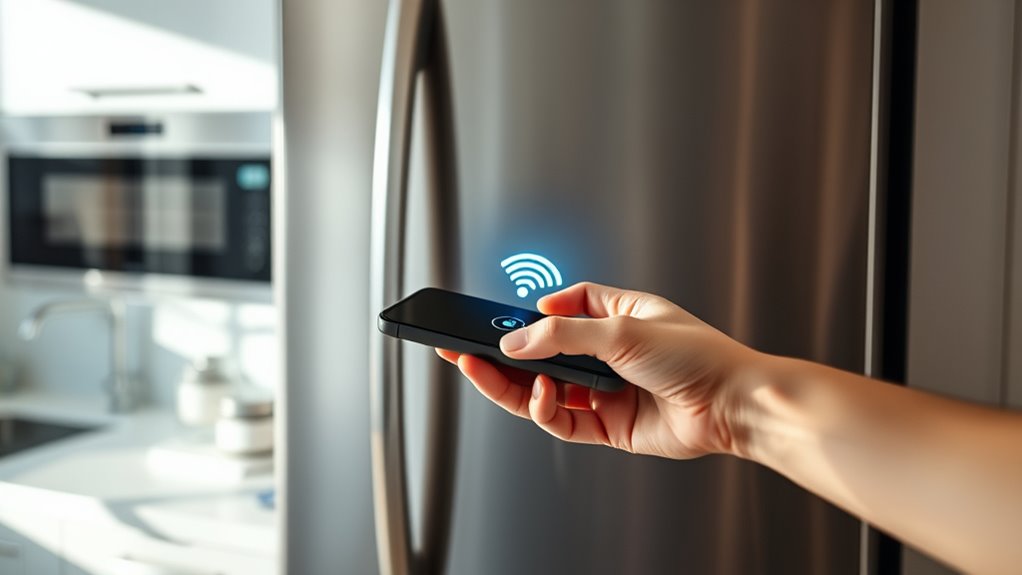

NFC tap-to-pair technology makes connecting appliances quick and effortless by simply bringing your devices close—usually within 4 cm—activating secure data transfer and automatic setup. It eliminates manual configurations, PIN entries, or complex steps, giving you instant, secure access. With quick, contactless pairing, your devices can communicate seamlessly, whether at home or in a commercial setting. To discover how this simple process enhances your experience and boosts security, keep exploring this innovative tech.
Key Takeaways
- NFC enables quick, contactless pairing of appliances and devices within 4 cm for seamless setup.
- Tap-to-pair reduces manual configuration, PIN entry, and simplifies device discovery.
- Secure, bidirectional communication ensures safe connections with minimal eavesdropping risk.
- Ideal for small data transfers like serial numbers, settings, or activation commands.
- Widely applicable in smart homes and commercial settings for faster device integration.
How NFC Facilitates Effortless Device Pairing
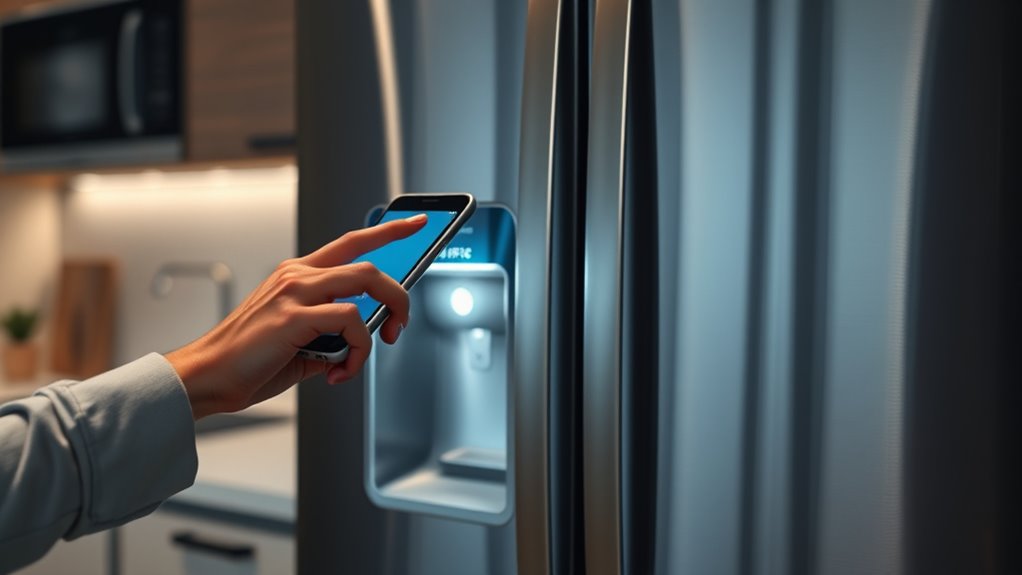
NFC makes device pairing quick and simple by allowing your devices to recognize each other instantly when they’re close together. When you bring them within 4 centimeters, NFC uses electromagnetic induction to establish a connection without any physical contact or manual input. The initiator device generates a radio-frequency field that powers passive targets, enabling quick discovery and pairing. Communication speeds up to 424 kbit/s ensure data transfers happen swiftly, making the connection process seamless. NFC automates the handshake, removing the need for manual searches or PIN entries, which saves you time. When devices are near, NFC triggers their built-in pairing protocols like Bluetooth or Wi-Fi Direct automatically. This straightforward process makes connecting appliances effortless, quick, and hassle-free, all with just a simple tap. NFC’s limited range of a few centimeters helps reduce the risk of data interception during pairing, and understanding the technology’s capabilities can enhance your connected experience.
Key Security Benefits of Tap-to-Pair Technology

Because of its short-range operation, tap-to-pair technology considerably enhances data security during device setup. With a range of about 4 centimeters, it minimizes eavesdropping risks and prevents unauthorized access, as data exchange only occurs when devices are intentionally brought close. The electromagnetic induction used for communication employs secure, bidirectional data transfer, reducing exposure to wireless attacks. NFC’s built-in security protocols guard against data corruption and unauthorized connections during pairing. Unlike Bluetooth or Wi-Fi, NFC restricts broadcasting signals, limiting attack surfaces. It also supports secure ‘handshake’ protocols that verify device authenticity, making counterfeiting difficult. Additionally, hardware features like tamper-resistant chips and secure elements protect cryptographic keys and detect tampering, ensuring your appliances stay protected against digital threats. NFC’s secure, interoperable design further enhances overall device security by enabling trusted connections without exposing sensitive data to potential cyber threats. Moreover, the security protocols integrated into NFC standards are regularly updated to address emerging vulnerabilities, maintaining a robust defense against evolving cyber threats. Implementing regular security updates is crucial to stay ahead of potential exploits targeting connected appliances.
Enhancing User Experience With Simple NFC Interactions

Using NFC tap-to-pair makes setting up your appliances quick and effortless, removing the need to navigate complicated menus. When you tap your device, the connection happens automatically, giving you instant access without extra steps. This simple interaction saves you time and enhances your overall experience with smarter, more user-friendly appliances. Incorporating mindfulness techniques during setup can help you stay focused and reduce frustration, making the process even more seamless. Paying attention to antioxidant benefits can also improve your overall well-being while handling new technology.
Seamless Device Setup
Setting up your appliances has never been easier thanks to tap-to-pair technology. With NFC, you simply bring your device close—less than 4 centimeters apart—and the connection happens instantly, no manual steps needed. This quick process eliminates the hassle of manual configuration, PIN entry, or device discovery. NFC initiates on-demand, waking devices from deep sleep to conserve power while ensuring they’re ready when you need them. Using tapNLink’s NFC modules, you can read and write appliance settings via a mobile app, making setup and updates straightforward. Modern standards like Matter 1.4.1 incorporate tap-to-pair features, enabling seamless smart home integration. Overall, NFC simplifies device setup, saving you time and effort while providing a smooth, efficient experience from the first connection.
Intuitive Interaction Process
The simplicity of NFC tap-to-pair technology extends beyond quick setup to create a more intuitive user experience. When you tap your device, you’ll receive immediate signals—like lights or vibrations—that confirm the pairing is successful. This clear feedback guides you on when to separate devices, reducing confusion and ensuring a reliable connection. Most feedback comes from the primary device, making it easy to understand the process. The typical flow involves a simple touch, device powering, message exchange, feedback, and separation. This streamlined process eliminates complex menus or scanning, lowering cognitive load. Plus, the feedback keeps you informed, making interactions feel natural and effortless, enhancing overall satisfaction with appliance pairing. Additionally, the use of sound vibrations can reinforce successful connections, further simplifying user interactions. Incorporating user-friendly signals like visual or auditory cues can also improve the overall experience by providing additional reassurance during pairing.
Practical Applications in Home and Commercial Appliances

NFC Tap-to-Pair simplifies the setup and operation of home and commercial appliances by enabling quick, contactless connections with smartphones or control hubs. By tapping an NFC tag, you can instantly initiate device pairing, retrieve serial numbers, and access configuration data, speeding up setup and reducing manual steps. In households, NFC tags on laundry machines or kitchen appliances let you activate cycles, set timers, or access recipes effortlessly, boosting efficiency and reducing forgetfulness. For smart homes, NFC automates multiple devices simultaneously—like adjusting lighting, climate, or music—without needing apps or voice commands. In commercial settings, NFC pairing accelerates equipment management, firmware updates, and inventory control, improving productivity. Additionally, understanding the aura associated with connected devices can provide insights into their operational status or potential issues, which can be enhanced through device diagnostics tools, thereby improving maintenance and troubleshooting. Overall, NFC Tap-to-Pair enhances convenience, streamlines workflows, and simplifies device interactions in both domestic and professional environments.
Technical Considerations and Limitations of NFC Pairing

NFC pairing comes with some key technical limitations, like its very short range and limited data transfer speeds, which can affect ease of use and functionality. You’ll also face compatibility issues since not all devices support NFC or have it enabled by default. Additionally, understanding store hours can help you plan your tech shopping or troubleshooting sessions more effectively to avoid inconvenience. Moreover, the rise in sophisticated cyber threats underscores the importance of AI security in safeguarding connected devices and sensitive data.
Limited Data Transfer Speeds
Although NFC’s quick connection setup makes it appealing for appliance pairing, its data transfer speeds are inherently limited, typically maxing out at around 424 kbps. This speed restricts NFC to small data payloads like pairing info, authentication tokens, or short messages, rather than large files. You’ll notice that:
- Data rates can vary within standards, but 424 kbps is the practical upper limit.
- Bluetooth versions offer at least five times faster throughput.
- Continuous or high-volume data transfers aren’t feasible with NFC’s slow speeds.
- Protocol overhead and physical constraints further hamper rapid data exchange.
- The disadvantages of slow data transfer speeds highlight why NFC is primarily used for quick, secure setup rather than for transferring large amounts of data.
These limitations mean NFC is best suited for quick, secure setup rather than transferring large amounts of data. The speed trade-off favors simplicity, security, and efficiency during device pairing.
Short Operational Range
The very short operational range of NFC is a defining factor that influences how devices interact during pairing. You need to bring your device within about 4 centimeters of the appliance’s NFC tag or sensor for successful communication. This proximity guarantees secure, intentional pairing and minimizes accidental connections. However, environmental factors like metal objects, electromagnetic interference, or dense materials can further restrict the effective range, making precise alignment critical. The limited distance also means you can’t initiate pairing remotely or at a distance; physical contact is mandatory. Antenna design within appliances must be carefully optimized to maintain reliable connections, and users need clear guidance on where to tap. While this short range enhances security, it can pose usability challenges for those expecting more flexible or hands-free pairing options. Additionally, understanding the technical limitations can help users troubleshoot connectivity issues more effectively, especially in environments with potential interference.
Device Compatibility Challenges
Device compatibility presents a significant challenge when using NFC for appliance pairing. Not all smartphones or devices include NFC chips, especially older or budget models, limiting universal tap-to-pair use. Compatibility issues also arise from variations in NFC compliance with ISO standards, affecting interoperability across brands. Integrating NFC into traditional appliances may require additional hardware upgrades, complicating setup. Furthermore, device manufacturers often restrict NFC features based on model or firmware, reducing pairing options. Additionally, NFC standards can influence the success rate of pairing, as differing implementations may hinder seamless connections. Variations in device hardware compatibility can further complicate the pairing process, potentially requiring firmware updates or hardware modifications to ensure functionality.
Future Trends and Innovations in NFC-Enabled Appliances
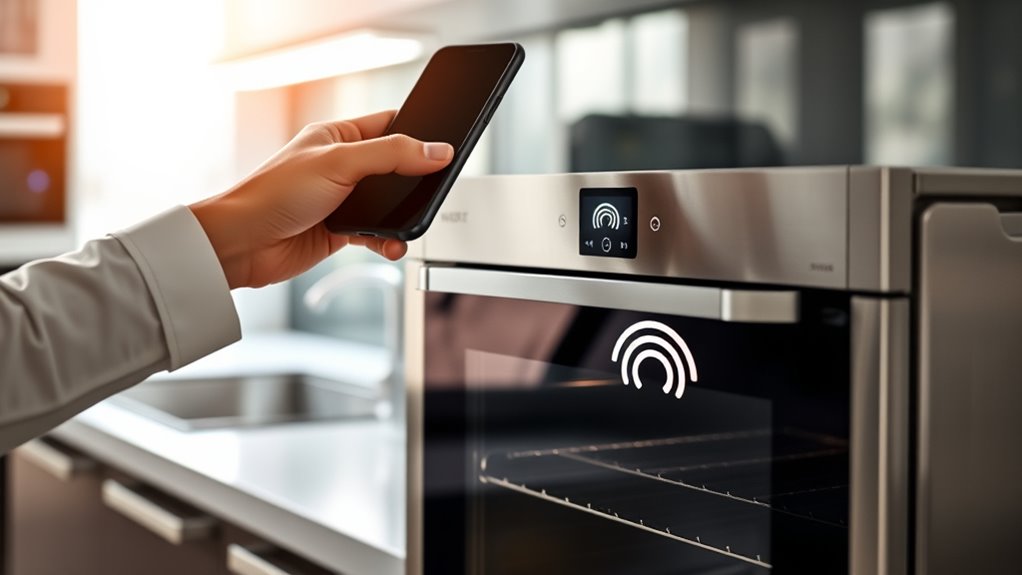
As the integration of NFC with IoT and smart appliances advances, we can expect significant innovations that will reshape how devices connect and communicate. 5G rollout will boost NFC device deployment, enabling real-time, seamless communication for smart appliances. Future trends include expanding NFC beyond payments to areas like access control, identification, and interactive consumer experiences. You’ll see smarter appliances that adapt to your habits through AI and NFC integration, providing personalized automation and data sharing with a simple tap. Security improvements, like enhanced encryption and biometric verification, will make NFC connections more trustworthy, even in sensitive environments. Manufacturers will embed NFC chips directly into appliances for easier setup and interoperability, creating a more connected, intuitive, and secure smart home ecosystem. Additionally, alimony laws can influence the financial planning needed when integrating new smart appliances into a household budget. Moreover, understanding the importance of creative practice can inspire innovative features in future NFC-enabled devices, enhancing user experience and functionality.
Frequently Asked Questions
Can NFC Tap-To-Pair Work With Non-Smart Appliances?
No, NFC tap-to-pair doesn’t work with non-smart appliances because they lack the necessary NFC hardware. You can’t directly connect your device to these appliances using NFC. If you want to control or automate them, you’ll need external adapters or upgrade kits, which can be complex and costly. For simple, seamless pairing, it’s best to choose smart appliances designed with NFC or other wireless capabilities.
What Are the Battery Implications for Nfc-Enabled Appliances?
Think of your appliance’s battery like a delicate garden needing careful watering. NFC-enabled appliances use minimal power, mainly in sleep mode, which greatly extends battery life. Active NFC functions briefly consume energy, but NFC power harvesting and wireless charging help save batteries even more. This means your device stays healthy longer, reduces battery replacements, and keeps your appliance running smoothly—like a well-tended garden thriving over time.
How Does NFC Compatibility Vary Across Different Device Brands?
You’ll find that NFC compatibility varies across brands. Apple iPhones from iPhone 6 support NFC with limited functions, while Samsung, Google Pixel, and OnePlus offer broader support. Mid-range and budget devices like Xiaomi or Huawei may have inconsistent NFC features. Less common brands like ZTE or Vertu also support NFC, but compatibility with specific tags and functions can differ. Always check your device’s specifications to confirm NFC support.
Is NFC Tap-To-Pair Secure Against Relay or Man-In-The-Middle Attacks?
NFC tap-to-pair isn’t entirely secure against relay or man-in-the-middle attacks. Since it lacks strong authentication and encryption, malicious actors can intercept, relay, or manipulate data. You should be cautious and only pair with trusted devices. Regularly update your devices, enable security features, and stay aware of potential threats. These steps help reduce risks, but NFC’s inherent vulnerabilities mean it can’t guarantee complete protection against sophisticated attacks.
Can NFC Tap-To-Pair Be Used for Firmware Updates Remotely?
NFC tap-to-pair isn’t designed for completely remote firmware updates because of its limited range, which requires physical proximity. However, it can initiate the update process and transfer firmware when combined with other wireless protocols like Bluetooth or Wi-Fi. This setup allows you to start the update via NFC and then use faster wireless connections for the actual data transfer, making updates more practical and secure.
Conclusion
NFC tap-to-pair makes connecting devices as easy as flipping a switch, turning complex setups into a simple tap. It’s secure, user-friendly, and perfect for both home and commercial use. As technology advances, expect more appliances to embrace this seamless interaction, transforming how you connect and control your devices. Think of NFC as the friendly handshake of the digital world—making your tech experience smoother and more enjoyable every day.