
To optimize your Wi-Fi for smart appliances, make certain your network is strong and stable by placing your router centrally and elevating it. Use mesh systems or signal boosters to eliminate dead zones and improve coverage. Keep your firmware updated and limit connected devices during peak times to prevent congestion. Combining these strategies will help your smart devices respond instantly and stay connected. For more tips, you’ll discover even better ways to enhance your home network.

Get home appliances delivered free with Prime
- Fast, free delivery on millions of items
- Prime Video, Amazon Music and more included
- Member-only deals all year
Key Takeaways
- Use a mesh network system to ensure comprehensive coverage and eliminate dead zones in your home.
- Place Wi-Fi range extenders or repeaters strategically between the router and smart appliances for better signal strength.
- Regularly update your router’s firmware to improve performance and security for smart device connectivity.
- Limit the number of connected devices during peak times to prevent network congestion and lag.
- Position the router and boosters in central locations to optimize signal reach and wall penetration for all smart appliances.
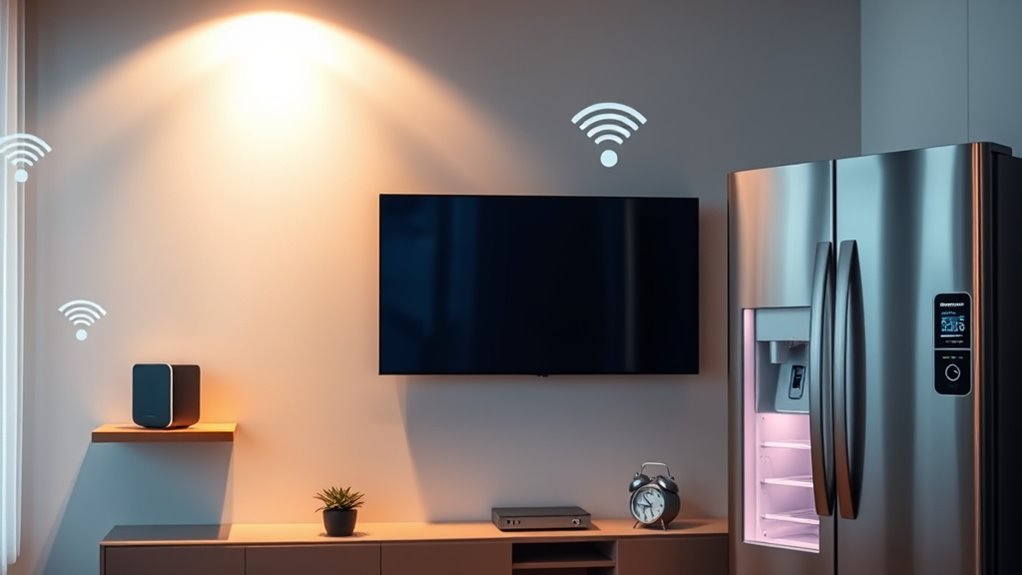
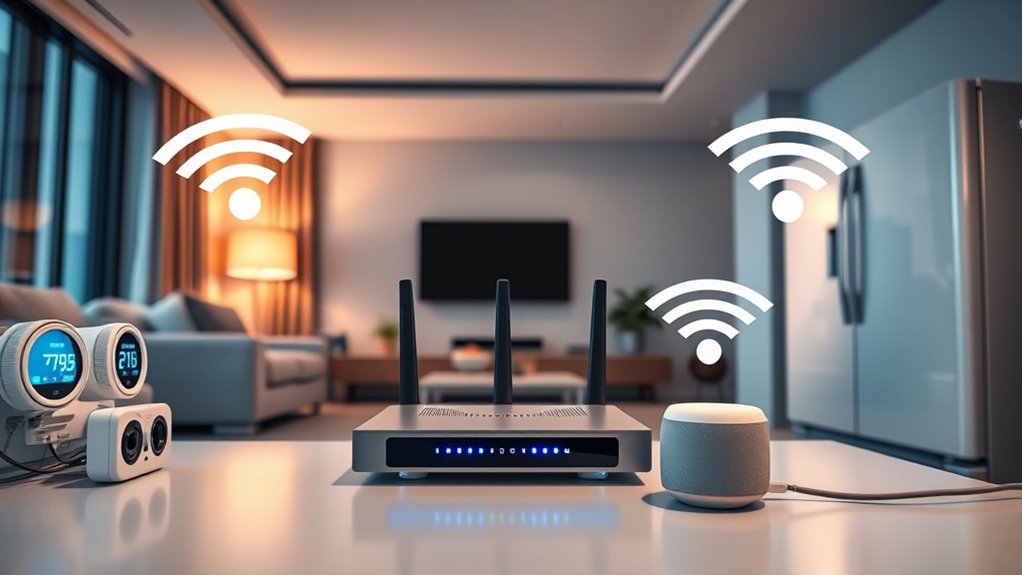
Smart appliances rely on Wi-Fi networks to connect, communicate, and perform their functions seamlessly. Without a strong, reliable connection, your smart devices might lag, disconnect, or fail to operate as intended. To guarantee smooth performance, you need to optimize your Wi-Fi network effectively. One of the most efficient ways to do this is by implementing a mesh extension system. Mesh networks use multiple nodes to blanket your entire home with consistent Wi-Fi coverage, eliminating dead zones where signals weaken or drop. Instead of relying on a single router, a mesh extension creates a unified network that dynamically routes data through the best path, maintaining a stable connection even when multiple devices are active. This setup is especially beneficial if your smart appliances are spread across different rooms or floors, as it prevents weak signals from hindering their performance.
In addition to adding mesh extensions, signal boosting is another vital step. Signal boosting involves enhancing your existing Wi-Fi signal to reach farther and penetrate walls more effectively. You can do this through range extenders or Wi-Fi repeaters, which amplify your network’s reach without needing a complete overhaul. When choosing signal boosters, look for models that support your router’s frequency band and are compatible with your smart appliances. Proper placement of these devices is key—position them midway between your router and the areas where your smart appliances are located, ideally in open spaces away from thick walls or electronic interference. By boosting your signal, you reduce lag and disconnections, ensuring your smart devices respond instantly and operate without interruption. Additionally, understanding how GMC tuning can optimize vehicle performance demonstrates the importance of tailored adjustments to improve overall system effectiveness.
Optimizing Wi-Fi for smart appliances isn’t just about adding devices; it’s about creating a resilient, well-structured network. Mesh extensions help cover your entire home uniformly, while signal boosting guarantees that the connection remains strong at every point. Combining these strategies means your smart fridge, security cameras, thermostats, and other devices will stay connected and responsive. Remember, regularly updating your router’s firmware can also improve performance and security. Additionally, limiting the number of connected devices during heavy usage times can prevent network congestion that slows down your smart appliances. By taking these steps, you’re creating a dependable backbone for your smart home, minimizing connectivity issues and maximizing device efficiency. With a well-optimized Wi-Fi network, your smart appliances will function smarter, faster, and more reliably, making your daily routines smoother and more convenient.
mesh Wi-Fi system for smart home
As an affiliate, we earn on qualifying purchases.
As an affiliate, we earn on qualifying purchases.
Frequently Asked Questions
How Do I Troubleshoot Wi-Fi Issues With Smart Appliances?
To troubleshoot Wi-Fi issues with your smart appliances, start by checking their placement—ensure they’re close to your router and avoid obstructions. Next, optimize your Wi-Fi channel selection; switching to a less congested channel can improve connectivity. Restart your router and devices, and update their firmware. If problems persist, consider using a Wi-Fi extender or mesh system to strengthen the signal and enhance overall smart device performance.
What Security Measures Protect Smart Appliance Wi-Fi Connections?
To keep your smart appliance Wi-Fi connections secure, use strong encryption protocols like WPA3, which protect your data from eavesdroppers. Enable device authentication features to make certain only authorized devices connect. Regularly update your router’s firmware and reset default passwords on your appliances. These practices help prevent unauthorized access, safeguarding your network and keeping your smart devices safe from cyber threats.
Can Multiple Smart Devices Cause Wi-Fi Interference?
Yes, multiple smart devices can cause Wi-Fi interference, turning your network into a crowded highway. To keep traffic flowing smoothly, use interference mitigation techniques and prioritize essential devices. By managing device prioritization, you prevent less important gadgets from clogging your bandwidth. This approach guarantees your smart appliances stay connected and responsive, making your smart home function seamlessly without bottlenecks or dropped signals.
How Often Should I Update My Wi-Fi Router Firmware?
You should update your Wi-Fi router firmware at least once every three to six months to guarantee ideal performance and security. Regular firmware updates are a key part of router maintenance, fixing bugs and improving connectivity. Keep an eye on your router’s manufacturer notifications or check the admin panel periodically to see if updates are available. Staying current with firmware helps prevent interference and keeps your smart devices running smoothly.
Are There Specific Wi-Fi Standards Best Suited for Smart Appliances?
You should look for Wi-Fi standards like 802.11ac or 802.11ax, as they offer faster speeds and better reliability for smart appliances. Devices often operate on 2.4 GHz or 5 GHz frequency bands; 2.4 GHz offers wider coverage, while 5 GHz provides higher speeds. Opt for dual-band routers to guarantee your smart appliances connect seamlessly, reducing latency and improving overall performance.
Conclusion
By optimizing your Wi-Fi network, you unleash the full potential of your smart appliances, transforming your home into a futuristic paradise. Say goodbye to slow connections and endless buffering—your devices will dance in perfect harmony at lightning speed. With these tweaks, you’ll experience a connectivity revolution so powerful, it’s like giving your entire home a turbocharged brain. Get ready to enjoy smart living at warp speed—your Wi-Fi will never be the same again!
Halloween Picks
halloween
As an affiliate, we earn on qualifying purchases.