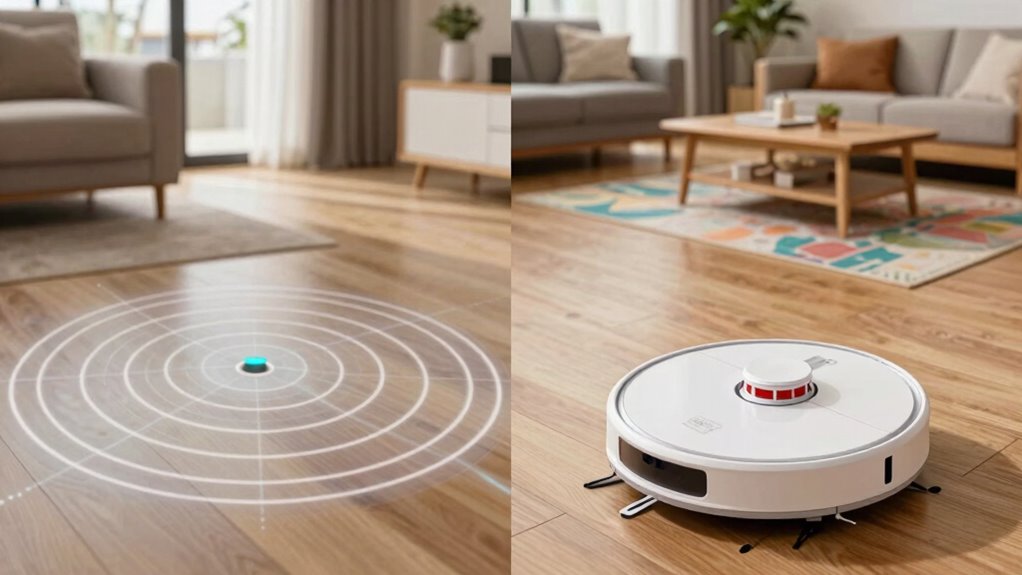

If you’re choosing between LiDAR and camera mapping for a robot vacuum, LiDAR usually offers clearer, more accurate navigation, especially in complex layouts or low-light conditions. It provides detailed maps by measuring distances precisely, which helps prevent missed spots and collisions. Cameras are cheaper and versatile but can struggle with poor lighting or visual clutter. To understand how each impacts cleaning performance and which suits your home best, keep exploring the details ahead.

Get home appliances delivered free with Prime
- Fast, free delivery on millions of items
- Prime Video, Amazon Music and more included
- Member-only deals all year
Key Takeaways
- LiDAR provides more accurate and detailed mapping, especially in low-light or complex environments.
- Camera-based navigation is more cost-effective but less reliable in poor lighting or cluttered spaces.
- LiDAR’s high data processing demands ensure precise obstacle detection and consistent cleaning routes.
- Cameras excel in well-lit settings and offer versatile visual recognition but may struggle with accuracy.
- Overall, LiDAR-based systems generally deliver superior navigation performance over camera-only models.
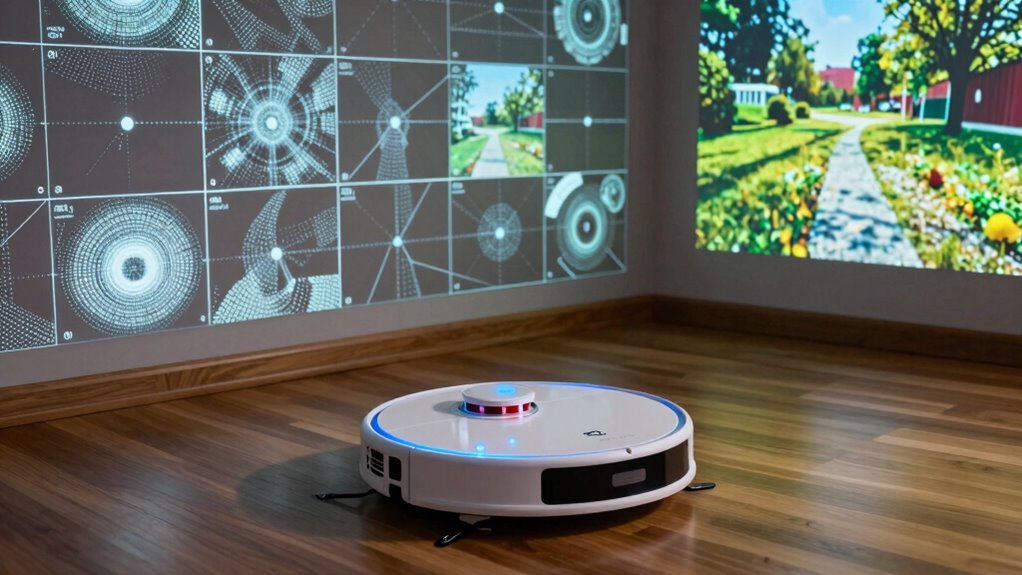
When choosing between LiDAR and camera mapping technologies, understanding their strengths and limitations is essential. If you’re considering a robot vacuum for your home, knowing how these systems scan and interpret their environment can help you pick the right one. Sensor accuracy plays a vital role here, as it directly impacts how well the device navigates around furniture, walls, and obstacles. LiDAR systems use laser beams to create precise, three-dimensional maps by measuring distances accurately. This high sensor accuracy allows the robot to develop detailed models of your space, even in low-light conditions. However, this precision comes with the need for robust data processing. LiDAR generates large amounts of spatial data that the robot’s onboard processors must analyze quickly to update its map in real time. If the data processing isn’t efficient, the robot might struggle with navigation, especially in complex environments. On the other hand, camera-based systems rely on visual imagery captured through sensors like RGB cameras. They process data by recognizing patterns, textures, and colors to build a map of your home. This approach can be quite effective in well-lit environments and allows for more detailed visual understanding, such as identifying specific objects or floor types. Yet, camera systems tend to have lower sensor accuracy compared to LiDAR because they depend heavily on lighting conditions and image clarity. Poor lighting or glare can impair their ability to interpret surroundings correctly. Additionally, data processing for camera mapping involves complex image recognition algorithms that require significant computational power. This can sometimes lead to slower updates or errors in navigation if the system’s processing capacity is limited. Overall, LiDAR offers superior sensor accuracy and more reliable mapping in a variety of lighting conditions, making it ideal for thorough and consistent navigation. Conversely, camera systems excel where detailed visual context is beneficial and lighting is sufficient, often providing a more cost-effective and versatile solution. When deciding, consider your environment—if your home has complex layouts, multiple levels, or variable lighting, a LiDAR-equipped vacuum may serve you better. If your budget is tighter and lighting conditions are generally good, a camera-based model might meet your needs. Remember, the key is understanding how sensor accuracy and data processing influence navigation quality. A system with high sensor accuracy and efficient data processing will always deliver smoother, more reliable cleaning routines, saving you time and frustration in the long run. Understanding sensor accuracy is crucial for making the right choice.
robot vacuum with LiDAR navigation
As an affiliate, we earn on qualifying purchases.
As an affiliate, we earn on qualifying purchases.
Frequently Asked Questions
How Do Lighting Conditions Affect Camera-Based Navigation?
Lighting conditions notably impact camera-based navigation, as poor or uneven lighting creates lighting challenges that hinder the robot’s ability to detect obstacles and map your space accurately. You might notice the camera’s limitations in dim or overly bright environments, causing navigation issues. To guarantee ideal performance, make sure your lighting is consistent and sufficient, reducing the chances of misinterpretation caused by lighting challenges and camera limitations.
What Is the Cost Difference Between Lidar and Camera Systems?
Think of sensor systems as tools in your toolbox; LiDAR is like a high-precision laser pointer, costing more but offering superior accuracy and detailed mapping. Cameras are like simple snapshots—cheaper and easier to install, but less precise in complex environments. Expect LiDAR to be pricier, with higher installation complexity, while camera systems cost less but may sacrifice some sensor accuracy. Choose based on your budget and cleaning needs.
Can Robots Switch Between Lidar and Camera Mapping Seamlessly?
Yes, you can switch seamlessly between LiDAR and camera mapping through sensor fusion, which combines data from both sensors. This process relies on advanced algorithms that handle the increased complexity of merging different data types. As a result, your robot can adapt to various environments and improve navigation accuracy, making the shift smooth and efficient without needing manual adjustments or interruptions during operation.
Which System Performs Better in Cluttered or Dynamic Environments?
In cluttered or dynamic environments, LiDAR sensors shine like a lighthouse amid fog, providing superior sensor accuracy and environmental adaptability. You’ll find LiDAR better at maneuvering around moving objects and dense obstacles, ensuring thorough cleaning without getting lost. Cameras can struggle with changing lighting or complex scenes, but LiDAR’s ability to map in real-time makes it the clear winner when your space’s chaos demands precision and reliability.
How Do Maintenance and Durability Compare for Both Systems?
You’ll find that LiDAR systems generally offer better hardware longevity because they have fewer delicate parts and require less frequent sensor calibration. Cameras, however, need regular calibration to maintain accuracy and are more prone to damage from dust or impact, reducing their durability. If you prioritize low maintenance and long-lasting performance, LiDAR’s robust hardware makes it the better choice, especially in challenging environments.
Conclusion
So, next time you’re choosing a robot vacuum, remember: it’s not just about fancy tech. Coincidentally, whether you opt for LiDAR or a camera, both systems aim to make your cleaning effortless. It’s almost like they’re secretly competing to see which can better understand your space—just for your convenience. Ultimately, the best choice depends on your home’s layout and your cleaning needs, proving that sometimes, technology’s true power lies in its unexpected similarities.
Fall yard work Picks
leaf blowers
As an affiliate, we earn on qualifying purchases.