For high-efficiency cooling across different home layouts, I rank the Midea 12,000 BTU U-Shaped Window Air Conditioner as the best overall pick for its inverter design and window-friendly format. The YITAHOME 12,000 BTU Mini Split stands out for buyers who want a higher-efficiency permanent system with heating, while the DREO 14,000 BTU Dual-Hose Portable AC suits rooms where window installation is not practical. The main tradeoffs are efficiency versus installation effort, upfront system complexity, and the portability that can bring more noise or venting demands. Room size, insulation, and the kind of window or wall you have can matter as much as the unit’s headline capacity. Continue reading for my comparison of all 12 options and guidance on choosing the right type.

Get home appliances delivered free with Prime
- Fast, free delivery on millions of items
- Prime Video, Amazon Music and more included
- Member-only deals all year
Complete the kit

![[Genuine] Waterdrop PF-01A Water Filter Replacement for W...](https://m.media-amazon.com/images/I/41+5tl9EiKL._SX342_SY445_QL70_FMwebp_.jpg)
Key Takeaways
- Inverter design appears across several leading formats: the Midea window unit and DREO and TURBRO portable models offer inverter-based cooling, while the mini splits list SEER2 ratings.
- Installation type shapes the decision more than BTU alone: window units are less involved than mini splits, while portable models trade a simpler move-in setup for exhaust-hose requirements.
- The mini splits are the clearest permanent-system options: YITAHOME lists 20 SEER2 and Wi-Fi, while Rellytech lists 19 SEER2 and 115V operation.
- Portable units vary in how they manage hot exhaust air: DREO uses a dual-hose design, unlike the single-hose approach common to many portable ACs.
- Capacity is not a stand-in for room suitability: the lineup spans 6,000 to 14,000 BTU, so room dimensions, sun exposure, ceiling height, and insulation should guide the match.
| Midea 12,000 BTU U-Shaped Window Air Conditioner |  | Best Quiet High-Efficiency Window Pick | Cooling capacity: 12,000 BTU | Coverage area: 550 sq. ft. | Noise level: As low as 32 dBA | VIEW ON AMAZON | See Our Full Breakdown |
| DREO 14,000 BTU Inverter Dual-Hose Portable Air Conditioner |  | Best Efficient Portable for Smaller Rooms | Cooling capacity: 14,000 BTU ASHRAE; 10,000 BTU DOE | Recommended room size: Up to 200 sq. ft. | Hose design: Dual-hose | VIEW ON AMAZON | See Our Full Breakdown |
| Frigidaire 8,000 BTU Window Air Conditioner with Remote, White |  | Best Straightforward Window Value | Cooling capacity: 8,000 BTU | Coverage area: 350 sq. ft. | Noise level: 54 dBA; also listed as 55 dB | VIEW ON AMAZON | See Our Full Breakdown |
| TURBRO Greenland 14,000 BTU Inverter Portable Air Conditioner |  | Best for Large Rooms and Humidity Control | Cooling capacity: 14,000 BTU | Coverage: Up to 600 sq. ft. | Noise level: 43 dB | VIEW ON AMAZON | See Our Full Breakdown |
| Tehanld 12,000 BTU Ductless Mini Split Air Conditioner and Heat Pump |  | Best Ductless Cooling and Heating | Cooling and heating capacity: 12,000 BTU cooling; 12,500 BTU heating | Coverage area: Up to 750 sq. ft. | Noise level: 42 dB | VIEW ON AMAZON | See Our Full Breakdown |
| Senville LETO 12,000 BTU Mini Split Air Conditioner and Heat Pump |  | Best for Year-Round Ductless Comfort | Cooling capacity: 12,000 BTU | Efficiency: 20.8 SEER | Coverage: Up to 700 sq. ft. | VIEW ON AMAZON | See Our Full Breakdown |
| Rellytech 12,000 BTU Mini Split Air Conditioner and Heat Pump, 19 SEER2, 115V |  | Best for a Feature-Rich Mini Split | Cooling capacity: 12,000 BTU | Heating capacity: 12,500 BTU | Coverage: Up to 750 sq. ft. | VIEW ON AMAZON | See Our Full Breakdown |
| BLACK+DECKER Smart Portable Air Conditioner, 12,000 BTU, White | 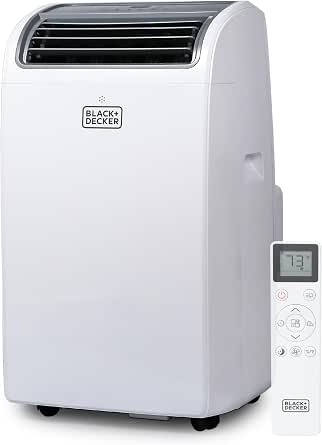 | Best Smart Portable for Moderate Rooms | Cooling capacity: 12,000 BTU; 8,350 BTU SACC | Room coverage: Up to 550 sq. ft.; listed floor area 500 sq. ft. | Functions: Air conditioning, dehumidifier, and fan | VIEW ON AMAZON | See Our Full Breakdown |
| Garvee 3-in-1 Portable Air Conditioner, 14,000 BTU |  | Best for Higher-Capacity Portable Cooling | Cooling capacity: 14,000 BTU; 9,300 BTU SACC | Coverage: Up to 750 sq. ft. | Functions: Air conditioning, fan, and dehumidifier | VIEW ON AMAZON | See Our Full Breakdown |
| GE 12,000 BTU Smart Window Air Conditioner, White |  | Best Smart Window Unit | Cooling capacity: 12,000 BTU | Room coverage: Up to 550 sq. ft. | Power: 115 V; 1,030 W | VIEW ON AMAZON | See Our Full Breakdown |
| YITAHOME 12000 BTU Ductless Mini Split AC and Heat Pump System, 20 SEER2, 115V, WiFi Enabled |  | Best High-Efficiency Mini Split for Year-Round Comfort | Cooling capacity: 12,000 BTU | Efficiency: 20 SEER2 | Voltage: 115V | VIEW ON AMAZON | See Our Full Breakdown |
| GE 6,000 BTU Electronic Window Air Conditioner |  | Best Simple, Efficient Pick for Small Rooms | Cooling capacity: 6,000 BTU | Coverage area: Up to 250 sq. ft. | SEER: 11 | VIEW ON AMAZON | See Our Full Breakdown |
| high efficiency air conditioners for | Cooling capacity | Noise level | Dimensions and weight |
|---|---|---|---|
| Midea 12,000 BTU U-Shaped Wind | 12,000 BTU | As low as 32 dBA | 21.97 × 19.17 × 13.46 in.; 56.9 lb |
| DREO 14,000 BTU Inverter Dual- | 14,000 BTU ASHRAE; 10,000 BTU DOE | 42 dB | 14.37 × 17.32 × 28.13 in.; 55.4 lb |
| Frigidaire 8,000 BTU Window Ai | 8,000 BTU | 54 dBA; also listed as 55 dB | 18.5 × 15.8 × 13.4 in.; 45.4 lb |
| TURBRO Greenland 14,000 BTU In | 14,000 BTU | 43 dB | 17.52 × 19.57 × 34.84 in.; 71.2 lb |
| Tehanld 12,000 BTU Ductless Mi | — | 42 dB | — |
| Senville LETO 12,000 BTU Mini | 12,000 BTU | 28 dB | — |
| Rellytech 12,000 BTU Mini Spli | 12,000 BTU | — | — |
| BLACK+DECKER Smart Portable Ai | 12,000 BTU; 8,350 BTU SACC | 54 dB | — |
| Garvee 3-in-1 Portable Air Con | 14,000 BTU; 9,300 BTU SACC | 50 dB | 20.16 × 18.11 × 33.66 in.; 85.3 lb |
| GE 12,000 BTU Smart Window Air | 12,000 BTU | 59 dB | 19.75 × 19 × 14.5 in.; 63.6 lb |
| YITAHOME 12000 BTU Ductless Mi | 12,000 BTU | Below 41 dB | — |
| GE 6,000 BTU Electronic Window | 6,000 BTU | 52–56 dBA | — |
More Details on Our Top Picks
Midea 12,000 BTU U-Shaped Window Air Conditioner
The Midea U-shaped window AC is a strong fit for buyers who want inverter efficiency without giving up access to an open window. Its listed savings of over 37% compared with traditional units and operation as low as 32 dBA make it more suited to bedrooms and living spaces where compressor noise is a concern than the louder Frigidaire 8,000 BTU Window Air Conditioner. The U-shaped chassis also lets the window open for fresh air, while its lock mechanism secures the window when closed. App control and Alexa or Google Assistant support add scheduling and remote adjustments.
The tradeoff is the installation: this model needs a compatible window, and its 12,000 BTU capacity is less than the 14,000 BTU portable options listed here. Choose it for quiet, efficient room cooling rather than flexible placement or whole-home coverage.
Pros:- Inverter design is listed as saving over 37% compared with traditional units.
- Quiet operation as low as 32 dBA suits noise-sensitive rooms.
- U-shaped design allows the window to open while the unit remains installed.
- Wi-Fi app, Alexa, and Google Assistant controls support convenient scheduling.
Cons:- Requires a compatible window opening and careful installation.
- Its 550 sq. ft. coverage is below the stated 600 sq. ft. of the TURBRO Greenland portable AC.
- A one-year limited warranty is specified.
Best for: People cooling a bedroom or living area up to 550 sq. ft. who have a compatible window and value quiet operation, smart control, and the option to open the window.
Not ideal for: Renters with incompatible windows or buyers who need a portable unit, heating, or cooling for a larger area.
- Cooling capacity:12,000 BTU
- Coverage area:550 sq. ft.
- Noise level:As low as 32 dBA
- Energy savings:Over 37% compared with traditional units
- Refrigerant:R-32
- Power:115 V, 1,140 W
- Window fit:22–36 in. wide; minimum 13.75 in. high
- Dimensions and weight:21.97 × 19.17 × 13.46 in.; 56.9 lb
- Smart home compatibility:Alexa and Google Assistant
Our verdict“Choose the Midea if you want a quiet, smart window unit with inverter efficiency and a window-opening design, and your window fits its installation requirements.”
DREO 14,000 BTU Inverter Dual-Hose Portable Air Conditioner
The DREO dual-hose portable AC pairs inverter operation with a dual-hose setup, a combination intended to support steadier cooling without relying on a window-mounted chassis. App, remote, and Alexa controls make it easier to adjust from across the room, while its self-evaporating system can remove the need for manual drainage in environments below 90% humidity. At 42 dB, it is quieter on paper than the Frigidaire window unit’s listed 54–55 dBA, though the DREO is still a portable appliance with hoses and a larger footprint to accommodate.
Its main limitation is the stated room size: up to 200 sq. ft. That makes it a more focused choice than the TURBRO Greenland, which is listed for up to 600 sq. ft. Buyers should also note that drainage-free operation is conditional, not universal; very humid rooms may require drainage.
Pros:- Inverter and dual-hose design support efficient temperature control.
- App, remote, and Alexa control offer several ways to adjust settings.
- Self-evaporating operation can avoid manual drainage below 90% humidity.
- Listed 42 dB noise level is lower than the Frigidaire window unit’s stated level.
Cons:- Recommended for rooms up to 200 sq. ft., limiting its use in larger spaces.
- Drainage-free operation is specified only below 90% humidity.
- Portable setup requires a window opening for the dual hoses.
Best for: People who need portable cooling for a room up to 200 sq. ft. and want inverter operation, dual hoses, and app or voice controls.
Not ideal for: Buyers cooling larger open-plan spaces or anyone who needs guaranteed drainage-free operation in very humid conditions.
- Cooling capacity:14,000 BTU ASHRAE; 10,000 BTU DOE
- Recommended room size:Up to 200 sq. ft.
- Hose design:Dual-hose
- Noise level:42 dB
- Drainage:Self-evaporating; no drainage needed below 90% humidity
- Controls:App, remote, and Alexa
- Refrigerant and power:R-32; 115 V, 1,540 W
- Dimensions and weight:14.37 × 17.32 × 28.13 in.; 55.4 lb
Our verdict“Pick the DREO for efficient, smart portable cooling in a smaller room, but choose a higher-coverage model such as the TURBRO Greenland for a larger space.”
Frigidaire 8,000 BTU Window Air Conditioner with Remote, White
The Frigidaire 8,000 BTU window AC favors practical controls and basic maintenance over the quieter operation and smart-home features of the Midea U-shaped model. Its stated 350 sq. ft. coverage suits a bedroom or modest living room, while a remote and 24-hour timer let you set operation around daily routines. Eco, Sleep, and Dry modes add useful choices for managing comfort, and the washable filter plus Clean Filter alert make routine upkeep more direct.
That simpler approach has clear limits: the unit runs at about 54–55 dBA, far louder on paper than the Midea’s 32 dBA rating, and it lacks the Midea’s app and voice control. Its power listing also varies slightly between 714 W and 720 W. This is a sensible option for buyers who want a conventional window unit, not a quiet or highly connected one.
Pros:- Rated for rooms up to 350 sq. ft.
- Remote control and 24-hour timer simplify everyday operation.
- Washable pre-filter and Clean Filter alert support routine maintenance.
- Eco, Sleep, and Dry modes provide more flexibility than basic cooling alone.
Cons:- Listed noise level of 54–55 dBA is much higher than the Midea U-shaped unit’s 32 dBA.
- Requires a compatible window opening.
- Power is listed as both 714 W and 720 W in the product information.
Best for: Budget-conscious buyers cooling a room up to 350 sq. ft. who want a remote, timer, washable filter, and familiar window installation.
Not ideal for: Light sleepers or smart-home users who prioritize very quiet operation, app control, or voice-assistant compatibility.
- Cooling capacity:8,000 BTU
- Coverage area:350 sq. ft.
- Noise level:54 dBA; also listed as 55 dB
- Power:115 V; 714 W (also listed as 720 W)
- Airflow and fan speeds:6-way directional airflow; 3 fan speeds
- Timer and modes:24-hour timer; Eco, Sleep, and Dry
- Filter and refrigerant:Washable dust pre-filter with Clean Filter alert; R-32
- Dimensions and weight:18.5 × 15.8 × 13.4 in.; 45.4 lb
Our verdict“Choose the Frigidaire for uncomplicated, feature-conscious window cooling in a medium-sized room, but favor the Midea if quiet operation or smart controls matter more.”
TURBRO Greenland 14,000 BTU Inverter Portable Air Conditioner
The TURBRO Greenland stands apart from the DREO portable AC by pairing a much larger stated coverage area—up to 600 sq. ft.—with dehumidifying capacity of up to 85 pints per day. Its inverter compressor adjusts output to demand, while the 43 dB rating and app, remote, Alexa, and Google Assistant controls give it a more connected feature set than the simpler Frigidaire window unit. Cooling, dehumidifier, and fan modes also let it serve more than one seasonal purpose.
Those capabilities come with a substantial physical tradeoff: at 71.2 lb and nearly 35 inches tall, it is much less convenient to move or tuck away than the DREO. Portable installation still needs a window connection, and its stated coverage tops out at 600 sq. ft. Choose it when room coverage and moisture removal justify the bulk, not when compact storage is the priority.
Pros:- Inverter technology adjusts compressor speed to cooling demand.
- Rated for spaces up to 600 sq. ft., exceeding the DREO’s stated 200 sq. ft. limit.
- Dehumidifies up to 85 pints per day and also provides fan mode.
- Supports app, remote, Alexa, and Google Assistant control.
Cons:- At 71.2 lb, it is heavy to reposition or store.
- Its tall, wide body needs more floor space than the DREO portable unit.
- Coverage is listed up to 600 sq. ft., which may not suit larger areas.
Best for: Households cooling a larger room up to 600 sq. ft. that also want substantial dehumidification and app or voice control.
Not ideal for: People who need a lightweight portable unit, have very limited floor space, or need cooling beyond the listed 600 sq. ft. coverage.
- Cooling capacity:14,000 BTU
- Coverage:Up to 600 sq. ft.
- Noise level:43 dB
- Dehumidification:Up to 85 pints per day
- Modes and fan speeds:Cooling, dehumidifier, and fan; 3 fan speeds
- Refrigerant and power:R-32; 115 V, 1,300 W
- Controls:App, Wi-Fi, remote, Alexa, and Google Assistant
- Dimensions and weight:17.52 × 19.57 × 34.84 in.; 71.2 lb
Our verdict“Choose the TURBRO Greenland when you need portable cooling for a larger room plus serious moisture removal and can accommodate its heavy cabinet.”
Tehanld 12,000 BTU Ductless Mini Split Air Conditioner and Heat Pump
The Tehanld ductless mini split is the only option in this batch that combines room cooling with heat-pump heating, making it a better fit for year-round use than the Midea window AC or either portable model. Its 19 SEER2 rating and inverter technology are aimed at efficient operation, and the listed 750 sq. ft. coverage is larger than the Midea’s 550 sq. ft. The five modes, four fan-speed settings, and programmable timer give households more control over day-to-day comfort.
This is not a quick-install substitute for a portable or window unit: professional installation is required, and the system ships in two packages that may arrive separately. The stated 42 dB noise level is also above the Midea’s minimum 32 dBA figure. Pick the Tehanld when permanent installation and both heating and cooling justify the setup; skip it for temporary or renter-friendly cooling.
Pros:- Provides both 12,000 BTU cooling and 12,500 BTU heat-pump heating.
- Inverter technology and a 19 SEER2 rating are suited to efficient operation.
- Rated for spaces up to 750 sq. ft., larger than the Midea window unit’s stated coverage.
- Five operating modes, four fan speeds, and a 24-hour timer offer control flexibility.
Cons:- Professional installation is required, adding setup complexity compared with window and portable models.
- Ships in two packages that may arrive separately.
- Listed 42 dB noise level is higher than the Midea’s minimum 32 dBA rating.
Best for: Homeowners seeking permanent ductless cooling and heat-pump heating for a space up to 750 sq. ft., with inverter operation and a 19 SEER2 rating.
Not ideal for: Renters, buyers who need a self-install portable or window AC, or anyone unwilling to arrange professional installation.
- Cooling and heating capacity:12,000 BTU cooling; 12,500 BTU heating
- Coverage area:Up to 750 sq. ft.
- Noise level:42 dB
- Power:115 V, 1,500 W
- Refrigerant:R-32
- Operating modes:Cool, Heat, Auto, Fan, and Dry
- Fan speeds and timer:Low, Medium, High, and Auto; 24-hour programmable timer
- Installation:Professional installation required
Our verdict“Choose the Tehanld for permanent, year-round ductless comfort in a larger room if professional installation is acceptable.”
Senville LETO 12,000 BTU Mini Split Air Conditioner and Heat Pump
The Senville LETO is a strong fit for buyers who want one ductless system for cooling and heating, rather than a portable or window unit limited to summer use. Its 20.8 SEER rating, 12,000 BTU capacity, and stated coverage up to 700 square feet give it a more efficiency-focused profile than the GE smart window unit, though installation is a bigger commitment than placing a unit in a window. Alexa and app control add convenience, while the included indoor and outdoor components and 16-foot line set cover part of the equipment list. The tradeoff is that professional installation is required, and the listing gives conflicting parts-warranty terms. I’d verify warranty coverage before buying; buyers who want easier relocation should compare it with the BLACK+DECKER portable model instead.
Pros:- Provides cooling, heat-pump heating, dehumidifying, and fan modes
- 20.8 SEER rating is a strong efficiency specification for this lineup
- Alexa and app control add remote operation
- Includes indoor and outdoor units, remote, and a 16-foot line set
Cons:- Requires professional installation
- Parts-warranty duration is inconsistent across the listing
- A fixed split system is less suitable than a portable unit for renters or frequent moves
Best for: Homeowners seeking ductless heating and cooling for a room or open area up to 700 square feet, with app or Alexa control.
Not ideal for: Renters or buyers who need a DIY, movable unit, and anyone unwilling to confirm the conflicting parts-warranty details before purchase.
- Cooling capacity:12,000 BTU
- Efficiency:20.8 SEER
- Coverage:Up to 700 sq. ft.
- Operating modes:Air conditioning, heat pump, dehumidifier, and fan
- Smart control:Alexa and app control
- Noise level:28 dB
- Voltage:110 V
- Line set:16 ft.
- Installation:Professional installation required
Our verdict“Choose the Senville LETO for a permanently installed, app-controlled system that handles both cooling and heating, provided you confirm warranty terms and budget for professional installation.”
Rellytech 12,000 BTU Mini Split Air Conditioner and Heat Pump, 19 SEER2, 115V
The Rellytech mini split suits buyers who want ductless heating and cooling with practical scheduling controls. It supplies 12,000 BTU of cooling and 12,500 BTU of heating, with coverage listed up to 750 square feet—slightly broader than the Senville LETO’s stated 700 square feet. ECO and sleep modes, a 24-hour timer, and multiple fan speeds give users more ways to tailor operation, while ETL and AHRI certifications provide useful product documentation. Its 19 SEER2 rating is respectable, though the Senville lists a 20.8 SEER figure, so efficiency-minded buyers should compare the rating systems and product details rather than assume the numbers are directly equivalent. The listing also gives two noise figures, 42 dB and 26 dB. Like the Senville, this is a fixed system requiring professional HVAC installation.
Pros:- Provides both cooling and heating, with capacities listed for each
- ECO mode, sleep mode, and 24-hour timer support scheduled use
- Four fan-speed settings offer operating flexibility
- ETL and AHRI certifications are listed
Cons:- Professional HVAC installation is required
- Noise specifications conflict between the description and product information
- Its 19 SEER2 figure is lower than the Senville’s listed 20.8 SEER rating, though the rating systems differ
Best for: Homeowners who want a ductless heat-pump system with ECO and sleep modes, timed operation, and coverage listed up to 750 square feet.
Not ideal for: Renters, DIY installers, or noise-sensitive buyers who need a clearly stated sound level before purchasing.
- Cooling capacity:12,000 BTU
- Heating capacity:12,500 BTU
- Coverage:Up to 750 sq. ft.
- Efficiency:19 SEER2
- Heating efficiency:8.5 HSPF2
- Voltage:115 V
- Refrigerant:R-32
- Modes and controls:Cooling, heating, fan, dry, ECO, sleep, 24-hour timer, and remote
- Installation:Professional HVAC installation required
Our verdict“Pick the Rellytech if you want a scheduled, feature-rich ductless heat pump and can confirm its noise specification before arranging professional installation.”
BLACK+DECKER Smart Portable Air Conditioner, 12,000 BTU, White
The BLACK+DECKER earns its place for buyers who need portable cooling with app and voice control, not a permanent installation. Its 12,000 BTU rating is paired with an 8,350 BTU SACC figure, a distinction worth noting when comparing it with the Garvee’s 9,300 BTU SACC listing. The model is specified for rooms up to 550 square feet, and its Follow Me remote measures temperature near the remote rather than only at the unit—helpful when the air conditioner sits across the room. Wi-Fi, Alexa, and Google Assistant support make it more connected than the Garvee, but it has no heating mode and still needs a window for exhaust. At 54 dB, it is not a quiet-room specialist, and its one-year limited warranty is shorter than the warranty listed for the Rellytech mini split.
Pros:- Wi-Fi app, Alexa, and Google Assistant control
- Follow Me remote senses temperature near the remote
- Combines air conditioning, dehumidifying, and fan operation
- Includes a window kit, exhaust hose, and drain hose
Cons:- No heating function
- Requires a window for exhaust and takes up floor space
- 54 dB noise level and one-year limited warranty may not suit every buyer
Best for: Apartment dwellers or household members who need a movable, app-controlled AC for a room around 500 to 550 square feet.
Not ideal for: Buyers seeking heating, very quiet operation, or cooling performance comparable to a mini split without a window exhaust setup.
- Cooling capacity:12,000 BTU; 8,350 BTU SACC
- Room coverage:Up to 550 sq. ft.; listed floor area 500 sq. ft.
- Functions:Air conditioning, dehumidifier, and fan
- Noise level:54 dB
- Controls:Wi-Fi app, Alexa, Google Assistant, and remote
- Voltage:115 V
- Dimensions:13.8 × 17.1 × 28.1 in.
- Weight:28 lb
- Warranty:1-year limited
Our verdict“Choose this BLACK+DECKER for flexible, connected cooling in a moderate-size room when portability matters more than heating or the higher listed SACC capacity of the Garvee.”
Garvee 3-in-1 Portable Air Conditioner, 14,000 BTU
For a buyer who needs a portable unit for a larger room, the Garvee stands out with 14,000 BTU cooling and a 9,300 BTU SACC rating. That SACC figure is higher than the BLACK+DECKER’s listed 8,350 BTU, making the Garvee the more compelling capacity choice on paper for spaces where a 12,000 BTU portable model may fall short. It also combines cooling with fan and dehumidifier functions, and its stated 90-pint dehumidifier capacity may appeal in damp conditions. Casters and side handles help with repositioning, but they do not make an 85.3-pound appliance truly light. It still needs a window exhaust setup, and unlike the BLACK+DECKER, it does not list app or voice control. The 50 dB noise figure is lower than that model’s listed 54 dB, though neither is silent.
Pros:- 14,000 BTU capacity with a listed 9,300 BTU SACC rating
- Cooling, fan, and dehumidifier functions in one unit
- Casters and side handles aid movement around a level floor
- Includes remote control and window installation kit
Cons:- At 85.3 lb, it is heavy to carry between floors
- Requires a window for exhaust installation
- No app or voice control is listed
Best for: People seeking a higher-capacity portable AC for a room listed up to 750 square feet, especially where dehumidifying and occasional repositioning matter.
Not ideal for: Buyers who need a lightweight unit for stairs, smart-home control, or an air conditioner that works without a suitable exhaust window.
- Cooling capacity:14,000 BTU; 9,300 BTU SACC
- Coverage:Up to 750 sq. ft.
- Functions:Air conditioning, fan, and dehumidifier
- Dehumidifier capacity:90 pints
- Noise level:50 dB
- Power:115 V; 1,155 W
- Annual energy consumption:869 kWh
- Dimensions and weight:20.16 × 18.11 × 33.66 in.; 85.3 lb
- Controls and timer:Remote, LED panel, and 24-hour timer
Our verdict“Choose the Garvee over the BLACK+DECKER when higher listed portable cooling capacity matters more than smart controls and easy lifting.”
GE 12,000 BTU Smart Window Air Conditioner, White
The GE is a straightforward choice for buyers who want smart controls in a fixed window unit without committing to the professional installation of a mini split. It is rated for rooms up to 550 square feet and works with the SmartHQ app, Alexa, and Google Assistant; three cooling modes and three fan speeds let users adjust operation without adding a separate smart plug. Eco Mode and a washable filter support routine use, while the included kit and remote keep setup and everyday control simple. Against the Midea U-shaped window model in this roundup, the GE’s conventional design is the more familiar format, but its 59 dB listed noise level and lack of an inverter are notable tradeoffs for efficiency-minded or sound-sensitive buyers. It also requires a compatible double-hung window, so check the opening dimensions before choosing it.
Pros:- SmartHQ app, Alexa, and Google Assistant compatibility
- Eco Mode plus three cooling modes and three fan speeds
- Washable filter reduces the need for replacement filters
- Includes installation kit and remote control
Cons:- Requires a double-hung window within the specified dimensions
- Listed noise level is 59 dB
- No inverter is listed
Best for: Homeowners with a compatible double-hung window who want app and voice control for cooling a room up to 550 square feet.
Not ideal for: Buyers with casement or undersized windows, or those prioritizing inverter operation and a lower listed noise level.
- Cooling capacity:12,000 BTU
- Room coverage:Up to 550 sq. ft.
- Power:115 V; 1,030 W
- Noise level:59 dB
- Smart features:Wi-Fi, SmartHQ app, Alexa, and Google Assistant
- Cooling controls:Three cooling modes and three fan speeds
- Window fit:25–36.63 in. wide; minimum 14.56 in. high
- Dimensions and weight:19.75 × 19 × 14.5 in.; 63.6 lb
- Filter and inverter:Washable filter; no inverter
Our verdict“Pick the GE for app-connected window cooling in a compatible room, but compare it with the Midea U-shaped model if noise and window design are higher priorities.”
YITAHOME 12000 BTU Ductless Mini Split AC and Heat Pump System, 20 SEER2, 115V, WiFi Enabled
For buyers who want efficient cooling plus heat in one permanently installed system, the YITAHOME 12000 BTU stands apart from window and portable picks such as the GE 12,000 BTU Smart Window Air Conditioner. Its 20 SEER2 rating and inverter operation are aimed at reducing energy use while maintaining temperatures in spaces up to 750 square feet; the GE is a simpler cooling-only choice. YITAHOME also adds app and voice controls, along with operation below 41 dB, which can suit bedrooms or open living areas where compressor noise matters. The tradeoff is the installation commitment: this ductless system calls for a licensed HVAC technician, and its kit omits a shut-off valve housing and side protection grille. It is a stronger fit for long-term heating and cooling than for renters or anyone seeking a quick, self-installed upgrade.
Pros:- 20 SEER2 efficiency rating with inverter operation
- Provides both cooling and heating across a stated operating range of 5°F to 118°F
- App, remote, and voice-control options
- Quiet operation rated below 41 dB
Cons:- Requires professional installation by a licensed HVAC technician
- Installation kit lacks a shut-off valve housing and side protection grille
- Ships in two cartons that may need delivery coordination
Best for: Homeowners planning efficient heating and cooling for a space up to 750 square feet who want app or voice control and can arrange professional installation.
Not ideal for: Renters, buyers who need a fast DIY setup, or anyone unwilling to coordinate professional installation and separate carton deliveries.
- Cooling capacity:12,000 BTU
- Efficiency:20 SEER2
- Voltage:115V
- Wattage:1,040 W
- Coverage area:Up to 750 sq. ft.
- Noise level:Below 41 dB
- Refrigerant:R-32
- Operating temperature range:5°F to 118°F
- Controls:App, remote, and voice
Our verdict“Choose YITAHOME for quiet, efficient, year-round comfort in a larger room if you are ready for a professional ductless installation.”
GE 6,000 BTU Electronic Window Air Conditioner
The GE 6,000 BTU Electronic Window Air Conditioner is the small-room choice for buyers who prefer straightforward controls and a manageable installation over smart features or high capacity. Its stated coverage of up to 250 square feet suits a bedroom or compact home office, while Energy Saver mode cycles the compressor to limit unnecessary operation. A 24-hour timer, auto-restart, remote, and washable filter add practical convenience without requiring an app. Against the GE 12,000 BTU Smart Window Air Conditioner, this model is better matched to a smaller space but lacks WiFi and has far less cooling capacity. Its 52–56 dBA noise range may also be more noticeable than the YITAHOME mini split’s stated sub-41 dB operation. Choose it for contained, occasional room cooling, not for large or connected homes.
Pros:- Energy Saver mode cycles the compressor to reduce unnecessary operation
- Remote and touch controls provide convenient adjustments
- EZ Mount kit supports DIY window installation
- Washable filter includes a reminder indicator
Cons:- Cooling capacity is limited to rooms up to 250 square feet
- No WiFi or smart-home compatibility
- Noise rating of 52–56 dBA may be noticeable in quiet rooms
Best for: People cooling a bedroom, study, or other room up to 250 square feet who want a window unit with a remote, timer, and washable filter.
Not ideal for: Buyers cooling a large or open-plan area, or anyone who wants WiFi control, voice commands, or quieter operation than its 52–56 dBA rating.
- Cooling capacity:6,000 BTU
- Coverage area:Up to 250 sq. ft.
- SEER:11
- CEER:12.1
- Voltage:115V
- Wattage:530 W
- Noise level:52–56 dBA
- Refrigerant:R-32
- Controls and filter:Remote and touch controls; washable filter
Our verdict“Pick this GE for efficient, uncomplicated cooling in a small room, but choose the 12,000 BTU GE or a mini split for more space or smart controls.”

How We Picked
I compared the 12 units by the factors that affect both cooling results and day-to-day ownership: stated capacity, available efficiency information, installation type, controls, portability, and whether a model also provides heat. I gave more weight to clear, buyer-useful performance details—such as inverter operation, dual-hose exhaust, or a published SEER2 figure—than to broad claims without comparable measurements. The lineup includes window, portable, and ductless mini split systems, so I judged each against its intended use rather than treating every format as interchangeable.
The ranking favors options that balance meaningful efficiency features with practical fit for a broad range of homes. Midea leads as a versatile window pick; the DREO portable and YITAHOME mini split rank highly for distinct needs, not because one format suits every buyer. Models with less efficiency information or fewer stated differentiators rank lower, even when their capacity may fit a particular room. Before buying, check the full manufacturer specifications, room-sizing guidance, electrical requirements, and installation instructions for the exact model.
Factors to Consider When Choosing 12 Best High Efficiency Air Conditioners For
Choosing among these air conditioners starts with the room and installation constraints, not the longest feature list. I would use the factors below to narrow the format first, then compare efficiency information and operating convenience among models that fit.
Match Capacity to the Room and Conditions
BTU describes cooling capacity, but a larger number does not automatically mean a better match. An oversized unit may cool the air quickly without running long enough to manage humidity well, while an undersized one can struggle on hot days. Room area is only a starting point: direct sun, high ceilings, open doorways, insulation, and kitchen heat all change the load. Use manufacturer sizing guidance or a qualified HVAC professional for unusual layouts rather than adding capacity as a safety margin. The lineup spans 6,000 BTU window cooling through 14,000 BTU portable models, but those ratings should not be compared without accounting for different unit types and rating methods.
Choose a System Type Before Comparing Features
Window units generally suit rooms with compatible windows and offer a more contained installation than a ductless system. Portable ACs can work where permanent changes are restricted, but they still need a route for exhaust air and space for the hose and window panel. Mini splits call for more planning and installation work, yet they can suit buyers seeking a permanent system with both cooling and heating. A common mistake is choosing a portable unit solely because it has wheels, then discovering the exhaust setup conflicts with the room. Confirm window dimensions, wall rules, landlord restrictions, and installer availability before settling on a format.
Read Efficiency Claims in the Right Context
Efficiency figures help compare models, but only when the same rating system and conditions apply. This roundup includes mini splits with stated SEER2 figures, while several window and portable models are identified by inverter technology rather than a directly comparable figure here. Inverter compressors can adjust output instead of switching between full power and off, which may support steadier operation; actual energy use still depends on climate, room load, and settings. Check the product’s energy label and current manufacturer specifications for comparable seasonal data before treating one number as proof of lower bills. Also account for the cost of installation and any electrical work when comparing a permanent system with a plug-in unit.
Check Electrical and Installation Requirements Early
Before ordering, verify voltage, circuit needs, plug type, window dimensions, and any clearance requirements in the installation manual. A listed 115V mini split, such as the Rellytech or YITAHOME, still requires correct equipment placement and suitable electrical service; voltage alone does not make installation a do-it-yourself job. Window units need a stable, appropriately sized opening and secure support, while portable models require a sealed exhaust panel. Mini splits may involve refrigerant-line work, permits, or professional installation depending on local rules. Checking these details first can prevent a unit that fits the room on paper from being unusable in your home.
Balance Noise, Controls, and Daily Convenience
Noise matters most in bedrooms, home offices, and shared living spaces, but product format alone does not predict how quiet a specific model will feel. Window placement, compressor operation, fan speed, and room acoustics all affect perceived sound; look for published sound ratings and compare them at similar settings. Smart controls can be useful when you want schedules or remote adjustments, though app features are less valuable if the unit’s basic controls are awkward or your Wi-Fi is unreliable. A remote may be enough for occasional adjustments, while smart features can help households with changing schedules. Consider filter access and cleaning instructions too, since neglected maintenance can reduce airflow and cooling performance.
Decide When a Higher-Commitment System Is Worth It
A permanent mini split can make sense when you need regular cooling, want heating as well, and expect to remain in the home long enough to benefit from a dedicated system. A window or portable AC may be a better fit for renters, occasional use, or a single room that does not justify installation work. Compare the full ownership picture: installation, electrical changes, maintenance access, and how often the room needs cooling. Do not assume the model with the highest published efficiency figure will be the best choice if it is poorly sized or rarely used. The right spend follows the room’s needs and your installation limits, not a single specification.
Frequently Asked Questions
Which type should I choose if I rent and cannot make permanent changes?
A window unit may work if your lease permits it and the window can support the installation; confirm both points with your landlord first. If window mounting is not allowed or the room layout makes it impractical, a portable model can avoid a permanent wall opening, but it still needs a sealed exhaust route to a window. Portable units also take up floor space and need access to a suitable outlet. Among this lineup, the DREO’s dual-hose design is a notable option to compare for portable use. Check installation rules and the exact vent kit before choosing.
Is a mini split worth the extra installation work for one room?
It can be, particularly if that room needs frequent cooling or you value having heating from the same system. The YITAHOME and Rellytech list SEER2 figures, giving buyers efficiency information to compare alongside capacity and installation needs. A mini split is a larger commitment than a window or portable unit, and installation requirements can include electrical work and local approvals. For occasional use or a temporary living arrangement, a simpler unit may make more sense. Ask installers for a complete scope of work before comparing total ownership costs.
Should I choose a 14,000 BTU portable unit over a 12,000 BTU model?
Not without checking the room and how each model’s capacity is rated. A higher BTU figure does not guarantee better comfort if the unit is oversized, and portable AC ratings may not be directly comparable with window-unit ratings. Look at the manufacturer’s room-sizing guidance, the exhaust setup, and published efficiency or sound information for the exact model. The DREO’s dual-hose arrangement is a meaningful design difference to examine, but it does not remove the need to match capacity to the room. For a complex or open layout, seek sizing advice rather than choosing by BTU alone.
What does a dual-hose portable air conditioner change?
A dual-hose design uses separate paths for intake and exhaust air, unlike a single-hose unit that can draw some conditioned room air into its exhaust process. That design can reduce one source of pressure imbalance, though real-world results depend on the room, installation seal, and operating conditions. It also means managing two hoses or a paired vent connection, which can affect window setup. Compare the complete installation kit and hose placement with your available window space. The DREO is the lineup’s explicit dual-hose portable option, while other portable models should be checked against their own manuals.
Can a window air conditioner be efficient if it is not an inverter model?
Yes, but the answer depends on the unit’s tested efficiency data, sizing, and how you use it. Inverter operation is one feature that may support steadier output, but it is not the only factor behind energy consumption. Compare the model’s energy label and operating guidance rather than relying on a feature name or BTU rating alone. A correctly sized unit with well-sealed installation can be a better fit than a more feature-rich model that leaks air or runs continuously. In this roundup, the Frigidaire and GE window models are worth comparing by their published specifications and the room each is intended to cool.
Conclusion
For most shoppers who can install a window unit, I would start with the Midea 12,000 BTU U-Shaped Window AC as the best overall balance of inverter operation and practical window format. For a permanent system with a published 20 SEER2 figure and heating, the YITAHOME mini split is my premium-style pick, provided professional installation fits your plans. Buyers focused on value should compare the Frigidaire 8,000 BTU window unit against their room’s actual cooling needs and the specifications of the GE window options; the right fit matters more than extra capacity. For beginners who want a familiar plug-in format, a window unit is generally easier to plan around than a mini split, with the GE 6,000 BTU suited to smaller spaces when its capacity matches. Choose the DREO dual-hose portable for rooms where window mounting is not workable, or consider the Senville LETO when a ductless system with heating better matches a permanent room upgrade. My final recommendation is to confirm sizing, installation compatibility, and the exact efficiency documentation before choosing among these distinct formats.
Fall Picks
fall essentials
As an affiliate, we earn on qualifying purchases.