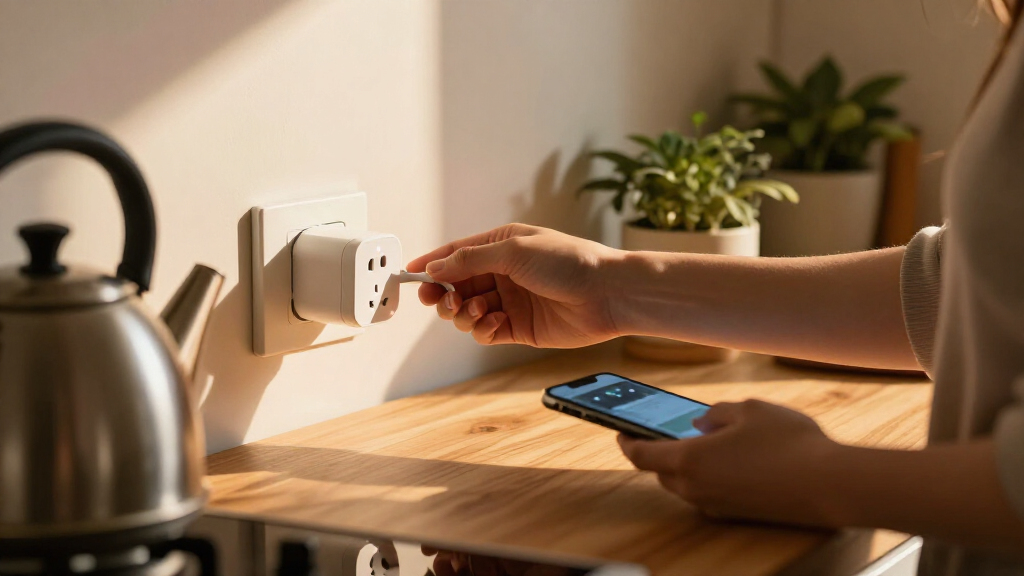

Smart plugs with energy monitoring let you track an appliance’s electricity use and control it remotely, but the right pick depends on your setup and how much data you need. I’d put the Kasa Matter KP125MP2 first for its blend of Matter support, 15A capacity, and practical two-pack format. The Tapo P115 is a strong alternative for straightforward plug-level tracking, while the Emporia 16-sensor bundle stands apart for shoppers who want whole-home data alongside smart plugs. The main tradeoffs are smart-home compatibility, pack size, and whether you need readings from individual outlets or across the home. Read on for the full breakdown of all 12 options and guidance on choosing between them.

Get home appliances delivered free with Prime
- Fast, free delivery on millions of items
- Prime Video, Amazon Music and more included
- Member-only deals all year
Complete the kit



Key Takeaways
- Matter support separates several leading picks: Kasa KP125MP2 and Tapo P110M offer cross-platform flexibility, while the Emporia bundle targets a broader whole-home monitoring setup.
- Pack size changes the value equation: Tapo P115 and Kasa Matter are available in two- and four-plug options, so buyers can match coverage to the appliances they want to track.
- Whole-home monitoring is a different job from outlet tracking: Emporia’s 16-sensor bundle adds circuit-level context that a standard smart plug lineup cannot provide.
- Hub requirements can outweigh app features: Minoston’s Z-Wave connection may suit an existing hub-based home, but it is a less direct fit for buyers seeking a simple Wi-Fi setup.
- Monitoring is most useful when matched to a decision: Per-plug readings help compare appliance use, while scheduling and remote control matter more when the goal is avoiding standby consumption or automating routines.


| smart plugs with energy monitoring | Pack size | Connectivity | Operating voltage | Model |
|---|---|---|---|---|
| Tapo Smart Plug Wi‑Fi Energy M | 2 plugs | 2.4 GHz Wi‑Fi | 125 V | — |
| TOPELER 15A Smart Plug with En | 2 plugs | 2.4 GHz Wi‑Fi and Bluetooth | — | YSP101 |
| Kasa Matter Smart Plug with En | 2 plugs | Matter and 2.4 GHz Wi‑Fi | 120 V | KP125MP2 |
| Tapo P110M Matter Smart Plugs | 4 plugs | Matter and 2.4 GHz Wi‑Fi | — | P110M |
| Emporia Energy Monitor with 16 | — | — | — | — |
| AiSeek Smart Plugs with Energy | 4 plugs | 2.4 GHz Wi-Fi and Bluetooth | 120 V | — |
| Tapo P115 Smart Wi-Fi Plug wit | 4 plugs | 2.4 GHz Wi-Fi | 110 V AC | — |
| Govee Smart Plug with Energy M | 4 plugs | Wi-Fi and Bluetooth; 5 GHz Wi-Fi is not supported | 120 V | H5086 |
| SONOFF S61s Matter Smart Plug | — | — | 120 V | — |
| Kasa Matter Smart Plug with En | 4 plugs | Matter, Wi-Fi, and SmartThings; 2.4 GHz Wi-Fi | 120 V | KP125MP4 |
| Emporia Energy Monitoring Smar | 4 plugs | 2.4 GHz Wi-Fi | 120 V | EMSO1-4 |
| Minoston MP21ZP Z-Wave Smart P | — | — | — | MP21ZP (VER 8.0) |
More Details on Our Top Picks
Tapo Smart Plug Wi‑Fi Energy Monitoring P115 (2‑Pack) 15A
The Tapo P115 is a balanced choice for buyers who want outlet-level energy data without setting up a broader smart-home system. Its app charts usage and estimates electricity costs, making it easier to spot devices that draw power when idle; scheduling and smart charging add practical ways to act on those readings. Compared with the Kasa KP125MP2, the P115 emphasizes Tapo app controls rather than Matter-based access across several platforms. It also includes overload shutoff protection, a useful safeguard for everyday connected appliances, while its compact form is designed to leave room around the outlet. The main limits are its 2.4 GHz Wi‑Fi requirement and two-plug pack size. Buyers who need broader platform flexibility or more plugs per purchase may prefer another option.
Pros:- App charts show energy use and estimated electricity costs.
- Alexa and Google Assistant voice control.
- Scheduling and smart charging help manage when devices run.
- Overload shutoff protection and compact plug design.
Cons:- Requires a 2.4 GHz Wi‑Fi network.
- Two-plug pack offers fewer monitored outlets than the Tapo P110M four-pack.
- Rated for 125 V, limiting suitability outside compatible regions.
Best for: Households seeking clear usage charts, cost estimates, and scheduling for a couple of appliances through one app.
Not ideal for: Smart-home users who need Matter platform flexibility, or households wanting four monitored outlets in one pack.
- Pack size:2 plugs
- Maximum current:15 A
- Maximum wattage:1800 W
- Operating voltage:125 V
- Connectivity:2.4 GHz Wi‑Fi
- Controller:Tapo app
- Voice assistants:Alexa and Google Assistant
- Certifications:ETL, FCC, RoHS
Our verdict“Choose the Tapo P115 for accessible energy charts and everyday scheduling, but choose a Matter model if multi-platform control matters more.”
TOPELER 15A Smart Plug with Energy Monitoring, Timer, and Remote Control, 2-Pack
The TOPELER YSP101 stands out for combining energy reports with Bluetooth local control, which gives it a fallback when the Wi‑Fi connection is unavailable. The Smart Life app reports power, current, and voltage, so its monitoring is more electrically detailed than the cost-estimate-focused description of the Tapo P115. Schedules, remote control, and voice commands cover the usual day-to-day needs, and no hub is required. That mix suits buyers who already use Smart Life or want local control alongside Wi‑Fi. The tradeoff is a less direct setup path: the plugs need to be configured in Smart Life before voice assistants can be linked. Like the Tapo, this is a 2.4 GHz-only, two-plug pack, so it is not the strongest fit for buyers building out many monitored outlets or relying on a 5 GHz-only network.
Pros:- Reports real-time power usage, current, and voltage.
- Bluetooth supports local control when Wi‑Fi is offline.
- Works with Alexa and Google Assistant after Smart Life setup.
- Hub-free design with schedules and remote app control.
Cons:- Requires 2.4 GHz Wi‑Fi for network features.
- Voice assistant setup requires configuring the Smart Life app first.
- Two plugs provide less coverage than the Tapo P110M four-pack.
Best for: Smart Life users who want outlet readings for power, current, and voltage, with Bluetooth control as a local backup.
Not ideal for: Buyers who want Matter-based platform integration, a 5 GHz-only connection, or setup without linking apps.
- Model:YSP101
- Pack size:2 plugs
- Maximum current:15 A
- Maximum power:1800 W
- Voltage:125 V
- Connectivity:2.4 GHz Wi‑Fi and Bluetooth
- App:Smart Life
- Voice assistants:Amazon Alexa and Google Assistant
- Certifications:ETL and FCC
Our verdict“Pick TOPELER if Bluetooth fallback and detailed electrical readings matter more than Matter integration or a simpler voice-assistant setup.”
Kasa Matter Smart Plug with Energy Monitoring, KP125MP2, 15A/1800W Max, 2-Pack
The Kasa KP125MP2 makes the most sense when energy monitoring needs to sit alongside an existing mix of smart-home platforms. Matter support brings compatibility with Apple Home, Alexa, Google Home, and SmartThings, while local network control can continue when internet access is down. That broader platform reach is the key difference from the Tapo P115, which centers control on its own app and voice integrations. The Kasa also tracks energy use, so buyers can pair outlet-level monitoring with familiar controls rather than switching ecosystems. Its 15 A, 1800 W ceiling is standard for this group, not a reason to use it with loads beyond its rating. The compromises are a 2.4 GHz Wi‑Fi requirement and a two-plug pack; households outfitting several rooms may get more coverage from the four-plug Tapo P110M.
Pros:- Matter support spans four major smart-home platforms.
- Local network control can work without internet access.
- Tracks energy use through app and voice control.
- UL-certified flame-retardant design and a 2-year limited warranty.
Cons:- Requires a 2.4 GHz Wi‑Fi network.
- Two-plug pack covers fewer outlets than the Tapo P110M four-pack.
- Maximum rating is 15 A and 1800 W.
Best for: Households using Apple Home, Alexa, Google Home, or SmartThings that want energy tracking through a Matter-compatible plug.
Not ideal for: Buyers who need more than two plugs in a pack or whose network has no 2.4 GHz Wi‑Fi.
- Model:KP125MP2
- Pack size:2 plugs
- Maximum current:15 A
- Maximum wattage:1800 W
- Operating voltage:120 V
- Connectivity:Matter and 2.4 GHz Wi‑Fi
- Compatible platforms:Apple Home, Amazon Alexa, Google Home, Samsung SmartThings
- Safety:UL-certified flame-retardant design
- Warranty:2-year limited
Our verdict“Choose the Kasa KP125MP2 when Matter compatibility and local control are priorities; choose a larger pack if outlet coverage comes first.”
Tapo P110M Matter Smart Plugs with Energy Monitoring, 4-Pack, 15A
For buyers who want to monitor several appliances at once, the Tapo P110M four-pack offers more outlet coverage than the two-plug Tapo P115 or Kasa KP125MP2. Matter support connects it with Alexa, Apple Home, Google Home, and SmartThings, while energy statistics, scheduling, and remote control give those outlets practical everyday uses. Its compact design is intended to keep neighboring sockets accessible, which matters when adding plugs around crowded power strips or wall outlets. The tradeoff is that the listed power-threshold shutoff may take some configuration, so buyers wanting protective automation should be ready to set limits rather than assuming it is active out of the box. It also depends on 2.4 GHz Wi‑Fi. Compared with the Kasa two-pack, this is the better pick for covering more devices; the Kasa is the more focused choice when a smaller pack and its stated local-control behavior are preferable.
Pros:- Four plugs provide broad outlet-level monitoring in one pack.
- Matter compatibility includes Alexa, Apple Home, Google Home, and SmartThings.
- Energy statistics, scheduling, voice commands, and remote control.
- Compact shape is designed to leave neighboring outlets accessible.
Cons:- Requires 2.4 GHz Wi‑Fi.
- Power-threshold shutoff settings may need manual configuration.
- The listed maximum is 1800 W, so higher-load appliances are outside its rating.
Best for: Matter smart-home households that want energy statistics and scheduling across several appliances without buying individual plugs.
Not ideal for: Buyers with 5 GHz-only Wi‑Fi or anyone who wants power-threshold shutoff without configuring settings.
- Model:P110M
- Pack size:4 plugs
- Maximum wattage:1800 W
- Connectivity:Matter and 2.4 GHz Wi‑Fi
- Compatible platforms:Amazon Alexa, Apple HomeKit, Google Home, Samsung SmartThings
- Control:App, voice, scheduling, and remote control
- Energy monitoring:Usage tracking and statistics
- Color:White
Our verdict“Choose the Tapo P110M when you want four Matter-compatible monitored outlets, provided you are willing to configure its power limits.”
Emporia Energy Monitor with 16 Sensors + 4 Smart Plugs Super Bundle – Whole Home Electricity Usage Tracking & Real-Time Control – Supports Solar Net Metering – Works with iOS, Android, Alexa
The Emporia bundle is a different kind of choice from the Tapo P110M or Kasa KP125MP2: it pairs four smart plugs with a panel-mounted monitor and up to 16 circuit sensors. That means buyers can compare individual outlet use with circuit-level and whole-home data, rather than relying only on readings from plugged-in devices. Second-by-second tracking and solar net-metering support make it a stronger fit for energy-conscious households managing multiple circuits or solar production. The added scope brings added effort, though. Connecting sensors in the electrical panel may require basic electrical knowledge, unlike simply plugging in the standalone Tapo or Kasa models. The system is also centered on Emporia’s app and ecosystem, so it is less flexible for buyers who want broad Matter-based smart-home control. This bundle suits analysis across the home; it is excessive if you only want to monitor a few appliances.
Pros:- Includes a whole-home monitor with up to 16 circuit sensors.
- Four smart plugs add outlet-level energy tracking and control.
- App provides real-time usage data, trends, and automation.
- Supports solar net metering and time-of-use planning.
Cons:- Panel sensor installation may require basic electrical knowledge.
- The system is centered on the Emporia ecosystem and may not suit buyers seeking broad smart-home platform support.
- More involved than standalone options such as the Tapo P115 for monitoring a small number of devices.
Best for: Homeowners who want circuit-level and whole-home usage data alongside four monitored outlets, especially those with solar or time-of-use concerns.
Not ideal for: Renters, buyers uncomfortable working at an electrical panel, or households seeking only simple plug-level monitoring and broad Matter integration.
- Brand:Emporia
- Circuit sensors included:16
- Smart plugs included:4
- Monitoring scope:Whole-home, circuit-level, and outlet-level
- Data interval:Second-by-second usage data
- Solar support:Solar net metering
- App compatibility:iOS and Android
- Voice assistant:Alexa
Our verdict“Choose Emporia for a wider view of household circuits and plug-in devices, but skip it if you only need simple outlet monitoring.”
AiSeek Smart Plugs with Energy Monitoring, 15A, 4-Pack
The AiSeek 4-pack makes sense when I want energy tracking across several appliances without needing a more involved smart-home setup. It reports real-time power and energy use through SmartLife, then adds schedules, timers, and group control for everyday routines. Its 1.4-inch-wide profile is notably compact, which can help when outlets sit close together. Compared with the Govee H5086, AiSeek’s listing gives less detail about historical data, so it is a simpler choice for checking current consumption rather than studying long-term patterns. Voice control works with Alexa and Google Assistant, but both require linking SmartLife, and setup depends on 2.4 GHz Wi-Fi. I’d pick it for straightforward multi-device coverage; buyers seeking broader platform support or more detailed monitoring should compare the Tapo P115 or Govee instead.
Pros:- Four plugs provide monitoring coverage for several devices.
- Real-time power and energy tracking, plus schedules, timers, and group control.
- Compact 1.4-inch-wide design can help preserve access to nearby outlets.
- Short-circuit and overload protection with a stated 1800 W maximum.
Cons:- Requires a 2.4 GHz Wi-Fi network.
- Alexa and Google Assistant control requires linking through SmartLife.
- The supplied product details do not specify a long-term history view or energy-cost tracking.
Best for: Households that want to monitor several everyday appliances with basic live readings, schedules, and SmartLife group control.
Not ideal for: Buyers who want detailed long-term energy history, broad smart-home platform compatibility, or a setup that avoids linking a separate app to voice assistants.
- Pack size:4 plugs
- Maximum power:1800 W
- Operating voltage:120 V
- Connectivity:2.4 GHz Wi-Fi and Bluetooth
- App:SmartLife
- Voice assistants:Amazon Alexa and Google Assistant
- Dimensions:1.4 × 2.8 × 2 in
- Warranty:2 years
Our verdict“Choose AiSeek for compact, straightforward monitoring across four appliances, but look to Govee or Tapo if richer energy records or broader integrations matter more.”
Tapo P115 Smart Wi-Fi Plug with Energy Monitoring, 4-Pack, 15A
I’d put the Tapo P115 near the top for buyers who want energy monitoring to fit naturally into routine smart-plug use. Its app provides energy statistics and charts, while scheduling and automatic shutoff make it easier to manage connected appliances rather than only observe them. The compact design is also a practical advantage when a second outlet needs to stay free. Compared with the AiSeek 4-pack, Tapo names more control options, including SmartThings alongside Alexa and Google Assistant, and describes its monitoring with charts. The tradeoff is that estimating a bill depends on billing information integration, so usage data may not translate directly into a precise household cost. It also requires 2.4 GHz Wi-Fi. I’d choose Tapo for a clear app-led starting point, but not for someone whose main priority is Matter-based local control, where Kasa and SONOFF are stronger fits.
Pros:- Energy statistics and charts make usage patterns easier to review.
- Supports Tapo app control, Alexa, Google Assistant, and SmartThings.
- Scheduling and automatic shutoff add practical control beyond monitoring.
- Compact shape is designed to leave neighboring outlets accessible.
Cons:- Requires a 2.4 GHz Wi-Fi network.
- Bill estimates depend on billing information integration.
- Does not list Matter support, unlike the Kasa KP125MP4 and SONOFF S61s.
Best for: New smart-plug owners who want app charts, familiar voice controls, scheduling, and automatic shutoff in a four-plug set.
Not ideal for: Buyers who need Matter-based platform flexibility, 5 GHz Wi-Fi, or energy-cost estimates that work without billing information integration.
- Pack size:4 plugs
- Maximum wattage:1800 W
- Operating voltage:110 V AC
- Connectivity:2.4 GHz Wi-Fi
- Control methods:Tapo app, Alexa, Google Assistant, and SmartThings
- Monitoring and control features:Energy monitoring, scheduling, and automatic shutoff
- Material:Polycarbonate
- Certifications:ETL, FCC, and RoHS
Our verdict“Pick the Tapo P115 for approachable app-based monitoring and routine controls, but choose a Matter plug if cross-platform local control is your priority.”
Govee Smart Plug with Energy Monitoring, Wi-Fi and Bluetooth, 4-Pack
Govee is the clearest fit in this group for buyers who want to study more than a live wattage reading. The Govee Home app tracks power, current, and voltage, with data history available for up to one year. That longer record gives it an advantage over the AiSeek 4-pack, whose supplied details focus on real-time use without specifying a comparable history view. Schedules, group control, remote operation, and Alexa or Google Assistant voice commands cover everyday automation. There is a connectivity catch: Bluetooth is included, but the plugs do not support 5 GHz Wi-Fi, and app-based control runs through Govee Home. Its 2.68-inch dimension is also wider than AiSeek’s stated 1.4-inch width, so I’d check outlet spacing before buying. Choose Govee for richer tracking, not the most compact footprint or app flexibility.
Pros:- Tracks power, current, and voltage rather than energy use alone.
- Provides up to one year of data history.
- Supports remote control, schedules, group control, Alexa, and Google Assistant.
- ETL and FCC certified.
Cons:- Does not support 5 GHz Wi-Fi.
- App-based control requires Govee Home.
- Its listed 2.68-inch dimension is larger than AiSeek’s stated width, which may affect tight outlet layouts.
Best for: Energy-conscious households that want to review multiple electrical readings and examine up to a year of usage history in one app.
Not ideal for: Buyers whose router setup relies on 5 GHz Wi-Fi, who want to avoid the Govee Home app, or who need especially slim plugs.
- Model:H5086
- Pack size:4 plugs
- Maximum wattage:1800 W
- Operating voltage:120 V
- Connectivity:Wi-Fi and Bluetooth; 5 GHz Wi-Fi is not supported
- Energy data:Power, current, and voltage; history up to one year
- Voice assistants:Amazon Alexa and Google Assistant
- Certifications:ETL and FCC
Our verdict“Choose Govee when detailed readings and a year of usage history matter more than a smaller body or freedom to use another app.”
SONOFF S61s Matter Smart Plug, 15A Wi-Fi Outlet with Energy Monitoring
The SONOFF S61s stands out for buyers who want energy monitoring alongside a broad Matter-connected setup. It supports Apple Home, Alexa, Google Home, and SmartThings, and adds real-time energy readings and cost tracking for day-to-day visibility. Its stated 1875 W capacity is slightly above the 1800 W rating listed for the Tapo P115 and Kasa KP125MP4, though the stated 15 A limit still defines its intended load class. Overload and fire protection add a safety layer, but this is a single plug, not a four-pack like the Kasa or Govee options. That makes it easier to try in one location, but less suited to monitoring several rooms at once. It requires 2.4 GHz Wi-Fi, and the supplied details identify eWeLink as a compatible device rather than clearly describing all app options, so I’d check the intended control setup before choosing it.
Pros:- Matter compatibility spans Apple Home, Alexa, Google Home, and SmartThings.
- Provides real-time energy monitoring and cost tracking.
- Lists a 1875 W maximum and 15 A load capacity.
- Includes overload and fire protection.
Cons:- Sold as one plug, so covering several appliances requires additional units.
- Supports only 2.4 GHz Wi-Fi.
- The supplied product information does not clearly identify the full app-control setup.
Best for: Smart-home owners using Apple Home, Alexa, Google Home, or SmartThings who want Matter compatibility and energy-cost tracking for one appliance.
Not ideal for: Buyers who want a multi-plug set, 5 GHz Wi-Fi, or clearly specified app details before committing to a control ecosystem.
- Connectivity protocol:Matter over Wi-Fi
- Operating voltage:120 V
- Maximum load:15 A; 1875 W
- Compatible platforms:Apple Home, Alexa, Google Home, and SmartThings
- Energy features:Real-time monitoring and cost tracking
- Protection:Overload and fire protection
- Dimensions:2.36 × 1.5 × 2.13 in
- Warranty:2 years
Our verdict“Choose the SONOFF S61s for a single monitored appliance in a Matter household, but pick a four-pack such as Kasa or Govee for broader coverage.”
Kasa Matter Smart Plug with Energy Monitoring, 4-Pack
The Kasa KP125MP4 earns my broadest recommendation here for households that want energy monitoring across several devices without tying control to one major smart-home platform. Matter support connects it with Apple Home, Alexa, Google Home, and SmartThings, while local network control can keep compatible control working when the internet is unavailable. That combination gives this four-pack a stronger platform case than the Tapo P115, which lists several integrations but not Matter. Energy usage tracking is included, though the supplied details do not describe the deeper history or multi-measurement views offered by Govee. Each plug is rated for 15 A and 1800 W, so it suits everyday loads within that limit, not higher-demand appliances. A 2.4 GHz Wi-Fi network is required. I’d make this my default pick for Matter homes; buyers focused on year-long data should favor Govee instead.
Pros:- Matter support spans Apple Home, Alexa, Google Home, and SmartThings.
- Local network control can work when internet access is unavailable.
- Four plugs provide monitoring across multiple appliances.
- UL-certified, flame-retardant design with a 2-year limited warranty.
Cons:- Requires a 2.4 GHz Wi-Fi network.
- Maximum load is 15 A and 1800 W.
- The supplied details do not specify a long-term history period or cost-tracking feature.
Best for: Households with Apple Home, Alexa, Google Home, or SmartThings that want four energy-monitoring plugs and local Matter control.
Not ideal for: Buyers who need 5 GHz Wi-Fi, loads above 15 A or 1800 W, or detailed energy-history features specified at the level Govee provides.
- Model:KP125MP4
- Pack size:4 plugs
- Maximum current and wattage:15 A; 1800 W
- Operating voltage:120 V
- Connectivity:Matter, Wi-Fi, and SmartThings; 2.4 GHz Wi-Fi
- Compatible platforms:Apple Home, Amazon Alexa, Google Home, and Samsung SmartThings
- Control:Kasa app, voice control, on/off, and local network control
- Safety and warranty:UL certified; flame-retardant design; 2-year limited warranty
Our verdict“Choose Kasa for a four-plug Matter setup with local control, or choose Govee if richer historical energy data is your main goal.”
Emporia Energy Monitoring Smart Plugs, 4-Pack
Four plugs and device-level energy monitoring make this Emporia set a practical choice for tracking several lamps, fans, or other household devices without buying a separate plug for each one. You can check consumption and manage schedules through the Emporia app, or use Alexa and Google Assistant for voice control. Compared with the Minoston MP21ZP, it connects directly over Wi-Fi rather than requiring a separate Z-Wave hub, so setup is less dependent on existing smart-home equipment. The tradeoff is a 10 A maximum continuous load and a 1200 W rating, below the 15 A capacity listed for several other plugs in this roundup. It also works only on 2.4 GHz Wi-Fi, so households with a 5 GHz-only network should skip it.
Pros:- Four plugs let buyers monitor and control several devices from one set.
- Tracks connected-device energy use through the Emporia app.
- Supports remote control and scheduling.
- Works with Amazon Alexa and Google Assistant.
Cons:- Requires 2.4 GHz Wi-Fi and does not support 5 GHz networks.
- 10 A maximum continuous load and 1200 W rating limit suitable appliance choices.
- The one-year warranty is shorter than the Minoston MP21ZP’s two-year warranty.
Best for: Households that want four app-controlled plugs for monitoring and scheduling modest-load devices over an existing 2.4 GHz Wi-Fi network.
Not ideal for: People monitoring high-draw appliances or using a 5 GHz-only Wi-Fi network; its 10 A continuous-load limit and 2.4 GHz requirement may not fit.
- Model:EMSO1-4
- Pack size:4 plugs
- Operating voltage:120 V
- Maximum wattage:1200 W
- Connectivity:2.4 GHz Wi-Fi
- Compatibility:Amazon Alexa, Google Assistant, Android, and iOS
- Features:Energy monitoring, scheduling, and remote control
- Dimensions:1.97 × 3.31 × 1.5 inches
- Certifications and warranty:ETL and FCC; 1-year warranty
Our verdict“Choose this four-pack if you want app-based energy monitoring for several modest-load devices and have 2.4 GHz Wi-Fi.”
Minoston MP21ZP Z-Wave Smart Plug with Energy Monitoring
Z-Wave energy monitoring gives this Minoston plug a different appeal from Wi-Fi models: it is designed for buyers who already run a compatible hub and want another device on that system. It reports power and energy use and supports timers, schedules, and remote control, while its 800 Series chip, S2 security, and SmartStart pairing suit a more integrated setup. Unlike the four-plug Emporia set, this is a single plug and needs a hub sold separately; Alexa and Google Assistant control also depend on that hub. Its ability to extend Z-Wave coverage can add value beyond controlling the attached device, with range claims dependent on a compatible Long Range hub. Choose the Emporia instead if you want a direct Wi-Fi option without hub requirements; choose Minoston when Z-Wave integration is the priority.
Pros:- Monitors power and energy consumption through a compatible Z-Wave hub.
- Supports timers, schedules, and remote control.
- Includes S2 authenticated security and SmartStart pairing.
- Can extend Z-Wave network coverage; the listed range is up to 1,300 ft with a compatible Long Range hub.
Cons:- Requires a compatible Z-Wave hub, which is sold separately.
- Alexa and Google Assistant control require a hub, and it cannot connect directly to Echo Plus.
- A single plug offers less multi-device coverage than the Emporia four-pack.
Best for: Z-Wave smart-home owners with a compatible hub who want device energy data, scheduled control, and a plug that can extend network coverage.
Not ideal for: Buyers without a compatible Z-Wave hub or anyone seeking a direct Wi-Fi plug; the hub is required and sold separately.
- Model:MP21ZP (VER 8.0)
- Wireless protocol:Z-Wave 800 Series
- Voltage:125 V
- Amperage:15 A
- Hub requirement:Compatible Z-Wave hub required; sold separately
- Security and pairing:S2 authenticated security and SmartStart
- Compatibility:SmartThings, Hubitat, Vera, Wink, Z-Box Hub, Fibaro, Ring, 2GIG, and HomeSeer
- Maximum range extension:Up to 1,300 ft with a compatible hub supporting Long Range
- Dimensions and warranty:1.14 × 1.89 × 1.89 inches; 2-year warranty
Our verdict“Pick the Minoston if you already use a compatible Z-Wave hub and value network integration over direct Wi-Fi setup.”

How We Picked
I ranked these smart plugs with energy monitoring by how well their monitoring, connectivity, and everyday controls fit likely buyer needs. I looked at stated electrical capacity, whether the plug uses Wi-Fi, Matter, or Z-Wave, the size of each bundle, and whether the product is focused on single-outlet readings or broader home-level data. I also weighed ease of adding plugs to a smart home, the usefulness of remote control and timers, and whether a product’s format makes sense for the number of appliances a buyer wants to track.
The ranking favors options that combine useful energy data with flexible setup, without making buyers pay in complexity for features they may not need. Matter-enabled Kasa and Tapo models rank highly for their mix of capacity and platform choice; Tapo P115 remains a practical pick for buyers who want a more direct plug-level solution. Emporia’s bundle earns a distinct place for whole-home monitoring, while hub-dependent or less widely differentiated options rank lower for general-purpose buyers. Product names and listed features are taken from the supplied product lineup; I do not imply hands-on testing or make unsupported claims about measurement accuracy.
Factors to Consider When Choosing Smart Plugs With Energy Monitoring
Before choosing, I’d decide what question you want the energy data to answer. A plug can show the use of one appliance, but it will not automatically explain your whole electricity bill or identify which circuit is responsible. The factors below help match the monitoring method and smart-home connection to your actual goal.
Decide Whether You Need Plug-Level or Whole-Home Data
A smart plug measures the appliance connected to that outlet, which makes it useful for comparing a dehumidifier, TV, or countertop appliance over time. It cannot account for hardwired equipment, other outlets, or total household use. If your goal is to spot which appliances are drawing power, individual plugs are a direct starting point. If you want to connect usage to circuits, solar production, or the home’s overall consumption, a whole-home monitor such as a sensor-based system serves a different purpose. A common mistake is buying several plugs and expecting them to explain a utility bill on their own. Choose the measurement scope first, then decide how many plugs you need.
Check Smart-Home Compatibility Before Buying a Pack
Compatibility can shape setup more than the plug’s energy features do. Matter models can offer a broader path across supported smart-home platforms, but you still need to confirm that your controller and desired functions work with the specific device. Wi-Fi plugs may be simpler for a home already organized around a manufacturer’s app, while Z-Wave models generally make more sense when a compatible hub is already in place. Do not assume that every platform exposes energy data in the same way just because it can switch a plug on and off. Check which app or controller presents the readings you care about, and whether remote access depends on a hub or account. Buying an unfamiliar protocol without checking your existing setup can turn a simple outlet upgrade into a compatibility project.
Match Pack Size to the Appliances You Will Actually Track
Four-plug bundles can make it easier to monitor several appliances, but buying more outlets than you need can add setup work without improving your decisions. Start by listing the devices whose consumption you genuinely want to compare or control. A two-pack may be enough for a couple of high-interest appliances, while a larger bundle suits a room-by-room plan. Also check whether the plugs’ physical shape leaves neighboring outlets accessible; outlet spacing can matter more than the count printed on the package. If you are new to monitoring, beginning with a small number of plugs can help you learn which readings are useful before expanding. Scale up when the first set changes what you do, not simply because a bundle includes more units.
Treat the 15A Rating as a Limit, Not a Guarantee of Fit
A listed 15A rating describes a maximum electrical capacity, not a promise that every high-draw appliance is suitable in every installation. Check the appliance’s label and instructions, the plug’s stated limits, and any restrictions for motors, heating devices, or other demanding loads. A smart plug also adds a connection point, so it should not be used to bypass an appliance’s own safety guidance. For equipment that runs for long periods, confirm the intended use and monitoring behavior before relying on automated schedules. Buyers often focus on app features and overlook the connected load. Electrical fit comes first; convenience features only matter after the plug is appropriate for the appliance.
Ask What You Will Do With the Energy Readings
Energy data is most valuable when it can guide an action: changing a schedule, comparing two appliances, or deciding whether a device should remain on standby. A reading alone does not automatically identify a fault or calculate savings. Check whether the app shows the level of detail you need, such as current use or historical trends, rather than assuming every monitor presents data identically. If you mainly want to switch a lamp or automate a routine, energy monitoring may be a secondary feature rather than the reason to buy. If appliance comparison is your goal, plan to observe devices under similar conditions and over a meaningful period. That approach avoids treating a brief snapshot as a reliable picture of ongoing consumption.
Pay More for Coverage or Compatibility, Not Just a Longer Feature List
A larger system can make sense when you need circuit-level context, solar-related tracking, or a single view across many parts of the home. For a few individual appliances, a simple plug-based setup may be easier to manage and sufficient for the task. Matter support can be worth prioritizing if platform flexibility matters, while a Z-Wave model may suit a home that already depends on a Z-Wave hub. Extra sensors and more outlets also mean more installation or setup steps, so match added complexity to a clear need. Avoid buying a premium monitoring system solely for data you will not review or use. The better fit is the least complicated option that answers your energy question and works with your existing home.
Frequently Asked Questions
Can I use a smart plug with energy monitoring to measure my whole home?
No single smart plug measures total household consumption; it reports the load connected to that plug. Multiple plugs can help you compare selected appliances, but they will miss hardwired equipment and anything connected elsewhere. For a home-wide view, look at a sensor-based energy monitor designed to measure circuits or service-level usage. A bundle that combines whole-home sensors with smart plugs can bridge both kinds of monitoring, but it is a larger setup than a plug-only purchase. Choose based on whether you need appliance-level answers or a picture of the whole property.
Should I choose Matter, Wi-Fi, or Z-Wave for energy monitoring?
Choose the connection that fits your current smart-home system and the way you want to view data. Matter can be a useful choice when you want broader platform options, but verify that the controller and app expose the monitoring features you need. Wi-Fi models can suit buyers who prefer direct app-based setup, while Z-Wave generally fits homes that already use a compatible hub. Protocol support for switching does not always mean every energy feature appears identically across platforms. Check both device compatibility and how readings are accessed before selecting a pack.
Is a four-pack a better choice than a two-pack if I want to track energy use?
Only if you have several appliances you plan to monitor or automate. A two-pack is a sensible starting point for comparing a couple of devices, and it limits setup before you know how useful the readings are. A four-pack can make sense when you already have a room-by-room plan or want several outlets covered at once. Consider outlet spacing and the plugs’ physical dimensions as well as the number included. More plugs do not improve the accuracy or scope of any individual reading; they only add more monitored outlets.
Can energy-monitoring smart plugs safely control high-wattage appliances?
Do not rely on a 15A label alone to decide whether a plug suits a particular appliance. Compare the appliance’s electrical requirements with the plug’s stated limits and follow both manufacturers’ instructions, especially for heaters, motors, and equipment that runs continuously. Some loads can have operating characteristics that deserve more care than a simple wattage comparison. If the appliance maker advises against using an extension or remote switching device, follow that guidance. When the electrical fit is unclear, use a suitable dedicated outlet or consult a qualified electrician rather than testing the limit.
Will a smart plug’s energy readings tell me exactly how much money an appliance costs to run?
Not by themselves. A plug measures electricity use at the connected outlet, while the cost depends on your utility’s rates, billing structure, and sometimes the time of day. If the app supports rate entry or cost estimates, check whether those settings match your actual plan. Treat the reading as a way to compare use and spot patterns, not as a guaranteed bill calculation. For meaningful comparisons, collect readings over similar periods and account for changes in how the appliance is used.
Conclusion
For most buyers, I’d start with the Kasa Matter KP125MP2 as the best overall balance of Matter support, 15A capacity, and a practical two-plug format. The Tapo P115 is my best value-style choice for buyers who want straightforward outlet monitoring, with two- and four-pack options to fit different needs. For beginners, I’d favor a small Wi-Fi plug set before building a larger monitoring system; it keeps the first step focused on a few appliances. Buyers seeking a premium, broader view should look at the Emporia 16-sensor bundle, which serves whole-home monitoring needs beyond plug-level tracking. For a specific hub-based setup, the Minoston Z-Wave plug is the specialist option; choose it when Z-Wave already fits your home, not as a default for a Wi-Fi-first setup.
NFL season / tailgating Picks
team gear
As an affiliate, we earn on qualifying purchases.