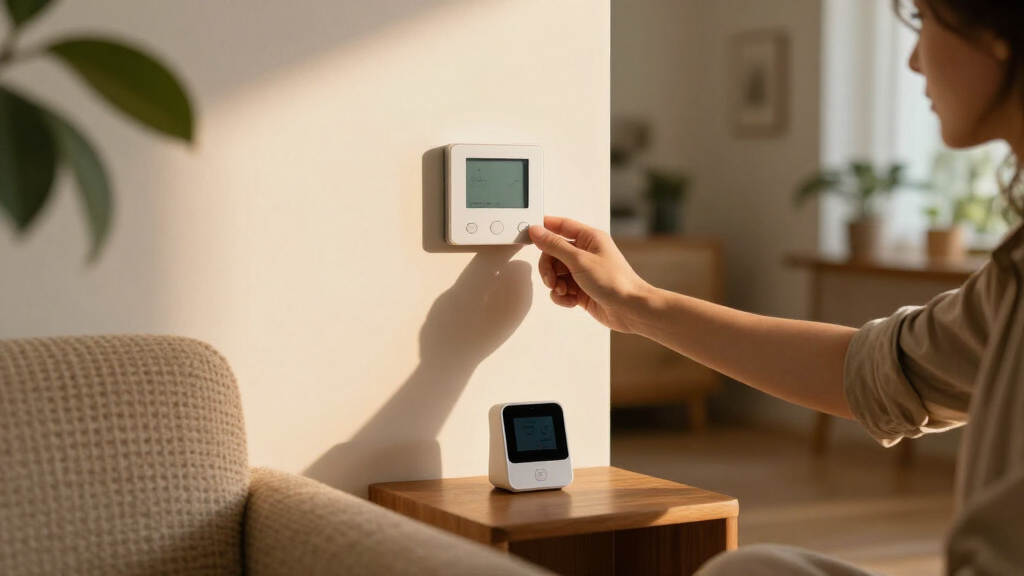

Smart thermostats with room sensors solve a problem single-thermostat homes know well: the temperature on the wall where the thermostat sits rarely matches the temperature in the rooms you actually live in. After comparing this lineup, the Honeywell Home X8S Premium in black stands out as the best overall pick, thanks to its flexible room-sensor priorititization and polished scheduling. The Google Nest Learning Thermostat (4th Gen) is the strongest premium alternative if you want a thermostat that programs itself, while the Sensi Touch 2 is the value play for simpler homes. The main tradeoffs in this category come down to how many sensors you need, whether your HVAC system supports multi-room averaging, and how much automation you want the thermostat to handle for you. Read on for the full breakdown.

Get home appliances delivered free with Prime
- Fast, free delivery on millions of items
- Prime Video, Amazon Music and more included
- Member-only deals all year
Complete the kit


![[Genuine] Waterdrop PF-01A Water Filter Replacement for W...](https://m.media-amazon.com/images/I/41+5tl9EiKL._SX342_SY445_QL70_FMwebp_.jpg)
Key Takeaways
- Sensor prioritization matters more than sensor count — the Honeywell X8S models let you weight specific rooms by time of day, while the Nest Temperature Sensor simply averages, which changes comfort in multi-story homes.
- Two near-identical Honeywell X8S variants made the list; the black version bundles a room sensor and suits whole-home setups, while the standalone unit only makes sense if you already own sensors or plan to buy them separately.
- The Nest 4th Gen is the only pick that genuinely learns your routine without programming, but its sensors don’t detect occupancy — a real gap against the TQX Matter’s presence sensing.
- The Sensi Touch 2 keeps the price of entry low but caps sensor support, so it fits small apartments better than sprawling floor plans.
- Matter support remains rare in this category — the TQX is the only option here that works natively across Apple, Google, and Amazon ecosystems without relying on a manufacturer app.
| Honeywell Home X8S Premium Smart Wi-Fi Thermostat with Room Sensor, Black |  | Best Overall | Display: 5-inch customizable touchscreen | Included accessory: Wireless room sensor, up to 200 ft range | Smart home compatibility: Matter, Amazon Alexa, Google Assistant, Apple Home | VIEW LATEST PRICE | See Our Full Breakdown |
| Sensi Touch 2 Smart Wi-Fi Thermostat (ST76) |  | Best Value | Model: ST76 | Connectivity: Wi-Fi, Bluetooth | Voice assistant compatibility: Amazon Alexa | VIEW LATEST PRICE | See Our Full Breakdown |
| Honeywell Home ElitePRO S1200 Smart Thermostat with Room Sensor, White |  | Best for Large or Complex HVAC Systems | Model: YTHX1200W5/U | Included room sensor: C7189R3010, one (up to 20 supported) | Display: 5-inch color touchscreen | VIEW LATEST PRICE | See Our Full Breakdown |
| TQX Matter Wi-Fi Thermostat with Occupancy Detection and Remote Sensor Support |  | Best for Smart-Home Power Users | Connectivity: Matter via compatible smart-home speaker | Occupancy detection: Millimeter-wave sensor with occupancy learning | Remote sensor support: Up to 5 QSZ Remote Sensors | VIEW LATEST PRICE | See Our Full Breakdown |
| Honeywell Home X8S Premium Smart Wi-Fi Thermostat |  | Best Smart Display Experience | Display: 5-inch customizable color display | Connectivity: 2.4 or 5 GHz Wi-Fi; 802.11ax/ac/a/b/g/n | Smart home compatibility: Matter, Amazon Alexa, Google Assistant, Apple Home | VIEW LATEST PRICE | See Our Full Breakdown |
| Google Nest Learning Thermostat (4th Gen) with Nest Temperature Sensor (2nd Gen), Obsidian |  | Best for Hands-Off Automation | Thermostat generation: 4th gen | Included sensor: Nest Temperature Sensor, 2nd gen | Color: Obsidian | VIEW LATEST PRICE | See Our Full Breakdown |
| smart thermostats with room sensor | Display | Certification | Connectivity | Smart home compatibility |
|---|---|---|---|---|
| Honeywell Home X8S Premium Sma | 5-inch customizable touchscreen | ENERGY STAR certified | — | Matter, Amazon Alexa, Google Assistant, Apple Home |
| Sensi Touch 2 Smart Wi-Fi Ther | — | ENERGY STAR certified | Wi-Fi, Bluetooth | — |
| Honeywell Home ElitePRO S1200 | 5-inch color touchscreen | ENERGY STAR certified | Dual-band Wi-Fi, Bluetooth, Matter | — |
| TQX Matter Wi-Fi Thermostat wi | — | — | Matter via compatible smart-home speaker | — |
| Honeywell Home X8S Premium Sma | 5-inch customizable color display | ENERGY STAR certified | 2.4 or 5 GHz Wi-Fi; 802.11ax/ac/a/b/g/n | Matter, Amazon Alexa, Google Assistant, Apple Home |
| Google Nest Learning Thermosta | 60% larger display than previous generation | — | — | Matter, Google Assistant, Alexa, and Siri |
More Details on Our Top Picks
Honeywell Home X8S Premium Smart Wi-Fi Thermostat with Room Sensor, Black
For most buyers who want targeted, room-by-room comfort without guesswork, the X8S in black earns the top spot. It ships with a wireless room sensor good for up to 200 feet of range, and the 5-inch customizable touchscreen doubles as a hub for indoor air quality monitoring and even video doorbell feeds from Ring or First Alert VX1 devices. Compared with the Sensi Touch 2, which makes you buy sensors separately, the X8S is complete out of the box. Against the ElitePRO S1200, it trades some HVAC stage capacity for a friendlier consumer experience while still covering most residential heat pumps and conventional systems. The tradeoffs are real: it needs a C-wire (an adapter voucher softens the blow), it won’t work with 120–240V baseboard heat, and some air quality features assume extra HVAC equipment you may not own.
Pros:- Room sensor included in the box with a 200 ft wireless range
- 5-inch customizable touchscreen that can display doorbell video
- Works with Matter, Alexa, Google Assistant, and Apple Home
- Indoor air quality monitoring and control built in
Cons:- Not compatible with 120–240V electric baseboard heat
- C-wire required, though an adapter voucher is included
- Some air quality features may need additional HVAC equipment or accessories
Best for: Homeowners with multi-story or unevenly heated homes who want a bundled sensor, air quality insight, and deep smart-home integration in one package
Not ideal for: Buyers with electric baseboard heat or older two-wire systems who can’t run a C-wire
- Display:5-inch customizable touchscreen
- Included accessory:Wireless room sensor, up to 200 ft range
- Smart home compatibility:Matter, Amazon Alexa, Google Assistant, Apple Home
- HVAC support:Up to 3H/2C heat pump with electric backup, or 2H/2C conventional
- Wi-Fi:2.4 or 5 GHz; 802.11ax/ac/a/b/g/n
- Wiring:C-wire required; adapter voucher included
- Certification:ENERGY STAR certified
Our verdict“If you want the most complete room-sensor package with a premium display and few compromises, this is the one to buy.”
Sensi Touch 2 Smart Wi-Fi Thermostat (ST76)
The Sensi Touch 2 makes this list as the budget-conscious entry point into sensor-based climate control. It doesn’t include a sensor, but it’s compatible with affordable Sensi Room Sensors you can add as needed — a pay-as-you-grow approach the pricier Honeywell Home X8S doesn’t offer since its accessory is bundled whether you need it or not. Where the Google Nest Learning Thermostat (4th Gen) leans on automatic schedules, the Sensi favors straightforward flexible scheduling and usage reports that show exactly where energy goes. App-guided installation keeps setup manageable for first-timers, and ENERGY STAR certification means it’s built for efficiency. The honest downsides: the C-wire requirement is non-negotiable, and Alexa is the only voice assistant on board, so Google and Apple households should look elsewhere.
Pros:- Remote access and flexible scheduling with energy usage reports
- Works with Sensi Room Sensors for multi-room monitoring
- App-guided installation for DIY setup
- ENERGY STAR certified for efficient operation
Cons:- Room sensors sold separately, adding to the true cost
- Requires a C-wire with no adapter included
- Voice assistant support limited to Alexa
Best for: Cost-conscious homeowners who want core smart scheduling now and the option to add room sensors incrementally
Not ideal for: Google Home or Apple HouseKit households, since voice control is Alexa-only
- Model:ST76
- Connectivity:Wi-Fi, Bluetooth
- Voice assistant compatibility:Amazon Alexa
- Room sensor compatibility:Sensi Room Sensors (sold separately)
- C-wire:Required
- Certification:ENERGY STAR certified
Our verdict“A sensible pick if you want sensor-expandable smart climate control at the lowest entry cost and don’t need premium display or air quality features.”
Honeywell Home ElitePRO S1200 Smart Thermostat with Room Sensor, White
The ElitePRO S1200 is the contractor-grade option here, built for homes that outgrow consumer models. It supports up to 20 wireless room sensors and handles up to 4 heat / 2 cool heat pumps or 3H/3C conventional systems — capacity the Honeywell Home X8S can’t match. Its bundled C7189R3010 sensor reads temperature, humidity, and motion, letting occupancy data drive comfort the way the TQX Matter thermostat does, but with a much larger sensor network. Add VOC and estimated CO2 monitoring plus control of two IAQ devices, and it functions as a whole-home comfort manager rather than a simple thermostat. The catch: this power demands infrastructure. You’ll need a C-wire with no adapter in the box, and doorbells plus air quality accessories are extra purchases.
Pros:- Supports up to 20 wireless room sensors for whole-building coverage
- Handles complex systems up to 4H/2C heat pump or 3H/3C conventional
- Monitors humidity, VOCs, and estimated CO2 with occupancy sensing
- Matter, Alexa, Google Home, and Apple Home compatibility
Cons:- C-wire required and the adapter is sold separately
- Doorbells and some indoor air quality accessories not included
- Overkill in cost and complexity for simple single-zone homes
Best for: Owners of large homes or light-commercial spaces with multi-stage HVAC and zoned comfort ambitions across many rooms
Not ideal for: Small apartments or single-stage furnace owners — this level of expandability is overkill and adds setup complexity
- Model:YTHX1200W5/U
- Included room sensor:C7189R3010, one (up to 20 supported)
- Display:5-inch color touchscreen
- System capacity:Up to 4H/2C heat pump; 3H/3C conventional
- Air quality monitoring:Humidity, VOCs, estimated CO2
- Connectivity:Dual-band Wi-Fi, Bluetooth, Matter
- Power:24 VAC, C-wire required
- Certification:ENERGY STAR certified
Our verdict“Buy this if your HVAC setup and room count exceed what consumer thermostats can manage; skip it for a standard single-family setup.”
TQX Matter Wi-Fi Thermostat with Occupancy Detection and Remote Sensor Support
The TQX takes a different philosophy from every other pick here: instead of being the center of attention, it becomes a citizen of your Matter ecosystem. Its millimeter-wave occupancy detection with occupancy learning feeds data back to your smart-home app, where it can trigger lighting or security automations — something the Honeywell Home X8S keeps locked inside its own app. With support for up to five QSZ remote sensors plus an ambient light sensor that wakes or sleeps the display automatically, it’s clever about presence-based comfort. One honest limitation separates it from the field: sensor readings are combined into whole-home adjustments rather than independently regulating individual rooms. It also needs a Matter-enabled speaker for internet connectivity, and line-voltage systems are off the table.
Pros:- Occupancy and temperature data usable across the smart-home ecosystem for lighting and security
- Supports up to five QSZ remote sensors
- Compatible with heat pump, conventional, PTAC, and fan coil systems
- Light sensor automatically manages display brightness and on/off state
Cons:- Requires a Matter-enabled smart-home speaker for internet connectivity
- Remote sensors cannot control individual rooms independently
- Not compatible with 120V or 240V line-voltage systems
Best for: Smart-home enthusiasts already running a Matter hub who value occupancy-driven automations across lighting, security, and climate
Not ideal for: Households without a Matter-enabled smart speaker, and anyone expecting true room-by-room zoning from the sensors
- Connectivity:Matter via compatible smart-home speaker
- Occupancy detection:Millimeter-wave sensor with occupancy learning
- Remote sensor support:Up to 5 QSZ Remote Sensors
- Heat pump compatibility:Up to 4 heat / 2 cool stages
- Conventional compatibility:Up to 2 heat / 2 cool stages; PTAC; 2- or 4-pipe fan coil
- Auxiliary outputs:Up to 2 for humidification, dehumidification, or ventilation
- Room control:Sensors combine for whole-home adjustment; no independent room control
Our verdict“Choose this if you live inside a Matter smart home and want climate data powering broader automations — not if you need independent room control.”
Honeywell Home X8S Premium Smart Wi-Fi Thermostat
This white X8S variant is essentially the same premium platform as the black X8S with room sensor, minus the bundled sensor — and that’s precisely its role. If your home only has one problem room, or you plan to add sensors later, this version lets you put money into the gorgeous 5-inch customizable display and its doorbell-streaming party trick instead of hardware you might not need. Compared with the Sensi Touch 2, it offers Matter certification, Apple Home support, and a far larger screen. Its occupancy detection helps trim energy use automatically, and humidity and ventilation control round out the feature set. The same caveats apply across the X8S family: C-wire required (voucher included for the adapter), no electric baseboard support, and the doorbell cameras shown on that lovely screen cost extra.
Pros:- Large 5-inch customizable color display with doorbell video streaming
- Occupancy detection for automatic energy savings
- Matter certified with Alexa, Google Assistant, and Apple Home support
- Built-in humidity and ventilation control
Cons:- No room sensor included, unlike the bundled black X8S variant
- Requires a C-wire and doesn’t support 120–240V baseboard heat
- Compatible doorbell cameras and extra HVAC equipment sold separately
Best for: Buyers who prioritize the wall-display experience and smart-home polish, and are happy to add room sensors on their own timeline
Not ideal for: Anyone who wants true multi-room comfort out of the box — the sensor costs extra here, unlike the black X8S bundle
- Display:5-inch customizable color display
- Connectivity:2.4 or 5 GHz Wi-Fi; 802.11ax/ac/a/b/g/n
- Smart home compatibility:Matter, Amazon Alexa, Google Assistant, Apple Home
- HVAC compatibility:Up to 3H/2C heat pump or 2H/2C conventional; hot water and forced air
- Wiring:C-wire required; adapter voucher included
- Certification:ENERGY STAR certified
- Unsupported systems:120–240V electric baseboard heat
Our verdict“Pick this over the black X8S if the premium display and smart-home integration matter more to you than getting a sensor in the box.”
Google Nest Learning Thermostat (4th Gen) with Nest Temperature Sensor (2nd Gen), Obsidian
Most thermostats in this roundup — the Sensi Touch 2, for example — wait for you to build a schedule. The Nest Learning Thermostat (4th Gen) flips that model: it learns your temperature preferences and routines on its own, then adapts as your habits change. For buyers who want set-it-and-forget-it comfort rather than constant tweaking, this pick makes the most sense.
The bundled second-generation Nest Temperature Sensor addresses hot and cold spots the same way the Honeywell Home X8S’s room sensor does, but Nest pairs it with that adaptive learning engine, which none of the Honeywell or TQX options replicate. The 60% larger display is a genuine upgrade over earlier Nest generations, and Matter support means it plays nicely beyond the Google ecosystem.
The tradeoff is ecosystem gravity. Advanced controls and schedule adjustments route through the Google Home app, so anyone who prefers physical menus — or who runs a system outside Nest’s compatibility list — should verify fit first or lean toward the Honeywell Home ElitePRO S1200 instead.
Pros:- Learns preferred temperatures and adapts automatically as routines change — no manual programming required
- Included second-generation Nest Temperature Sensor helps even out hot and cold spots
- Broad smart home support including Matter, Google Assistant, Alexa, and Siri
- 60% larger display than the previous generation for easier at-a-glance reading
Cons:- HVAC compatibility must be verified for your specific system before buying
- Advanced controls and schedule adjustments depend on the Google Home app rather than on-device menus
Best for: Homeowners with standard 24V systems who want a thermostat that programs itself and manages room-by-room comfort without manual scheduling
Not ideal for: Buyers deeply invested in non-Google smart home setups or those with unusual HVAC configurations who dislike app-dependent controls
- Thermostat generation:4th gen
- Included sensor:Nest Temperature Sensor, 2nd gen
- Color:Obsidian
- System compatibility:Most 24V systems, including gas, electric, oil, forced air, heat pump, and radiant
- C wire required:Not required in most homes
- Smart home compatibility:Matter, Google Assistant, Alexa, and Siri
- Display:60% larger display than previous generation
- Control:Google Home app and compatible voice assistants
Our verdict“Choose this if you want the most autonomous learning thermostat in the roundup and live comfortably inside the Google ecosystem; skip it if your system falls outside compatibility or you want app-free control.”

How We Picked
I evaluated each thermostat against the factors that actually drive satisfaction with room-sensor setups: sensor range and expandability (how many sensors can pair, and how far they reach), prioritization and averaging logic (whether you can focus heating and cooling on occupied rooms or only average across all sensors), installation and wiring compatibility, and app and ecosystem usability across iOS, Android, Alexa, Google Home, Apple Home, and Matter. Build quality and display legibility also played a role, since a thermostat is something you glance at dozens of times a day.
The ranking reflects a simple premise: a smart thermostat with room sensors is only as good as its ability to act on what the sensors tell it. That’s why models with true room-priority logic rank above those that merely average temperatures, and why the Nest lands high on software intelligence but lower on sensor flexibility. Value picks earned their place by covering the essentials well rather than adding features most buyers never touch.
| smart thermostats with room sensor | Smart home compatibility |
|---|---|
| Honeywell Home X8S Premium Sma | Matter, Amazon Alexa, Google Assistant, Apple Home |
| Sensi Touch 2 Smart Wi-Fi Ther | — |
| Honeywell Home ElitePRO S1200 | — |
| TQX Matter Wi-Fi Thermostat wi | — |
| Honeywell Home X8S Premium Sma | Matter, Amazon Alexa, Google Assistant, Apple Home |
| Google Nest Learning Thermosta | Matter, Google Assistant, Alexa, and Siri |
Factors to Consider When Choosing Smart Thermostats With Room Sensors
Before settling on a model, it helps to understand what separates a genuinely useful room-sensor system from a gimmick. These are the factors I’d weigh first.Averaging vs. Room Priority
The single biggest differentiator in this category is how the thermostat interprets sensor data. Some models simply average readings across every paired sensor, which smooths temperatures but can still leave a cold bedroom uncomfortable because the living room drags the average up. Others let you assign priority to specific sensors on a schedule, so the system heats the nursery at night and the kitchen in the morning. If your discomfort is concentrated in one or two rooms, prioritization is worth paying for. Buyers with open floor plans and even heat distribution can safely choose an averaging-only system and save money.
HVAC System Compatibility
Room sensors only help if the thermostat can actually control your equipment, and this is where many buyers stumble. Multi-stage furnaces, heat pumps with auxiliary heat, zoned systems, and homes without a C-wire all impose different requirements. Check your wiring before you shop, not after the box arrives — a common mistake is assuming any smart thermostat is a drop-in swap. Some models include a power-extender kit in the box, which can rescue installs in older homes, but compatibility with two-stage or heat-pump systems varies more than marketing suggests. When in doubt, photograph your existing wiring and compare it against the manufacturer’s compatibility tool.
Sensor Ecosystem Lock-In
Room sensors are almost never interchangeable between brands, so the sensors you buy today determine the ecosystem you’re committed to tomorrow. This matters more than it does for smart bulbs or speakers, because sensor networks grow over time as owners add coverage to new rooms. Buying into a sensor ecosystem is a five-to-ten-year decision, not a one-year one. A buyer who already runs Google Home throughout the house gets real convenience from staying within that ecosystem, while a household mixing Apple and Android devices benefits from Matter-native hardware that sidesteps the lock-in problem entirely.
Occupancy and Motion Sensing
Temperature is only half the story — knowing whether a room is actually occupied is what separates reactive systems from genuinely smart ones. Thermostats with occupancy detection can warm the office when you sit down and stop conditioning empty bedrooms entirely, which compounds into real energy savings over a season. The catch is that occupancy features depend on accurate presence sensing, and cheaper implementations mistake a sleeping pet or a ceiling fan for a person. If energy savings are your main motivation, prioritize occupancy detection over cosmetic features like color displays or metal bezels. If comfort consistency is your goal, temperature sensor count matters more.
How Many Sensors You Actually Need
A frequent buying mistake is over-purchasing sensors on day one. Start with sensors in the rooms where you spend the most time and the room that feels most out of sync with the thermostat’s location — often a basement or an upstairs bedroom. Most homes reach diminishing returns after three or four sensors, because each additional one dilutes the influence of the rooms you care about. Buy a capable thermostat first, then expand sensors gradually as you learn where the cold spots are. This also spreads the cost out and lets you verify the system works as promised before committing to full-house coverage.
Frequently Asked Questions
Do room sensors actually save money, or just improve comfort?
Both, but the split depends on how you use them. Sensors improve comfort immediately by telling the thermostat what conditions are like where people actually sit, rather than in the hallway where it’s mounted. Savings come when you pair sensors with scheduling or occupancy features — conditioning only the rooms in use means the system runs less overall. Homes with uneven heat distribution, such as multi-story houses or those with finished basements, see the largest benefit because the thermostat stops overshooting to compensate for a single inaccurate reading. In a small apartment with even temperatures, the savings are real but modest, so I’d weigh comfort rather than payback when deciding.
Can I mix sensors from different brands with one thermostat?
Almost never. Room sensors use proprietary wireless protocols, so a Nest Temperature Sensor only talks to Nest thermostats and Honeywell sensors only pair with Honeywell models. This is why choosing a thermostat brand is really a longer-term commitment to its sensor ecosystem. If you already own sensors from a previous thermostat, that’s a practical reason to stay within the same brand when upgrading the main unit. The exception to watch is Matter-enabled hardware like the TQX, which is designed to work across ecosystems — though even there, verify that the specific sensors you want are supported, since Matter compatibility doesn’t guarantee every accessory works with every hub.
How many room sensors do I need for a two-story house?
For most two-story homes, three sensors is the sweet spot: one in the primary bedroom, one in the main living area, and one in whichever room consistently feels furthest from the thermostat’s reading. What matters more than the count is whether your thermostat lets you prioritize those sensors by time of day, since upstairs and downstairs comfort needs usually flip between night and day. Adding five or six sensors to a system that only averages readings can actually make things worse by diluting the rooms you care about. Start with two, live with the system for a couple of weeks, and add a third only if a specific room still feels off.
Is a learning thermostat like the Nest worth it if I already have room sensors?
The two features solve different problems, which is why the Nest 4th Gen bundles both. Learning automates the schedule — when to heat, when to set back — while sensors handle the where, making sure conditions are right in occupied rooms. If you’re the type of person who will faithfully program a schedule yourself, learning adds less value and a conventional smart thermostat with good sensor support will serve you just as well. But if you want a system that adapts when your routine changes — a new work-from-home arrangement, shifting seasons — the learning layer earns its premium. The tradeoff to weigh is that Nest’s learning works within its own ecosystem, so it’s a poor fit for households heavily invested in another platform.
Will these thermostats work without a C-wire?
Some will, but performance varies enough that this deserves a careful check before buying. Thermostats lacking a constant power source often trickle-charge through the HVAC wiring, which can cause Wi-Fi dropouts, unresponsive screens, or — worse — accidentally triggering the furnace fan. Several models in this category ship with a power-extender kit that solves the problem in homes with a compatible furnace, and installation is typically a fifteen-minute job at the control board. Homes with older two-wire setups, especially those with heating only, may have fewer options. Check the manufacturer’s compatibility checker with your exact wiring photo before ordering anything, because return shipping and a wasted afternoon are the alternative.
Conclusion
Matching the right thermostat to your situation matters more than any single spec sheet. For best overall, the Honeywell Home X8S Premium in black balances sensor flexibility, room-priority logic, and everyday usability in a way that suits the widest range of homes. The best value pick is the Sensi Touch 2, which covers the essentials competently for smaller spaces where an elaborate sensor network would be overkill. For best premium, the Google Nest Learning Thermostat (4th Gen) rewards buyers who want the system to figure out their routine on its own, provided they’re happy living in the Google ecosystem.
For smart home enthusiasts and multi-platform households, the TQX Matter thermostat is the standout, combining occupancy detection with cross-ecosystem compatibility that nothing else here matches. The Honeywell Home ElitePRO S1200 suits buyers focused on multi-room comfort tuning in a clean white finish, while the standalone X8S makes sense for anyone who already owns Honeywell room sensors or plans to build out coverage gradually. Whichever route you take, buy the thermostat that matches your sensor strategy first — everything else is secondary.
Fall yard work Picks
leaf blowers
As an affiliate, we earn on qualifying purchases.