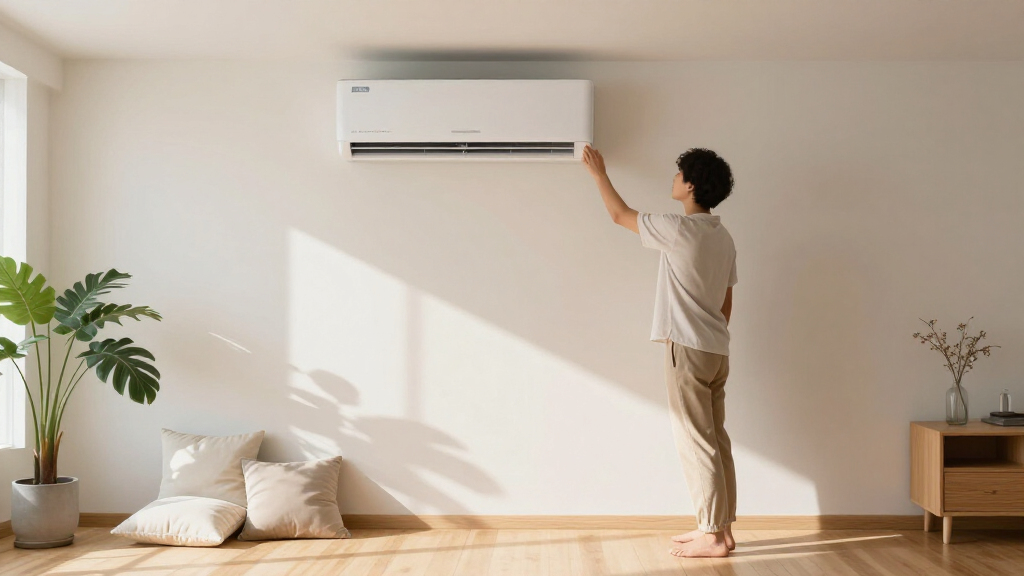

The Midea 7,800 BTU Inverter Window Air Conditioner is my best overall pick for efficient room cooling, while the Midea Duo 14,000 BTU stands out for larger spaces and the DREO 740S for its dual-hose portable design. The right choice depends on room size, window access, installation limits, and whether you need heating or smart controls. Window units avoid the exhaust hose setup of portables, while portable models can move between rooms but take up floor space. Capacity matters too: a unit that is poorly matched to the room may run less effectively. Read on for how these seven options compare and which fits your needs.

Get home appliances delivered free with Prime
- Fast, free delivery on millions of items
- Prime Video, Amazon Music and more included
- Member-only deals all year
Complete the kit


![[Genuine] Waterdrop PF-01A Water Filter Replacement for W...](https://m.media-amazon.com/images/I/41+5tl9EiKL._SX342_SY445_QL70_FMwebp_.jpg)
Key Takeaways
- Window models lead for fixed-room efficiency: the two Midea window units avoid the exhaust-hose arrangement required by the portable picks.
- Large-room cooling points toward 14,000 BTU portables: the Midea Duo and DREO 740S offer higher stated capacity than the 7,800 and 8,000 BTU window models.
- Dual-hose design sets the DREO 740S apart: it addresses a key portable-unit tradeoff, though setup still requires a window connection.
- Heating changes the shortlist: the Midea 8,000 BTU window model adds heat, making it more versatile than the cooling-only Midea 7,800 BTU.
- Smart features vary more than cooling formats: ZAFRO and TURBRO highlight connected controls, while the best fit still depends first on room capacity and installation.
| 14,000 BTU Portable Air Conditioner for Rooms up to 700 Sq. Ft. |  | Best for Flexible Room Coverage | Cooling capacity (ASHRAE): 14,000 BTU | Cooling capacity (SACC): 10,000 BTU | Recommended floor area: Up to 700 sq. ft. | VIEW LATEST PRICE | See Our Full Breakdown |
| ZAFRO Smart Inverter Portable Air Conditioner, 14,000 BTU |  | Best Quiet Portable Value | Cooling power: 14,000 BTU | SACC cooling power: 10,000 BTU | Energy efficiency: CEER 12.8 | VIEW LATEST PRICE | See Our Full Breakdown |
| Midea 7,800 BTU Inverter Window Air Conditioner |  | Best for Smaller Rooms | Cooling capacity: 7,800 BTU | Coverage area: Up to 340 sq. ft. | Energy efficiency ratio: 15.1 | VIEW LATEST PRICE | See Our Full Breakdown |
| TURBRO Greenland 14,000 BTU Inverter Portable Air Conditioner |  | Best for High-Capacity Dehumidifying | Cooling power: 14,000 BTU | Coverage area: Up to 600 sq. ft. | Compressor type: Inverter | VIEW LATEST PRICE | See Our Full Breakdown |
| DREO 14000 BTU Dual-Hose Inverter Portable Air Conditioner (740S) |  | Best Dual-Hose Efficiency Pick | Cooling power: 14,000 BTU ASHRAE; 10,000 BTU DOE | Coverage area: 200–300 sq. ft. | Hose type: Dual-hose | VIEW LATEST PRICE | See Our Full Breakdown |
| Midea 8,000 BTU Smart Inverter Window Air Conditioner with Heat and Dehumidifier |  | Best Year-Round Window Pick | Cooling capacity: 8,000 BTU | Coverage area: Up to 350 sq. ft. | Functions: Cool, Heat, Dry, Fan, Auto | VIEW LATEST PRICE | See Our Full Breakdown |
| Midea Duo 14,000 BTU Inverter Portable Air Conditioner |  | Best High-Capacity Portable Efficiency Pick | Cooling capacity: 14,000 BTU | Hose design: Dual hose-in-hose | Technology: Variable-speed inverter | VIEW LATEST PRICE | See Our Full Breakdown |
| high-efficiency air conditioner | Noise level | Refrigerant | Coverage area |
|---|---|---|---|
| 14,000 BTU Portable Air Condit | 52 dB; under 48 dB in sleep mode | R-32 | — |
| ZAFRO Smart Inverter Portable | 42 dB | R-32 | — |
| Midea 7,800 BTU Inverter Windo | As low as 39 dBA | — | Up to 340 sq. ft. |
| TURBRO Greenland 14,000 BTU In | 43 dB | R-32 | Up to 600 sq. ft. |
| DREO 14000 BTU Dual-Hose Inver | 42 dB | R-32 | 200–300 sq. ft. |
| Midea 8,000 BTU Smart Inverter | As low as 45 dBA | — | Up to 350 sq. ft. |
| Midea Duo 14,000 BTU Inverter | As low as 42 dB | — | — |
More Details on Our Top Picks
14,000 BTU Portable Air Conditioner for Rooms up to 700 Sq. Ft.
I’d choose this portable unit when room-to-room flexibility matters more than inverter efficiency. It combines cooling, dehumidifying, and fan modes, and its casters make it easier to reposition than the heavier TURBRO Greenland. The washable filter and self-evaporating system also reduce routine upkeep during cooling, while the included window kit supports horizontal or vertical sliding windows. Its listed 14,000 BTU capacity is paired with a lower 10,000 BTU SACC figure, so I’d compare coverage claims using the SACC rating and room conditions rather than assuming it will suit every 700-square-foot space. At 52 dB, it is louder than the Midea inverter window unit, and its SEER 12 rating offers less efficiency detail than the inverter-focused portable options. Dehumidifying also requires continuous drainage.
Pros:- Cooling, dehumidifying, and fan modes cover several room-comfort needs
- Casters make it easier to move than the 71.2-pound TURBRO Greenland
- Self-evaporating system reduces manual drainage during cooling
- Window kit fits horizontal and vertical sliding windows
Cons:- Listed noise level of 52 dB is higher than the Midea inverter window unit and the quieter inverter portables
- Continuous drainage is required in dehumidification mode
- SEER 12 provides less efficiency context than the CEER-rated ZAFRO
Best for: Renters who need a portable unit for a sliding-window room and want cooling, fan, and dehumidifying modes in one appliance
Not ideal for: Buyers prioritizing quiet operation or inverter-focused efficiency, or anyone who wants to dehumidify without setting up continuous drainage
- Cooling capacity (ASHRAE):14,000 BTU
- Cooling capacity (SACC):10,000 BTU
- Recommended floor area:Up to 700 sq. ft.
- Refrigerant:R-32
- Noise level:52 dB; under 48 dB in sleep mode
- Wattage:1,300 W
- Modes:Cooling, dehumidification, and fan
Our verdict“Pick this model if you need flexible portable cooling and multiple operating modes, and can accept louder operation and drainage during dehumidifying.”
ZAFRO Smart Inverter Portable Air Conditioner, 14,000 BTU
The ZAFRO is a strong fit for buyers who want portable cooling with inverter control and app access. Its dual-hose design and inverter compressor set it apart from the single-unit setup described for the 14,000 BTU portable model, while the 42 dB noise figure makes it a more appealing bedroom option than that model’s 52 dB rating. Six modes, a 24-hour timer, and both app and remote controls make day-to-day adjustments straightforward. The CEER 12.8 rating gives buyers a direct efficiency measure, though it should not be treated as a guarantee of a particular household’s energy use. It can run without drainage for up to 72 hours below 90% humidity, but very humid rooms may still need a drain hose. At 54 pounds, it is lighter than the TURBRO Greenland, yet still a substantial appliance to move.
Pros:- Dual-hose system and inverter compressor distinguish its cooling setup from the basic portable model
- 42 dB listed noise level is suited to quieter-room use
- Wi-Fi app, remote, and 24-hour timer offer flexible control
- Drainage-free operation can last up to 72 hours below 90% humidity
Cons:- May need a drain hose in very humid conditions
- At 54 pounds, it is not easy to carry between floors
- Portable floor unit requires space and window installation
Best for: Sleepers and renters who want a quieter portable AC with app control, an inverter compressor, and a dual-hose setup
Not ideal for: People who need a very light unit to carry frequently or who live in persistently humid conditions and want to avoid drainage
- Cooling power:14,000 BTU
- SACC cooling power:10,000 BTU
- Energy efficiency:CEER 12.8
- Noise level:42 dB
- Power consumption:1,250 W
- Refrigerant:R-32
- Controls:Wi-Fi app and remote
- Drainage-free operation:Up to 72 hours at humidity below 90%
Our verdict“Choose the ZAFRO if quiet, app-controlled portable cooling matters more than having a lightweight unit or guaranteed drainage-free operation.”
Midea 7,800 BTU Inverter Window Air Conditioner
For a smaller room with a compatible window, I’d put this ENERGY STAR certified inverter ahead of the portable models on the list. Its 7,800 BTU capacity is specified for rooms up to 340 square feet, making it a more targeted choice than the 14,000 BTU portables, whose larger capacity and floor footprint may be unnecessary in a bedroom or home office. The listed 39 dBA minimum noise, app and voice control, and 24-hour timer add useful convenience without taking up floor space. Its EER of 15.1 gives a clear efficiency figure, while the stated savings comparison is against the Energy Conservation Standard. The tradeoff is installation: it fits single- or double-hung windows only, needs at least 19.6 inches of window height, and cannot serve rooms beyond its stated coverage as readily as a larger portable unit.
Pros:- ENERGY STAR certification and EER 15.1 make efficiency a central strength
- Inverter design is paired with a listed minimum noise level of 39 dBA
- App and voice assistant controls plus a 24-hour timer add scheduling flexibility
- Window installation leaves floor space free compared with portable models
Cons:- Does not fit casement windows
- Requires at least 19.6 inches of window height
- 7,800 BTU capacity is intended for smaller spaces than the portable options
Best for: People cooling a bedroom, office, or other room up to 340 square feet with a compatible single- or double-hung window
Not ideal for: Buyers with casement windows, windows under 19.6 inches tall, or larger rooms needing higher cooling capacity
- Cooling capacity:7,800 BTU
- Coverage area:Up to 340 sq. ft.
- Energy efficiency ratio:15.1
- Noise level:As low as 39 dBA
- Certification:ENERGY STAR
- Modes:Auto, Cool, Dry, Fan
- Window compatibility:Single- or double-hung; 23–36 in wide
- Minimum window height:19.6 in
Our verdict“Choose this Midea for a quieter, efficiency-focused fit in a smaller room if your window meets its installation requirements.”
TURBRO Greenland 14,000 BTU Inverter Portable Air Conditioner
The TURBRO Greenland makes the most sense for buyers who need portable cooling and substantial moisture removal in a larger space. Its stated coverage reaches 600 square feet, and its dehumidifier is rated for up to 85 pints per day—more specific moisture-removal capacity than the other portable picks list. Inverter technology and a 43 dB noise figure also give it a quieter, efficiency-oriented profile than the 52 dB basic portable unit. The ZAFRO is listed at 42 dB and includes a dual-hose system, so it may suit buyers who put quiet operation and that configuration first. The Greenland’s main costs in convenience are physical: at 71.2 pounds with a broad footprint, it is harder to move and fit into crowded rooms than the 54-pound ZAFRO. Its stated energy reduction is a product claim, not a directly comparable rating in the supplied specs.
Pros:- Rated to cool spaces up to 600 sq. ft.
- Dehumidification capacity is listed at up to 85 pints per day
- Inverter compressor and 43 dB listed noise level support quieter operation
- App and remote controls plus Alexa and Google Assistant compatibility
Cons:- At 71.2 pounds, it is heavier than the ZAFRO and DREO portable models
- Its 19.57-inch width and 34.84-inch height demand substantial floor space
- No comparable efficiency rating is provided in the supplied specs
Best for: Households needing a portable unit for a larger room where strong dehumidifying capacity and smart controls are priorities
Not ideal for: People who regularly move an AC between rooms or have limited floor space
- Cooling power:14,000 BTU
- Coverage area:Up to 600 sq. ft.
- Compressor type:Inverter
- Noise level:43 dB
- Dehumidification capacity:Up to 85 pints/day
- Refrigerant:R-32
- Wattage:1,300 W
- Weight:71.2 lb
Our verdict“Pick the Greenland for a larger space that needs serious dehumidifying, provided you can accommodate its weight and footprint.”
DREO 14000 BTU Dual-Hose Inverter Portable Air Conditioner (740S)
The DREO 740S is the most focused option here for buyers who want a dual-hose inverter portable sized for a modest room. Its listed coverage is 200–300 square feet, a narrower target than the TURBRO Greenland’s 600-square-foot claim and a better match for a bedroom or living room of that scale. The maker states that inverter technology makes it 32% more energy-efficient than traditional models; the supplied specs do not include a standard efficiency rating for direct comparison with the Midea window unit’s EER 15.1. At 42 dB, it shares the ZAFRO’s listed noise level and adds app, remote, and Alexa control. The self-evaporating system reduces emptying in most conditions, but the stated limitation above 90% humidity matters in damp climates. Its 55.4-pound weight also means “portable” mostly describes placement, not effortless carrying.
Pros:- Dual-hose and inverter design is tailored to efficient portable cooling
- 42 dB listed noise level matches the quieter ZAFRO portable
- Self-evaporating design limits manual emptying in most conditions
- App, remote, and Alexa controls support flexible operation
Cons:- Stated 200–300 sq. ft. coverage is narrower than the TURBRO Greenland’s listed coverage
- At 55.4 pounds, it is cumbersome to move frequently
- Drainage-free operation may not hold in humidity above 90%
Best for: Buyers cooling a 200–300-square-foot bedroom or living room who want dual hoses, inverter operation, and voice controls
Not ideal for: People cooling larger open spaces, needing a readily carried unit, or living in very humid conditions
- Cooling power:14,000 BTU ASHRAE; 10,000 BTU DOE
- Coverage area:200–300 sq. ft.
- Hose type:Dual-hose
- Noise level:42 dB
- Wattage:1,540 W
- Refrigerant:R-32
- Weight:55.4 lb
- Window fit:20–53 in
Our verdict“Choose the DREO for a modest-size room if dual-hose inverter cooling and multiple control options matter more than easy carrying.”
Midea 8,000 BTU Smart Inverter Window Air Conditioner with Heat and Dehumidifier
The Midea 8,000 BTU earns this spot by pairing Energy Star certified inverter cooling with heating and dehumidification in one window unit. Its stated savings of up to 35% versus the Energy Conservation Standard and operation as low as 45 dBA suit buyers who want efficient, quieter comfort in a bedroom or office. Compared with the Midea 7,800 BTU Inverter Window Air Conditioner, this model adds heat, giving it more seasonal flexibility; the tradeoff is that its heat pump works only above 41°F outdoors. App and voice controls add convenience, while the washable filter simplifies upkeep. It needs a compatible double-hung window with a 14.5-inch opening, so window fit may decide the choice before the features do.
Pros:- Cooling, heat-pump heating, dehumidification, fan, and auto modes in one unit
- Energy Star certified inverter technology with stated savings up to 35% versus the Energy Conservation Standard
- Quiet operation as low as 45 dBA
- Wi-Fi app, Alexa, and Google Assistant controls
Cons:- Heat pump works only when outdoor temperatures are above 41°F
- Requires a double-hung window 24–38.5 inches wide with at least a 14.5-inch vertical opening
Best for: People cooling a bedroom or office who want app control and mild-weather heat from one window unit.
Not ideal for: Buyers who need dependable heating below 41°F outdoors or whose windows do not meet the listed fit requirements.
- Cooling capacity:8,000 BTU
- Coverage area:Up to 350 sq. ft.
- Functions:Cool, Heat, Dry, Fan, Auto
- Noise level:As low as 45 dBA
- Energy performance:Energy Star certified inverter; stated savings up to 35% versus the Energy Conservation Standard
- Window fit:Double-hung windows, 24–38.5 inches wide; 14.5-inch minimum vertical opening
- Smart controls:SmartHome app, Alexa, and Google Assistant
- Dimensions:19.41 in. W × 22.17 in. D × 13.9 in. H
Our verdict“Choose this window unit if you want efficient cooling plus mild-weather heat and your window meets its installation requirements.”
Midea Duo 14,000 BTU Inverter Portable Air Conditioner
The Midea Duo 14,000 BTU is the capacity-focused choice for buyers who need a portable unit and want inverter efficiency. Its dual hose-in-hose design is intended to balance air circulation and limit hot outdoor air entering the room, addressing a common drawback of portable cooling. The manufacturer describes its inverter as using over 40% less energy than the U.S. federal standard, a strong efficiency claim, though the supplied data does not include independent verification or a coverage-area figure. At as low as 42 dB, it is also rated quieter than the Midea 8,000 BTU window unit’s stated 45 dBA minimum. That comparison comes with a practical tradeoff: this portable model needs its hose setup and floor space, while the window unit is a more fixed installation. Wi-Fi and voice control round out the feature set.
Pros:- 14,000 BTU cooling capacity
- Dual hose-in-hose design helps limit hot outdoor air entering the room
- Variable-speed inverter with stated energy use over 40% below the U.S. federal standard
- Wi-Fi, app, Alexa, and Google Assistant controls; noise level as low as 42 dB
Cons:- Portable hose installation and floor space are required
- The supplied product data does not state a coverage area or include independent performance verification
Best for: Renters or homeowners who need high-capacity portable cooling, want inverter operation, and can accommodate a hose setup.
Not ideal for: Buyers prioritizing window-free installation, a documented room coverage figure, or independently verified energy performance.
- Cooling capacity:14,000 BTU
- Hose design:Dual hose-in-hose
- Technology:Variable-speed inverter
- Energy performance:Stated to use over 40% less energy than the U.S. federal standard
- Noise level:As low as 42 dB
- Smart controls:Wi-Fi, SmartHome app, Alexa, and Google Assistant
Our verdict“Pick the Duo if you need 14,000 BTU portable cooling and value its inverter and dual-hose design enough to accept the floor-space and hose setup.”
How We Picked
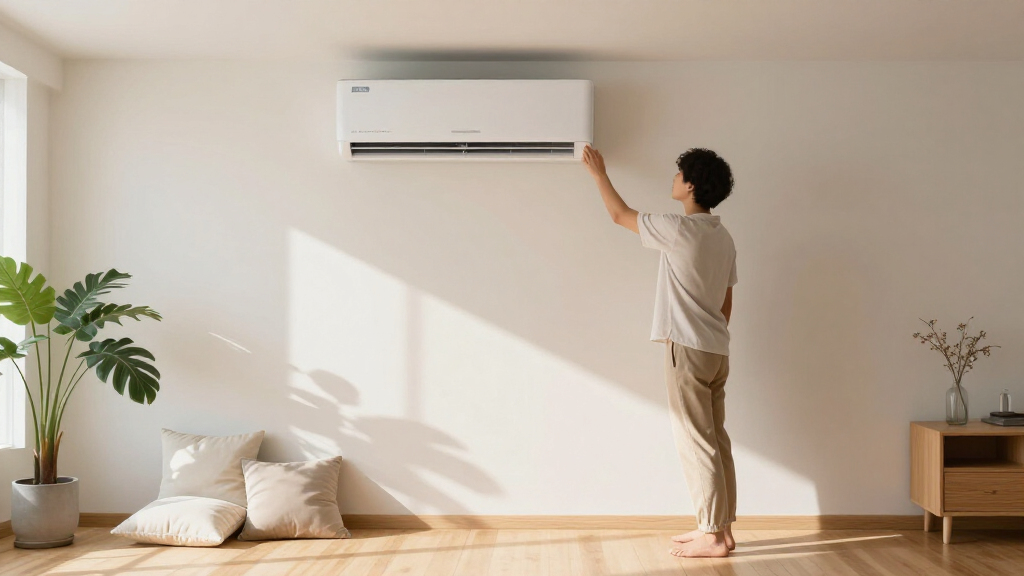
I compared the seven models through the lens of high-efficiency cooling, weighing inverter design, stated BTU capacity, installation format, and practical room fit. I also considered usability features such as WiFi, voice control, remote operation, dehumidification, and heating, since these can add convenience but do not replace a suitable capacity or installation plan.
The ranking favors models with a clear efficiency or versatility advantage for their intended setting. The Midea 7,800 BTU window unit leads for fixed-room cooling; the Midea Duo and DREO 740S rank higher among portables because their 14,000 BTU capacity serves larger spaces, with the DREO distinguished by dual-hose design. The remaining portable picks offer alternatives for buyers prioritizing smart controls or bundled functions, while the 8,000 BTU Midea window unit earns a place for adding heat. Stated BTU figures alone do not establish room suitability or energy use, so I treat them as comparison points rather than a guarantee of performance.
Factors to Consider When Choosing Best High-efficiency Air Conditioners
Choosing an efficient air conditioner starts with the room and installation, then moves to features. These broader checks can help prevent a mismatch that no smart control or extra mode can fix.
Match Capacity to the Room
Start with the room’s floor area, but also account for ceiling height, sun exposure, insulation, and how many people regularly use the space. A small, shaded bedroom has different cooling needs from an open living area with large sunny windows. Avoid choosing by BTU alone: the figures in product names offer a starting point, not a room-by-room sizing verdict. An oversized unit may cool the air quickly without addressing comfort evenly, while an undersized one may struggle during hot weather. Check the manufacturer’s room guidance and compare it with your actual layout before buying. For connected spaces, consider the area that needs cooling rather than just one room’s dimensions.
Choose Window or Portable Around Your Home
A window air conditioner is generally a better fit when you have a compatible window and want a unit that stays in one place. Portable models can work where window-unit installation is restricted or where moving the unit between rooms is useful, but they require an exhaust connection and occupy floor space. Before choosing a portable, check window dimensions, hose routing, and whether the included installation kit suits your window style. For a window model, confirm that the sash and sill can support the unit and that installation will not block a route you need. Renters should check building rules and lease terms before settling on either format. Installation convenience can outweigh a feature advantage if the unit cannot be set up properly.
Understand What Inverter Design Does
An inverter compressor can adjust its output as cooling demand changes, rather than relying only on repeated full-power starts and stops. That can support steadier temperatures and lower energy use under suitable conditions, but results depend on the room, settings, and how long the unit runs. Compare the unit’s energy information and certification details where available instead of assuming that the word “inverter” alone proves one model is more efficient than another. A higher-capacity unit may draw more power when working hard, even if its controls can modulate output. Think about your typical use: a unit running for long stretches may benefit more from efficient modulation than one switched on briefly. Consider noise and comfort alongside energy use, since both affect whether you will use the unit as intended.
Treat BTU Labels as a Starting Point
Portable air conditioner BTU figures may be reported using different rating methods, so a number on a product listing may not be directly comparable with a window unit’s figure. Check which capacity rating the manufacturer provides and look for independent efficiency information where available. Dual-hose designs draw and exhaust air differently from single-hose designs, which can affect how a portable interacts with the room. This makes hose configuration useful context, but it does not guarantee a particular result in every home. Compare the full specifications and room guidance rather than ranking products by their headline BTU number. If two units look similar on capacity, installation, energy information, and service needs can help break the tie.
Pay for Features You Will Use
WiFi, voice control, remote operation, dehumidification, and heating can make an air conditioner more useful, but each solves a different problem. Smart controls help when you want to adjust cooling before arriving home; they matter less if a manual control is easy to reach. Dehumidification can help in damp conditions, though it is not a substitute for choosing adequate cooling capacity. A heating function may justify a more versatile window unit if you need shoulder-season warmth in the same room. Check whether the feature works with your preferred devices and whether its setup requires an app or home network. Skip feature premiums that do not match your routine, and put that budget toward an appropriate capacity and reliable installation.
Frequently Asked Questions
Is a 14,000 BTU portable unit automatically better for a large room?
No. The stated capacity is only one part of room fit, and portable-unit ratings may use a different method from window-unit ratings. Room layout, sun, insulation, ceiling height, and connected spaces can all change how much cooling is needed. Check the manufacturer’s room guidance and the exact capacity rating before comparing models. A larger headline number does not by itself prove faster or more efficient cooling in your home.
Should I choose a dual-hose portable air conditioner over a single-hose model?
A dual-hose design may suit buyers who want a portable unit configured to draw and exhaust air separately. That distinction can matter because a single-hose unit uses room air as part of its exhaust process. Still, hose count alone does not settle efficiency or comfort: capacity, room conditions, sealing, and setup matter too. Compare the installation requirements and available energy information before deciding. The DREO 740S is the lineup’s dual-hose option, while the other portable models give buyers different feature and capacity combinations.
Can I use a portable air conditioner without venting it through a window?
Portable air conditioners need to exhaust hot air outdoors, typically through a window kit or another approved opening. Running one without an exhaust route sends that heat back into the room and defeats the cooling purpose. Check the included kit and the manufacturer’s instructions for compatible window types before purchase. If your window cannot accommodate the hose, look for an approved installation solution or consider a window unit if your building allows it. Do not assume a portable model is installation-free just because it sits on wheels.
Does an inverter air conditioner always use less electricity?
Not in every situation. Inverter operation can adjust compressor output to match changing demand, which may reduce waste during sustained use, but energy consumption depends on the unit’s size, room conditions, settings, and runtime. A poorly sized unit can still be an inefficient choice. Compare the manufacturer’s energy data and certification details when available, and use sensible temperature settings. The inverter label is a useful feature to weigh, not a standalone guarantee of lower bills.
Is a window air conditioner still a good choice if I need heat too?
It can be, if the specific model includes a heating function and its heating capacity suits your room and climate. In this lineup, the Midea 8,000 BTU Smart Inverter Window Air Conditioner adds heat and dehumidification, unlike the cooling-focused Midea 7,800 BTU model. Check the product specifications to confirm what type of heat it provides and the conditions where it is intended to operate. A combined unit can reduce the need for separate equipment, but it may not replace a home’s primary heating system. Choose it for room-level versatility only when its stated limits match your needs.
Conclusion
For a fixed room where a compatible window installation is available, my best overall choice is the Midea 7,800 BTU Inverter Window Air Conditioner. Buyers seeking a higher-capacity portable should compare the Midea Duo 14,000 BTU with the DREO 740S; the latter suits those specifically seeking dual-hose design. I’d point shoppers who value connected controls toward the ZAFRO or TURBRO, after confirming their room fit and installation needs. For beginners, a straightforward window unit is the simpler starting point when installation is permitted; choose the Midea 8,000 BTU model if heat is also useful. The best value depends on which features and format you need, so compare the Midea window options for fixed-room cooling and the simpler portable configurations for flexible placement. Pick by room size and installation first, then use smart controls, heating, and hose design to settle the final choice.
Halloween Picks
halloween
As an affiliate, we earn on qualifying purchases.