If you are searching for a wired 4K doorbell camera, the key choice is whether you need 4K detail or a better fit in power, viewing angle, storage, and smart home support. I put the Ring Wired Doorbell Pro (3rd Gen) first because it is the only true 4K option here with enhanced zoom, dual-band Wi-Fi 6, and adjustable motion zones. Its Deep Silver and Polished Mocha versions share the same core hardware, so the difference is finish and included installation accessories.

Get home appliances delivered free with Prime
- Fast, free delivery on millions of items
- Prime Video, Amazon Music and more included
- Member-only deals all year
For a wired camera without the 4K requirement, I would compare the Google Nest Doorbell (Wired, 3rd Gen) for its 2K HDR image and Google Home integration, and the Reolink PoE model for Ethernet power and local storage choices. The Tapo D225 also merits a place because it can be hardwired, but its 2K image and battery option make it a flexible alternative rather than a 4K camera. The tradeoff is clear: Ring supplies the most pixel detail, while the other picks may suit a buyer who values coverage, storage control, or a particular installation and ecosystem.
Complete the kit



Key Takeaways
- The Ring Wired Doorbell Pro in either finish is the only listed model with 4K video and up to 10x enhanced zoom.
- Both Ring finishes share the 140° by 140° view, Wi-Fi 6, hardwired power, and subscription requirements for some features; choose between them by color and included kit.
- Google Nest offers 2K HDR and a wider 166° field of view, making it a better fit for broad scene coverage and Google Home users than for buyers who require 4K.
- Reolink’s PoE connection and microSD, NVR, or FTP/NAS storage options suit buyers planning an Ethernet installation and local recording.
- Tapo D225 is the only model here that can run on battery or hardwired power, but it records in 2K and uses 2.4 GHz Wi-Fi only.
| Ring Wired Doorbell Pro (3rd Gen), 4K Video, Deep Silver |  | Best Overall for 4K Detail | Video: 4K with adaptive night vision | Zoom: Up to 10x enhanced zoom | Field of view: 140° horizontal x 140° vertical | VIEW ON AMAZON | See Our Full Breakdown |
| Ring Wired Doorbell Pro (3rd Gen), 4K, Polished Mocha | | Best 4K Alternative Finish | Video: 4K | Zoom: Up to 10x enhanced zoom | Field of view: 140° horizontal x 140° vertical | VIEW ON AMAZON | See Our Full Breakdown |
| Google Nest Doorbell (Wired, 3rd Gen), 2K HDR, Snow |  | Best for Google Home and Wide Coverage | Video resolution: 2K HDR | Field of view: 166° | Power: Corded electric | VIEW ON AMAZON | See Our Full Breakdown |
| Reolink Video Doorbell PoE 2K Wired Outdoor Security Camera with Chime V2 | 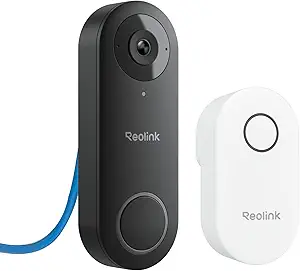 | Best for PoE and Local Storage | Resolution: 2K Super HD | Field of view: 135° H x 100° V x 180° diagonal | Connectivity: PoE; Wi-Fi is not supported | VIEW ON AMAZON | See Our Full Breakdown |
| TP-Link Tapo D225 2K QHD Smart Video Doorbell with Chime |  | Best Flexible Power Option | Video: 2K QHD | Field of view: 180° head-to-toe | Power: 10,000 mAh battery or 8–24 V hardwired | VIEW ON AMAZON | See Our Full Breakdown |
| 4k doorbell camera wired | Field of view | Power | Connectivity | Audio |
|---|---|---|---|---|
| Ring Wired Doorbell Pro | 140° horizontal x 140° vertical | Hardwired; compatible options include 16 or 24 VAC and 24 VDC | Wi-Fi 6, dual-band 2.4 GHz/5 GHz | Two-way talk with Audio+ |
| Ring Wired Doorbell Pro | 140° horizontal x 140° vertical | Hardwired; specified 16 or 24 VAC transformers or 24 VDC 12 W | Wi-Fi 6, dual-band 2.4 GHz/5 GHz | Two-way talk with Audio+ |
| Google Nest Doorbell | 166° | Corded electric | Wired, Wi-Fi | Two-way audio |
| Reolink Video Doorbell PoE 2K | 135° H x 100° V x 180° diagonal | PoE, 12–24 V AC, or 24 V DC | PoE; Wi-Fi is not supported | Two-way audio |
| TP-Link Tapo D225 2K QHD Smart | 180° head-to-toe | 10,000 mAh battery or 8–24 V hardwired | — | — |
More Details on Our Top Picks
Ring Wired Doorbell Pro (3rd Gen), 4K Video, Deep Silver
This is the clearest match for a buyer who means both true 4K video and wired power. The up-to-10x enhanced zoom gives the higher resolution a practical job: it can help make a distant face or package easier to inspect, while the 140° horizontal and vertical view covers the entrance. That viewing angle is narrower than the Nest’s 166° field of view and Tapo’s 180° head-to-toe framing, so I would favor Ring for detail at a distance over the broadest possible scene.
Customizable 3D motion zones and adaptive night vision add useful control around a busy doorway, and Wi-Fi 6 supports both 2.4 and 5 GHz networks. The tradeoffs are straightforward: installation requires compatible wired power, some features require a Ring subscription, and the power adapters or transformer are not included. Compared with the same model in Polished Mocha, this Deep Silver version appears to offer the same central camera capabilities; its appeal is the finish and the listed installation package.
Pros:- True 4K video with up to 10x enhanced zoom
- Adaptive night vision and customizable 3D motion zones
- Wi-Fi 6 with 2.4 GHz and 5 GHz support
- Two-way talk with Audio+
Cons:- Requires hardwired power and compatible voltage
- Some features require a Ring subscription
- Power adapters and transformers are not included
Best for: Buyers who need a hardwired 4K camera, zoom detail, adjustable motion zones, and dual-band Wi-Fi.
Not ideal for: Anyone who wants battery installation, the widest vertical view, included power hardware, or to avoid a subscription for all features.
- Video:4K with adaptive night vision
- Zoom:Up to 10x enhanced zoom
- Field of view:140° horizontal x 140° vertical
- Power:Hardwired; compatible options include 16 or 24 VAC and 24 VDC
- Connectivity:Wi-Fi 6, dual-band 2.4 GHz/5 GHz
- Motion:3D detection with customizable zones
- Audio:Two-way talk with Audio+
- Dimensions:1.95 x 1.02 x 5.45 in
Our verdict“I rank the Deep Silver Ring first for buyers whose wired doorbell search specifically requires 4K and useful zoom.”
Ring Wired Doorbell Pro (3rd Gen), 4K, Polished Mocha
The Polished Mocha version provides the same core answer for a 4K wired search as the Deep Silver Ring: 4K capture, up to 10x zoom, 140° by 140° coverage, and hardwired operation. I include it separately because finish can matter at a front entrance, and its listed box contents include a chime kit and mini corner kit along with a mounting plate and installation hardware. Those parts can make placement and existing chime setup easier, depending on the home.
Image performance and motion features do not create a meaningful reason to rank it above or below the silver version. Both are better suited to zooming in on visitors than the 2K Nest or Tapo, although the Nest sees a wider field and the Tapo can frame head to toe. Like its sibling, this Ring requires compatible wiring, a 15 Mbps minimum recommended upload speed, and a subscription for some features. Pick this one for its finish or package contents; skip it if you want a distinct camera design or a broader view.
Pros:- 4K video and up to 10x enhanced zoom
- Adaptive low-light night vision
- Customizable 3D motion zones
- Includes chime kit and mini corner kit
Cons:- Requires compatible wired power
- Some features require a Ring subscription
- Recommended upload speed is at least 15 Mbps
Best for: Buyers who want Ring’s 4K zoom and motion controls in Polished Mocha, especially if the included chime and corner kits fit the installation.
Not ideal for: Buyers seeking different core performance from the Deep Silver Ring, battery flexibility, or a wider view.
- Video:4K
- Zoom:Up to 10x enhanced zoom
- Field of view:140° horizontal x 140° vertical
- Power:Hardwired; specified 16 or 24 VAC transformers or 24 VDC 12 W
- Connectivity:Wi-Fi 6, dual-band 2.4 GHz/5 GHz
- Motion:3D detection with customizable zones
- Audio:Two-way talk with Audio+
- Color:Polished Mocha
- Included accessories:Chime kit, mini corner kit, mounting plate, tools and hardware
Our verdict“I recommend this Ring when the Mocha finish or its listed installation accessories matter more than choosing a different camera platform.”
Google Nest Doorbell (Wired, 3rd Gen), 2K HDR, Snow
Nest is the better fit when your real priority is a wired doorbell with broad coverage and Google Home intelligence, rather than 4K specifically. Its 2K HDR video is below Ring’s 4K resolution, but the 166° field of view is wider than Ring’s 140° by 140° specification. That can suit a porch where seeing more of the scene matters more than zooming into small details. Night vision and two-way audio round out the doorbell basics.
Google Home and Gemini features distinguish it from the Reolink and Ring picks, though some Gemini functions require a Google Home Premium subscription. Its corded electric power avoids battery upkeep, but this is not a PoE camera and it does not offer the same stated menu of microSD, NVR, and FTP/NAS storage as Reolink. If you are committed to Google’s home platform and can accept 2K, Nest is a more natural choice than either Ring finish. If 4K is non-negotiable, it is the wrong pick.
Pros:- 2K HDR video with night vision
- 166° field of view
- Wired power removes battery recharging
- Works with Google Home and Gemini features
Cons:- Resolution is 2K rather than 4K
- Some Gemini features require Google Home Premium
- No PoE option is listed
Best for: Google Home users who want wired power, a wide 166° view, 2K HDR, and intelligent alerts.
Not ideal for: Buyers who require 4K resolution, PoE, or clearly specified local storage options.
- Video resolution:2K HDR
- Field of view:166°
- Power:Corded electric
- Connectivity:Wired, Wi-Fi
- Smart home:Google Home and Gemini
- Audio:Two-way audio
- Night viewing:Night vision
- Dimensions:5.16 x 1.65 x 1.14 in
Our verdict“I would choose Nest over Ring when wide framing and Google Home integration matter more than 4K zoom detail.”
Reolink Video Doorbell PoE 2K Wired Outdoor Security Camera with Chime V2
Reolink takes a different route from Ring’s Wi-Fi 4K approach: it is a 2K doorbell built around Power over Ethernet. A single Ethernet run can supply connectivity and power, which appeals to buyers planning a wired network installation and can provide a stable link where Wi-Fi coverage at the entry is weak. Its 135° horizontal and 100° vertical view is less expansive than the Nest or Tapo figures, while the 2K image gives up the extra detail Ring offers for zooming.
Its strongest distinction is storage flexibility. Recordings can go to a microSD card, NVR, or FTP/NAS, and the supplied description specifies no monthly fees. Humanoid alerts and an included chime with ten tunes add practical functions. The limits are equally relevant: there is no Wi-Fi support, a power supply is not included, and third-party NVRs are not supported. Compared with Ring, choose Reolink for Ethernet and local recording options; choose Ring if 4K detail and wireless networking are the priorities.
Pros:- PoE supports a wired network connection
- Storage options include microSD, NVR, and FTP/NAS
- Humanoid alerts and two-way audio
- Includes a chime with ten tune choices
Cons:- Records in 2K rather than 4K
- No Wi-Fi support
- Power supply is not included and third-party NVRs are unsupported
Best for: Homeowners who can run Ethernet and want PoE connectivity with local microSD, NVR, or FTP/NAS storage.
Not ideal for: Anyone relying on Wi-Fi, requiring 4K video, or expecting compatibility with a third-party NVR.
- Resolution:2K Super HD
- Field of view:135° H x 100° V x 180° diagonal
- Connectivity:PoE; Wi-Fi is not supported
- Power:PoE, 12–24 V AC, or 24 V DC
- Storage:microSD up to 512 GB, NVR, or FTP/NAS
- Detection:Humanoid detection
- Chime:Included, with ten tunes
- Audio:Two-way audio
Our verdict“I rank Reolink for Ethernet-first installations where local storage matters more than 4K resolution.”
TP-Link Tapo D225 2K QHD Smart Video Doorbell with Chime
Tapo D225 is the least direct match for “4K wired,” but it earns a spot for buyers who want installation flexibility and a tall head-to-toe view. It records in 2K QHD, not 4K, and can run on a 10,000 mAh battery or be hardwired. That choice is useful if the existing doorbell wiring is inconvenient or you want the option to change power arrangements later. Its 180° view is described as head-to-toe, which prioritizes seeing a visitor and packages over Ring’s higher-resolution zoom detail.
Person, package, and vehicle detection, color night vision with a motion-activated spotlight, two-way audio, and a chime are all included in the listed feature set. Local recording to a microSD card up to 512 GB can avoid a subscription for storage, although the card is sold separately. Compared with Reolink, Tapo is easier to fit into a Wi-Fi home and does not demand Ethernet; compared with Nest, it adds battery operation and microSD storage. The main connectivity limit is 2.4 GHz Wi-Fi only.
Pros:- Battery or 8–24 V hardwired power
- 180° head-to-toe view with 2K QHD video
- Person, package, and vehicle detection
- Local microSD storage up to 512 GB
Cons:- Resolution is 2K rather than 4K
- Supports 2.4 GHz Wi-Fi only
- microSD card is not included
Best for: Buyers who want a doorbell that can be battery-powered or hardwired, with a tall view and microSD recording.
Not ideal for: Anyone seeking 4K detail, 5 GHz Wi-Fi, or a camera that must remain continuously hardwired.
- Video:2K QHD
- Field of view:180° head-to-toe
- Power:10,000 mAh battery or 8–24 V hardwired
- Battery life:Up to 8 months
- Wi-Fi:2.4 GHz only
- Storage:microSD up to 512 GB; card not included
- Night vision:Full color with motion-activated spotlight
- Detection:Person, package, and vehicle
- Smart home:Amazon Alexa and Google Assistant
Our verdict“I recommend Tapo when flexible power and broad vertical framing outweigh the need for 4K and dual-band Wi-Fi.”
How We Picked
I ranked these five options against the phrase “4k doorbell camera wired” by treating 4K resolution and wired power as the main filters, then comparing the practical costs of choosing each design. Only the two Ring finishes claim 4K. They lead because they combine that resolution with up to 10x enhanced zoom, adaptive night vision, customizable 3D motion detection, and dual-band Wi-Fi 6. Since they are variants of one model, I distinguish them by finish and box contents instead of suggesting they deliver different image performance.
I then weighed how each remaining camera serves someone whose search may include wired doorbells generally, even if 4K is not mandatory. The Nest earns its place for 2K HDR, a 166° view, and Google Home features. Reolink ranks for buyers who can run Ethernet and prefer several local storage routes. Tapo offers the most flexible power arrangement and a tall 180° view, but its battery option, 2K resolution, and 2.4 GHz-only Wi-Fi put it farther from a strict wired 4K brief. I considered resolution, installation requirements, view, connectivity, detection, storage, and ecosystem fit; I did not treat unlike models as equivalent just because they are all doorbell cameras.
| 4k doorbell camera wired | Connectivity | Audio |
|---|---|---|
| Ring Wired Doorbell Pro | Wi-Fi 6, dual-band 2.4 GHz/5 GHz | Two-way talk with Audio+ |
| Ring Wired Doorbell Pro | Wi-Fi 6, dual-band 2.4 GHz/5 GHz | Two-way talk with Audio+ |
| Google Nest Doorbell | Wired, Wi-Fi | Two-way audio |
| Reolink Video Doorbell PoE 2K | PoE; Wi-Fi is not supported | Two-way audio |
| TP-Link Tapo D225 2K QHD Smart | — | — |
Factors to Consider When Choosing 4k Doorbell Camera Wired
I would start by checking whether 4K is a firm requirement or shorthand for wanting clear footage. That distinction changes the shortlist: only Ring meets the stated 4K requirement, while Nest, Reolink, and Tapo make different compromises around coverage, wiring, storage, and ecosystem.Decide whether 4K detail is worth prioritizing
Among these five listings, Ring is the only 4K choice, and its up-to-10x zoom gives that resolution a specific use: examining detail farther from the camera. If your main concern is seeing the entire porch, a wider field of view may matter more. Nest lists 166°, Tapo describes a 180° head-to-toe view, and the Ring specification is 140° horizontally and vertically. These figures describe different framing claims, so compare the view you need rather than assuming resolution alone settles the choice.
Reolink and Tapo both record in 2K. That does not make them equivalent: Reolink is designed around PoE and multiple local storage paths, while Tapo combines Wi-Fi, optional battery operation, and a tall view. I would treat 4K as a firm filter if identifying small details or using zoom is central. If your goal is simply a sharp visitor view, compare the whole installation and view instead.
Match the power and network to your doorway
“Wired” can mean a traditional doorbell power connection or an Ethernet cable that carries power. Ring and Nest are listed as wired or corded electric, while Reolink supports PoE and specified low-voltage power. Tapo can be hardwired, but it can also run from its battery. Before choosing, check the existing transformer or wiring, the route to the router or network switch, and whether an adapter is needed. Ring’s listed power hardware is not included, and Reolink’s power supply is not included.
Network fit matters too. The two Ring finishes support dual-band Wi-Fi 6; Tapo only supports 2.4 GHz; Reolink has no Wi-Fi because it relies on Ethernet. Nest is listed as wired with Wi-Fi. For a weak wireless signal at the front door, a planned PoE installation may favor Reolink. If the home’s 2.4 GHz network is available but 5 GHz is not, Tapo remains viable. Check the Ring recommendation of at least 15 Mbps upload before settling on that model.
Compare framing, detection, and night viewing
Field of view affects what the camera can capture without moving or zooming. Tapo’s 180° head-to-toe framing emphasizes vertical coverage; Nest’s 166° figure supports a broad view; Ring specifies 140° in each direction and counters with enhanced zoom. Reolink lists 135° horizontal by 100° vertical. Mounting angle, porch shape, and nearby walls can change the practical scene, so use the included wedge or corner hardware where available and think about whether packages sit below the lens.
Detection options also differ. Ring lists customizable 3D motion zones, Tapo lists person, package, and vehicle detection, and Reolink lists humanoid detection. Nest offers intelligent alerts. Night visibility ranges from Ring’s adaptive night vision to Tapo’s color image with a motion-activated spotlight; Nest lists night vision. I would prioritize alert types that address the activity around your own entry, since an overly broad detection area can create unwanted notifications regardless of resolution.
Choose how you want recordings stored
Storage can affect ongoing cost and how easily footage remains accessible. Reolink lists microSD, NVR, and FTP/NAS options and states there are no monthly fees, but it does not support third-party NVRs. Tapo accepts a microSD card up to 512 GB, sold separately. Ring says some features require a compatible subscription, and some Google Gemini features on Nest require Google Home Premium. Those subscriptions cover feature access rather than changing the cameras’ stated resolution.
Before buying, decide whether you want local recording, cloud features, or a mix, then confirm the exact feature and storage requirements for the chosen model. The product details here do not establish every plan’s retention limits or all regional availability, so check the current service terms if a specific alert, history, or integration is essential to your setup.
Account for smart home fit and installation
Ring suits buyers already using Alexa and its Ring app ecosystem; the listed Polished Mocha version also names Alexa integration. Google Nest is the natural shortlist choice for a Google Home household and supports Gemini features, some of which require Premium. Tapo works with Alexa and Google Assistant, while Reolink’s supplied details focus more on its wired network and storage options. I would choose the platform that fits the devices and routines already used at home.
Finally, confirm dimensions, voltage, mounting surface, chime compatibility, and network reach before ordering. Both Ring variants have the same listed dimensions, but their box contents differ in the supplied descriptions: the Mocha listing specifies a chime kit and mini corner kit. Reolink includes a chime, and Tapo includes an indoor chime. Nest’s package lists a chime connector. These details can affect the effort required to get the camera installed and heard inside.
Frequently Asked Questions
Which of these wired doorbell cameras actually records in 4K?
Only the Ring Wired Doorbell Pro (3rd Gen) listings in Deep Silver and Polished Mocha specify 4K video. They also list up to 10x enhanced zoom. Nest, Reolink, and Tapo are 2K models, so they may suit buyers who prioritize wider coverage, PoE, or flexible power, but they do not meet a strict 4K requirement.
Are the two Ring Wired Doorbell Pro versions different cameras?
The supplied product details describe the same 3rd Gen model with matching 4K video, field of view, zoom, motion controls, audio, and Wi-Fi 6. The visible distinction is finish, and the Polished Mocha listing names a chime kit and mini corner kit in its box contents. I would compare their finish and included accessories rather than expect different core camera performance.
Does a wired doorbell camera always need an Ethernet cable?
No. Reolink’s PoE model uses Ethernet for its wired network installation, while Ring and Nest use doorbell or corded electric power and Wi-Fi connectivity. Tapo can be hardwired for power and still connects over 2.4 GHz Wi-Fi. Check the product’s power and network requirements separately, since “wired” can refer to power, data, or both.
Which option is best if I want recordings without a monthly fee?
Reolink is the clearest match in this lineup for local recording, with microSD, NVR, and FTP/NAS storage listed and no monthly fees stated in its description. Tapo also supports local microSD recording, although the card is not included. Ring requires a compatible subscription for some features, while some Nest Gemini features require Google Home Premium; check the current service details for the exact functions you plan to use.
Which model gives the widest view of the doorway?
Tapo specifies a 180° head-to-toe view, while Nest lists a 166° field of view. Ring lists 140° horizontally and vertically, and Reolink lists 135° horizontal by 100° vertical. Because the measurements are presented differently and mounting affects what appears in the image, I would match the camera’s framing to the porch layout; Ring’s zoom may matter more when distant detail is the priority.
Conclusion
If 4K resolution and zoom are the deciding factors, I recommend the Ring Wired Doorbell Pro in the finish that suits the entrance: Deep Silver or Polished Mocha. The two versions offer the same core camera features, so use the listed accessories and appearance to choose between them. For a Google Home household that values a wider image over 4K, I would pick Nest. For an Ethernet installation with local storage, Reolink is the specialist choice. Choose Tapo if you need battery or wired power flexibility, a tall view, and microSD recording. Each tradeoff is clear: Ring gives the highest resolution, while the others earn their place through coverage, network design, storage, or installation flexibility.