This checklist is for home cooks who want to preserve food with appliances suited to their routines, available space, and storage plans. It covers vacuum sealing, freezing, dehydrating, pressure canning, freeze drying, and fermentation. Match each method to the foods you plan to preserve and the way you expect to use them.

Get home appliances delivered free with Prime
- Fast, free delivery on millions of items
- Prime Video, Amazon Music and more included
- Member-only deals all year
The sections follow those six appliance slots. Each one explains what to consider, points out common selection mistakes, and gives a pick where one was provided. The pressure canner section offers advice only. Use the headings to focus on the methods that fit your kitchen and goals.
Read the fit and compatibility notes before choosing: check appliance dimensions against your counter or storage area, and confirm that containers, bags, or other accessories work with your intended process. For pressure canning, follow tested guidance for the specific food. Check the details before relying on a product name alone.
Vacuum Sealer
A vacuum sealer can help prepare foods for storage by removing air from a bag before sealing. The listed pick is the FoodSaver V4400 2-in-1 Vacuum Sealer Machine with Automatic Bag Detect. Its name highlights automatic bag detection, but check the product details to understand how it operates and what bags or accessories it accepts. Bag compatibility is central to choosing a sealer that fits your routine.
A common mistake is assuming every sealer works with every bag, container, or food. Review the instructions for moist foods, delicate items, and foods intended for longer storage; vacuum sealing by itself does not establish safe storage conditions. Consider where you will use and store the machine, and allow enough room for loading bags and cleaning. Plan for your foods and the storage method that follows sealing.
What to look for:
- Confirm which bag types and sizes the machine accepts.
- Check instructions for moist or delicate foods.
- Measure counter and storage space, including room to load bags.
- Review how the sealing area and removable parts are cleaned.
- Understand storage guidance for each food after sealing.
FoodSaver V4400 2-in-1 Vacuum Sealer Machine with Automatic Bag Detection and St
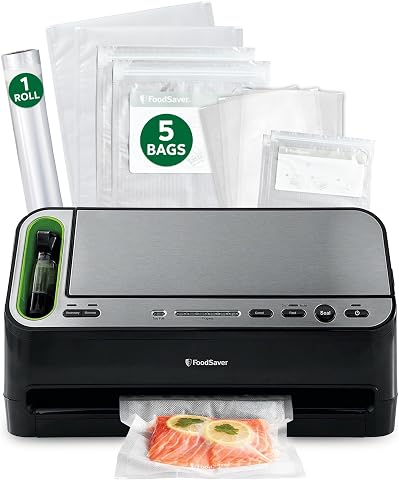
The FoodSaver V4400 is a versatile 2‑in‑1 vacuum sealing system that combines a countertop unit with a handheld retractable sealer. It features automatic bag detection, moisture sensing mode, built‑in roll storage and cutter, and comes with a starter kit of rolls and bags for quick use.
Pros:
- Automatic bag detection makes sealing quick and easy
- Handheld retractable sealer adds versatility for containers and canisters
- Built‑in roll cutter allows custom‑sized bags
- Moisture detection mode ensures optimal seal for wet foods
Cons:
- The unit is relatively bulky for small kitchens
- Warranty information is inconsistent (1‑year vs. advertised 5‑year)
- No price information provided in the listing
Best for: Home cooks seeking a vacuum sealer with automatic bag detection
Not ideal for: Anyone who has not confirmed bag compatibility or storage needs
Bottom line: Choose the FoodSaver V4400 after checking its bag compatibility, operating instructions, and available workspace.
Chest Freezer
A chest freezer is a dedicated place to keep frozen food, so its capacity and footprint matter as much as its features. The listed pick is the Igloo 5.0 Cu Ft Upright Deep Freezer Chest with Quick Freezing and Adj. The name includes a capacity and quick-freezing language; verify the complete specifications and controls in the product information before deciding. Measure first so the appliance fits its intended location.
A frequent buying mistake is focusing on capacity without considering how food will be organized and retrieved. Check the interior layout, dimensions, ventilation clearances, and the space needed to open the lid or door as applicable to the actual model. Confirm the electrical and placement requirements in the manual, and plan how you will label and rotate stored foods. Think through access as well as available volume.
What to look for:
- Verify the model’s actual dimensions and usable capacity.
- Check placement, ventilation, and electrical requirements in the manual.
- Review the interior layout and how you will organize food.
- Confirm the lid or door has room to open in its location.
- Plan labeling and rotation for stored items.
Igloo 5.0 Cu Ft Upright Deep Freezer Chest with Quick Freezing and Adjustable Th

The Igloo 5.0 cu ft upright deep freezer offers ample storage with a compact design suitable for homes, garages, and basements. Features include quick freezing, adjustable thermostat, removable basket, LED lighting, and quiet operation, making it ideal for organizing frozen foods efficiently.
Pros:
- Compact and space-efficient design suitable for various locations
- Fast freezing system preserves food quality
- Quiet operation and energy-efficient performance
- Removable basket and organized storage options
Cons:
- Limited capacity for large families
- Requires manual defrosting
- No detailed temperature display
Best for: Households that have a suitable location for dedicated frozen storage
Not ideal for: Kitchens or storage areas without room for the unit and required clearances
Bottom line: Consider the Igloo pick only after confirming its full specifications and fit in your planned location.
Dehydrator
A food dehydrator circulates heat to dry foods, and tray space affects how much you can prepare in one run. The listed pick is the Magic Mill Premium Food Dehydrator with 15 Extra-Large Stainless Steel. Verify the full model details, including the tray count, dimensions, and temperature controls, rather than inferring them from the abbreviated product name. Tray capacity should match the batches you expect to make.
A common mistake is choosing based on tray material or count alone without checking usable area and airflow. Consider whether the trays can accommodate the sizes of food you plan to dry, and review the instructions for spacing and cleaning. Measure the counter or storage area, including room for airflow around the unit during operation. Check the full setup before deciding it suits your kitchen.
What to look for:
- Verify the exact tray count, dimensions, and material.
- Check temperature settings and operating instructions.
- Compare tray area with the foods and batch sizes you plan to prepare.
- Review tray removal and cleaning requirements.
- Measure counter and storage space, allowing for airflow.
Magic Mill Premium Food Dehydrator with 15 Extra-Large Stainless Steel Trays, 80

The Magic Mill Premium Food Dehydrator features 15 extra-large stainless steel trays and a rear-mounted fan with precision airflow circulation for even drying without rotating trays. It offers digital temperature control from 95°F to 167°F, a 48-hour timer, and a 24-hour keep-warm function.
Pros:
- Even drying with rear-mounted fan — no need to rotate trays
- Precise digital temperature and timer controls
- Dishwasher-safe trays for easy cleaning
- Automatic shut-off and overheat protection
Cons:
- Large footprint may take up significant counter space
- Only 1-year limited warranty
Best for: Cooks who want to compare a dehydrator with stainless-steel trays
Not ideal for: Anyone who has not checked tray dimensions or available operating space
Bottom line: Review the Magic Mill model’s complete specifications and tray layout against your planned batches.
Pressure Canner
No specific pressure canner is named for this slot, so choose based on the foods you plan to preserve and tested canning instructions. Pressure canning is used for low-acid foods when a tested recipe calls for it; the appliance must be suitable for that method. Start with a tested recipe and identify the canner type it requires before shopping.
Common mistakes include treating a pressure cooker and a pressure canner as interchangeable, or improvising processing times and pressure. Check the manufacturer’s instructions, capacity, gauge or pressure-regulator details, and whether the canner is appropriate for your cooktop. Also consider the space needed for the appliance and safe handling of hot jars. Follow the recipe precisely, including its specified process and adjustments.
What to look for:
- Choose a canner suited to the tested recipes you intend to use.
- Confirm cooktop compatibility and manufacturer instructions.
- Review capacity and the number and size of jars it accommodates.
- Understand the gauge or pressure-regulator setup and its maintenance guidance.
- Allow safe space for operation, cooling, and handling jars.
Freeze Dryer
A freeze dryer is a specialized appliance for preserving foods through a distinct process, and it can require more planning than a small countertop tool. The listed pick is the Scientific Lab Lyophilizer & Home Freeze Dryer Machine with Vacuum Pum. Because the name is abbreviated, verify the complete model description, intended use, included components, and operating requirements directly with the seller or manufacturer. Confirm the exact machine before comparing it with your needs.
A common mistake is assuming a product labeled for home use will automatically fit the available space, power, or workflow. Review installation and ventilation guidance, process duration, cleaning, maintenance, and any required accessories. Consider where batches will be loaded and unloaded and how you will package the finished food. Check the full requirements and instructions before committing to this appliance category.
What to look for:
- Confirm the complete model name and intended use.
- Review dimensions, power needs, and installation guidance.
- Check included components and any required accessories.
- Understand operating, cleaning, and maintenance instructions.
- Plan loading space and packaging for finished batches.
Scientific Lab Lyophilizer & Home Freeze Dryer Machine with Vacuum Pump -40°C Ul

This freeze dryer uses high-efficiency technology with a -40°C cold trap and a powerful vacuum system to dehydrate food, fruits, vegetables, and more while retaining nutrients. It features an intuitive 7-inch LCD touchscreen for easy operation, transparent chamber for monitoring, and supports continuous, low-noise operation suitable for both home and industrial use.
Pros:
- Efficient freeze-drying with ultra-low temperature capability
- User-friendly LCD touchscreen control
- Transparent chamber for real-time monitoring
- Supports continuous operation with low noise
Cons:
- High power consumption at 1550W
- Relatively heavy at 11 lbs, may be less portable
- Designed primarily for scientific and industrial use, may be complex for casual users
Best for: People prepared to review a freeze dryer’s full operating requirements
Not ideal for: Anyone who needs a compact, simple appliance without checking setup details
Bottom line: Verify the exact Scientific Lab model and its space, power, and accessory requirements before choosing it.
Fermentation Crock
A fermentation crock provides a vessel for fermenting foods, and capacity and included pieces affect how it fits your batches. The listed pick is the Fermentation Crock 1 Gallon with Lid, Weights & Pounder. Confirm the material, dimensions, and what is included in the listing. Match the capacity to the batch size you expect to make and the space available for fermentation.
A common mistake is overlooking the crock’s opening, cleaning needs, or the role of its weights and lid in the intended process. Read the manufacturer’s use and care instructions, and confirm that the components suit the recipe or method you plan to follow. Consider where the crock will sit while in use and where it will be stored afterward. Check the full kit rather than assuming every accessory is included.
What to look for:
- Verify the one-gallon capacity and external dimensions.
- Confirm the crock material and care instructions.
- Check which lid, weights, and pounder are included.
- Make sure the opening and included weights suit your intended recipes.
- Plan a stable fermentation location and storage space.
Fermentation Crock 1 Gallon with Lid, Weights & Pounder

This 1-gallon ceramic fermentation crock is designed for making sauerkraut, kimchi, and pickles at home. It features a water seal lid, unglazed weights, and a pounder to facilitate easy and effective fermentation, ensuring flavorful results.
Pros:
- High-quality ceramic construction ensures food safety and flavor preservation
- Includes weights and pounder for optimal fermentation
- Water seal lid prevents air contamination and maintains proper gases escape
- Easy to clean and looks attractive on countertops
Cons:
- Limited to small batch sizes (1 gallon)
- Requires careful cleaning to prevent residue buildup
- May be fragile if dropped
Best for: Home fermenters whose recipes suit a one-gallon crock
Not ideal for: Anyone needing a different batch size or unconfirmed accessory set
Bottom line: Check the Fermentation Crock’s dimensions, included pieces, and care instructions against your recipes.
Build your buying order around the preservation methods you will use most: first confirm the recipe or storage plan, then check fit, capacity, and required accessories, and finally compare convenience features. For pressure canning, begin with tested recipes and the canner requirements they specify. Prioritize the method you expect to use regularly before adding specialized equipment.
You can start with one appliance and expand as your routine becomes clearer. Measure the space, read the product details, and keep the instructions for each preservation method close at hand. A thoughtful fit makes it easier to choose equipment you can use confidently.