Wine coolers and beverage centers rely on cooling technologies like thermoelectric units, which use the Peltier effect, or compressor-based systems similar to refrigerators, to maintain steady temperatures. You can set precise controls, often with adjustable thermostats, to keep drinks at ideal conditions. Their interior layouts with racks and shelves protect wines from vibrations and light, especially with UV-protected glass doors. If you want to understand how these components work together for maximum preservation, you’ll find the details fascinating.
Listen free for 30 days with Audible
Thousands of audiobooks and originals — cancel anytime.
As an affiliate, we earn on qualifying purchases.
Key Takeaways
- Wine coolers and beverage centers use thermoelectric or compressor cooling technologies to regulate internal temperatures.
- Thermoelectric units rely on the Peltier effect, providing quiet, energy-efficient cooling suitable for small capacities.
- Compressor systems function like refrigerators, offering powerful cooling for larger units and higher ambient temperatures.
- Accurate temperature control and multi-zone settings ensure optimal storage conditions for different beverage types.
- Interior organization, door insulation, and environmental controls like humidity and vibration dampening preserve beverage quality.
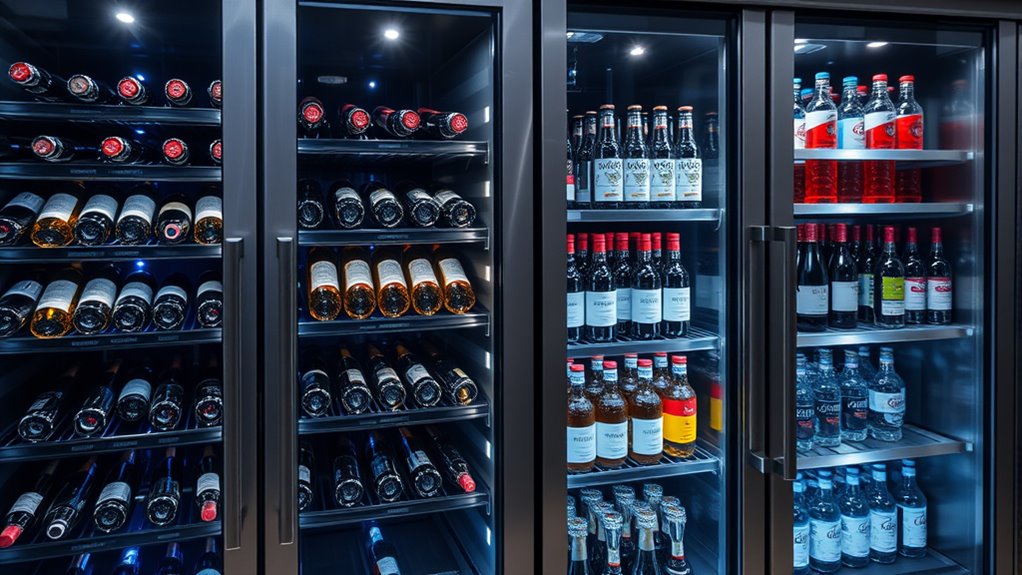
If you’re looking to keep your wines and beverages perfectly chilled, wine coolers and beverage centers offer convenient and efficient solutions. These appliances are designed with precise mechanisms that ensure ideal wine preservation and temperature regulation. Maintaining the right temperature is vital for preserving the flavors and aromas of your wines, and these units are built to deliver just that. They achieve this through specialized cooling systems that control the internal environment, preventing fluctuations that could compromise quality.
Most wine coolers and beverage centers utilize thermoelectric or compressor-based cooling technologies. Thermoelectric models use the Peltier effect, which involves passing an electric current through junctions of different metals, creating a temperature difference. This method is quiet, energy-efficient, and ideal for smaller units. Compressor-based systems, on the other hand, operate similarly to household refrigerators, using a refrigerant and a compressor to transfer heat out of the unit. These are often more powerful and better suited for larger capacities or higher ambient temperatures, providing consistent temperature regulation regardless of external conditions.
Thermoelectric units are quiet and energy-efficient, ideal for smaller wine coolers and beverage centers.
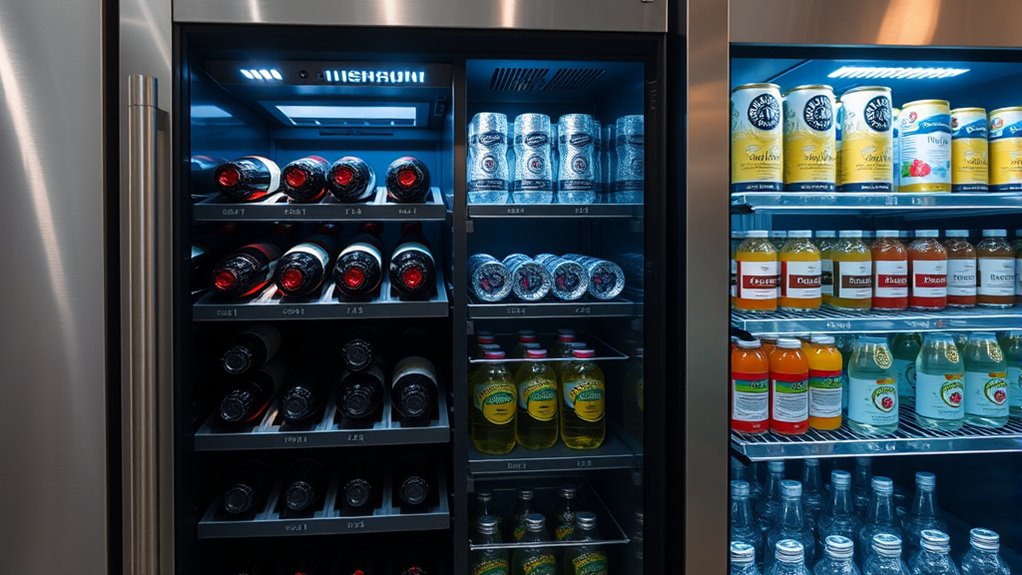
Inside, you’ll find adjustable thermostats that allow you to set the perfect temperature for your collection. For wine preservation, this typically means maintaining a range between 45°F and 65°F, depending on whether you’re storing reds, whites, or sparkling wines. Beverage centers, which usually hold a variety of cans and bottles, often have multiple temperature zones, giving you flexibility to chill different types of drinks simultaneously. The interior layout is thoughtfully designed with racks, shelves, and dividers to organize your beverages and prevent vibrations that could disturb sediment or affect taste. Modern units also incorporate vibration-dampening features to protect delicate wine structures.
The door design also plays a significant role in temperature regulation. Many units feature double-pane glass with UV protection, shielding your drinks from harmful light that can degrade wine quality. The seals around the door are tight, preventing warm air from infiltrating and disrupting the internal climate. Some models even include humidity controls, which are essential for wine storage, as they help maintain the right moisture levels to prevent corks from drying out. Additionally, tuning techniques can optimize the cooling performance and energy efficiency of these appliances.
wine cooler with adjustable thermostat
As an affiliate, we earn on qualifying purchases.
As an affiliate, we earn on qualifying purchases.
Frequently Asked Questions
How Do Wine Coolers Maintain Precise Temperature Control?
You can keep your wine cooler’s temperature precise through effective thermostat calibration and smart cooling system design. The thermostat constantly monitors the internal temperature, adjusting the cooling system to maintain your set point. A well-designed cooling system ensures even temperature distribution, preventing hot spots. Regular calibration guarantees the thermostat responds accurately, so your wines stay at the perfect temperature, preserving their quality and flavor.
What Energy Efficiency Features Do Beverage Centers Typically Have?
Beverage centers usually include energy-saving modes that reduce power consumption when the unit is idle or during off-peak hours. They also utilize high-quality insulation materials to minimize heat transfer, keeping beverages cool efficiently. By activating energy-saving modes and choosing models with superior insulation, you can lower energy bills while maintaining ideal temperatures. These features help guarantee your beverages stay perfectly chilled without wasting unnecessary energy.
How Does Humidity Regulation Affect Wine and Beverage Preservation?
Humidity regulation is vital because maintaining proper humidity levels prevents mold growth and keeps your drinks in ideal condition. When humidity is too high, mold can develop, damaging your beverages and creating health risks. Conversely, low humidity can dry out corks, leading to spoilage. By controlling humidity, you guarantee a stable environment that preserves flavor, aroma, and quality, making your wine and beverages last longer and stay fresher.
Can Wine Coolers Be Used for Other Types of Beverages?
Imagine you’re in a 21st-century speakeasy, and yes, wine coolers can definitely be used for other beverages. They’re great for alternative beverage storage and multi-purpose cooling, keeping sodas, water, and even craft beers at ideal temperatures. Just make sure your cooler’s temperature controls suit the drinks you want to store, and you’ll enjoy perfectly chilled beverages anytime, without needing separate appliances.
What Are the Noise Levels Generally Associated With Wine Coolers?
You’ll find that wine coolers typically produce low noise levels, usually between 20 to 40 decibels, comparable to a quiet library. Vibration reduction features help minimize disturbance, and insulation quality guarantees the cooler runs smoothly without excessive noise. If you choose a model with good insulation and vibration control, you’ll enjoy a quieter environment, perfect for keeping your beverages cool without any disruptive sound.
Conclusion
Now that you understand how wine coolers and beverage centers work, you’re better equipped to choose the right one for your needs. Did you know that the global wine storage market is expected to reach $4.7 billion by 2027? This growth shows how popular and essential these appliances have become for enthusiasts. Whether for preserving fine wines or keeping beverages perfectly chilled, investing in the right unit guarantees your drinks stay fresh and ready to enjoy whenever you want.
Fall Picks
fall essentials
As an affiliate, we earn on qualifying purchases.