
Antimicrobial surfaces in kitchens help you reduce bacteria, fungi, and microbes, making your environment safer and healthier. They target high-touch areas like countertops, sinks, and cutting boards, lowering the risk of cross-contamination. While they can streamline cleaning routines, it’s essential to maintain proper hygiene practices and avoid overusing these surfaces to prevent resistance. To learn how ongoing research is improving their long-term effectiveness, keep exploring this important topic.
Listen free for 30 days with Audible
Thousands of audiobooks and originals — cancel anytime.
As an affiliate, we earn on qualifying purchases.
Key Takeaways
- Antimicrobial surfaces inhibit harmful microbes, promoting a healthier kitchen environment and reducing cross-contamination risks.
- They are essential for high-touch areas like countertops and sinks, improving overall hygiene.
- Proper maintenance and cleaning are necessary to prevent microbial resistance and sustain effectiveness.
- Durable antimicrobial surfaces ensure long-lasting protection and reduce the need for frequent replacements.
- Ongoing research continues to enhance antimicrobial technologies, ensuring continued microbial control in kitchen settings.
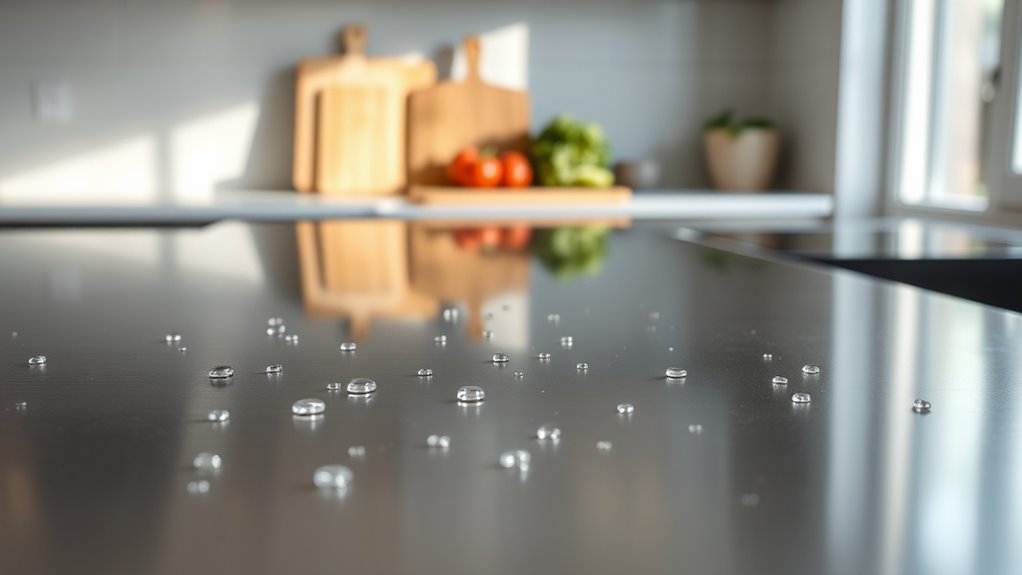
Keeping your kitchen safe from germs is easier than ever with the advent of antimicrobial surfaces. These innovative materials are designed to inhibit the growth of bacteria, fungi, and other microbes, making your kitchen a healthier environment. By choosing surfaces infused with antimicrobial agents, you reduce the risk of cross-contamination and bacterial spread, especially in high-touch areas like countertops, cutting boards, and sinks. But while these surfaces offer significant benefits, understanding their capabilities and limitations is essential to maximize their effectiveness.
One key factor to consider is bacterial resistance. Some microbes can develop resistance over time, especially if antimicrobial surfaces are overused or improperly maintained. This resistance can diminish the effectiveness of the antimicrobial agents, potentially leading to stubborn bacteria that are harder to eliminate. To combat this, it’s important to follow proper cleaning protocols and not rely solely on antimicrobial surfaces as your only defense. Regular cleaning with appropriate detergents remains vital, as it helps remove organic matter that can shield bacteria from antimicrobial agents. Combining these practices ensures that your surfaces stay effective and prevent bacteria from adapting.
Bacterial resistance can develop over time, so proper cleaning is essential to maintain antimicrobial surface effectiveness.
Surface durability is another critical aspect when selecting antimicrobial materials for your kitchen. You want surfaces that not only fight microbes but also withstand daily wear and tear. High-quality antimicrobial surfaces are engineered to resist scratches, stains, and chemical exposure, maintaining their antimicrobial properties over extended periods. Durability ensures that your investment continues to pay off, providing long-term protection without frequent replacements. When choosing surfaces, look for materials that balance antimicrobial efficacy with ruggedness, especially in busy kitchens where surfaces are subjected to constant use.
Moreover, the integration of antimicrobial surfaces in your kitchen can streamline your cleaning routine. Since these surfaces inhibit microbial growth, you may find that you need less frequent or less aggressive cleaning methods to maintain hygiene standards. This can save you time and effort while still ensuring a safe cooking environment. However, it’s important to remember that antimicrobial surfaces are not a substitute for good hygiene practices—they should complement regular cleaning and proper food handling.
Additionally, ongoing research into antimicrobial resistance aims to develop new materials and agents that can better withstand microbial adaptation, ensuring long-term effectiveness of these surfaces.
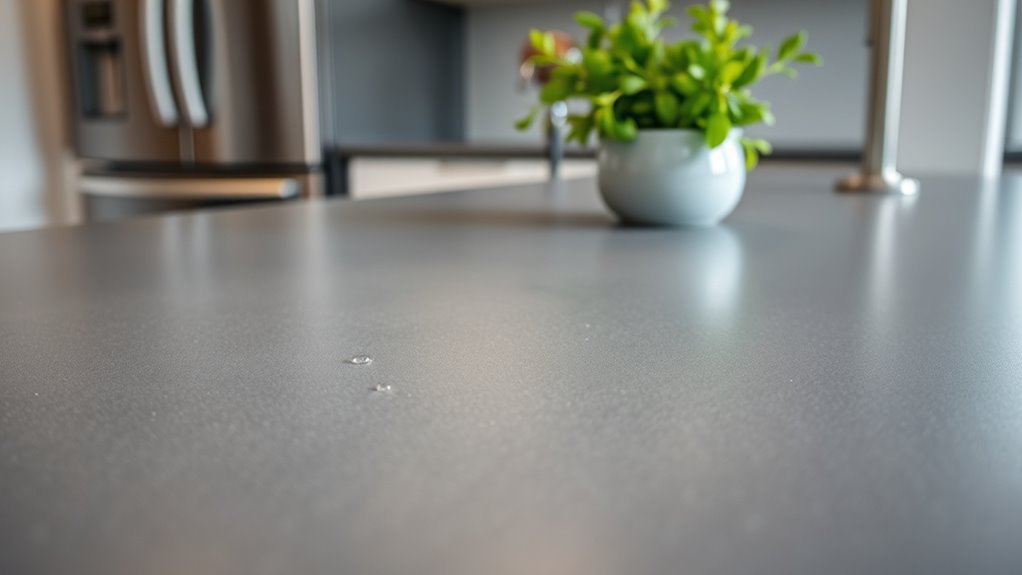
antimicrobial kitchen countertops
As an affiliate, we earn on qualifying purchases.
As an affiliate, we earn on qualifying purchases.
Frequently Asked Questions
Are Antimicrobial Surfaces Safe for Children and Pets?
Antimicrobial surfaces are generally safe for children and pets when used as directed. They help reduce harmful bacteria, supporting child safety and pet safety in your kitchen. However, it’s important to select products that are non-toxic and free from harmful chemicals. Always supervise children around these surfaces and follow manufacturer guidelines to guarantee safety. Proper cleaning and maintenance also help keep your family protected without risking exposure to potential hazards.
How Long Do Antimicrobial Properties Last on Surfaces?
Imagine a shield over your countertops that fights germs each day; this protection typically lasts between 6 months to a year. The durability lifespan depends on usage and cleaning routines, but over time, surface degradation can weaken antimicrobial properties. You should regularly check for signs of wear and reapply or replace surfaces as needed to ensure ongoing germ defense, keeping your kitchen safe for everyone.
Can Antimicrobial Coatings Be Damaged or Wear off Over Time?
Yes, antimicrobial coatings can be damaged or wear off over time. Surface durability depends on factors like cleaning methods and daily use, which can erode the coating. To maintain their effectiveness, you should regularly inspect the surfaces and perform proper coating maintenance. Avoid abrasive cleaners and harsh chemicals, as these can compromise the coating’s integrity. Consistent upkeep helps extend the antimicrobial properties and keeps your surfaces safer.
Do Antimicrobial Surfaces Prevent All Types of Bacteria and Viruses?
Antimicrobial surfaces don’t prevent all bacteria and viruses, but they substantially reduce their presence. You should know that bacteria resistance can develop over time, and surface longevity varies depending on usage and cleaning. While these surfaces help limit microbial growth, they aren’t foolproof. Regular cleaning and maintenance remain essential. Relying solely on antimicrobial coatings isn’t enough; combine them with good hygiene practices for the best protection in your kitchen.
Are There Environmental Concerns With Antimicrobial Surface Materials?
You might worry that antimicrobial surfaces could cause environmental chaos, but the truth isn’t a disaster movie. While some materials raise concerns about environmental impact and material sustainability, many are designed to be eco-friendly and safe. Manufacturers are working to balance antimicrobial benefits with minimal environmental footprint. So, you can enjoy cleaner kitchens without fueling environmental worries—these surfaces are evolving to protect both your health and the planet.
Conclusion
By choosing antimicrobial surfaces, you create a shield that keeps your kitchen safer, like an invisible army fighting germs. These surfaces are your first line of defense, turning everyday spaces into a fortress of cleanliness. Think of them as the silent guardians standing watch, tirelessly working to protect your family. Embrace this simple upgrade, and turn your kitchen into a sparkling sanctuary where germs have no place to hide. Your health depends on it—make the smart choice today.
Flea & tick season Picks
flea and tick prevention
As an affiliate, we earn on qualifying purchases.