
To properly clean and disinfect kitchen surfaces, start by removing any visible food debris or dirt with a damp cloth or sponge. Next, select a suitable cleaner for each surface type and wipe down thoroughly, focusing on corners and edges. After cleaning, apply a disinfectant containing at least 70% alcohol or diluted bleach, letting it sit for the recommended time. If you’re enthusiastic to master effective techniques, you’ll find more helpful tips below.

Get home appliances delivered free — and shop member deals
- Fast, free delivery on millions of items
- Access to Prime Big Deal Days deals on October 6–7
- Prime Video, Amazon Music and more included
Key Takeaways
- Remove debris and food scraps from surfaces before disinfecting.
- Wipe down surfaces with a damp cloth to ensure cleanliness prior to disinfectant application.
- Use disinfectants with at least 70% alcohol or diluted bleach, applying generously and covering all areas.
- Allow disinfectant to sit for the recommended dwell time before wiping with a clean cloth or paper towel.
- Regularly disinfect high-touch areas like handles and knobs to maintain hygiene and prevent bacteria buildup.

Keeping your kitchen surfaces clean and disinfected is essential for maintaining a healthy home. When you prioritize kitchen organization, you create a smoother workflow that minimizes cross-contamination and makes cleaning easier. Having designated areas for food prep, utensils, and cleaning supplies helps you stay organized and reduces clutter, which is key to food safety tips. When your kitchen is well-organized, you can quickly identify where to clean and disinfect, ensuring no corner is overlooked. Plus, a clutter-free space decreases the chances of bacteria spreading from dirty dishes or sponges to your countertops.
Maintaining a well-organized kitchen reduces clutter and enhances food safety.
To effectively clean and disinfect your kitchen surfaces, always start by removing any visible debris or food scraps. Use a damp cloth or paper towel to wipe down counters and tables, so you’re working on a clean surface before disinfecting. When selecting cleaning products, choose ones that are appropriate for your surface types—mild soap and water work well for many, but for disinfecting, you’ll need something with at least 70% alcohol or a diluted bleach solution. Make sure to follow the manufacturer’s instructions for the disinfectant, especially regarding the contact time needed to kill germs effectively.
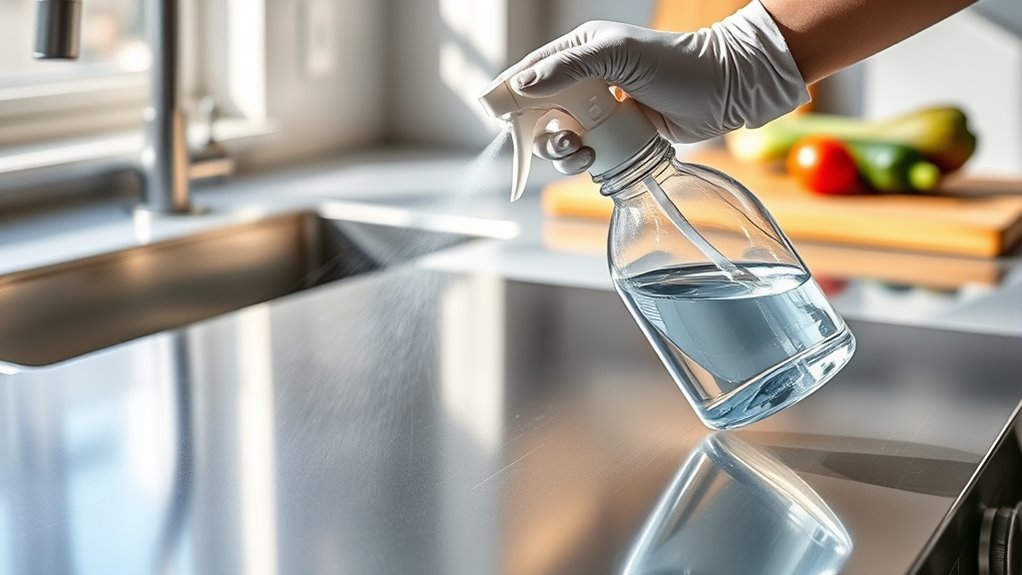
Applying disinfectant properly is crucial. Spray or apply the solution generously over the entire surface, covering all areas, including edges and corners. Allow it to sit for the recommended dwell time—this ensures germs and bacteria are effectively killed. After the disinfectant has done its job, wipe the surface with a clean cloth or paper towel to remove any residue and prevent streaks. Remember, cleaning first is vital because dirt and grime can shield bacteria from disinfectants, making your efforts ineffective unless you thoroughly clean beforehand. Additionally, understanding the importance of regular appliance maintenance can prevent the buildup of germs on kitchen appliances, contributing to overall hygiene.
Incorporate food safety tips into your routine by regularly disinfecting high-touch areas, such as refrigerator handles, faucet knobs, and appliance buttons. These spots are hotspots for germs and can easily transfer bacteria if overlooked. Always wash your hands before and after cleaning and disinfecting to prevent transferring germs from your hands to surfaces and vice versa. Additionally, change your cleaning cloths and sponges frequently—bacteria thrive in moist environments—so swapping out these tools minimizes the risk of spreading contamination.
disinfectant spray with 70% alcohol
As an affiliate, we earn on qualifying purchases.
As an affiliate, we earn on qualifying purchases.
Frequently Asked Questions
How Often Should I Clean My Kitchen Surfaces?
You should clean your kitchen surfaces daily to maintain hygiene and prevent bacteria buildup. For high-touch areas like countertops and handles, cleaning frequency should increase, especially after preparing raw meats or handling produce. Consider surface durability; gentler cleaning methods work best for delicate surfaces, while sturdier ones can handle more vigorous cleaning. Regular cleaning not only keeps your kitchen safe but also prolongs the lifespan of your surfaces.
Can I Use Vinegar to Disinfect Countertops?
Yes, you can use vinegar to disinfect countertops, but keep in mind vinegar safety concerns. Vinegar is a good alternative disinfectant for everyday cleaning, but it may not kill all germs effectively, especially viruses like norovirus or COVID-19. For thorough disinfection, consider using EPA-approved disinfectants. Always rinse surfaces after using vinegar and avoid mixing it with bleach or other chemicals, as this can create harmful fumes.
Are Antibacterial Wipes Safe for All Kitchen Surfaces?
Antibacterial wipes are generally safe for many kitchen surfaces, but they aren’t universal. You should always check labels for chemical safety and specific surface compatibility. Like a double-edged sword, they can effectively kill germs but may also pose environmental impacts if used excessively or contain harsh chemicals. Use them wisely, ensuring you’re not damaging your countertops or harming the environment with repeated use. When in doubt, opt for gentler, eco-friendly options.
What Is the Best Way to Remove Hard Water Stains?
To remove hard water stains, you should use a mixture of equal parts white vinegar and water for hard water removal. Spray it onto the stains, let it sit for a few minutes, then scrub gently with a soft brush or cloth. Rinse thoroughly and dry. Regular cleaning helps with stain prevention, so wipe surfaces after each use to keep hard water stains from forming again.
Should I Wear Gloves When Cleaning Kitchen Surfaces?
Yes, you should wear gloves when cleaning kitchen surfaces to guarantee cleaning safety. Protective gear like gloves shields your skin from harsh chemicals and potential germs, reducing the risk of irritation or infection. Always prioritize safety by wearing gloves, especially when using strong cleaners or disinfectants. This simple step helps keep your hands clean and safe while effectively maintaining a hygienic kitchen environment.
Conclusion
By regularly cleaning and disinfecting your kitchen surfaces, you’re not just wiping away dirt—you’re creating a fortress of safety and freshness. Think of your kitchen as a sanctuary, where each swipe banishes lurking germs like shadows fleeing the dawn. With consistent care, your space transforms into a haven of health, inviting you to cook and gather with confidence. Remember, a clean kitchen isn’t just tidy—it’s a shield guarding your family’s well-being every day.
NFL season / tailgating Picks
team gear
As an affiliate, we earn on qualifying purchases.