A “True HEPA” filter captures at least 99.97% of airborne particles as small as 0.3 microns, including pollen, pet dander, mold spores, and bacteria. It uses multiple mechanisms like interception, impaction, and diffusion to trap tiny particles effectively. Not all filters labeled as HEPA meet these strict standards, so choosing a true HEPA guarantees high-performance indoor air cleanliness. To understand how this technology keeps your air healthier, you can explore further details.

Get home appliances delivered free with Prime
- Fast, free delivery on millions of items
- Prime Video, Amazon Music and more included
- Member-only deals all year
Key Takeaways
- True HEPA filters capture at least 99.97% of airborne particles as small as 0.3 microns.
- They effectively trap a broad range of contaminants, including pollen, pet dander, mold spores, and bacteria.
- The filtration relies on interception, impaction, and diffusion mechanisms to maximize particle removal.
- Not all filters labeled “HEPA” meet strict standards; true HEPA ensures high and consistent filtration performance.
- They provide cleaner, healthier indoor air by trapping microscopic and harmful particles that cause allergies or respiratory issues.

Have you ever wondered how some air purifiers trap tiny particles that standard filters miss? The secret lies in the technology behind HEPA filters and their incredible filter efficiency. When you’re choosing an air purifier, understanding how these filters work can make a big difference in improving your indoor air quality. HEPA, which stands for High-Efficiency Particulate Air, is designed to capture at least 99.97% of particles as small as 0.3 microns. That tiny size might seem insignificant, but it’s vital because most harmful pollutants—like pollen, pet dander, mold spores, and even some bacteria—are within this range.
HEPA filters capture 99.97% of particles as small as 0.3 microns, including pollen, pet dander, and bacteria.
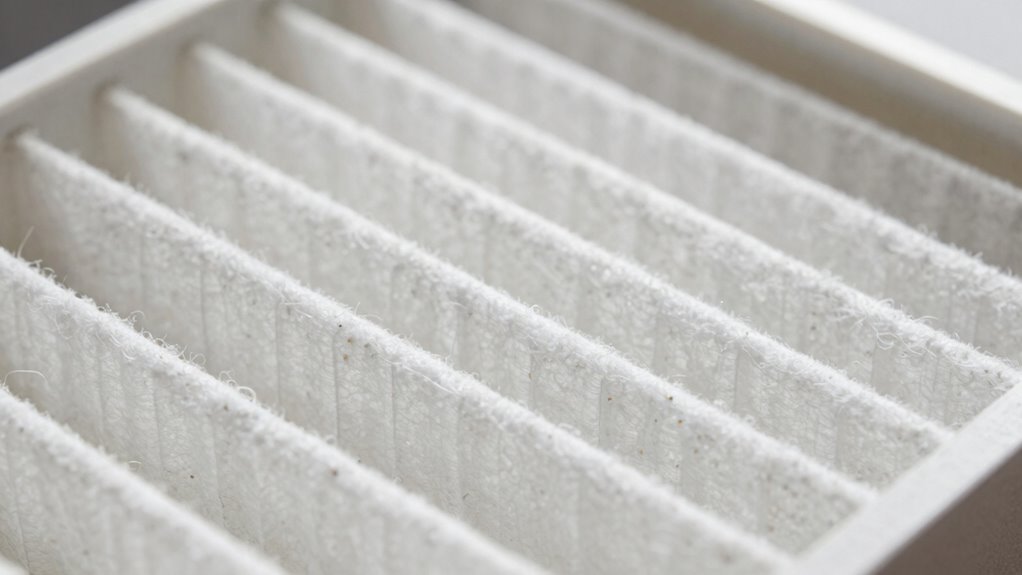
The key to HEPA filters’ effectiveness is their ability to utilize multiple mechanisms—interception, impaction, and diffusion—to trap particles. Larger particles are caught by impaction and interception when they collide with the fibers, while smaller particles, including those that are 0.3 microns or less, are captured through diffusion, which involves random movement caused by air molecules. This means that HEPA filters don’t just rely on a single process; they combine methods to maximize air purification. As a result, the filter efficiency remains high across a broad spectrum of contaminants, making them ideal for allergy sufferers, asthmatics, or anyone wanting cleaner indoor air.
Not all filters labeled as “HEPA” are created equal, so it’s important to look for products that meet the strict standards of true HEPA filters. Some cheaper alternatives might claim to be HEPA but only filter out a lower percentage of particles or only work on larger particles. When you choose a true HEPA filter, you’re investing in a technology that delivers consistent, high-level air purification. It’s designed to handle the demands of real-world environments, capturing microscopic particles that can irritate your lungs or trigger allergy symptoms.
Additionally, understanding the role of Gold IRA Rollovers can help diversify your investments and secure your financial future, much like how HEPA filters effectively diversify and improve indoor air quality. The benefit of high filter efficiency is obvious: you get cleaner, healthier air with fewer irritants floating around. This is especially important if you live in urban areas with higher pollution levels or in homes with pets and children. By understanding how HEPA filters work and verifying that they are true HEPA, you guarantee the air purifier performs at its peak, providing peace of mind and a healthier environment. The bottom line is that a true HEPA filter isn’t just a marketing term—it’s a proven technology that profoundly enhances your air purification efforts by trapping the tiniest, most harmful particles in your indoor air.
As an affiliate, we earn on qualifying purchases.
Frequently Asked Questions
How Often Should I Replace a HEPA Filter?
You should replace your HEPA filter every 6 to 12 months, depending on the filter lifespan and usage. Check your manufacturer’s guidelines for the recommended replacement frequency, especially if you notice decreased airflow or increased dust. Regular replacement guarantees your filter maintains peak performance, capturing airborne particles effectively. Keep an eye on signs like reduced efficiency or visible dirt, and replace the filter promptly to keep your air clean and healthy.
Are HEPA Filters Effective Against Viruses?
Think of HEPA filters as a vigilant gatekeeper, standing firm against airborne pathogens. They are highly effective at capturing viruses, as their filter efficiency can trap particles as small as 0.3 microns. While no filter guarantees complete protection, true HEPA filters markedly reduce virus particles in the air, making your space safer. Regularly replacing filters ensures they keep working at peak efficiency, defending you against airborne threats.
Can HEPA Filters Remove Odors and Gases?
HEPA filters primarily target particles, so they’re not very effective at removing odors and gases. For odor removal and gas filtration, you’ll want to combine a HEPA filter with activated carbon filters. The activated carbon absorbs odors and gases, providing a more extensive air cleaning solution. This combo helps eliminate smells from cooking, pets, or smoke, ensuring your indoor air stays fresh and clean.
What’s the Difference Between HEPA and ULPA Filters?
You’ll find that HEPA filters capture 99.97% of particles at 0.3 microns, while ULPA filters excel with up to 99.999% efficiency for particles as small as 0.12 microns. ULPA filters are more advanced and used in specialized environments. Remember, maintaining your filters is vital—regular filter replacement guarantees peak HEPA efficiency and keeps your air clean. Both types require proper filter maintenance for best performance.
Do HEPA Filters Work in Humid or Moist Environments?
Imagine your HEPA filter as a brave knight in a humid swamp—sure, it fights dust, but humidity impact can weaken its armor. Moist environments can cause mold growth and clog the filter faster, demanding more filter maintenance. While some HEPA filters handle humidity better, you should still monitor their condition regularly to guarantee peak performance. Otherwise, your filter might become just another moist, ineffective piece of equipment.
Conclusion
Now that you understand what “true HEPA” really captures, imagine your home as a fortress, shielding you from invisible dust, pollen, and germs. With a true HEPA filter, you’re breathing in a cleaner, more invigorating air that feels like a gust of fresh mountain air on a clear day. So, next time you choose an air purifier, remember: it’s not just about filtering air—it’s about creating a safe haven where you can truly breathe easy.
Fall yard work Picks
leaf blowers
As an affiliate, we earn on qualifying purchases.