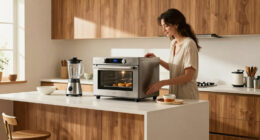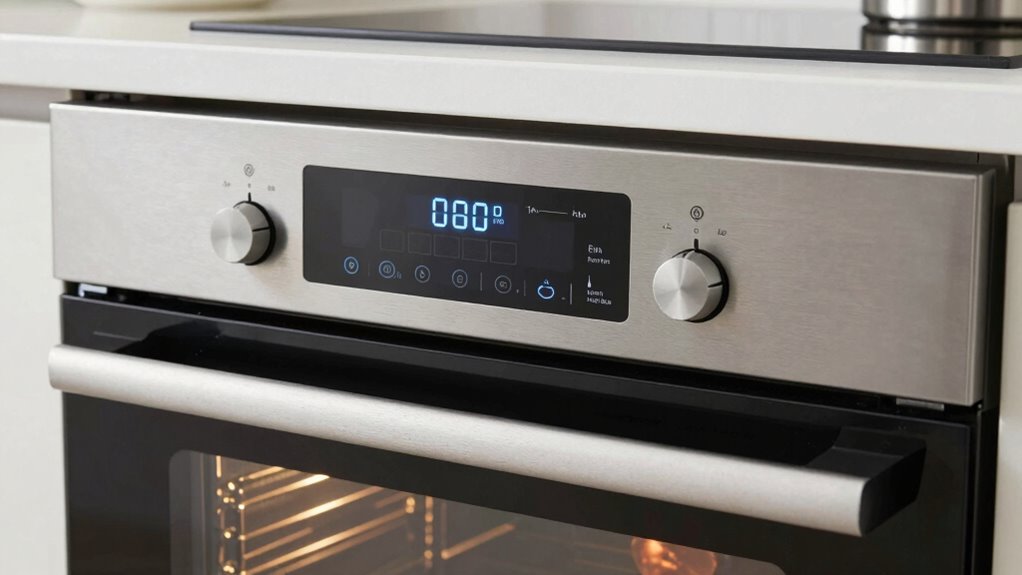
If your oven runs hotter than its set temperature, it’s likely due to inaccurate calibration. To fix this easily, place an oven thermometer inside, preheat to a standard temperature, and compare the reading to what you set. If it’s higher, adjust the calibration through your oven’s settings—many models have a simple calibration mode. Keep testing and adjusting until the actual and display temperatures match closely. For more detailed steps, keep exploring how to fine-tune your oven.

Get home appliances delivered free with Prime
- Fast, free delivery on millions of items
- Prime Video, Amazon Music and more included
- Member-only deals all year
Key Takeaways
- An overheating oven often displays higher-than-set temperatures, causing uneven cooking and burnt exterior results.
- Use an oven thermometer to verify if the actual temperature exceeds the dial setting.
- Perform calibration by adjusting the oven’s temperature settings based on thermometer readings.
- Regular calibration ensures accurate temperature control, preventing overheating and improving cooking consistency.
- Consult your user manual or a technician if the oven lacks built-in calibration options.
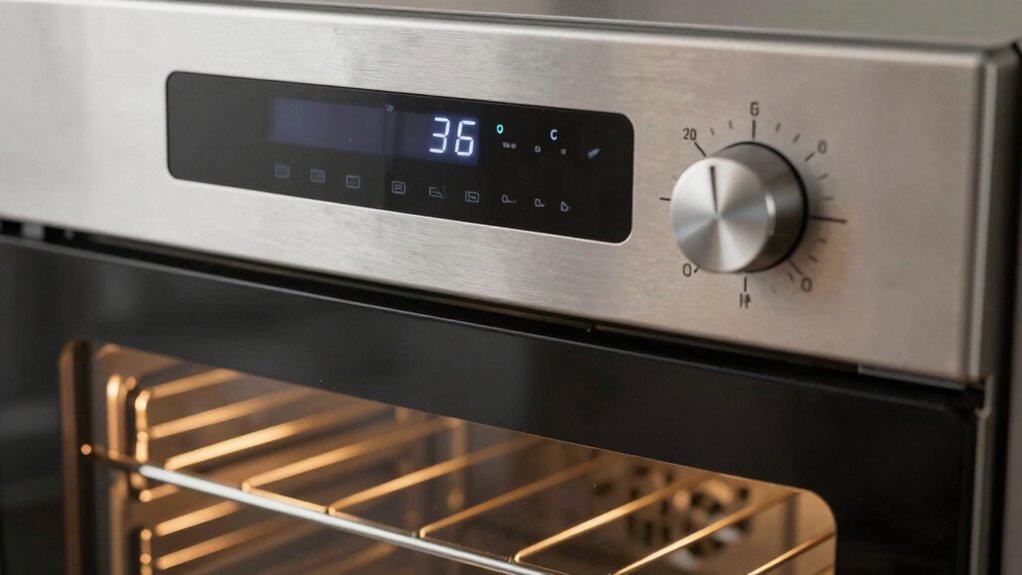
If your oven consistently runs hotter than the set temperature, it can throw off your cooking and baking results. You might notice your cakes burn on the outside while remaining undercooked inside or your roasted vegetables becoming too crispy. This issue often stems from an inaccurate oven temperature, which means the oven isn’t heating to the precise level you expect. To fix this, you need to understand and perform a simple calibration process. Proper calibration ensures that the oven’s internal temperature aligns with the display, giving you more control and reliable results.
A miscalibrated oven can cause uneven cooking—learn how to fix it for better baking results.
The first step in addressing a hot-running oven is to test its current oven temperature. You can do this easily with an oven thermometer, which you place inside the oven and preheat to a specific temperature, typically 350°F. Once the oven reaches that temperature, check the thermometer reading. If the actual temperature is *considerably* higher than what you set on the oven’s control panel, it indicates that your oven’s temperature gauge is off. This discrepancy is what causes inconsistent cooking and baking outcomes.
Next, you’ll want to perform the calibration process. Many modern ovens have built-in calibration settings that allow you to adjust the oven temperature. Check your user manual for instructions specific to your model. Usually, this involves entering a calibration mode and then adjusting the temperature in small increments until the actual oven temperature matches the desired setting. For example, if your oven reads 350°F but the thermometer shows 370°F, you’ll need to lower the calibration setting accordingly. If your oven doesn’t have a built-in calibration feature, you might need to adjust the oven’s temperature sensor or contact a professional technician for assistance.
It’s important to note that calibration is a straightforward process that can *substantially* improve your cooking precision. Additionally, understanding the role of contrast ratio can help you better assess your oven’s performance when used with certain appliances or displays. Once you’ve made the necessary adjustments, run another test with the thermometer to verify the change. Repeat the process if needed until the oven’s internal temperature matches your set temperature closely. Proper calibration not only extends the life of your appliance but also saves you time and ingredients by reducing the need for guesswork during cooking.
Ultimately, understanding your oven’s calibration process and keeping it properly calibrated ensures consistent, accurate temperatures. When your oven runs hot, addressing it through calibration can make a big difference in your culinary results. With a little effort, you’ll regain confidence in your oven’s performance and enjoy more predictable, perfectly cooked meals every time.
oven thermometer for calibration
As an affiliate, we earn on qualifying purchases.
As an affiliate, we earn on qualifying purchases.
Frequently Asked Questions
How Often Should I Calibrate My Oven?
You should calibrate your oven at least once a year to maintain accurate temperatures. Regular oven maintenance, including calibration frequency, helps ensure it cooks evenly and saves energy. If you notice uneven baking or your oven’s temperature seems off, it’s a good idea to calibrate sooner. Keep an eye on your oven’s performance and schedule calibration as needed to prevent issues and extend its lifespan.
Can a Broken Thermostat Cause Overheating?
A broken thermostat can definitely cause overheating, like a faulty traffic light leading to chaos on the road. When thermostat malfunctions happen, your oven might run hotter than intended, risking uneven cooking or even fire hazards. For oven safety, it’s essential to get the thermostat checked and repaired promptly. Ignoring these signs could lead to more serious problems, so don’t delay fixing it to keep your kitchen safe and your meals perfectly cooked.
Is It Safe to Adjust the Oven Calibration Myself?
It’s generally safe to adjust your oven calibration yourself if you follow proper safety precautions, like unplugging the appliance and wearing gloves. However, if you’re unsure or uncomfortable, it’s best to seek professional assistance to avoid damaging your oven or risking injury. Always consult your oven’s manual and never bypass safety features. When in doubt, contacting a qualified technician guarantees your safety and proper calibration.
What Tools Are Needed for Calibration?
Think of calibration tools as your oven’s trusted compass. For the calibration process, you’ll need a reliable oven thermometer, a screwdriver, and possibly a pair of pliers. The thermometer ensures accuracy, while the screwdriver helps adjust the calibration screw or knob. These tools are straightforward and essential, guiding you like a steady hand to fine-tune your oven’s temperature, making sure your cooking is always spot-on.
How Does Ambient Room Temperature Affect Oven Accuracy?
Ambient room temperature affects oven accuracy because fluctuations can influence the oven sensor sensitivity, causing inconsistent temperature readings. When the room is warmer, the sensor may interpret the heat differently, making your oven run hotter than set. Conversely, cooler rooms can cause it to run cooler. To maintain precise cooking, keep your kitchen at a stable temperature, and regularly check your oven’s calibration, especially if room temperature effects seem to alter cooking results.
Conclusion
Now that you know how simple it is to calibrate your oven, you don’t have to wonder if your baked goods are perfectly cooked. Imagine what you could create with consistent temperatures—delicious cookies, perfectly roasted veggies, and tender roasts. Isn’t it worth taking a few minutes to fix your oven and enjoy flawless results every time? With this easy fix, you’re in control of your cooking, making every meal just right.
Halloween Picks
halloween
As an affiliate, we earn on qualifying purchases.