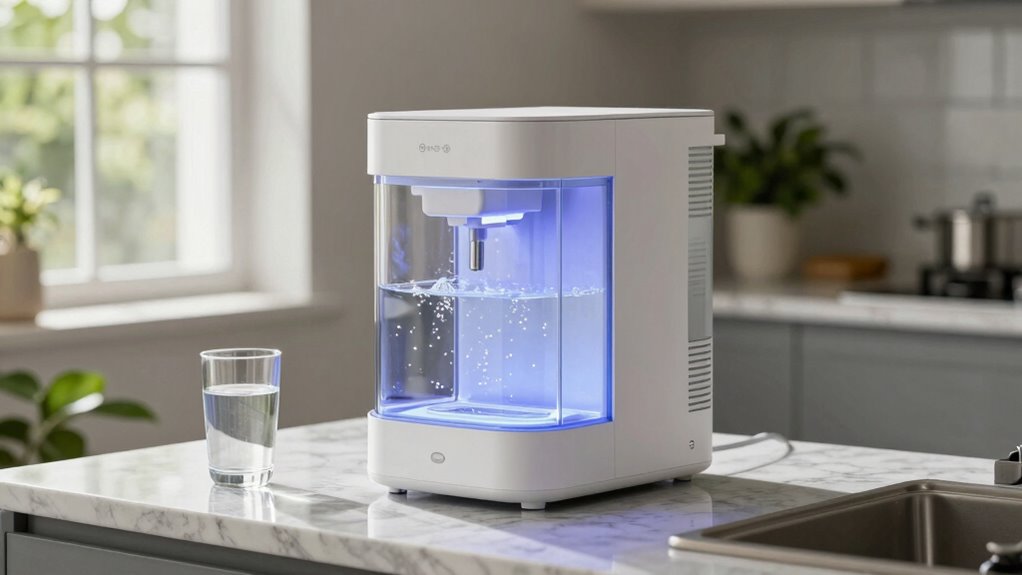

UV water purifiers make sense when you’re dealing with water contaminated by bacteria, viruses, or other microorganisms, as they effectively destroy these pathogens without chemicals. They’re ideal if your water source is microbiologically unsafe but free from heavy metals or sediments that require filtration. Since UV doesn’t remove chemical impurities, combining it with other filters is often best. To learn more about when UV systems are right for you, keep exploring how they fit into your water safety plan.
Key Takeaways
- UV purifiers are effective when microbial contamination is the primary concern in water.
- They are ideal for disinfecting clear water without chemicals but do not remove chemical pollutants.
- Proper pre-filtration is necessary for turbid or contaminated water to ensure UV effectiveness.
- Regular maintenance, including bulb replacement, is essential for consistent pathogen destruction.
- UV technology works best as part of a multi-stage filtration system addressing both microbes and chemical impurities.
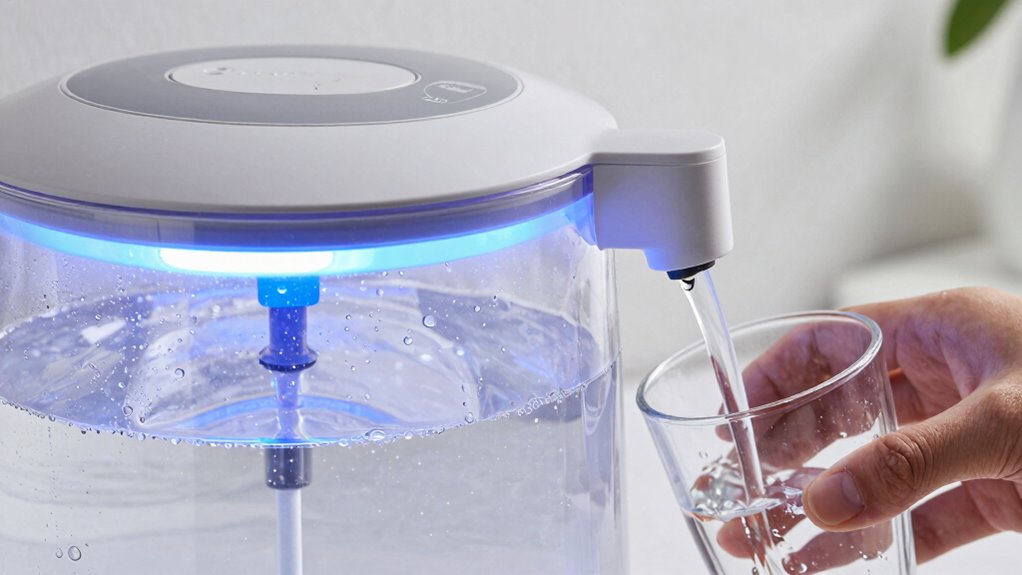
Are you concerned about the safety of your drinking water? If so, UV water purifiers can offer a reliable solution, especially when you understand how UV technology works and where it fits best in your water safety regimen. UV technology uses ultraviolet light to disinfect water by destroying bacteria, viruses, and other microorganisms that can cause illness. This method is chemical-free, quick, and effective at neutralizing pathogens without adding any substances to your water, making it a popular choice for those prioritizing purity and simplicity.
UV water purifiers effectively destroy harmful microorganisms without using chemicals, ensuring pure, safe drinking water.
UV water purifiers are particularly useful in scenarios where microbiological contamination is the primary concern. If your water source is from a well, municipal supply, or a location with known microbial issues, installing a UV purifier can considerably improve water safety. Since UV light penetrates the cell walls of microorganisms, it disrupts their DNA, rendering them incapable of reproduction and infection. This process guarantees that your water is free from harmful pathogens that could otherwise lead to waterborne illnesses.
However, it’s important to recognize that UV technology doesn’t remove chemical contaminants, heavy metals, or sediments. If your water contains impurities like pesticides, chlorine, or lead, a UV purifier alone won’t suffice. In these cases, it’s best to combine UV treatment with other filtration methods, such as activated carbon filters, to address a broader spectrum of contaminants. This layered approach enhances overall water safety, guaranteeing that what you drink is not only free from microbes but also free from harmful chemicals.
Another factor to consider is water clarity. UV systems require clear water to work effectively because particles and sediments can block the UV light, reducing its disinfecting power. If your water has high turbidity, pre-filtration is essential before UV treatment. Regular maintenance is also vital; UV bulbs degrade over time and need replacement to maintain their effectiveness. Not following these guidelines can compromise the safety benefits UV technology offers. Additionally, understanding the contrast ratio of your UV system can help ensure you select a unit capable of providing adequate disinfection under your specific water conditions.

Aquasana Max Flow UV AQ-UV-15C Whole House Water Filter System | UV Purifier | 16 GPM Peak Flow | Sterilizes up to 99.99% of Viruses and Bacteria and 99% of Chlorine-Resistant Cysts
- UV Sterilization Efficiency: Kills 99.99% of viruses and bacteria
- Whole House Water Protection: Disinfects water at every tap
- High Flow Rate: Supports 16 GPM without pressure loss
As an affiliate, we earn on qualifying purchases.
As an affiliate, we earn on qualifying purchases.
Frequently Asked Questions
Can UV Purifiers Remove Chemical Contaminants From Water?
UV purifiers can’t remove chemical contaminants from water. They’re designed to kill bacteria, viruses, and other microorganisms, improving water safety in that regard. However, if your water contains chemicals like pesticides, heavy metals, or organic pollutants, UV treatment alone won’t address those issues. To guarantee thorough water safety, consider using activated carbon filters or other treatment methods alongside UV purifiers for chemical removal.
How Often Should the UV Bulb Be Replaced?
Replacing your UV bulb is like changing a worn-out light bulb—you need to do it regularly for maximum performance. Typically, a UV bulb’s lifespan is about 9 to 12 months, depending on usage and water quality. Follow your purifier’s recommended replacement schedule, and check the manufacturer’s instructions. Regularly replacing the UV bulb guarantees your water stays safe and germ-free, maintaining the system’s efficiency.
Are UV Water Purifiers Effective Against Viruses?
Yes, UV water purifiers are effective against viruses when used correctly. They destroy the genetic material of microorganisms, making viruses harmless. However, UV safety is essential; avoid direct exposure to UV light, and guarantee your device is properly maintained for peak water filtration. Regularly replacing the UV bulb, typically every year, ensures continued effectiveness. When used properly, UV purifiers provide a reliable, chemical-free method to improve your water’s safety from viruses.
Do UV Purifiers Require Electricity to Operate?
You might think UV water purifiers need electricity, but that’s not always true. Many models operate with electricity dependency, requiring power to generate UV light that destroys microbes. However, some portable or manual units don’t need power at all, making them ideal for outdoor or emergency use. When choosing a UV purifier, consider your power requirements and whether you need a device that relies on electricity or not.
Can UV Water Purifiers Treat Well Water?
Yes, UV water purifiers can treat well water, but they mainly target bacteria, viruses, and other biological contaminants. They don’t remove chemical contaminants or heavy metals, so you might need additional filtration systems for well water with chemical pollutants. UV purifiers are effective when combined with pre-filters that address sediment and chemicals, ensuring your well water is safe and clean for household use.
Conclusion
UV water purifiers can be a smart choice when used in the right circumstances, especially for quick disinfection and improving water clarity. Remember, don’t put all your eggs in one basket—combine UV with other filtration methods for best results. When you choose the right purifier for your needs, you’re taking a step toward safer water. After all, a little prevention now saves a lot of trouble later—so choose wisely and stay safe.