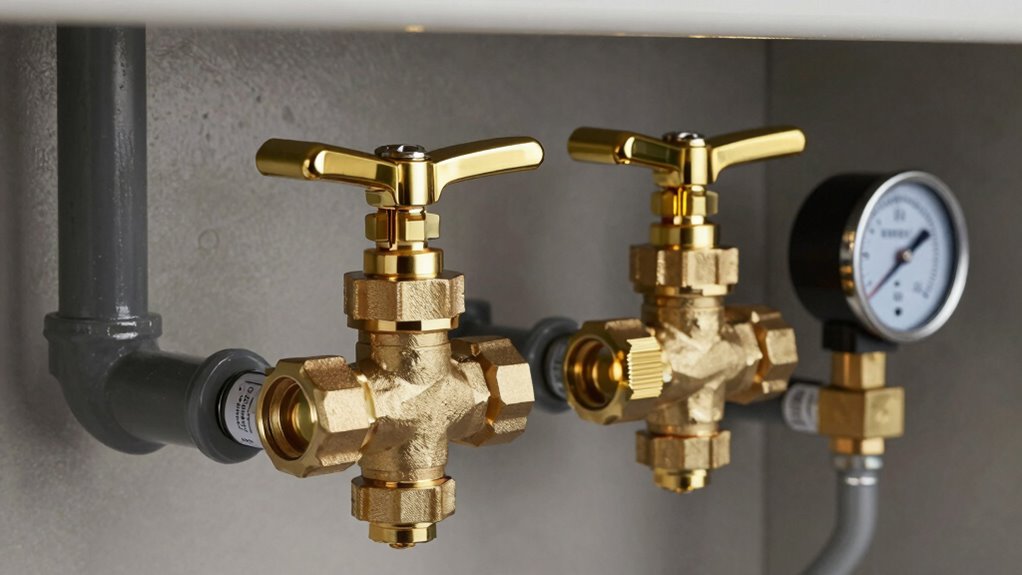

For maximum protection, install a shutoff valve at your main water supply line to quickly stop all water flow during major leaks. Also, place shutoff valves at fixtures like sinks, toilets, and washing machines for localized control. Consider access points in crawl spaces or utility rooms for hidden pipe areas. Proper placement, regular maintenance, and selecting quality valves guarantee they’re reliable when needed. Keep reading to discover how to optimize your valve setup and stay prepared for emergencies.
Key Takeaways
- Install a main water shutoff valve at the main supply line to control the entire plumbing system.
- Place shutoff valves at fixtures like sinks, toilets, and washing machines for localized control.
- Position valves in crawl spaces and utility rooms to quickly contain leaks in hidden or hard-to-reach areas.
- Regularly test and maintain all shutoff valves to ensure reliable operation during emergencies.
- Use high-quality valves installed in accessible locations to enable prompt response and minimize water damage.
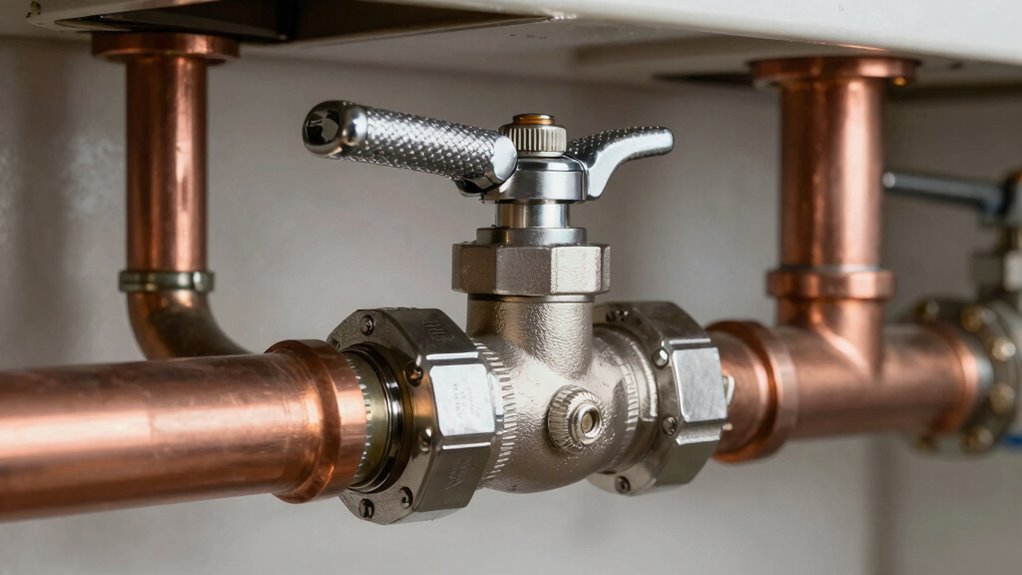
Leak shutoff valves are essential safety devices that prevent water damage by automatically stopping leaks in plumbing systems. If you want to protect your home effectively, knowing where to install these valves is crucial. Proper placement not only minimizes potential damage but also enhances your emergency preparedness. When a leak occurs, having shutoff valves strategically located allows you to respond swiftly, reducing water wastage and avoiding costly repairs.
Start by considering the main water supply line. Installing a shutoff valve here gives you control over the entire plumbing system. In the event of a major leak or burst pipe, turning off the main valve stops the flow immediately, preventing extensive damage. This is especially important if you’re away from home or during nighttime hours when leaks might go unnoticed. Additionally, installing shutoff valves at individual fixtures—such as sinks, toilets, and washing machines—provides localized control. If a specific appliance develops a leak, you can shut off just that line without disrupting water to the rest of your house. This targeted approach minimizes inconvenience and makes maintenance schedules more manageable.
Regular maintenance schedules are vital for ensuring these valves work when you need them most. Check for leaks, corrosion, or any signs of wear periodically, especially before winter or during heavy usage seasons. A well-maintained shutoff valve reduces the risk of failure during emergency situations. Keep in mind that some valves may require lubrication or replacement over time, so adhering to a routine maintenance plan keeps your system reliable. Proper maintenance also involves testing the valves periodically to confirm they shut off properly. If you notice any difficulty turning them or irregular operation, address these issues promptly to keep your home protected. Additionally, choosing high-quality valves can improve durability and performance over time.
When considering installation locations, don’t forget less obvious spots like crawl spaces or utility rooms where pipes are vulnerable. Installing valves close to potential trouble areas ensures you can quickly isolate leaks before they cause damage. Combining these installation strategies with a solid emergency preparedness plan guarantees you’re ready for unexpected plumbing failures. Remember, the goal is to have quick access to shutoff points, allowing you to respond promptly during emergencies. This proactive approach, paired with consistent maintenance, maximizes your protection against water damage.
As an affiliate, we earn on qualifying purchases.
Frequently Asked Questions
Can Leak Shutoff Valves Be Installed Outdoors?
Yes, you can install leak shutoff valves outdoors. Just make sure to select valves designed for outdoor installation with weather resistance features. These valves are built to withstand exposure to rain, snow, and temperature changes. Proper outdoor installation helps protect your plumbing system and ensures reliable shutoff during leaks. Always verify that the valve is rated for outdoor use before installation to prevent corrosion and damage over time.
Are Leak Shutoff Valves Compatible With All Plumbing Systems?
Sure, leak shutoff valves can be compatible with most plumbing systems, but you should check material compatibility and installation requirements first. You’ll want valves suited for your pipe material—copper, plastic, or steel—and make certain they fit seamlessly into your setup. Always verify the specifications, because different systems demand different features. Properly matching materials and following installation instructions guarantees a safe, snug, and secure shutoff solution for your plumbing needs.
How Often Should Leak Shutoff Valves Be Inspected or Maintained?
You should inspect your leak shutoff valves at least once a year to make certain they’re functioning properly. Regular maintenance tips include checking for corrosion, testing the valve operation, and lubricating moving parts if needed. If you notice any leaks, stiffness, or corrosion, perform maintenance sooner. Proper inspection frequency helps prevent water damage and prolongs the life of your valves, giving you maximum protection against unexpected leaks.
Do Leak Shutoff Valves Require Professional Installation?
Think of installing leak shutoff valves like anchoring a ship; it’s essential to get it right. While DIY installation might seem tempting, professional services guarantee everything’s secure and code-compliant, preventing potential disasters. You wouldn’t trust a rough sailor to steer your vessel, so don’t leave your home’s safety to chance. Hiring a professional guarantees your shutoff valve works effectively, giving you peace of mind and maximum protection against water damage.
Are There Manual and Automatic Leak Shutoff Valve Options?
Yes, there are both manual and automatic leak shutoff valve options. Manual valves require you to turn them on or off manually during maintenance or emergencies, while automatic valves use smart sensors to detect leaks and trigger shutoff without intervention. You can choose from various valve types based on your needs, ensuring maximum protection. Installing automatic valves with smart sensor technology offers the most efficient, hands-free leak prevention.
Conclusion
By installing leak shutoff valves at key points, you create a fortress of protection around your home’s plumbing. Imagine these valves as vigilant guards, standing watch to catch leaks before they spread like wildfire. By placing them wisely, you turn potential floods into mere drizzles, safeguarding your sanctuary from water’s destructive dance. With these valves in place, your home becomes an unbreakable fortress, ready to stand strong against any unforeseen plumbing threat.