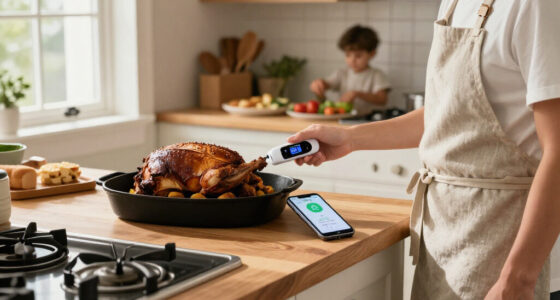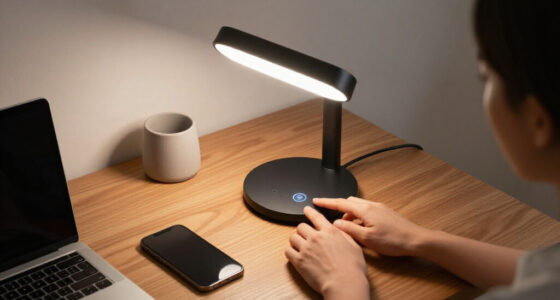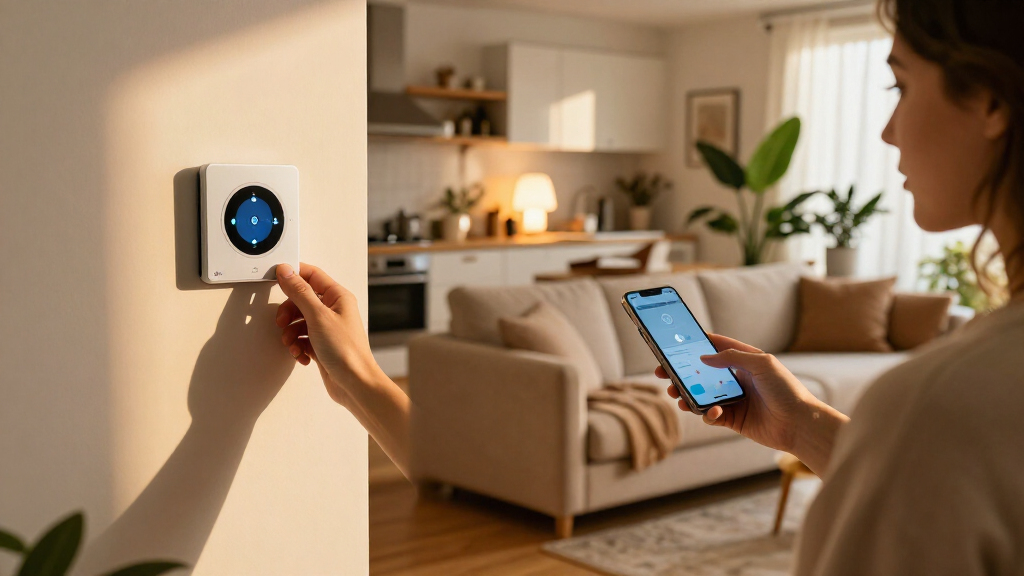

The best HomeKit smart home devices make everyday control simple while fitting the way your home is wired and connected. My best overall pick is the Aqara Smart Home Hub M3, which can bring several device protocols together; the ecobee Smart Thermostat Premium stands out for richer climate control, while the TP-Link Tapo P125M is a straightforward option for adding smart outlets. The main tradeoffs are compatibility, whether a device needs a hub or neutral wire, and how much functionality you want outside Apple Home. Read on for all 15 picks and guidance on matching them to your setup.

Get home appliances delivered free with Prime
- Fast, free delivery on millions of items
- Prime Video, Amazon Music and more included
- Member-only deals all year
Complete the kit


Key Takeaways
- The Aqara Hub M3 is the most flexible foundation in this lineup: Matter, Zigbee, Thread, and IR support give it a broader role than a single-purpose plug or switch.
- Wiring can decide the switch shortlist before features do: the Kasa KS205P3 explicitly requires a neutral wire, while a three-way dimmer kit is aimed at a different circuit layout.
- Smart plugs are the easiest way to start small: the Tapo P125M mini plugs suit individual outlets, while Linkind’s four-pack and Kasa’s outdoor dual-outlet plug fit different coverage needs.
- Thermostats are not interchangeable upgrades: Aqara’s W200 brings Apple Adaptive Temperature into the mix, while ecobee’s Premium pairs climate control with Siri and a SmartSensor.
- Aqara’s two doorbells and the standalone sensors serve different jobs: choose a camera for visitor monitoring, or door and window sensors when the priority is contact status and automation triggers.
| Kasa EP40A Outdoor Smart Plug with Apple HomeKit, 2 Outlets |  | Best Outdoor HomeKit Plug | Model: EP40A | Outlets: 2 independently controlled AC outlets | Voltage: 125 V AC | VIEW LATEST PRICE | See Our Full Breakdown |
| Aqara Smart Thermostat W200 with Apple Adaptive Temperature |  | Best Premium HomeKit Thermostat | Model: W200 | Display: 4-inch full-color touchscreen | HVAC compatibility: About 85% of HVAC systems | VIEW LATEST PRICE | See Our Full Breakdown |
| Aqara Zigbee Door and Window Sensor, 3-Pack |  | Best for Entry and Cabinet Alerts | Model: MCCGQ11LM | Pack size: 3 sensors | Connectivity: Zigbee | VIEW LATEST PRICE | See Our Full Breakdown |
| Kasa Matter Smart Light Switch KS205P3, Single Pole, Neutral Wire Required, 3-Pack |  | Best Matter Switch Multipack | Model: KS205P3 | Pack size: 3 switches | Switch type: Single pole, on/off | VIEW LATEST PRICE | See Our Full Breakdown |
| Kasa KS200P3 Apple HomeKit Smart Light Switch, Single Pole |  | Best Straightforward HomeKit Switch | Model: KS200P3 | Operation mode: On-off | Switch type: One-way, single pole | VIEW LATEST PRICE | See Our Full Breakdown |
| ecobee Smart Thermostat Premium with Wi-Fi, Siri, Alexa, and SmartSensor |  | Best HomeKit Thermostat for Room-by-Room Comfort | Connectivity: Wi-Fi | Voice assistants: Siri and Alexa | Included sensor: SmartSensor | VIEW LATEST PRICE | See Our Full Breakdown |
| Linkind Matter Smart Plug, 4-Pack | 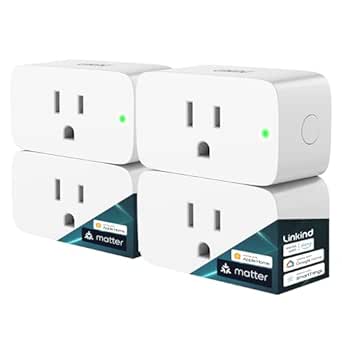 | Best Multi-Platform Plug Pack | Pack size: 4 | Plug type: Type A | Amperage: 15 A | VIEW LATEST PRICE | See Our Full Breakdown |
| Aqara Doorbell Camera G400 with Chime |  | Best Wired HomeKit Doorbell for Local Storage | Resolution: 2K HD | Field of view: 165° | Power: PoE or 8–24V AC/DC | VIEW LATEST PRICE | See Our Full Breakdown |
| Tapo Matter Smart 3-Way Dimmer Switch Kit (S515D) |  | Best HomeKit Dimmer for Two-Switch Locations | Circuit type: 3-way | Dimming range: 0–100% | Connectivity: Matter, 2.4 GHz Wi-Fi | VIEW LATEST PRICE | See Our Full Breakdown |
| TP-Link Tapo S505 Matter Smart Light Switch, 2-Pack | 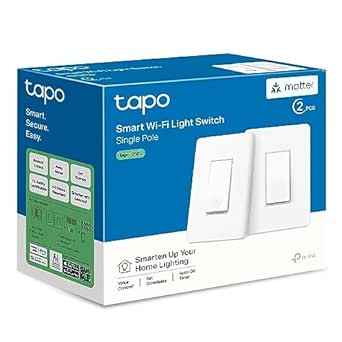 | Best Value Pair for Single-Pole Lighting | Pack size: 2 | Switch type: Single-pole, one-way | Matter certified: Yes | VIEW LATEST PRICE | See Our Full Breakdown |
| TP-Link Tapo P125M Matter Smart Plug Mini, 3-Pack |  | Best Value Matter Plug Set | Pack size: 3 | Maximum current: 15 A | Maximum power: 1800 W | VIEW LATEST PRICE | See Our Full Breakdown |
| Meross Smart Garage Door Opener Remote with HomeKit, Alexa, and Google Assistant |  | Best for HomeKit Garage Access | Model: MSG100HK | Connectivity: 2.4 GHz Wi-Fi | Compatible platforms: Apple HomeKit, Amazon Alexa, SmartThings, Google Home | VIEW LATEST PRICE | See Our Full Breakdown |
| Aqara Smart Home Hub M3 with Matter, Zigbee, Thread, and IR |  | Best Premium HomeKit Hub | Model: HM-G01E | Protocols: Zigbee, Thread, Matter, Bluetooth, Wi-Fi | Connectivity: Dual-band Wi-Fi (2.4/5 GHz), Ethernet with PoE, USB-C | VIEW LATEST PRICE | See Our Full Breakdown |
| Aqara Smart Doorbell Camera G410 with Chime |  | Best HomeKit Doorbell with Local Storage | Resolution: 2K; up to 1600×1200 when connected to Apple HomeKit | Field of view: 175° | Chime volume: 95 dB | VIEW LATEST PRICE | See Our Full Breakdown |
| Airversa QliQ AC1 3-Button HomeKit Controller, White |  | Best for Physical HomeKit Scenes | Model: AC1 | Buttons: 3 | Automations: Up to 9 | VIEW LATEST PRICE | See Our Full Breakdown |
| HomeKit smart home device | Connectivity | Model |
|---|---|---|
| Kasa EP40A Outdoor Smart Plug | — | EP40A |
| Aqara Smart Thermostat W200 wi | Dual-band Wi-Fi (2.4/5 GHz), Matter 1.4, Zigbee, Thread | W200 |
| Aqara Zigbee Door and Window S | Zigbee | MCCGQ11LM |
| Kasa Matter Smart Light Switch | 2.4 GHz Wi-Fi | KS205P3 |
| Kasa KS200P3 Apple HomeKit Sma | 2.4 GHz Wi-Fi | KS200P3 |
| ecobee Smart Thermostat Premiu | Wi-Fi | — |
| Linkind Matter Smart Plug | — | — |
| Aqara Doorbell Camera G400 wit | Wired, Wi-Fi, RTSP/ONVIF | — |
| Tapo Matter Smart 3-Way Dimmer | Matter, 2.4 GHz Wi-Fi | — |
| TP-Link Tapo S505 Matter Smart | Matter, Wi-Fi | — |
| TP-Link Tapo P125M Matter Smar | 2.4 GHz Wi-Fi, Bluetooth, Matter | — |
| Meross Smart Garage Door Opene | 2.4 GHz Wi-Fi | MSG100HK |
| Aqara Smart Home Hub M3 with M | Dual-band Wi-Fi (2.4/5 GHz), Ethernet with PoE, USB-C | HM-G01E |
| Aqara Smart Doorbell Camera G4 | 2.4 GHz and 5 GHz Wi-Fi, Bluetooth, Zigbee | — |
| Airversa QliQ AC1 3-Button Hom | Thread | AC1 |
More Details on Our Top Picks
Kasa EP40A Outdoor Smart Plug with Apple HomeKit, 2 Outlets
I’d choose the Kasa EP40A when outdoor lights or seasonal decorations need HomeKit scheduling without replacing their existing plugs. Its two independently controlled outlets let me automate separate devices on different schedules, unlike a single-outlet plug such as the Tapo P125M. The IP64 weather resistance is suited to exposure to dust and splashing water, though it isn’t a reason to leave connections sitting in standing water. It also works with Siri and other major voice assistants, making it a flexible pick for mixed-platform homes. The tradeoff is that it needs 2.4 GHz Wi-Fi, and HomeKit remote access depends on a networked Apple device at home. I’d skip it for indoor-only use or where Wi-Fi coverage outdoors is unreliable.
Pros:- Two outlets can be controlled independently
- Works with Apple HomeKit, Siri, Alexa, and Google Assistant
- IP64 protection helps resist dust and splashing water
- Supports remote control, grouping, and schedules
Cons:- Requires a 2.4 GHz Wi-Fi network
- HomeKit remote control requires a networked Apple device at home
- Outdoor Wi-Fi coverage may limit placement
Best for: HomeKit households automating two outdoor lights or other plug-in devices independently.
Not ideal for: Buyers who need an indoor-only plug, 5 GHz connectivity, or HomeKit remote access without a networked Apple device at home.
- Model:EP40A
- Outlets:2 independently controlled AC outlets
- Voltage:125 V AC
- Weather resistance:IP64
- Wi-Fi:2.4 GHz; 802.11 b/g/n
- Wi-Fi range:Up to 300 ft
- Voice assistants:Apple Siri, Amazon Alexa, Google Assistant
- Warranty:2 years
Our verdict“Choose the EP40A if you want one weather-resistant HomeKit plug to automate two outdoor devices separately.”
Aqara Smart Thermostat W200 with Apple Adaptive Temperature
The Aqara W200 is the most ambitious HomeKit pick here: it combines a thermostat with a 4-inch touchscreen, mmWave presence detection, and Zigbee, Matter, and Thread hub functions. That makes it a stronger fit for someone building a connected home than a thermostat-focused choice such as the ecobee Smart Thermostat Premium, while its presence sensing can help trigger comfort-related automations when a room is occupied. Compatibility spans several platforms, but the advertised HVAC coverage is about 85% of systems, so checking wiring and system type comes first. Some features also have limits: the C-wire adapter is sold separately if needed, Apple Adaptive Temperature requires compatible hardware and software version 26 or later, and Clean Energy Guidance is limited to the contiguous U.S. I’d skip it if you want a simple thermostat without hub features.
Pros:- 4-inch touchscreen combines thermostat controls with a room display
- Built-in mmWave sensing can support presence-based automations
- Matter, Zigbee, and Thread functions expand its role beyond temperature control
- Supports Apple Home and several other smart-home platforms
Cons:- C-wire adapter is sold separately if required by the installation
- Apple Adaptive Temperature requires compatible devices and software version 26 or later
- Clean Energy Guidance is available only in the contiguous U.S.
Best for: Apple Home users with a compatible HVAC system who also want a touchscreen, presence-based automations, and built-in smart-home hub functions.
Not ideal for: Buyers seeking a simple thermostat, those with an unsupported HVAC setup, or users without the compatible Apple hub and software required for Adaptive Temperature.
- Model:W200
- Display:4-inch full-color touchscreen
- HVAC compatibility:About 85% of HVAC systems
- Connectivity:Dual-band Wi-Fi (2.4/5 GHz), Matter 1.4, Zigbee, Thread
- Presence detection:Built-in mmWave radar
- Smart home platforms:Apple Home, Google Home, Amazon Alexa, Samsung SmartThings, Home Assistant
- Additional functions:Zigbee hub, Matter controller, Thread border router
- C-wire adapter:Sold separately
Our verdict“Pick the W200 if its broad hub features and presence sensing justify a more involved setup than a thermostat-focused option.”
Aqara Zigbee Door and Window Sensor, 3-Pack
For a HomeKit setup centered on knowing when doors, windows, or cabinets open, this Aqara three-pack adds several monitoring points without needing a separate sensor for each kind of opening. The sensors can send alerts and trigger automations, making them more useful than a basic notification-only device when paired with other compatible Aqara gear. Compared with the Kasa EP40A, which automates powered devices, these sensors respond to open-and-close events rather than switching outlets. The main limitation is the required Aqara hub, sold separately; these sensors do not work with third-party hubs or SmartThings. Their 0.86-inch maximum gap also means fit depends on the door or window frame. I’d choose them for several suitable openings, but not for a hub-free HomeKit setup.
Pros:- Three sensors cover multiple openings in one setup
- Can send phone alerts when a monitored opening changes state
- Can trigger Aqara home automations
- Small sensors suit doors, windows, drawers, and cabinets
Cons:- Requires a separately sold Aqara hub
- Not compatible with third-party hubs or SmartThings
- Sensor-to-hub distance is limited to 400 inches
Best for: HomeKit users who want alerts or automations for several doors, windows, drawers, or cabinets and are willing to add an Aqara hub.
Not ideal for: People who want a hub-free sensor, rely on SmartThings, or need a sensor-to-hub distance beyond the stated limit.
- Model:MCCGQ11LM
- Pack size:3 sensors
- Connectivity:Zigbee
- Hub requirement:Aqara hub required; sold separately
- Maximum sensor-to-hub distance:400 inches
- Maximum allowed gap:0.86 inches
- Main sensor dimensions:1.61 × 0.87 × 0.43 inches
- Compatible assistants:Apple HomeKit, Alexa
Our verdict“Choose this pack to monitor several suitable openings in HomeKit if adding an Aqara hub is acceptable.”
Kasa Matter Smart Light Switch KS205P3, Single Pole, Neutral Wire Required, 3-Pack
I’d give the Kasa KS205P3 three-pack the nod for buyers replacing several standard single-pole switches and wanting the flexibility of Matter across Apple Home and other platforms. Compared with the HomeKit-focused Kasa KS200P3, its clear distinction is Matter compatibility with SmartThings as well as Apple Home, Alexa, and Google Home. Scheduling, timers, and Away Mode add everyday control without requiring a separate smart plug at each fixture. The catch is installation: these are wired switches, and a neutral wire is required, so they aren’t a fit for every electrical box or a three-way circuit. They also depend on 2.4 GHz Wi-Fi. I’d choose this pack over the KS200P3 when cross-platform flexibility across multiple rooms matters more than a simpler HomeKit-oriented choice.
Pros:- Three switches support upgrades in multiple rooms
- Matter compatibility works across several major smart-home platforms
- Scheduling, timers, remote control, and Away Mode are supported
- App-guided installation and included wall plates simplify setup
Cons:- Neutral wire is required at each installation point
- Single-pole on/off switches, not three-way or dimmer switches
- Requires 2.4 GHz Wi-Fi
Best for: Homeowners replacing multiple single-pole switches who want Matter compatibility across Apple Home, Alexa, Google Home, and SmartThings.
Not ideal for: Renters, homes without neutral wires at the switch locations, or buyers who need three-way dimming rather than single-pole on/off control.
- Model:KS205P3
- Pack size:3 switches
- Switch type:Single pole, on/off
- Neutral wire:Required
- Input voltage:100–120 VAC, 50/60 Hz
- Maximum wattage:600 W
- Connectivity:2.4 GHz Wi-Fi
- Compatible platforms:Apple Home, Amazon Alexa, Google Home, SmartThings
Our verdict“Choose the KS205P3 if you need several single-pole switches and want Matter-based platform flexibility, provided your wiring has neutrals.”
Kasa KS200P3 Apple HomeKit Smart Light Switch, Single Pole
The Kasa KS200P3 is a straightforward choice when the goal is to control a standard light or fixture through Apple Home without adding a hub. It supports Siri, schedules, timers, and Away Mode, while also working with Alexa and Google Assistant. Compared with the KS205P3 three-pack, this pick is less compelling for a multi-room Matter upgrade, but suits buyers who want a HomeKit-compatible single-pole switch and don’t need that model’s stated Matter support. It still requires a neutral wire and 2.4 GHz Wi-Fi, so checking the wall box before buying matters. HomeKit remote access also requires a networked Apple device at home. I’d skip it for three-way circuits, dimming, or installations where the wiring lacks a neutral.
Pros:- Works with Apple HomeKit and Siri as well as Alexa and Google Assistant
- No separate hub is required
- Supports remote control, scheduling, timers, and Away Mode
- App-guided installation is included
Cons:- Requires a neutral wire
- Single-pole on/off operation does not provide dimming or three-way control
- Requires 2.4 GHz Wi-Fi; HomeKit remote access needs a networked Apple device at home
Best for: Apple Home users replacing one standard single-pole switch who want voice control and schedules without a separate hub.
Not ideal for: Buyers with three-way wiring, a dimming requirement, no neutral wire, or a need for HomeKit remote access without a networked Apple device at home.
- Model:KS200P3
- Operation mode:On-off
- Switch type:One-way, single pole
- Input voltage:100–120 VAC, 50/60 Hz
- Connectivity:2.4 GHz Wi-Fi
- Neutral wire required:Yes
- Hub required:No
- Compatible assistants:Apple HomeKit, Siri, Amazon Alexa, Google Assistant
Our verdict“Choose the KS200P3 for a hub-free HomeKit upgrade to one compatible single-pole circuit, not for dimming or multi-way wiring.”
ecobee Smart Thermostat Premium with Wi-Fi, Siri, Alexa, and SmartSensor
I’d choose the ecobee Smart Thermostat Premium when uneven temperatures are the problem, not just the thermostat itself. Its included SmartSensor can help account for a room that runs warmer or colder than the hallway where the thermostat sits, while occupancy sensing can adapt heating and cooling to how the home is used. The built-in air-quality monitor and Siri support make it a more feature-rich HomeKit pick than a basic smart switch such as the TP-Link Tapo S505.
The tradeoff is that some advertised functions rely on other equipment or services: Siri needs an Apple home hub, smoke alarm alerts require an ecobee Smart Security subscription, and doorbell viewing requires a compatible ecobee camera. The included Power Extender Kit helps in homes without a C-wire, but HVAC compatibility still needs checking before purchase.
Pros:- Included SmartSensor helps account for temperature differences between rooms.
- Occupancy sensing can adapt temperature settings to household routines.
- Built-in air-quality monitoring adds alerts and filter reminders.
- Power Extender Kit supports installation in homes without a C-wire.
Cons:- Siri control requires an Apple home hub.
- Smoke alarm alerts require an ecobee Smart Security subscription.
- Doorbell viewing and talking require a compatible ecobee camera.
Best for: HomeKit households with hot or cold rooms that want a thermostat sensor, air-quality information, and voice control in one device.
Not ideal for: Buyers seeking a simple thermostat without extra monitoring features, or households unwilling to use an Apple home hub for Siri.
- Connectivity:Wi-Fi
- Voice assistants:Siri and Alexa
- Included sensor:SmartSensor
- HVAC compatibility:Compatible with 95% of HVAC systems
- Installation accessories:Power Extender Kit and Trim Kit
- Air-quality monitoring:Built-in monitor
- Certification:ENERGY STAR certified
- Warranty:3 years
Our verdict“Choose this ecobee if room-by-room comfort and built-in monitoring matter more than keeping your thermostat setup simple.”
Linkind Matter Smart Plug, 4-Pack
The Linkind Matter Smart Plug 4-Pack is a practical way to add HomeKit control to several lamps or small appliances without buying into a single-platform ecosystem. Matter support also gives it a broader role than the TP-Link Tapo S505, which controls hardwired lights rather than plug-in devices. Local network control can keep automations and control available when the internet is down, while schedules and timers cover everyday routines.
The main catch is setup: Apple Home and the other listed major platforms require a Matter-certified hub, so these plugs are less appealing if you want to avoid another hub. They also use 2.4 GHz Wi-Fi and IPv6, which may call for a network check before installation. Their 15A/1800W capacity and overload protection are useful, but buyers still need to confirm that a connected device’s load is appropriate.
Pros:- Four plugs provide a straightforward way to automate multiple devices.
- Matter support works across Apple Home and several other smart home platforms.
- Local network control can continue when internet access is unavailable.
- 15A/1800W capacity and short-circuit and overload protection.
Cons:- A Matter-certified hub is required for Apple Home and most other listed platforms.
- Works with 2.4 GHz Wi-Fi only and requires IPv6.
- Plug-in control is limited to devices suitable for its rated capacity.
Best for: HomeKit households that already have a compatible Matter hub and want to automate several lamps or other suitable plug-in devices.
Not ideal for: Buyers without a Matter-certified hub, or anyone whose Wi-Fi network lacks 2.4 GHz support or IPv6.
- Pack size:4
- Plug type:Type A
- Amperage:15 A
- Power capacity:1800 W
- Wi-Fi:2.4 GHz only
- Network requirement:IPv6
- Hub requirement:Matter-certified hub required for Apple Home and most listed platforms
- Safety certifications:FCC, ETL
Our verdict“Pick this pack if you have a Matter hub and want several locally controlled HomeKit outlets rather than a hardwired lighting upgrade.”
Aqara Doorbell Camera G400 with Chime
The Aqara Doorbell Camera G400 suits a HomeKit setup where a wide view and local recording matter as much as smart alerts. Its 165° field of view, two-way audio, and infrared night vision are designed to show and communicate with visitors, while microSD recording gives an alternative to relying only on cloud storage. Compared with the ecobee Smart Thermostat Premium, which can show a compatible ecobee doorbell feed, the G400 is a dedicated doorbell with broader platform support and its own indoor chime.
Installation is less flexible than a battery-powered camera: the G400 needs PoE or 8–24V wiring. HomeKit Secure Video also requires iCloud+ and an Apple home hub, and HomeKit limits video resolution to 1200p despite the camera’s 2K capability. The microSD card is not included, so local recording requires an additional component.
Pros:- 165° field of view gives a broad view of the entrance.
- Supports PoE or existing 8–24V AC/DC wiring.
- Local AI detections and microSD recording support on-device options.
- Works with HomeKit Secure Video and several other smart home platforms.
Cons:- HomeKit Secure Video requires iCloud+ and an Apple home hub.
- HomeKit limits video resolution to 1200p.
- MicroSD card is not included, and installation requires wired power.
Best for: HomeKit households with wired doorbell power or PoE that want a wide-angle camera, two-way audio, and the option of local microSD recording.
Not ideal for: Renters or buyers who need a battery-powered installation, or HomeKit users expecting the full 2K resolution through HomeKit Secure Video.
- Resolution:2K HD
- Field of view:165°
- Power:PoE or 8–24V AC/DC
- Weather resistance:IP65
- Local storage:MicroSD up to 512GB; card not included
- Night vision:940nm infrared
- Connectivity:Wired, Wi-Fi, RTSP/ONVIF
- Audio:Two-way audio
Our verdict“Choose the G400 if you can provide wired power and value local recording and a wide view over wireless installation flexibility.”
Tapo Matter Smart 3-Way Dimmer Switch Kit (S515D)
For a hallway, stairway, or other light controlled from two locations, the Tapo S515D kit solves a different problem from the single-pole TP-Link Tapo S505. The kit pairs a smart dimmer with a satellite dimmer, so you can adjust the same lighting circuit at either switch location while using 0–100% dimming, schedules, and voice control. Matter support also lets it fit into Apple Home alongside other compatible platforms, and energy monitoring adds information that a basic switch does not provide.
The installation requirements narrow its audience: it needs a neutral wire and 2.4 GHz Wi-Fi, and wiring a three-way circuit may call for an electrician. It is also rated for 100–120 V and up to 300 W of incandescent load, so check the circuit and connected lighting before choosing it. If you only need a one-location switch, the S505 is the simpler fit.
Pros:- Controls a 3-way lighting circuit from two locations.
- Offers 0–100% dimming, schedules, and voice control.
- Energy monitoring and Away Mode add functions beyond basic switching.
- Matter support works with Apple Home and other listed platforms.
Cons:- Requires a neutral wire and 2.4 GHz Wi-Fi.
- Three-way wiring can make installation challenging without an electrician.
- Maximum incandescent load is 300 W.
Best for: HomeKit households replacing a two-location lighting circuit that want dimming, schedules, and Matter compatibility.
Not ideal for: Buyers with no neutral wire, a single-pole circuit, or lighting loads outside the listed voltage and incandescent capacity.
- Circuit type:3-way
- Dimming range:0–100%
- Connectivity:Matter, 2.4 GHz Wi-Fi
- Wiring requirement:Neutral wire
- Operating voltage:100–120 V
- Maximum incandescent load:300 W
- Compatible platforms:Amazon Alexa, Apple HomeKit, Google Home, Samsung SmartThings
- Included:Smart dimmer, satellite dimmer, two wall plates, wire nuts, wire labels, quick start guide
Our verdict“Choose the S515D when you need dimming at both ends of a 3-way circuit; use a single-pole switch such as the Tapo S505 for simpler wiring.”
TP-Link Tapo S505 Matter Smart Light Switch, 2-Pack
The Tapo S505 2-Pack is the straightforward choice for replacing two single-pole wall switches with HomeKit-compatible controls. Matter support works across Apple Home and several other platforms, while local network control and multi-admin access make it easier to share control across household accounts. Compared with the Tapo S515D, this is a better match for ordinary one-location lighting circuits; the S515D is the one to choose when the same lights are controlled from two places and dimming is required.
The S505 does not offer the S515D’s dimming or energy monitoring, and it cannot serve a 3-way circuit. Installation also requires a neutral wire and 2.4 GHz Wi-Fi, so it is not a universal replacement for existing switches. App-guided installation may help, but buyers should check their wiring and circuit type before starting.
Pros:- Two switches make it possible to update more than one single-pole circuit.
- Matter supports Apple Home and several major smart home platforms.
- Local network control and multi-admin access support shared household use.
- App-guided setup plus app, touch, and voice control.
Cons:- Requires a neutral wire and 2.4 GHz Wi-Fi.
- Single-pole only; not suited to lights controlled from two switch locations.
- Does not provide dimming or the S515D kit’s energy monitoring.
Best for: HomeKit households with two single-pole switches to replace and a neutral wire available at each switch box.
Not ideal for: Buyers needing dimming, a 3-way circuit, or installation in a switch box without a neutral wire.
- Pack size:2
- Switch type:Single-pole, one-way
- Matter certified:Yes
- Connectivity:Matter, Wi-Fi
- Input voltage:100–120 VAC, 50/60 Hz
- Wattage:600 W
- Installation requirements:Neutral wire, 2.4 GHz Wi-Fi
- Warranty:2 years
Our verdict“Pick the S505 pair for basic HomeKit control of two single-pole circuits, but choose the S515D if your wiring needs a 3-way dimmer.”
TP-Link Tapo P125M Matter Smart Plug Mini, 3-Pack
I’d choose the Tapo P125M 3-Pack when I want to add several ordinary lamps or small appliances to Apple Home without tying the setup to one platform. Its Matter support also works with Alexa, Google Home, and SmartThings, while local network control can keep compatible Matter devices responsive during an internet outage. The compact shape is useful when plugs share a wall outlet, and schedules, timers, app control, and voice commands cover the day-to-day basics.
Compared with the Linkind Matter Smart Plug 4-Pack, this set has one fewer plug, so it suits smaller rooms or a more selective rollout. The tradeoff is 2.4 GHz Wi-Fi only and a 15 A, 1800 W ceiling; I’d check the appliance’s load rather than use it for equipment that exceeds those limits.
Pros:- Matter support connects with Apple Home and several other major smart home platforms.
- Compact design helps preserve access to neighboring outlets.
- Schedules, timers, app control, and voice control cover common automation needs.
- Compatible Matter devices can use local network control when internet access is unavailable.
Cons:- Connects over 2.4 GHz Wi-Fi only.
- The 15 A and 1800 W maximum limits which appliances it can control.
Best for: Apple Home households adding smart control to several lamps or other compatible devices while keeping the option to use other Matter platforms.
Not ideal for: Buyers with 5 GHz-only Wi-Fi or appliances that draw more than 15 A or 1800 W.
- Pack size:3
- Maximum current:15 A
- Maximum power:1800 W
- Operating voltage:120 V AC
- Connectivity:2.4 GHz Wi-Fi, Bluetooth, Matter
- Compatible platforms:Apple Home, Amazon Alexa, Google Home, Samsung SmartThings
- Control methods:App, voice, scheduling
- Warranty:2-year limited warranty
Our verdict“Choose this three-pack for compact, cross-platform Matter control of everyday devices, provided your Wi-Fi and appliance loads fit its limits.”
Meross Smart Garage Door Opener Remote with HomeKit, Alexa, and Google Assistant
The Meross MSG100HK is a focused way to bring an existing compatible garage door opener into Apple Home. Its wired sensor reports whether the door is open or closed, which makes remote control more useful than a simple command that leaves you guessing. You can also use app or voice control, check door history, and schedule automatic closing; existing wall buttons and remotes remain usable. No hub or subscription fee is required.
Unlike the Aqara G410, this device is about garage access rather than video monitoring, so it makes more sense for a buyer who already has a doorbell camera. The main hurdle is compatibility: support varies by opener, an adapter may be needed, and Security+ 3.0 is not supported. I’d verify the opener model before choosing it, especially if the garage system is newer or uses an unusual configuration.
Pros:- Wired sensor provides real-time garage door status.
- Supports remote app and voice control through Apple HomeKit and other listed platforms.
- Existing wall button and remotes continue to work.
- Requires no hub or subscription fee.
Cons:- Works with one opener and compatibility varies by model.
- Some openers require a separate adapter.
- Uses 2.4 GHz Wi-Fi only and does not support Security+ 3.0.
Best for: HomeKit users who want remote garage-door control and confirmed open-or-closed status from a compatible existing opener.
Not ideal for: Owners of Security+ 3.0 openers or anyone unwilling to check compatibility and possible adapter needs before installation.
- Model:MSG100HK
- Connectivity:2.4 GHz Wi-Fi
- Compatible platforms:Apple HomeKit, Amazon Alexa, SmartThings, Google Home
- Maximum supported devices:1
- Maximum range:200 meters
- Dimensions:3 × 2 × 1 in
- Compatibility:200+ brands and 1,600+ models; adapter may be required
- Subscription fees:None
Our verdict“Pick the MSG100HK to add status-aware HomeKit control to a compatible existing garage opener, after checking your model and adapter needs.”
Aqara Smart Home Hub M3 with Matter, Zigbee, Thread, and IR
I’d choose the Aqara Hub M3 when an Apple Home setup is growing beyond a few Wi-Fi accessories and needs a central bridge for Aqara Zigbee and Thread devices. It supports Matter integration and local automations, with capacity for up to 127 Aqara Zigbee devices and 127 Thread devices. Ethernet with PoE, dual-band Wi-Fi, and USB-C give more placement and network options than a simple plug such as the Tapo P125M.
The built-in 360° IR blaster with feedback can also bring compatible infrared-controlled equipment into automations. That breadth comes with setup dependencies: a USB power adapter is not included, and supported Thread devices need Thread repeaters. Matter exposure is also limited to one air conditioner, so I wouldn’t pick this hub solely to make multiple IR-controlled climate units available across platforms.
Pros:- Bridges Aqara Zigbee and Thread devices and supports Matter integration.
- Local automations prioritize operation within the home network.
- Ethernet with PoE, dual-band Wi-Fi, and USB-C offer flexible connectivity and power options.
- Built-in IR blaster includes status feedback and learning.
Cons:- USB power adapter is not included.
- Supported Thread devices need Thread repeaters.
- Only one air conditioner can be exposed to Matter.
Best for: Apple Home users building a larger Aqara-based setup with Zigbee or Thread devices, local automations, and compatible IR-controlled equipment.
Not ideal for: People who only need a few Wi-Fi accessories, lack a suitable power adapter or Ethernet setup, or need several air conditioners exposed to Matter.
- Model:HM-G01E
- Protocols:Zigbee, Thread, Matter, Bluetooth, Wi-Fi
- Connectivity:Dual-band Wi-Fi (2.4/5 GHz), Ethernet with PoE, USB-C
- Device capacity:Up to 127 Aqara Zigbee devices and 127 Thread devices
- Infrared:360° IR blaster with status feedback and learning
- Local storage:8 GB encrypted storage
- Compatibility:Apple HomeKit, Alexa, SmartThings, Home Assistant
- USB power adapter:Not included
Our verdict“Choose the M3 as a flexible local hub for an expanding Aqara and HomeKit setup, not as a simple starter accessory.”
Aqara Smart Doorbell Camera G410 with Chime
The Aqara G410 stands out for pairing a doorbell camera with broader smart-home duties: it supports HomeKit Secure Video and includes a Zigbee and Matter hub. Its 175° field of view helps cover a wide entry area, while mmWave motion detection and local face recognition can support more selective alerts and automations. A 95 dB indoor chime is part of the package, and local microSD recording offers an alternative storage route when a card is added.
Compared with the Meross MSG100HK, the G410 is the better fit for monitoring visitors, not controlling a garage door. The HomeKit tradeoff is resolution: Apple HomeKit connection limits it to 1600×1200, below its stated 2K capability. The microSD card is separate, and the camera is not water resistant, so installation needs suitable weather protection.
Pros:- Supports HomeKit Secure Video and several other smart home platforms.
- 175° field of view, mmWave detection, and local face recognition support more useful entry alerts.
- Built-in Zigbee and Matter hub adds smart-home functionality beyond the doorbell.
- Offers local microSD storage up to 512 GB and a 95 dB indoor chime.
Cons:- Apple HomeKit connection limits resolution to 1600×1200.
- microSD card is not included.
- Not water resistant, so exposed placement needs protection.
Best for: Apple Home households seeking a wide-view doorbell camera with HomeKit Secure Video, local storage options, and a built-in hub for compatible devices.
Not ideal for: Buyers who need a water-resistant camera for exposed installation, full 2K resolution through HomeKit, or included microSD storage.
- Resolution:2K; up to 1600×1200 when connected to Apple HomeKit
- Field of view:175°
- Chime volume:95 dB
- Motion detection:mmWave radar
- Connectivity:2.4 GHz and 5 GHz Wi-Fi, Bluetooth, Zigbee
- Local storage:microSD card up to 512 GB; card not included
- Smart home compatibility:Apple HomeKit Secure Video, Matter, Alexa, Google Assistant, SmartThings, Home Assistant
- Face recognition:Local
Our verdict“Choose the G410 for a feature-rich HomeKit entry camera and built-in hub if its HomeKit resolution limit and installation needs suit your doorway.”
Airversa QliQ AC1 3-Button HomeKit Controller, White
The Airversa QliQ AC1 is for Apple Home users who would rather press a button than reach for a phone or speak to a voice assistant. Its three buttons support single, double, and long presses, giving a household up to nine automation triggers for actions such as adjusting lights or running a scene. A rechargeable battery, wall plate, and magnetic attachment make it suited to a fixed spot near an entry or bedside.
Unlike the Tapo P125M, which directly switches power to plugged-in devices, the QliQ is a physical controller for Apple Home accessories and automations. That narrower purpose is also its main limitation: it works exclusively with Apple Home and needs a compatible Thread-enabled hub within 30 feet. Battery life is listed at up to two months per charge, so it still needs periodic charging.
Pros:- Three buttons with single, double, and long presses can trigger up to nine automations.
- Rechargeable battery is rated for up to two months per charge.
- Includes a wall plate and magnetic attachment for flexible placement.
- Vibration and audible feedback confirm button presses.
Cons:- Works exclusively with Apple Home.
- Requires a compatible Thread-enabled Apple Home hub within 30 feet.
- Needs recharging, with battery life listed at up to two months per charge.
Best for: Apple Home households that want a wall-mounted physical control for scenes and automations without relying on phones or voice commands.
Not ideal for: People using multiple smart home platforms or homes without a compatible Thread-enabled Apple Home hub within 30 feet.
- Model:AC1
- Buttons:3
- Automations:Up to 9
- Connectivity:Thread
- Compatibility:Apple Home (HomeKit)
- Battery:Rechargeable lithium-ion, included
- Battery life:Up to 2 months per charge
- Dimensions:2.99 × 1.26 × 0.57 in
Our verdict“Choose the QliQ AC1 if you want a dedicated physical controller for Apple Home scenes and have a nearby compatible Thread hub.”
How We Picked
I ranked these products by how clearly they solve a useful HomeKit task, how much setup or infrastructure they demand, and how well their features translate into everyday control. Compatibility details matter here: I gave weight to Matter and HomeKit support, hub requirements, wiring constraints, and whether a product is intended for indoor, outdoor, single-pole, or three-way use. I also compared each device with the alternatives in this roundup so a broad, flexible pick would not automatically outrank a simpler device that better suits a specific buyer.
The order reflects practical usefulness across different homes, not a claim that one product is right for everyone. Devices that can anchor or expand a wider setup rank ahead of narrower tools, while focused picks remain valuable when their use case is clear. I treated maintenance, installation fit, and the risk of buying incompatible hardware as real tradeoffs, and avoided assuming that every HomeKit household needs a hub, camera, or smart thermostat.
Factors to Consider When Choosing Best HomeKit Smart Home Devices
Before choosing a device, I would map the job it needs to do to your home’s wiring, network, and existing Apple Home setup. A small compatibility check can prevent buying a switch that cannot fit your circuit or a device whose best features depend on an additional hub.
Check HomeKit, Matter, and Hub Requirements
HomeKit support and Matter support overlap, but they are not identical buying signals. Check the exact device model and its setup instructions rather than assuming a Matter label means every feature appears in Apple Home. Some products communicate through a hub, and that hub may be what connects devices using another radio protocol to your home setup. A hub can make a mixed-device system easier to manage, but it adds another device to place, power, and maintain. If you already own a compatible hub, confirm that it supports the device and the feature you want before buying. For a small setup of plugs or switches, direct connectivity may be simpler than adding infrastructure.
Match Smart Switches to Your Actual Wiring
Do not choose a wall switch by appearance alone: confirm whether the circuit is single-pole or three-way and whether the box has the wiring the switch requires. A neutral-wire requirement can rule out a model even when its HomeKit features seem like a fit. Three-way circuits involve more than one switch location, so check the kit’s installation plan and compatibility with the existing arrangement. If you rent, lack electrical experience, or cannot change the wiring, a plug-in device or a qualified electrician may be a better route. Dimming also requires compatible bulbs; a smart dimmer cannot make every lamp behave smoothly. Treat circuit fit as the first filter, then compare app controls and automation options.
Choose Plugs by Location and What They Control
Indoor mini plugs, multi-packs, and outdoor plugs solve different coverage problems. For lamps or small appliances indoors, a compact plug may leave adjacent outlets available, while a multi-pack can make it easier to automate several rooms at once. Outdoor use calls for a device designed for exterior conditions, and two outlets can help when nearby seasonal lights or equipment need separate control. Before automating an appliance, check that its power draw and operating behavior suit a smart plug; devices that need a particular shutdown sequence may not be good candidates. A plug usually controls power rather than providing detailed feedback about the connected appliance. If you need a device to keep settings after power is interrupted, verify that behavior in its documentation.
Decide Whether You Need a Camera or a Sensor
A doorbell camera gives you a view of visitors, while a door or window sensor reports whether an entry point is open or closed. Those functions can complement each other, but they are not substitutes: a sensor cannot show who is at the door, and a camera may not be the simplest way to trigger an automation when a window opens. For cameras, check power and chime compatibility, mounting needs, network coverage, and the privacy settings available in your preferred home system. For contact sensors, think about where you want status alerts or automation triggers and how often you are willing to maintain batteries. Avoid buying multiple devices for the same task unless their distinct roles justify the extra setup.
Pay More for a Clear Benefit, Not a Longer Feature List
A premium thermostat can make sense when you want a more capable climate-control system, but the added functions matter only if they fit your HVAC equipment and daily routines. A basic plug or switch may be the better use of your budget when your goal is simply remote on-and-off control. Compare the cost of ownership beyond the device itself: hubs, sensors, installation, and replacement batteries can all add upkeep. Consider which controls household members will actually use, including physical buttons and familiar wall controls, not just automations. It can help to begin with one room or one task and expand after checking how well the setup fits your routines. This approach limits the chance of building a complicated system around features you rarely need.
Plan for Network Coverage and Daily Use
Smart home reliability depends on more than the device’s feature list: Wi-Fi coverage, network congestion, and device placement can shape day-to-day responsiveness. A camera near an exterior door may have a weaker signal than a plug close to the router, so check coverage at the intended installation point. Multiple devices can also make a crowded wireless network harder to manage, which is one reason to understand whether a product uses Wi-Fi, Thread, Zigbee, or a hub. Decide who needs control and whether physical controls remain easy to reach when phones are elsewhere. For a shared household, simple operation may matter more than adding another automation layer. Plan for how you will rename, group, and troubleshoot devices as the system grows.
Frequently Asked Questions
Do I need an Aqara hub to use every Aqara device in this roundup with Apple Home?
Not every product follows the same connection path, so check the requirements for the specific Aqara model rather than treating the brand as a single system. The Hub M3 supports several protocols and can serve as a bridge for compatible devices, but that does not mean every feature on every device is available through Apple Home. Confirm whether your chosen sensor, thermostat, or doorbell needs a hub for setup or particular functions. Also check whether the hub supports the device’s protocol and the integration you plan to use. If you already have an Aqara hub, compare its capabilities with the new device’s requirements before adding another.
How can I tell whether a smart light switch will fit my wiring?
Start by identifying whether the switch controls one location or is part of a three-way circuit, then check the product’s wiring requirements, including whether it needs a neutral wire. Product names and photos do not reliably reveal what is behind the wall plate. If you are unsure how to identify the wires safely, consult an electrician instead of guessing. Also verify that the switch fits the electrical box and works with the type of lighting you plan to control, especially if you need dimming. A plug-in smart device can be a simpler alternative when a wall-switch installation is not practical.
Should I choose Matter or a device labeled specifically for Apple Home?
Neither label alone tells the whole story. A Matter device may offer broader compatibility across smart home systems, while a product advertised for Apple Home can be a more direct fit for a household centered on Apple devices. Check which features are exposed in Apple Home, whether setup requires a hub, and whether firmware or app settings are needed for advanced controls. If you may use more than one smart home platform, Matter support can be useful, but it is still worth confirming compatibility for the exact model. Choose based on the features and setup you need rather than the label by itself.
Is a smart plug suitable for any appliance I want to automate?
No. A smart plug is best for devices that can safely be controlled by cutting and restoring power, and its electrical limits must match the appliance. Some equipment expects a manual restart or has special startup behavior, so switching its power remotely may not produce the result you want. Check the plug’s specifications and the appliance maker’s instructions before connecting heaters, motors, or other higher-load devices. Outdoor equipment also needs an outdoor-rated plug suited to its location. For anything with safety-sensitive operation, use a control method approved for that appliance rather than relying on a general-purpose plug.
Which should I install first: a camera, a contact sensor, or a doorbell camera?
Choose based on the information or automation you need. A doorbell camera is the direct choice for seeing visitors, while a contact sensor can report whether a door or window is open and trigger simple routines. A separate camera may suit monitoring a broader area, but it brings different placement, power, privacy, and network needs. Start with the entry point or room that has the clearest unmet need instead of installing several devices at once. Check whether the chosen device works with your preferred Apple Home features and whether your Wi-Fi reaches the installation location.
Conclusion
For the best overall foundation, I would choose the Aqara Smart Home Hub M3 when the goal is to connect compatible devices across several protocols. For best value, the TP-Link Tapo P125M is a practical way to add smart control to individual indoor outlets, while the ecobee Smart Thermostat Premium is my best premium pick for buyers seeking a more feature-rich climate setup. Beginners should start with an indoor smart plug and add devices only after confirming network and HomeKit behavior; the Tapo P125M is the simplest fit in this list for that approach. For specific needs, pick the Kasa EP40A for outdoor outlets, the Tapo S515D for a compatible three-way dimmer circuit, or an Aqara doorbell or contact sensor based on whether you need visitor video or open-and-closed status. The right choice is the one that fits your wiring, coverage, and daily task—not the device with the longest feature list.
Halloween Picks
halloween
As an affiliate, we earn on qualifying purchases.