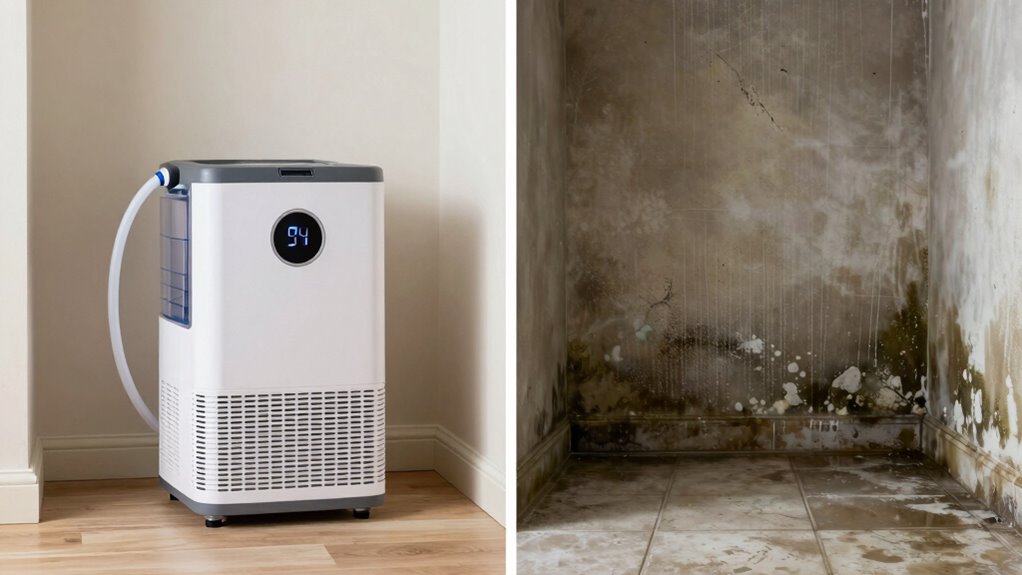
If you want ease and consistent performance, a dehumidifier with a pump is a good choice for your basement. It allows automatic drainage, saving you effort and helping the unit run efficiently longer. However, it costs more upfront and might be noisier. Without a pump, you’ll need to empty the tank manually, which is simpler and cheaper but less convenient. To make the best decision, consider your budget, space, and maintenance preferences—and discover more details below.

Get home appliances delivered free with Prime
- Fast, free delivery on millions of items
- Prime Video, Amazon Music and more included
- Member-only deals all year
Key Takeaways
- Pump models enable continuous drainage, reducing manual emptying and improving efficiency in basement environments.
- Dehumidifiers with pumps generally cost more upfront but may save energy and maintenance time long-term.
- Pump-equipped units are ideal for hard-to-access areas, offering convenience and consistent dehumidification.
- Non-pump models are more affordable initially but require regular tank emptying, which can be less convenient.
- Noise levels may vary; pump models might be louder, so consider placement and comfort when choosing.

When choosing a dehumidifier, you might wonder whether to go with a model that has a built-in pump or one without. This decision can profoundly impact your home’s comfort, especially in a basement where humidity levels tend to be high. One of the first factors to consider is energy efficiency. Dehumidifiers with pumps often operate more efficiently because they allow continuous drainage without needing to be manually emptied. This means you can run the unit longer or more frequently without worrying about frequent stops to empty the tank, ultimately saving energy over time. On the other hand, models without pumps rely on a collection tank that needs to be emptied manually, which can interrupt operation and potentially lead to less efficient use if you’re not diligent about maintenance. If energy efficiency is a priority, a pump-equipped dehumidifier might be the better choice, especially in a space that requires constant dehumidification.
Cost comparison is another vital aspect to weigh. Generally, dehumidifiers with built-in pumps tend to have a higher upfront cost. The added feature of a pump mechanism increases the manufacturing complexity, and that cost is reflected in the retail price. However, you should also consider the long-term savings. Since pump models often operate more continuously and with less manual intervention, they can reduce energy consumption over time. Furthermore, if you factor in the convenience, especially in a basement that’s hard to access regularly, the increased initial investment can be justified by the time and effort saved. Conversely, models without pumps usually have a lower initial purchase price. Still, they might incur higher maintenance costs or inconvenience if you need to empty the tank frequently, which could lead to longer-term costs or even reduced efficiency if the tank is not emptied regularly.
Additionally, noise levels may differ between models with and without pumps, affecting your comfort, especially if the dehumidifier is located in living spaces. In short, your choice between a dehumidifier with a pump and one without hinges on your specific needs and budget. If you prioritize energy efficiency and convenience, investing in a model with a built-in pump is likely worthwhile despite the higher upfront cost. If you’re working within a tighter budget and don’t mind routine maintenance, a simpler model without a pump may suffice. Ultimately, understanding how these factors interact will help you make a decision that balances cost, efficiency, and ease of use, ensuring your basement stays dry without unnecessary expense or effort.
dehumidifier with pump for basement
As an affiliate, we earn on qualifying purchases.
As an affiliate, we earn on qualifying purchases.
Frequently Asked Questions
How Much Does a Dehumidifier With Pump Cost Compared to Without?
A dehumidifier with a pump generally costs between $300 and $700, while models without pumps range from $150 to $400. The price comparison shows that pump-equipped units are pricier upfront, mainly due to added features. Keep in mind, installation costs for units with pumps can be higher too, especially if professional setup is needed. Overall, you’re paying more initially, but it might save you effort and maintenance in the long run.
Which Dehumidifier Type Is More Energy-Efficient for Basements?
Imagine your basement as a thirsty sponge, craving just the right amount of moisture. A dehumidifier without a pump often sips less power, making it more energy-efficient for your space. It consumes less energy, reducing your electric bill, while still keeping humidity in check. If you prioritize power efficiency and lower energy consumption, a dehumidifier without a pump is your best bet to keep your basement dry and your costs down.
Can a Dehumidifier With Pump Operate Continuously?
Yes, a dehumidifier with pump can operate continuously, but you should consider installation considerations like proper drainage setup to prevent overflow. Keep in mind that these units typically produce more noise compared to those without a pump, so noise level comparison is important if your basement is a living space. Regular maintenance ensures peak performance, and continuous operation helps control humidity effectively, especially in damp environments.
Are Maintenance Requirements Different Between the Two Types?
You’ll find that maintenance requirements differ between dehumidifiers with and without pumps. With a pump, you’ll need to regularly check and clean the pump and drainage system to prevent clogs. Without a pump, you mainly focus on emptying and cleaning the water collection bucket. Overall, the maintenance comparison shows that pump models might involve a bit more routine cleaning, but both types benefit from regular filter cleaning to guarantee efficiency.
What Is the Typical Lifespan of Each Dehumidifier Type?
You can expect a dehumidifier without a pump to last about 5 to 10 years, depending on usage and maintenance, showcasing solid durability. A pump-equipped model might have a similar lifespan but often sees reduced pump lifespan due to continuous operation or heavy use. Proper upkeep extends your dehumidifier’s durability, so regular cleaning and timely repairs help maximize both units’ longevity and performance.
Conclusion
Choosing between a dehumidifier with or without a pump is like picking the right tool for a job—you want something that works seamlessly and fits your needs. If you prefer hands-free operation and easy maintenance, a dehumidifier with a pump is your steady ship in stormy waters. But if simplicity and lower upfront costs matter most, a model without a pump can still keep your basement dry. Either way, you’re the captain steering toward a healthier, mold-free space.
Fall yard work Picks
leaf blowers
As an affiliate, we earn on qualifying purchases.