Electric kettles boil water faster because they use efficient metal heating elements embedded directly in the base, which quickly transfer heat to the water with minimal energy loss. The materials used have high thermal conductivity, and the design concentrates heat at the bottom for even and rapid heating. Features like automatic shut-off also help save energy and prevent overheating. If you want to understand how all these elements work together, there’s more to discover below.
Key Takeaways
- Built-in heating elements are directly embedded at the kettle’s base, ensuring rapid heat transfer to the water.
- High thermal conductivity materials in the heating element enable quick and efficient heating.
- Precise placement and design focus heat at the base for uniform and fast water heating.
- Direct electrical-to-thermal energy conversion minimizes heat loss and speeds up boiling.
- Safety features like automatic shut-off optimize energy use, maintaining fast boiling without waste.
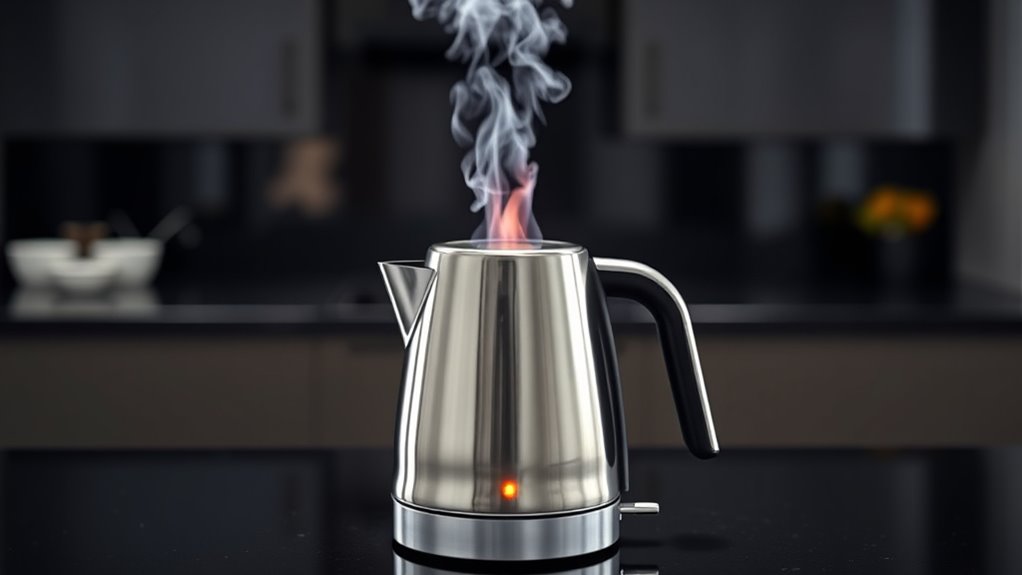
Have you ever wondered why electric kettles heat water faster than traditional stovetop pots? The answer largely comes down to their design and the way they utilize power efficiency and heating elements. Electric kettles are engineered to maximize the transfer of electrical energy into heat, making the process quicker and more energy-efficient. Unlike stovetop pots, which rely on a flame or electric coil that heats the bottom of a pot, electric kettles have dedicated heating elements built directly into their base. These elements are typically made of metal alloys that conduct heat rapidly, ensuring that the entire kettle heats evenly and quickly.
Electric kettles heat water faster by direct, efficient heating elements built into their base.
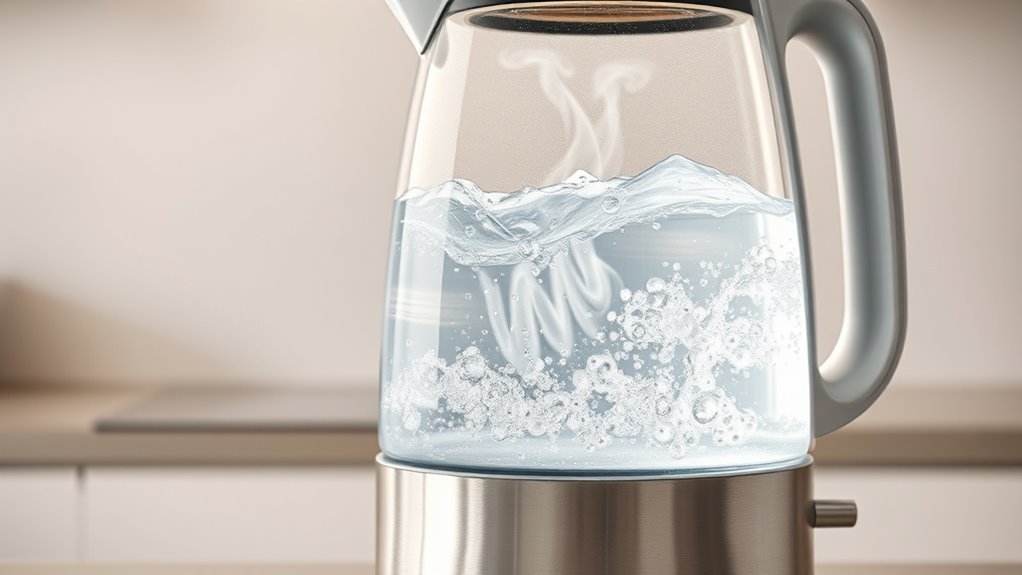
When you turn on an electric kettle, the power is directed straight into these heating elements. Because they are in direct contact with the water, heat transfer happens almost instantaneously, markedly reducing the time it takes to reach boiling point. This direct contact also means less heat is lost to the surrounding environment, which enhances power efficiency. In contrast, stovetop pots often lose some heat to the air and the surface of the stove, making them less efficient overall. The design of electric kettles guarantees that nearly all the electrical energy consumed is turned into heat within the kettle itself, enabling faster water boiling.
Additionally, the size and placement of the heating elements in electric kettles are optimized for quick heating. They are usually located at the base or embedded within the bottom of the kettle, providing a concentrated heat source. This design allows the entire water volume to be heated uniformly and rapidly. The materials used in these heating elements are also vital—metal alloys with high thermal conductivity are chosen because they transfer heat efficiently from the element to the water. This combination of powerful, well-placed heating elements and a design that minimizes heat loss makes electric kettles highly effective at boiling water swiftly.
Furthermore, electric kettles often come with automatic shut-off features, which prevent overheating and energy waste once the water reaches boiling point. This not only saves power but also ensures safety. So, when you’re in a hurry or just want a quick cup of tea or coffee, an electric kettle’s focus on power efficiency and specialized heating elements makes all the difference. It’s these thoughtful design choices that allow electric kettles to outperform traditional stovetop methods in speed and energy use, giving you hot water in a fraction of the time.
A key factor in their speed is the precise control over heat transfer, which is optimized in electric kettle designs.
Frequently Asked Questions
Do Smaller Electric Kettles Boil Water Faster Than Larger Ones?
Yes, smaller electric kettles tend to boil water faster because their smaller kettle size means less water to heat. This improves boiling efficiency, allowing you to get hot water quickly. When you choose a kettle size that matches your needs, you’ll notice a difference in boiling time. Keep in mind, larger kettles take longer because they have more water to heat, which can impact overall boiling efficiency.
Does the Material of the Kettle Affect Boiling Speed?
Imagine a sleek stainless steel kettle glowing as it heats, or a cozy ceramic one warming slowly. Kettle material considerably affects boiling speed; metal like stainless steel or copper conducts heat faster, speeding up boiling. On the other hand, ceramic or glass kettles heat more slowly, taking longer to reach boiling point. So, if you want quick boiling, choose a metal kettle for faster boiling speed.
Can Adding Salt or Other Substances Speed up Boiling?
Adding salt or mineral additives won’t considerably speed up boiling in your electric kettle. Salt enhancement raises the boiling point slightly, but the effect is minimal and won’t noticeably reduce boiling time. Mineral additives may change the water’s taste or appearance but won’t impact boiling speed. Instead, focus on using a high-wattage kettle or ensuring your appliance is in good condition to boil water faster.
How Does Altitude Influence Electric Kettle Boiling Time?
Altitude effects your electric kettle’s boiling time because higher elevations lower the boiling point of water, causing it to take longer to reach boiling. Your kettle size also matters; larger kettles require more water to heat, increasing boiling time. So, at higher altitudes, expect longer boil times regardless of kettle size. To compensate, you might need to increase heating duration or adjust your expectations for boiling speed.
Are There Energy-Efficient Settings for Faster Boiling?
Yes, you can find electric kettles with energy-saving modes and precise temperature control, which help boil water faster and save energy. Using energy-saving modes reduces power consumption once the water reaches the desired temperature, while temperature control lets you set the exact heat needed, avoiding unnecessary energy use. By choosing models with these features, you optimize boiling efficiency and minimize electricity waste.
Conclusion
Now that you know how electric kettles boil water faster, it’s almost like they’re made just for busy mornings. Imagine waking up, pouring water in, and hearing that familiar whistling sound—quick, easy, and efficient. It’s no coincidence that these kettles save you time; they’re designed to work with your busy life. So, next time you need hot water fast, trust your electric kettle to get it right, just when you need it most.