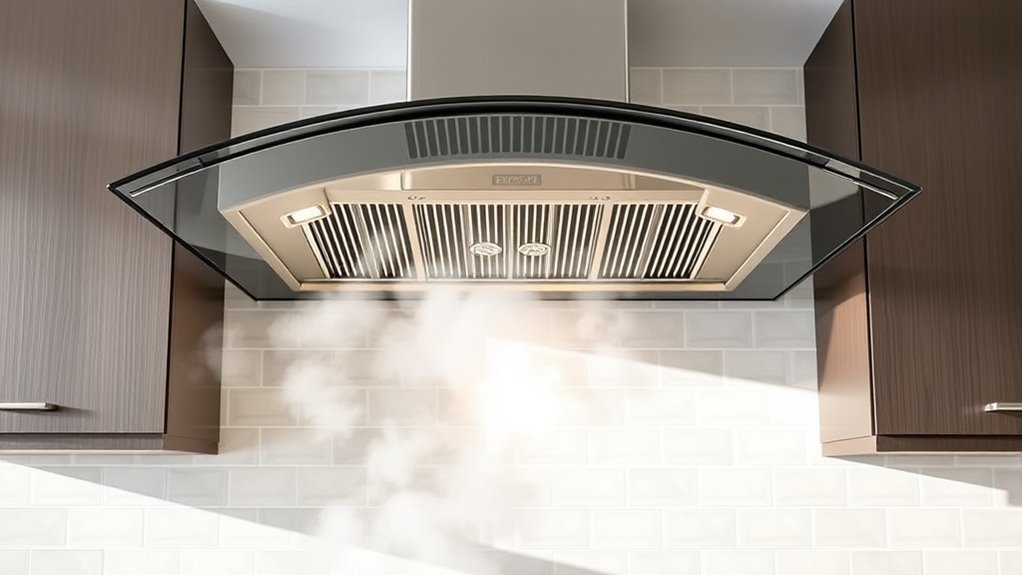

Kitchen ventilation systems work by capturing smoke, odors, grease, and airborne contaminants and then exhausting them outside. They use filters like grease and activated carbon to trap impurities before air flows through carefully designed ductwork that promotes smooth, efficient airflow. Proper duct design ensures pollutants are effectively removed from your kitchen, keeping the air clean and safe. If you want to learn how these components work together for ideal performance, keep exploring for more details.
Key Takeaways
- Kitchen ventilation systems extract smoke, odors, and airborne contaminants through exhaust hoods and ducts.
- Air filtration traps grease, smoke particles, and odors before the air is recirculated or expelled.
- Proper duct design ensures smooth airflow and efficient removal of pollutants from the kitchen space.
- The system continuously pulls contaminated air out, replacing it with fresh, filtered air for a healthier environment.
- Regular maintenance like filter replacement and duct inspection keeps the system operating effectively.
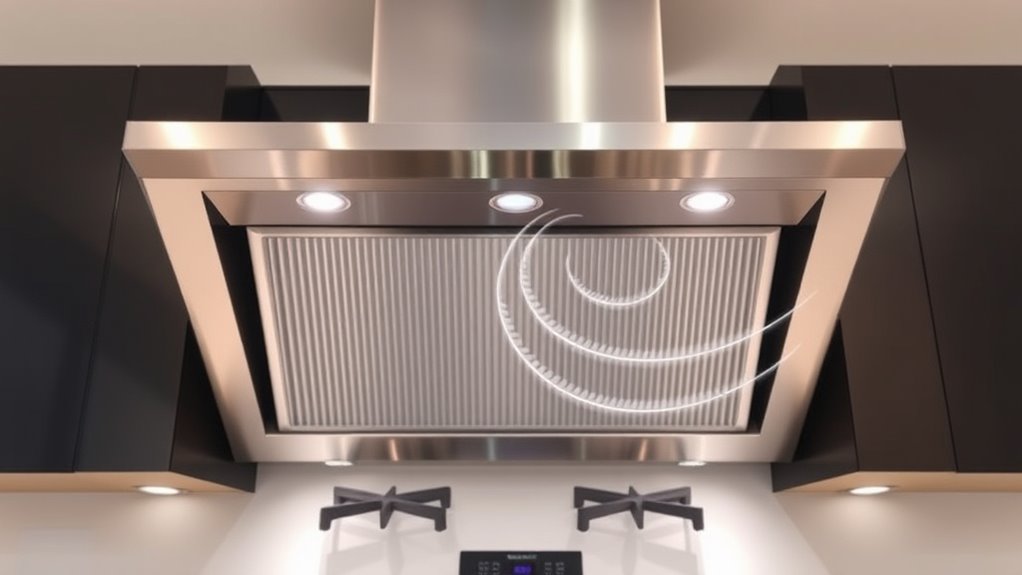
A well-designed kitchen ventilation system is essential for maintaining a clean, healthy, and comfortable cooking environment. It works by effectively removing smoke, odors, grease, and airborne contaminants that are generated during cooking. At the heart of this system are two crucial elements: air filtration and duct design. These components work together to ensure that the air in your kitchen stays fresh and safe, preventing buildup of pollutants that could affect your health and the overall atmosphere of your space.
Air filtration plays a vital role in trapping particles and impurities before they circulate back into your kitchen. High-quality filters, such as grease filters and activated carbon filters, are designed to capture grease droplets, smoke particles, and odors. As contaminated air is drawn into the ventilation system, it first passes through these filters, which remove the heaviest pollutants. This process not only improves air quality but also protects the ductwork from grease buildup, reducing fire hazards and making maintenance easier. You should regularly check and replace these filters to keep the system running efficiently and to maintain optimal air cleanliness.
Duct design is equally important because it determines how effectively the contaminated air is transported out of your kitchen. Properly designed ducts ensure smooth airflow, minimizing resistance and turbulence that can hinder ventilation performance. They should be appropriately sized—neither too narrow nor too wide—to match the volume of air that needs to be moved. Good duct design also involves careful routing to avoid sharp bends and obstructions, which can cause air to stagnate or reduce the system’s efficiency. When ducts are correctly installed, the entire process of air removal becomes seamless, allowing pollutants to exit quickly and preventing stale or smoky air from lingering.
Together, air filtration and duct design form the backbone of an effective kitchen ventilation system. You want to invest in systems that prioritize high-quality filters and meticulous duct planning. This combination ensures that the air you breathe remains clean and free of harmful contaminants, making your kitchen safer and more comfortable for cooking and socializing. Proper maintenance, including regular filter replacements and duct inspections, will keep your ventilation system performing at its best. Additionally, understanding the importance of factors influencing airflow can help you optimize your system’s performance. Ultimately, understanding how these elements work together helps you appreciate the importance of a well-designed system and encourages you to prioritize quality when selecting and maintaining your kitchen ventilation.
Frequently Asked Questions
What Are the Latest Innovations in Kitchen Ventilation Technology?
You’ll find that the latest innovations in kitchen ventilation include smart sensors that detect smoke, odors, and humidity, automatically adjusting airflow for ideal performance. Many systems now incorporate advanced air purification features, removing airborne pollutants and bacteria for healthier air. These smart, adaptive systems make your kitchen safer and more comfortable, reducing energy use and ensuring you maintain fresh, clean air effortlessly.
How Do I Choose the Right Ventilation System for My Kitchen Size?
To select the appropriate ventilation system, begin by evaluating your kitchen size and cooking routines. Make certain the system has sufficient ventilation capacity to meet your needs, which depends on your kitchen’s square footage and stove type. Proper duct sizing is vital—choose ducts that match the system’s airflow requirements to prevent noise and inefficiency. Consult a professional to size the ducts correctly, guaranteeing ideal air removal and a healthier cooking environment.
What Maintenance Is Required to Keep Ventilation Systems Effective?
Imagine a busy restaurant where neglecting maintenance led to poor air quality. To keep your ventilation system effective, you should regularly replace filters and schedule duct cleaning. These steps remove grease, dust, and debris, ensuring peak airflow. Check filters monthly and replace them as needed. Schedule duct cleaning at least once a year. Consistent maintenance preserves your system’s efficiency, protects your staff’s health, and keeps your kitchen compliant with safety standards.
Are There Eco-Friendly or Energy-Efficient Ventilation Options Available?
Yes, you can choose eco-friendly options and energy-efficient choices for your kitchen ventilation system. Look for models with Energy Star ratings or those that use advanced, low-energy motors. Eco-friendly options might include systems that recycle or filter air effectively, reducing waste. By selecting energy-efficient choices, you lower your electricity bills and reduce your environmental impact, making your kitchen more sustainable and cost-effective over time.
How Long Does It Typically Take to Install a New Ventilation System?
You’ll usually see a 1-3 day installation timeline for a new ventilation system, depending on your kitchen’s size and complexity. Proper project planning helps make sure the process runs smoothly, minimizing disruptions. If you’re working with a professional team, they’ll coordinate to streamline the process, but it’s wise to allocate extra time for permits or unforeseen issues. Planning ahead guarantees your system’s installed efficiently, keeping your kitchen safe and well-ventilated.
Conclusion
Now that you understand how kitchen ventilation systems work, imagine the air flowing smoothly like a gentle breeze, whisking away smoke, steam, and odors. With a well-designed system, your kitchen becomes a fresh, inviting space where cooking feels effortless. Feel confident knowing that each vent, fan, and filter plays a crucial role in keeping your environment clean and comfortable. Breathe easy, knowing your kitchen stays crisp and clear, no matter what you’re cooking up next.