In your refrigerator, the water filtration system uses an internal cartridge with special media to remove impurities from the water before it reaches your ice maker or dispenser. Water flows through the cartridge, which traps contaminants like chlorine, sediments, and heavy metals, ensuring fresh, clean-tasting water. As the filter works, it provides better flavor and safety. To keep it performing well, you’ll want to know when and how to replace it; keep exploring to learn more.
Key Takeaways
- Water passes through a filter cartridge containing activated carbon and other media to remove impurities before reaching the dispenser.
- The filtration system is integrated into the refrigerator’s water supply line, activated when the dispenser is used.
- Regular filter replacement ensures efficient removal of contaminants like chlorine, sediments, and heavy metals.
- The filter’s media contact water for a set time to maximize impurity removal and improve taste.
- Flushing the system after installing a new filter clears residual dust and ensures clean, safe drinking water.
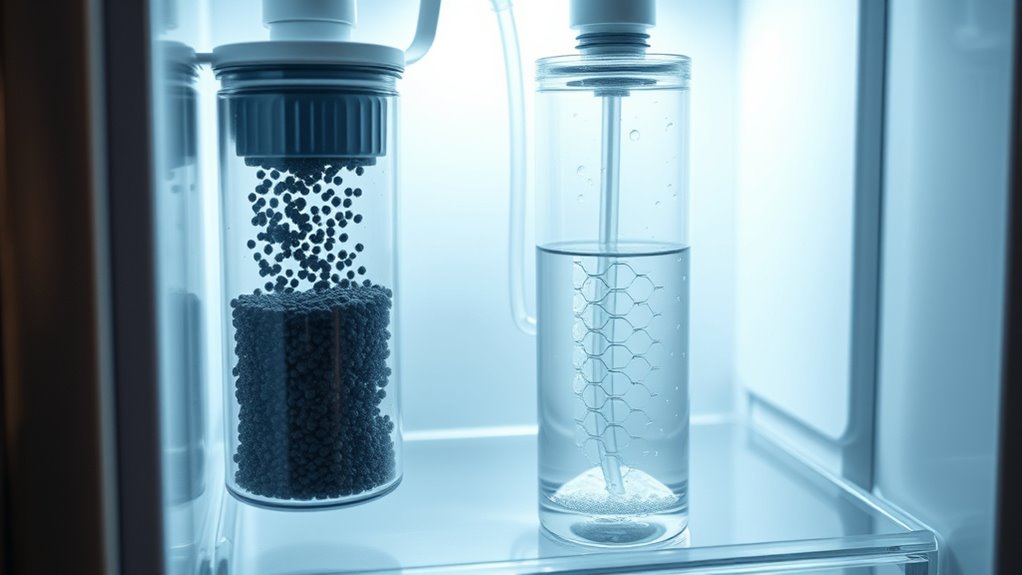
Many modern refrigerators come equipped with built-in water filtration systems that guarantee your drinking water is clean and safe. These systems rely on a filter cartridge, which is the core component responsible for removing impurities from tap water before it reaches your glass. When you activate the water dispenser, water flows through the refrigerator’s inlet valve and into the filter cartridge. As water passes through, the filter captures contaminants such as chlorine, sediments, heavy metals, and other impurities, making your drinking water taste better and reducing potential health risks. Regular cleaning and timely replacement of the filter help maintain optimal performance and water quality.
Modern refrigerators use filter cartridges to remove impurities and improve water taste and safety.
The water flow is carefully regulated to guarantee crucial filtration. When you press the dispenser lever, a valve opens, allowing water to move from the water supply line into the filter cartridge. The design of the system ensures a steady, controlled water flow, so the filtration process is both efficient and thorough. The flow rate is calibrated to allow enough contact time between the water and the filter media, maximizing impurity removal without causing delays or backpressure. This balance helps you get a consistent flow of clean water each time you dispense it.
Your filter cartridge plays a vital role in maintaining the system’s effectiveness. It contains various filtration media—such as activated carbon, ion exchange resins, or other specialized materials—that target specific contaminants. Over time, the filter cartridge becomes less effective as it traps impurities, which is why most manufacturers recommend replacing it every six months or after a certain volume of water has been filtered. When the filter is nearing capacity, you might notice a decrease in water flow or a change in taste, signaling it’s time for a replacement.
Replacing the filter cartridge is straightforward, but it’s imperative to follow your refrigerator’s instructions to guarantee a proper fit and seal. When installing a new cartridge, the water flow may be temporarily disrupted until air is purged from the system. Once the new filter is in place, run water through the dispenser for a few minutes to flush out any residual carbon dust or impurities from the new filter media. This process ensures that your water remains fresh and safe to drink. Proper maintenance, including filter replacement, helps prevent costly repairs and ensures your refrigerator continues to provide clean, safe drinking water.
Frequently Asked Questions
How Often Should I Replace My Refrigerator’s Water Filter?
You should replace your refrigerator’s water filter every six months or when the replacement indicator lights up. The filter lifespan varies depending on usage and water quality, so keep an eye on the indicator for accurate timing. Regular replacement guarantees clean, fresh-tasting water and maintains ideal filtration performance. If your water tastes off or flows slow, it’s a good sign to change the filter sooner.
Can a Water Filtration System Remove All Contaminants?
Imagine water flowing through a clear, sparkling stream—your fridge’s filtration system aims to do the same. It removes many contaminants, but it can’t eliminate all impurities, especially certain chemicals or microbes. While effective for common pollutants, filtration limitations mean some contaminants may slip through. So, while your system improves water quality, it’s not a guarantee of perfect purity, making occasional testing or additional filtration necessary for complete safety.
Is Professional Installation Required for Water Filtration Systems?
You don’t always need professional installation for water filtration systems; many models offer DIY setup options that are straightforward. However, for complex systems or if you’re unsure about connecting water lines properly, professional installation can guarantee everything is done safely and correctly. Consider your comfort level and the system’s requirements—if it’s simple, go ahead with DIY, but for more advanced setups, hiring a professional is a wise choice.
Do Filtration Systems Affect Water Flow Rate?
Filtration systems can slightly reduce your water flow rate because the filter adds a barrier to the water path. The impact depends on the filter capacity; a higher capacity filter usually maintains a good flow rate longer. You might notice a decrease in water pressure over time as the filter gets clogged, but regular replacement keeps the flow steady. So, your water flow rate is influenced by both the filter’s capacity and how often you change it.
Are There Different Types of Filters for Various Refrigerator Models?
You might think all filters fit every refrigerator, but that’s not true. Different models require specific filters for peak performance. To keep your system working well, you need to check filter compatibility and perform regular filter maintenance. Using the wrong filter can reduce water flow and compromise filtration quality. Always verify your refrigerator’s model and filter type before purchasing, ensuring you get the right fit for efficient, clean water.
Conclusion
Understanding how water filtration systems work in your refrigerator shows you the power of simple technology. They remove contaminants, ensuring clean, fresh-tasting water right from your door. While the filters quietly do their job, you enjoy the convenience of having pure water at your fingertips. It’s a small device with a big impact—cleanliness and freshness in every sip, peace of mind in every glass. Keep it maintained, and your fridge will serve you well, every time.