Vacuum sealing is a smart way to extend your food’s freshness by removing air, which helps prevent spoilage and freezer burn. It preserves flavor, texture, and nutrients while also reducing waste and saving money. By creating an airtight environment, you can store food longer and protect it from odors and oxidation. This versatile method works with both raw and cooked items, and if you keep exploring, you’ll discover even more benefits and tips for successful preservation.
Key Takeaways
- Vacuum sealing removes air from packaging to extend food shelf life and preserve freshness.
- It slows bacterial growth and prevents oxidation, reducing spoilage and freezer burn.
- The process involves sealing foods in specially designed bags or containers with adjustable settings.
- Vacuum sealing enhances storage efficiency, minimizes waste, and allows for bulk buying and seasonal preservation.
- Besides food, vacuum sealers can protect documents, clothing, and other non-food items.
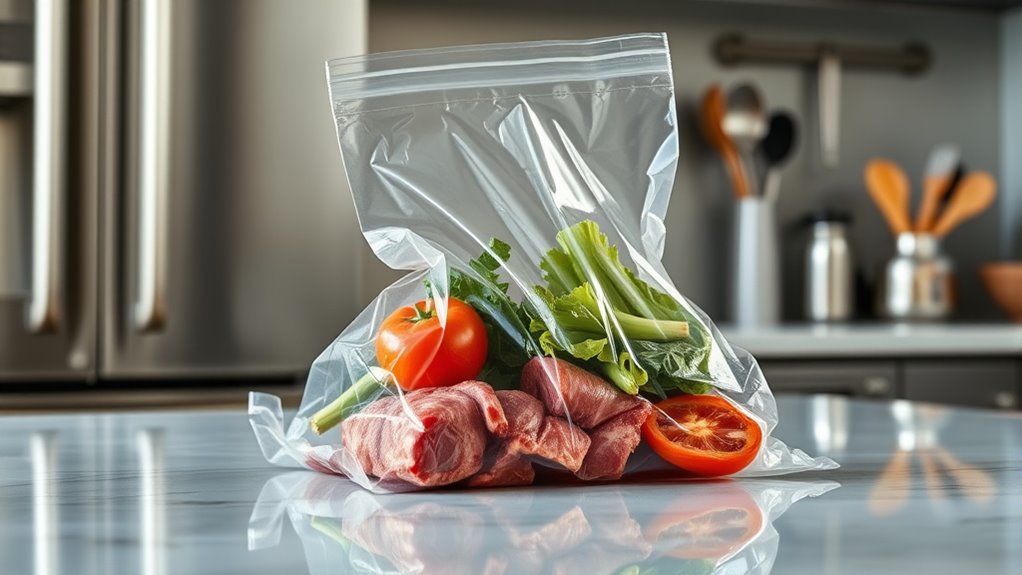
Vacuum sealing is a highly effective method for preserving food by removing air that causes spoilage. When you seal food in airtight bags or containers, you markedly slow down the growth of bacteria, mold, and yeast, all of which thrive in oxygen-rich environments. This process not only extends the shelf life of your food but also helps maintain its flavor, texture, and nutritional value. The vacuum sealing benefits are clear: you can store more food for longer periods, reduce waste, and save money by buying in bulk or preserving seasonal produce. By removing air, you also prevent freezer burn, which can ruin the quality of your frozen foods over time.
Vacuum sealing extends food freshness by removing air and slowing spoilage.
You might find that vacuum sealing is one of the best food preservation techniques available today. Unlike traditional methods such as canning, drying, or freezing alone, vacuum sealing complements these techniques by providing an extra layer of protection. It’s especially useful for preserving delicate items like berries, herbs, or cooked leftovers that might otherwise spoil quickly. Plus, vacuum-sealed foods take up less space in your fridge or freezer, making organization easier and more efficient. When you’re able to store food in a compact, airtight package, you also reduce the risk of contamination from freezer odors or other foods. Additionally, vacuum sealing can help prevent oxidation, which can degrade the quality of foods over time.
Using a vacuum sealer is straightforward once you get the hang of it. You start by placing your food into a specially designed bag or container, then use the machine to remove the air and create a tight seal. Many modern vacuum sealers come with adjustable settings, allowing you to tailor the process based on the type of food you’re sealing—whether it’s moist or dry. This flexibility ensures that your food remains fresh and that the seal stays intact during storage. Additionally, vacuum sealing is versatile; it works well with raw ingredients, cooked dishes, or even non-food items like important documents or clothing.
Incorporating vacuum sealing into your food preservation routine offers numerous advantages. It’s a safe, reliable, and efficient method to extend the life of your perishables while maintaining quality. Whether you’re looking to minimize waste, save money, or simply want to enjoy seasonal foods year-round, vacuum sealing stands out as a top food preservation technique. Once you experience the benefits firsthand, you’ll find it becomes a staple in your kitchen, helping you keep your food fresh longer and reducing the frequency of trips to the store.
Frequently Asked Questions
How Long Can Vacuum-Sealed Food Be Stored Safely?
Vacuum-sealed food can last 1-3 years in the freezer, depending on the type of food and proper storage techniques. For ideal shelf life, verify your vacuum seal is airtight and store sealed items at consistent freezing temperatures. In the refrigerator, vacuum-sealed perishables typically stay fresh for 1-2 weeks. Always check for signs of spoilage before consuming, and label packages with dates to track storage duration accurately.
Can Vacuum Sealing Prevent Freezer Burn Entirely?
Vacuum sealers substantially reduce freezer burn, but they can’t prevent it entirely. Studies show that proper preservation techniques can extend food quality, yet small air pockets may still form over time. While vacuum sealing removes most air, tiny amounts can remain, leading to potential ice crystals. To minimize freezer burn, guarantee a tight seal and use quality vacuum sealers, but remember, no method guarantees complete prevention.
Is Vacuum Sealing Suitable for All Types of Food?
Vacuum sealing isn’t suitable for all types of food because some foods, like soft fruits or bread, may have delicate textures that get crushed or become soggy. Additionally, sealing compatibility varies; some foods release liquids or have irregular shapes that can compromise the seal. You should consider food texture and whether the packaging can handle the item properly to make certain of effective preservation and prevent spoilage.
What Are Common Mistakes to Avoid When Vacuum Sealing?
Think of vacuum sealing as a delicate dance—if you miss a step, it could lead to spoiled food. To avoid this, always maintain your sealing equipment, ensuring it works smoothly. Proper bag selection is essential; choose the right size and material to prevent leaks. Don’t rush the process or overlook sealing edges. These mistakes can turn your food preservation efforts into a recipe for spoilage, so stay attentive!
Does Vacuum Sealing Affect Food Flavor or Nutritional Value?
Vacuum sealing generally preserves food flavor and nutritional value, but improper sealing can impact flavor retention and nutritional impact. You might notice some loss if the seal isn’t airtight or if you store food too long. To maximize benefits, guarantee a tight seal and use your vacuum sealer promptly. Proper technique helps maintain flavor, nutrients, and freshness, ensuring your food stays tasty and nutritious for longer.
Conclusion
So, after all this talk about vacuum sealing, you might think you’ve cracked the code to endless freshness. But remember, even the best seal can’t stop your snacks from someday losing their charm. Ironically, by trying to preserve everything perfectly, you might just spend more time fussing over your food than actually enjoying it. Still, isn’t it comforting to know that with a little effort, your leftovers can stay fresh long enough to become tomorrow’s surprise?