Tankless water heaters are more energy-efficient because they heat water only when you need it, cutting down on standby heat loss and reducing your bills over time. They also save space and can last longer than traditional units. However, they often come with higher upfront costs and may require system upgrades. To find out how these benefits compare to traditional models and whether a tankless system suits your home, keep exploring the details.
Key Takeaways
- Tankless water heaters provide on-demand hot water, eliminating standby heat loss and improving energy efficiency.
- Despite higher initial costs, tankless systems save money long-term through lower energy bills.
- Traditional units are easier and cheaper to install, especially in homes without existing upgrades.
- Tankless models save space with their compact design and can accommodate future expansion needs.
- Proper installation ensures optimal performance, making tankless heaters a cost-effective, long-term solution.
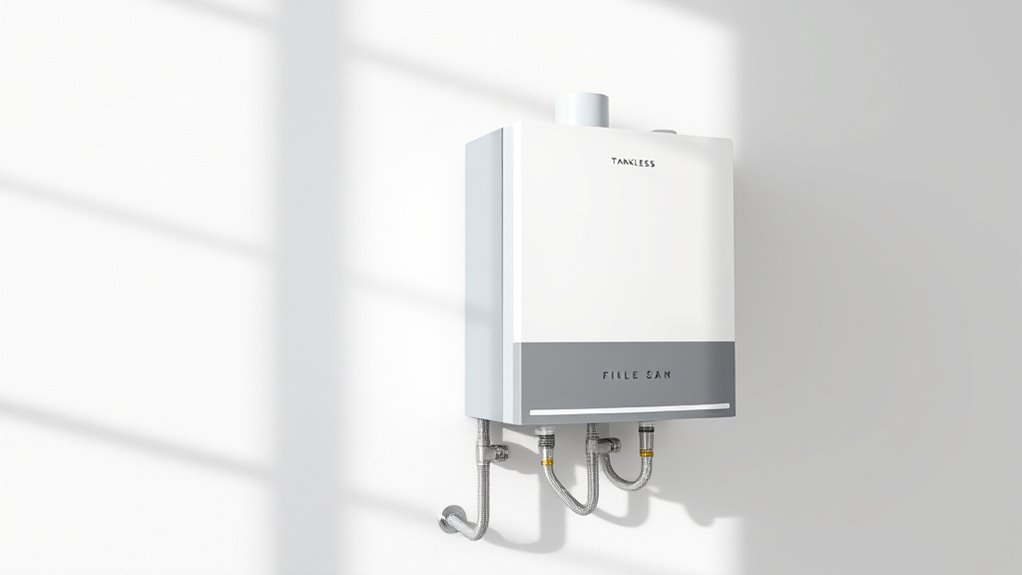
Are you trying to decide between a tankless and a traditional water heater for your home? If so, understanding how each option stacks up in terms of energy efficiency and installation costs can help you make a smarter choice. Tankless water heaters, also called on-demand units, heat water only when you need it, which means they don’t store hot water in a tank. This design can considerably improve your home’s energy efficiency because you’re not constantly maintaining the temperature of a large water reservoir. Traditional water heaters, on the other hand, store a set amount of hot water in a tank, which requires energy to keep it heated even when you’re not using it. So, regarding energy efficiency, tankless models generally save you more money over time by reducing standby heat loss.
However, the initial installation costs of a tankless water heater tend to be higher than those of a traditional unit. The reason is that tankless systems often require upgrades to your home’s electrical system or gas lines to handle their power demands. Plus, the units themselves are usually more expensive upfront. While traditional water heaters are less costly to install since they fit into existing setups more easily, they might cost you more in the long run through higher energy bills due to continuous heat loss. If you’re looking at the upfront investment versus long-term savings, a tankless heater might seem pricier initially but could pay off over years with lower energy bills.
Another factor to think about is installation complexity. Installing a tankless water heater can be more involved, especially in homes that weren’t originally designed for them. You might need additional plumbing modifications or electrical work, which can add to your installation costs and time. Traditional water heaters are usually straightforward to install because they’re built to fit standard spaces and existing connections. Yet, if you’re weighing long-term benefits, those higher installation costs for a tankless model might be worth it, especially if you want to save space and reduce your energy consumption. Additionally, choosing a qualified Ford Tuning shop can ensure proper setup and optimal performance of your system.
Frequently Asked Questions
How Long Do Tankless Water Heaters Typically Last?
Tankless water heaters typically last about 20 years, but their lifespan depends on durability factors like water quality and maintenance. You can extend their longevity by flushing the system regularly and addressing mineral buildup. Proper care helps them reach their full lifespan, ensuring you get reliable hot water for years. Keep an eye on performance and schedule maintenance to maximize durability and enjoy the benefits of a long-lasting unit.
Are There Specific Maintenance Requirements for Tankless Models?
You need to stay on top of routine flushing to prevent mineral buildup in your tankless water heater. Regular maintenance, like flushing once a year, keeps the system running efficiently and extends its lifespan. Check and clean the filter periodically, and inspect for leaks or corrosion. When you keep up with these simple tasks, you’ll avoid surprises and ensure your heater performs at its best for years to come.
Can I Install a Tankless Heater in an Existing Home?
Yes, you can install a tankless heater in your existing home. However, you’ll face installation challenges like upgrading your home’s electrical or gas lines and possibly modifying space. These modifications can increase the overall cost implications. It’s crucial to hire experienced professionals who can evaluate your home’s current setup and guarantee the installation meets safety standards, making the switch smoother and more cost-effective.
What Are the Safety Considerations for Tankless Systems?
When installing a tankless system, you should consider installation challenges like proper venting and electrical wiring. Make sure your unit has safety certifications to guarantee it meets safety standards. Regular maintenance and proper use help prevent leaks, overheating, or electrical issues. Always follow manufacturer instructions and hire qualified professionals to install and inspect your system, reducing risks and ensuring safe, efficient operation for your household.
How Do Energy Savings Compare Over the Heater’s Lifespan?
You might think traditional heaters save energy, but over their lifespan, tankless systems actually outperform. Thanks to their energy efficiency, you’ll enjoy significant cost savings since they only heat water on demand, not constantly. Ironically, while tankless units often cost more upfront, the long-term savings in energy and reduced utility bills make them a smarter, more economical choice over time.
Conclusion
Choosing between tankless and traditional water heaters depends on your needs. Did you know that tankless models can be 24% more energy-efficient? They provide endless hot water and save space, making them a smart choice for many households. While traditional heaters are usually cheaper upfront, tankless units offer long-term savings and convenience. Consider your usage habits and budget to decide which option best fits your lifestyle—either way, you’ll enjoy reliable hot water tailored to your needs.